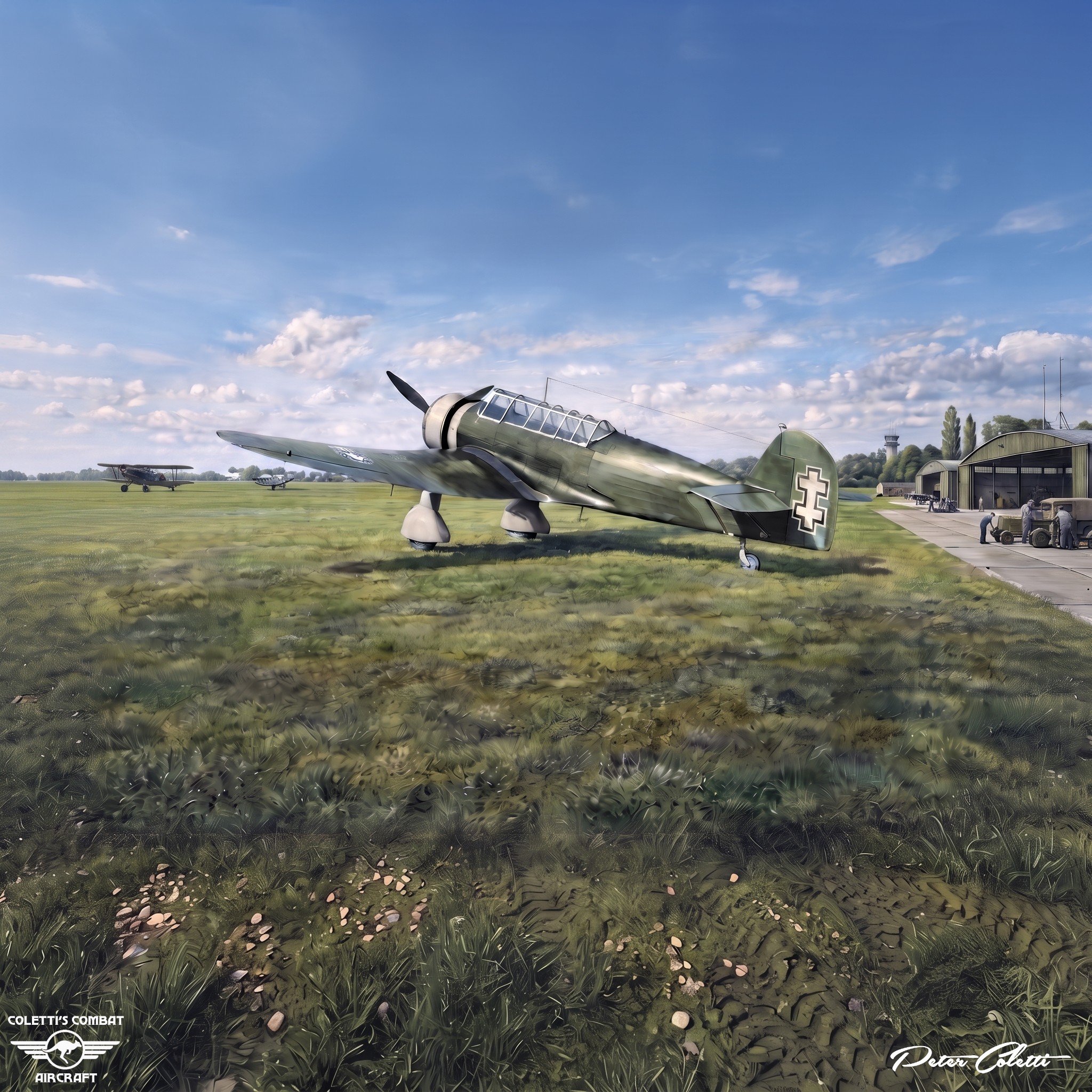
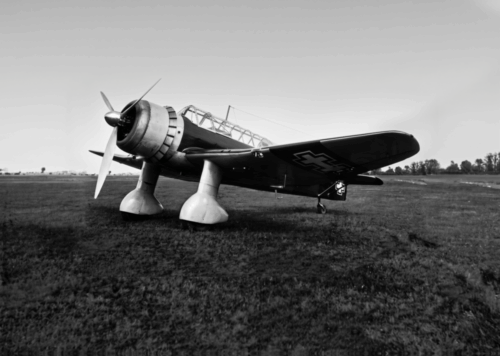
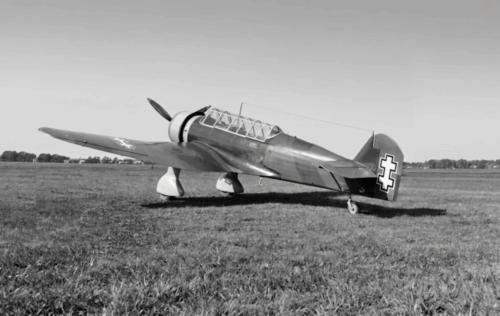
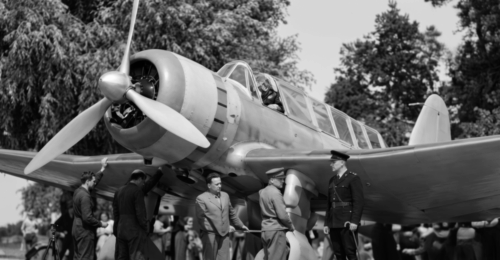
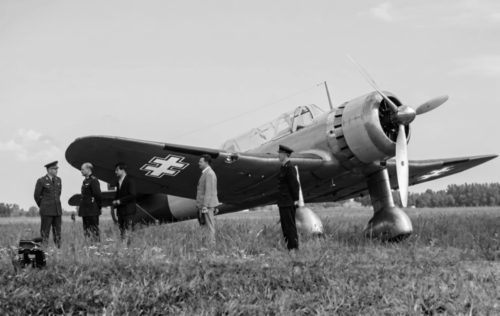
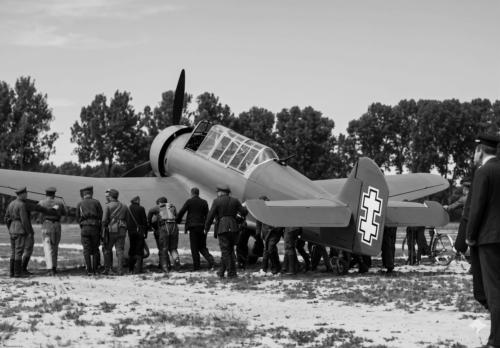
The ANBO VIII was the final and most ambitious aircraft designed by Antanas Gustaitis, the leading figure of interwar Lithuanian aviation.
Conceived in the late 1930s, it represented Lithuania’s attempt to field a modern, indigenous bomber‑reconnaissance monoplane at a time when regional tensions were escalating and the country sought to strengthen its air arm with domestically produced designs.
Development took place at the Karo Aviacijos Tiekimo Skyrius, the Lithuanian Air Force’s supply and construction department.
The aircraft was intended to replace older biplane reconnaissance and light bomber types with a fast, enclosed-cockpit monoplane capable of both tactical bombing and long-range scouting.
Its design philosophy followed the broader European trend towards all‑metal, low‑wing monoplanes with higher speeds and improved crew protection.
The prototype achieved its first flight on 5 September 1939 — a moment overshadowed by the outbreak of the Second World War just days earlier.
Despite promising performance, the aircraft remained in the testing phase when Lithuania was annexed by the Soviet Union in 1940.
Soviet authorities seized the prototype for evaluation, ending any possibility of series production.
Design Characteristics
Airframe and Layout
The ANBO VIII was a low‑wing monoplane with a fixed tailwheel undercarriage.
Its structure reflected a transitional period in aviation: modern in aerodynamic form but still employing fixed landing gear to simplify construction and maintenance.
The aircraft featured:
A two‑seat tandem cockpit, fully enclosed for improved crew comfort and operational flexibility.
A streamlined fuselage optimised for speed and stability.
A relatively compact planform with a 13.5 m wingspan and a 30 m² wing area.
Powerplant
The aircraft was powered by a Bristol Pegasus XVIII radial engine rated at 930 hp (694 kW).
This was a modern, high‑output engine widely used in European military aircraft of the era.
Its selection gave the ANBO VIII competitive performance for a light bomber-reconnaissance platform.
Crew Arrangement
The two-man crew consisted of the following:
A pilot in the forward cockpit, responsible for flying and operating the fixed forward‑firing armament.
A rear gunner/observer, who handled reconnaissance duties and manned the defensive machine gun.
This configuration mirrored contemporary multi-role aircraft such as the PZL.23 Karaś and the early Fairey Battle.
Performance
The ANBO VIII’s performance figures placed it among the faster light bombers of its class.
Maximum speed: 411 km/h (255 mph) at 5,000 m
Service ceiling: 9,000 m (30,000 ft)
Climb performance:
1,000 m in 2 minutes
5,000 m in 15 minutes
These numbers indicate a capable aircraft with good altitude performance and a speed advantage over many older reconnaissance types still in service across Eastern Europe in 1939.
Armament and Military Role
Offensive Armament
The ANBO VIII could carry up to 600 kg of bombs on a fuselage rack and an additional 400 kg under the wings.
This gave it a maximum load of 1,000 kg, which is substantial for a two‑seat aircraft of its size.
Defensive and Fixed Guns
Four fixed forward‑firing 7.7 mm Browning M1919 machine guns, each with 500 rounds.
One rear‑mounted 7.7 mm Browning M1919, manually operated by the observer, with five 100‑round boxes.
This combination allowed the aircraft to perform low‑level attack runs while retaining basic defensive capability.
Intended Roles
Tactical bombing
Armed reconnaissance
Battlefield observation
Light attack
In concept, the ANBO VIII was Lithuania’s attempt to field a versatile, indigenous equivalent to the multi-role light bombers being developed across Europe.
Variants
Only one prototype of the ANBO VIII was ever built.
No variants were produced, though the aircraft’s design lineage suggests that Gustaitis may have intended further refinements had Lithuania remained independent.
Operational and Historical Context
Lithuania on the Eve of WWII
By 1939, Lithuania faced increasing geopolitical pressure from both Nazi Germany and the Soviet Union.
The Lithuanian Air Force sought to modernise rapidly, but industrial capacity was limited.
The ANBO VIII represented a significant technological leap, but its timing was unfortunate.
Impact of the Soviet Annexation
When the Soviet Union occupied Lithuania in 1940, the ANBO VIII prototype was confiscated and taken for evaluation by Soviet authorities.
Its subsequent fate is unclear, but it did not enter Soviet service or production.
WWII Significance
Although it never saw combat, the ANBO VIII stands as the following:
The last indigenous Lithuanian military aircraft was completed before the loss of independence.
A symbol of the country’s aviation ambitions.
A technically advanced design that, had it entered production, might have provided Lithuania with a modern reconnaissance‑bomber capability during the early war years.
Its development also marked the culmination of Antanas Gustaitis’s work before he was arrested and executed by Soviet authorities in 1941—a tragic end to one of the Baltic region’s most important aviation pioneers.
Specifications (ANBO VIII Prototype)
Crew: 2
Length: 9.5 m
Wingspan: 13.5 m
Wing area: 30 m²
Empty weight: 2,300 kg
Max takeoff weight: 3,700 kg
Engine: 1 × Bristol Pegasus XVIII, 930 hp
Performance:
Max speed: 411 km/h at 5,000 m
Service ceiling: 9,000 m
Climb: 1,000 m in 2 min; 5,000 m in 15 min
Armament:
4 × fixed 7.7 mm Browning M1919 (forward)
1 × 7.7 mm Browning M1919 (rear)
Up to 1,000 kg of bombs (600 kg fuselage + 400 kg wings).
Digital Artworks by Peter Coletti.
Links
Check out theANBO websitefor more historical information and images.