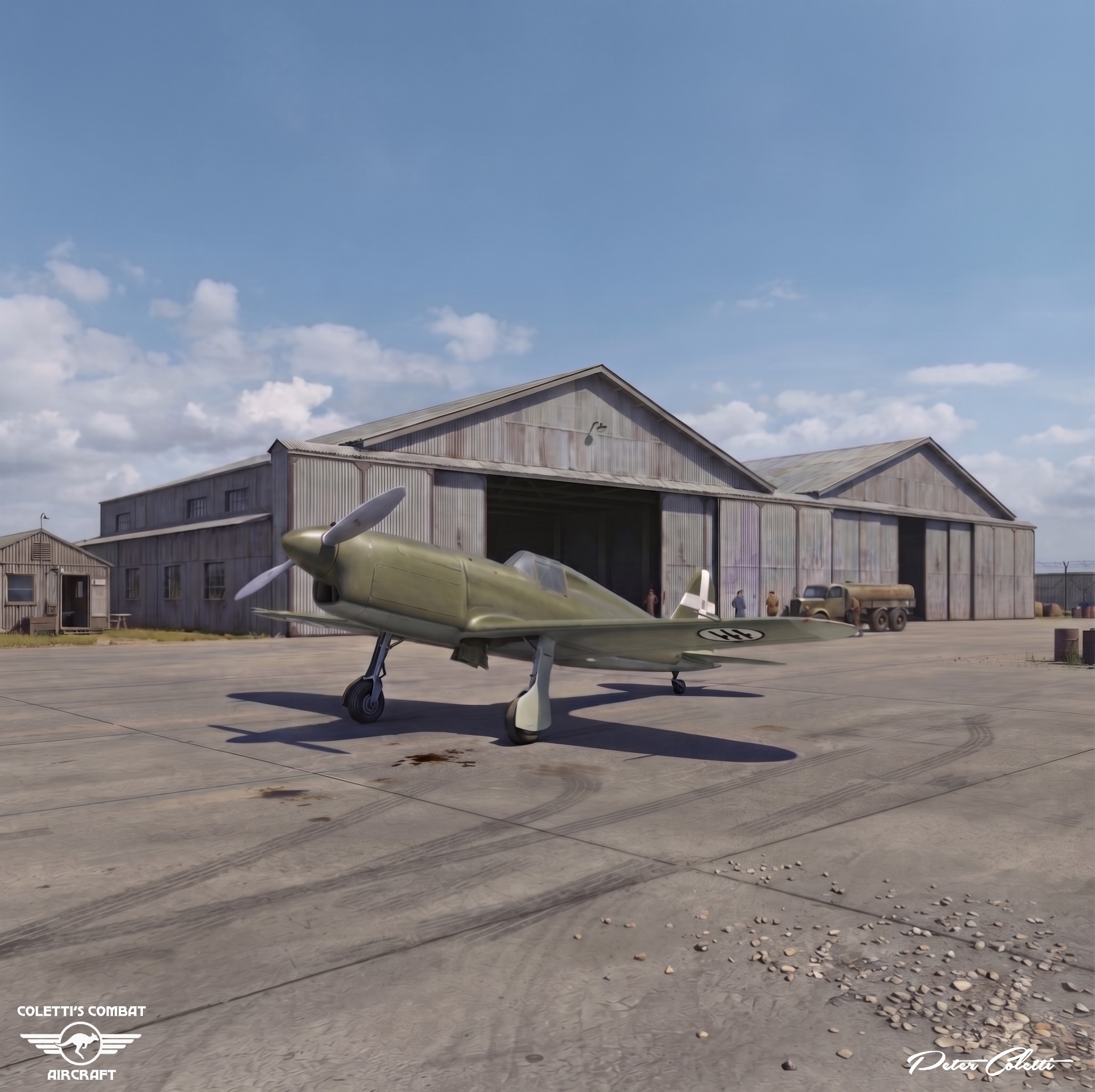
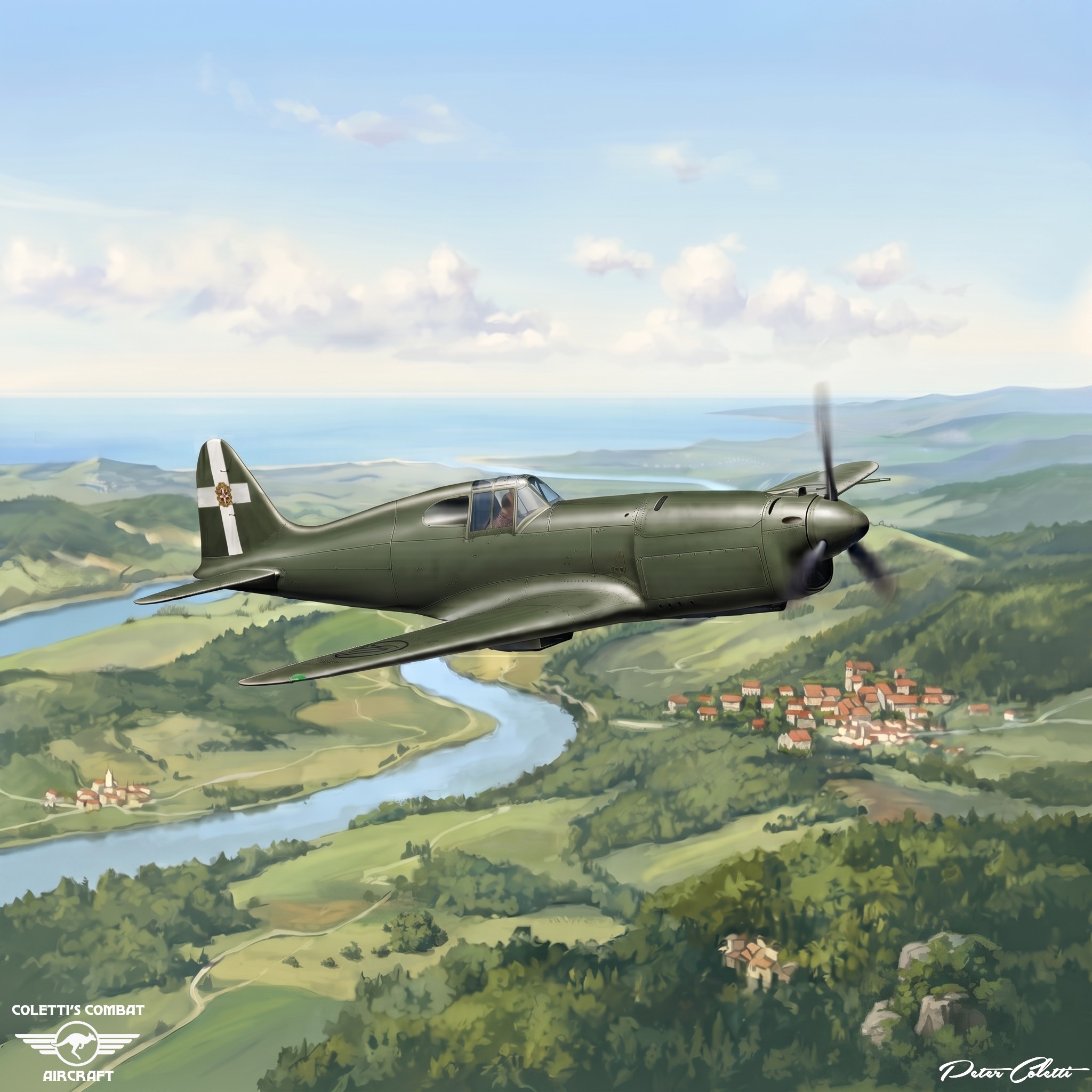
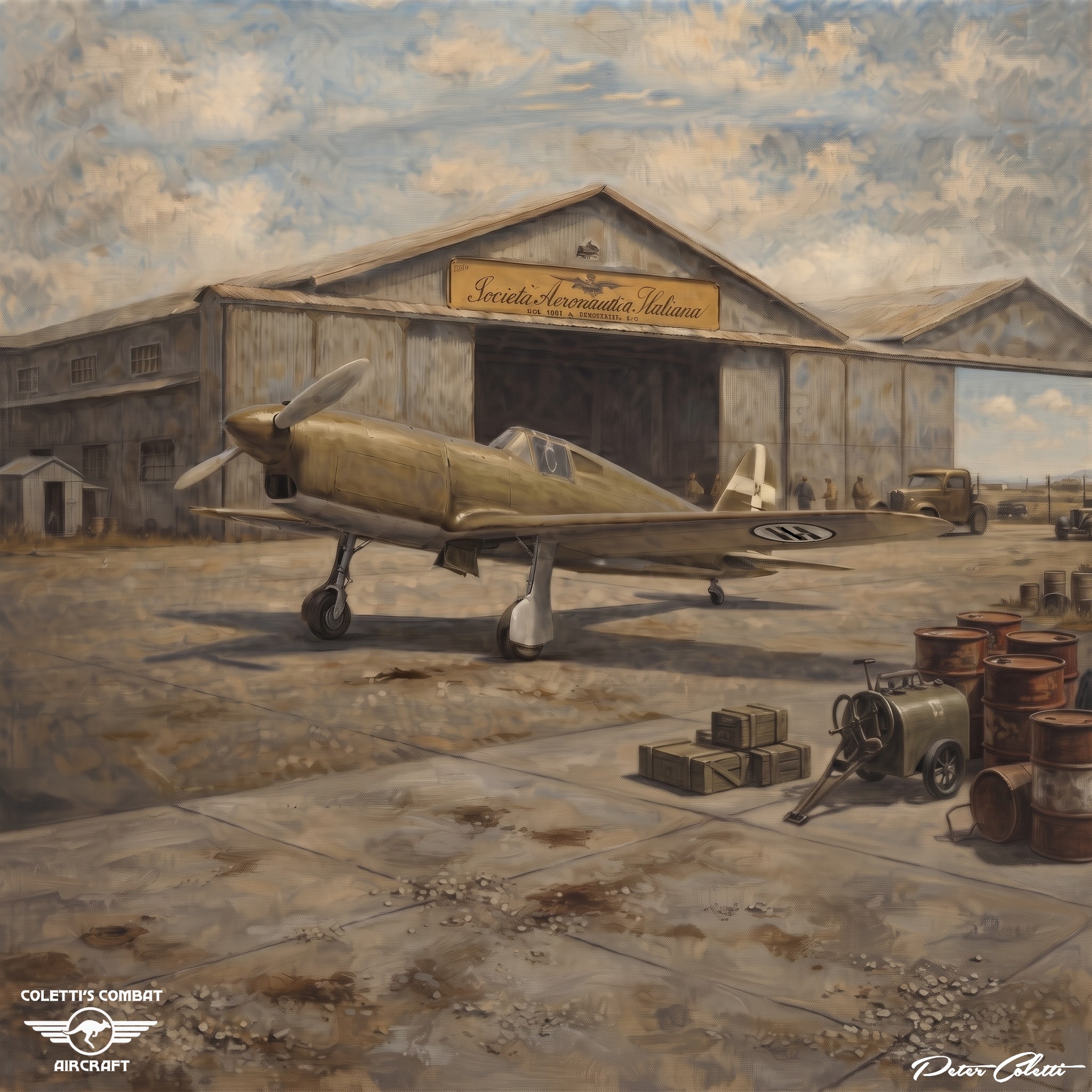
The Ambrosini SAI.107 emerged in 1940 as part of Italy’s search for alternative fighter concepts that could be produced quickly, cheaply, and with minimal use of strategic materials.
Italian industry faced chronic shortages of high‑grade alloys and powerful engines, and the Regia Aeronautica was eager to evaluate unconventional solutions that might deliver high performance without the industrial burden of conventional metal fighters.
Engineer Sergio Stefanutti, working at SAI‑Ambrosini, proposed a radical idea: a lightweight, extremely clean, wooden fighter powered by a mid‑power engine but capable of speeds comparable to contemporary frontline fighters.
The SAI.107 was built as a dedicated experimental aircraft to test this philosophy.
Construction of the prototype began in 1939, and the aircraft flew for the first time in early 1940.
It was sent to the Guidonia test centre for evaluation, where it immediately attracted attention for its remarkable speed relative to its modest power plant.
Design and Structure
Airframe
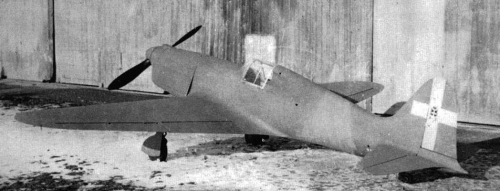
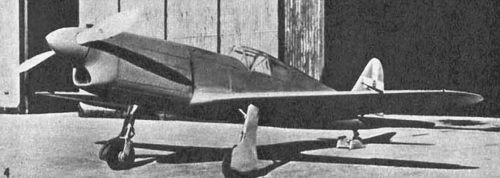
The SAI.107 was a single‑seat, low‑wing monoplane with a conventional tailwheel undercarriage.
Its defining characteristic was its all‑wood construction, using plywood skinning over a lightweight internal structure.
This approach reduced weight, simplified manufacturing, and conserved metal for other aircraft programmes.
The airframe was compact and aerodynamically refined, with:
Wingspan: approx. 9.00 m
Length: approx. 8.00 m
Wing area: approx. 13.1 m²
The small wing area resulted in a relatively high wing loading, which contributed to high speed but demanded careful handling at low speeds.
Aerodynamics
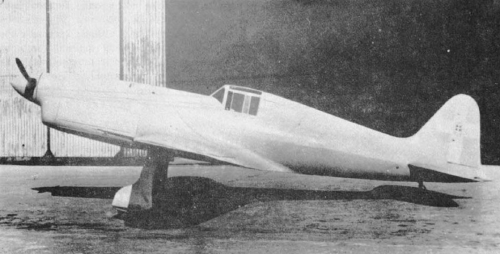
The SAI.107 featured exceptionally clean aerodynamic lines.
Early test flights used a long, faired windscreen that extended forward over the engine cowling to reduce drag.
Although effective aerodynamically, this design restricted forward visibility and was later replaced with a more conventional windscreen.
The tail surfaces were conventional in layout but sized to maintain stability at the aircraft’s high speeds.
Powerplant and Systems
Engine
The aircraft was powered by a 515 hp Isotta‑Fraschini Gamma R.C.35‑I, a 12‑cylinder inverted‑V air‑cooled engine.
Although not powerful by fighter standards, the engine’s narrow frontal area and air‑cooled simplicity suited the lightweight concept.
Cooling and Installation
The air-cooled Gamma required careful cowling design to ensure adequate airflow without compromising the aircraft’s aerodynamic cleanliness.
The inverted‑V layout also improved pilot visibility over the nose.
Armament
The SAI.107 prototype carried only a single 7.7 mm machine gun, installed for testing purposes.
It was never intended to serve as an operationally armed fighter in this configuration; its purpose was to validate the lightweight high‑speed concept.
Performance
Despite its modest engine, the SAI.107 delivered performance that surprised Italian test authorities.
Estimated Performance Figures
Maximum speed: 500–563 km/h (311–350 mph), depending on test conditions
Range: approx. 800 km
Empty weight: approx. 1,280 kg
Loaded weight: approx. 1,600 kg
These speeds placed the SAI.107 in the same general performance bracket as many early-war fighters powered by engines with nearly twice the horsepower.
Handling
Test pilots reported:
Excellent agility, owing to the aircraft’s low mass and compact dimensions
High responsiveness, especially at medium and high speeds
Demanding low-speed behaviour, a consequence of the high wing loading
The aircraft was considered promising enough that further development was encouraged.
Testing, Accident, and Programme Termination
The SAI.107 underwent official evaluation at Guidonia in 1940–41.
Its performance validated the lightweight fighter concept, but the programme suffered a major setback on 18 July 1941, when the sole prototype crashed during testing.
The accident killed the renowned Italian aviator Arturo Ferrarin, one of Italy’s most celebrated pilots.
The loss of Ferrarin cast a long shadow over the project.
Although the concept itself remained valid, the SAI.107 airframe was not rebuilt.
Italian authorities shifted their attention to more refined lightweight fighter designs, leaving the SAI. 107 as a one‑off experimental step.
Variants
The SAI.107 existed only as a single prototype.
No production variants or modified subtypes were built.
Operational and Historical Context
Italy’s Fighter Situation
During the early years of WWII, Italy’s frontline fighters—such as the Macchi C.200 and Fiat G.50—were already becoming outdated.
More advanced fighters were in development, but engine shortages and industrial limitations slowed progress.
The SAI.107 represented an alternative path: a fighter that could be built quickly and cheaply and in large numbers using non-strategic materials.
Its performance suggested that such an approach had merit.
Why It Did Not Proceed
Several factors prevented the SAI. 107 from advancing:
The fatal crash halted momentum.
The Regia Aeronautica prioritised more conventional fighters.
Italy’s industrial situation deteriorated as the war progressed.
Competing lightweight fighter projects emerged with more refined designs.
Legacy
Although it never entered production, the SAI.107 proved that a small, wooden airframe with a mid‑power engine could achieve impressive speeds.
It served as a technological stepping stone within Italy’s exploration of lightweight, high‑performance wooden fighters during WWII.
Its legacy lies in its role as a bold experimental concept that demonstrated what Italian aerodynamics and structural engineering could achieve under severe material constraints.