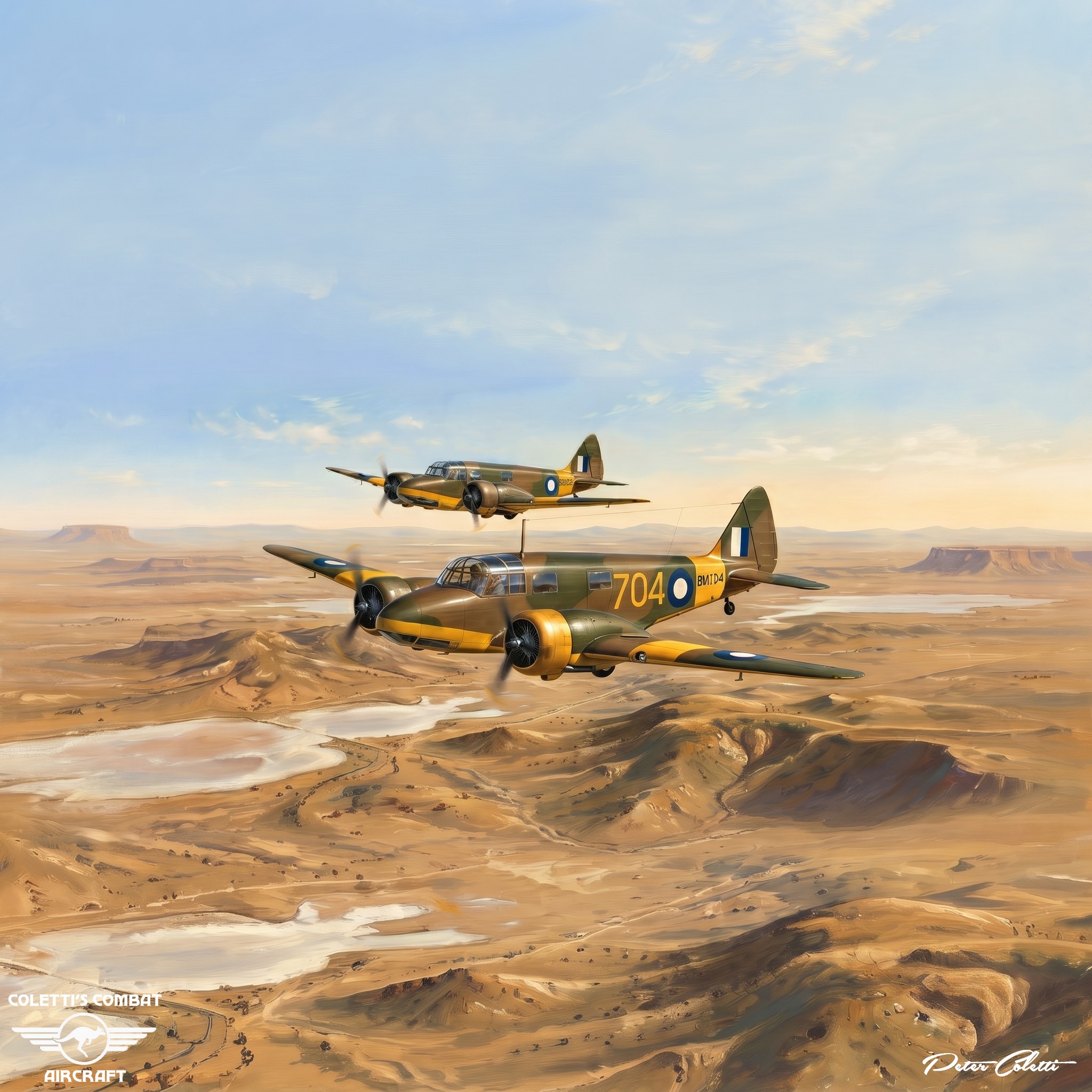
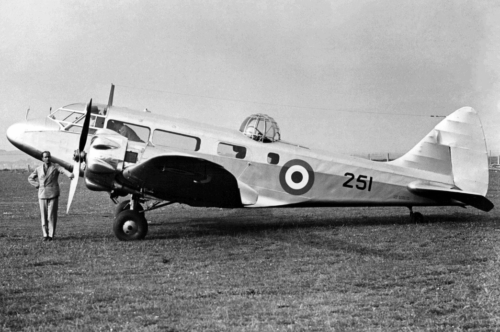
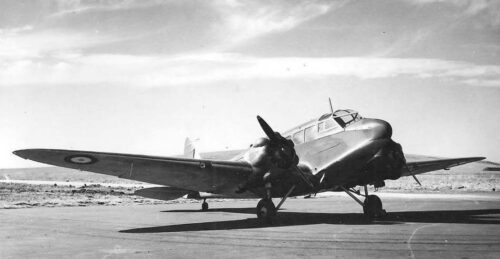
Overview The Airspeed Envoy was a British light transport aircraft developed in the mid‑1930s as an evolution of the earlier AS.5 Courier.
It became notable for its wide variety of engines, international civil use, and limited but interesting military service before and during WWII.
Development The Envoy project began in late 1933 as a more capable follow‑on to the Airspeed Courier, with the prototype flying on 26 June 1934.
It retained the wooden construction typical of Airspeed designs of the era, with fabric-covered control surfaces and a retractable undercarriage.
Key development points:
Designed as a multi‑purpose transport for airlines and private owners.
Standard cabin layout: one pilot + eight passengers.
Produced from 1934 to 1939 in three main series.
The prototype (G‑ACVH) served as Airspeed’s demonstrator and flew again in October 1934 after modifications.
The Envoy quickly attracted interest due to its modern features and competitive performance for a small twin‑engine aircraft.
Variants One of the most unusual aspects of the Envoy was the wide variety of engines used across its subtypes.
The major variants:
AS.6 — Wolseley AR.9 (200 hp)
AS.6A — Armstrong Siddeley Lynx IVC (240 hp)
AS.6D — Wright R‑760‑E2 Whirlwind (350 hp)
AS.6E — Walter Castor II (340 hp)
AS.6G — Wolseley Scorpio I (250 hp)
AS.6H — Wolseley Aries III (225 hp)
AS.6J / AS.6JM/C — Armstrong Siddeley Cheetah IX (350 hp)
Production series differences:
Series I — 17 built, no flaps.
Series II — 13 built, split flaps added.
Series III — further refinements and improvements.
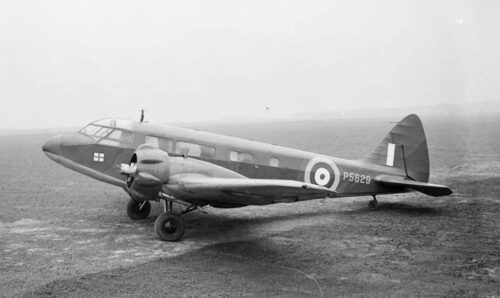
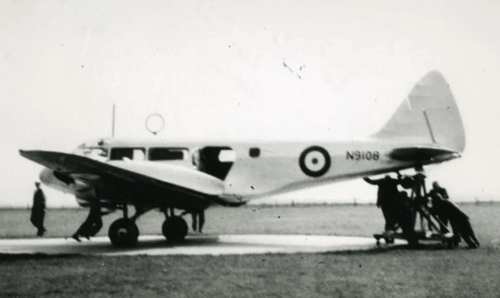
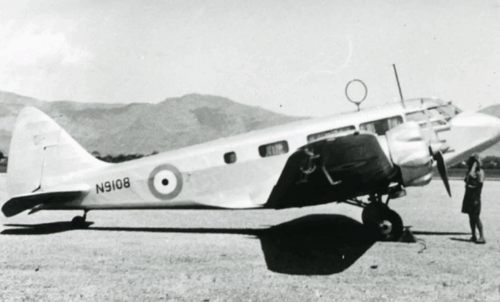
Operational History in WWII United Kingdom The RAF purchased a small number of Envoys for communications duties in India and Britain.
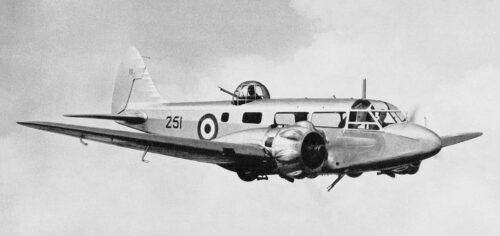
One aircraft continued RAF service during WWII; another was transferred to naval aviation.
The Envoy directly influenced the design of the Airspeed Oxford, of which 136 were ordered in 1936 as a modernised military trainer derived from the Envoy airframe.
Spain (Spanish Civil War) At least 10 envoys served with the Republicans, used for:
military transport
frontline reconnaissance
light bombing
Nationalists captured two aircraft (one damaged).
South Africa
South Africa purchased seven Envoys in 1936.
Three were militarised with front and dorsal machine-gun turrets and a crew of four.
Four civil aircraft could be rapidly converted for military use.
Used on domestic airline routes in peacetime.
Japan
Two aircraft were purchased in 1935.
One was operated by Japan Air Transport; the other by the Imperial Navy as the Airspeed LXM.
Japan purchased a licence for production, and Mitsubishi built 11 aircraft.
Early tests with Japanese engines were unsuccessful, but later British engines were used.
All Japanese‑built Envoys went to civil aviation (NKYKK).
Czechoslovakia & Slovakia
Six aircraft entered Czechoslovak civil service from 1935, flying routes including Prague–Moscow.
One AS.6E later served briefly with the Luftwaffe and then the Slovak Air Force before being destroyed in a 1943 test flight fire.
Notable Civil Use Operated by British airlines such as North Eastern Airways and Olley Air Service.
Two aircraft were used by Ansett Airlines in Australia.
One Envoy (G‑AEXX) was selected as the Royal Flight aircraft for King George V after outperforming the de Havilland Dragon Rapide in trials.
Summary
The Airspeed Envoy was a versatile, modern light transport of the 1930s that saw widespread civil use and modest but diverse military service.
Its influence on the Airspeed Oxford ensured its legacy in RAF training throughout WWII, even though the Envoy itself served only in small numbers.
Specifications (AS.6E Envoy)
Crew
1 pilot
Capacity
6 passengers
Length
34 ft 6 in (10.52 m)
Wingspan
52 ft 4 in (15.95 m)
Height
9 ft 6 in (2.90 m)
Wing area
339 sq ft (31.5 m²)
Empty weight
4,057 lb (1,840 kg)
Gross weight
6,300 lb (2,858 kg)
Powerplant
2 × Armstrong Siddeley Cheetah IX seven-cylinder radial engine,
345 hp (257 kW) each
Performance
Maximum speed
210 mph (340 km/h, 180 kn) at 7,300 ft (2,230 m)
Cruise speed
192 mph (309 km/h, 167 kn) at 75% power and 7,300 ft (2,230 m)
Range
650 mi (1,050 km, 560 nmi) at 62.5% power and 10,000 ft (3,050 m)