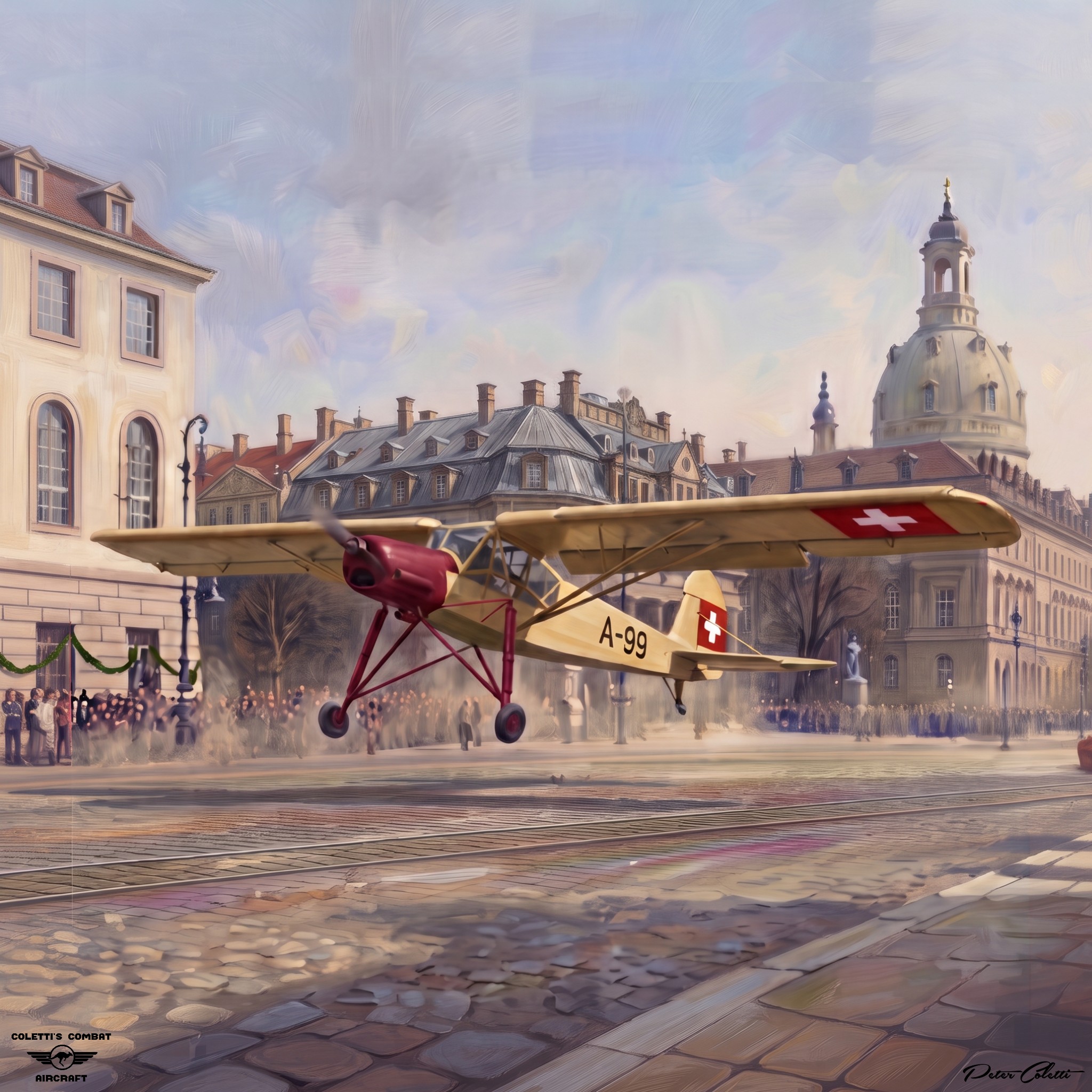
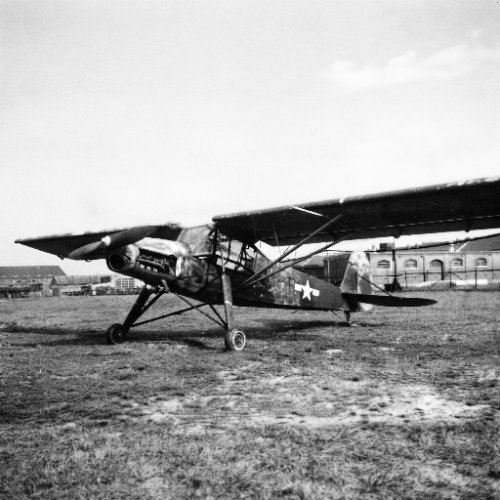
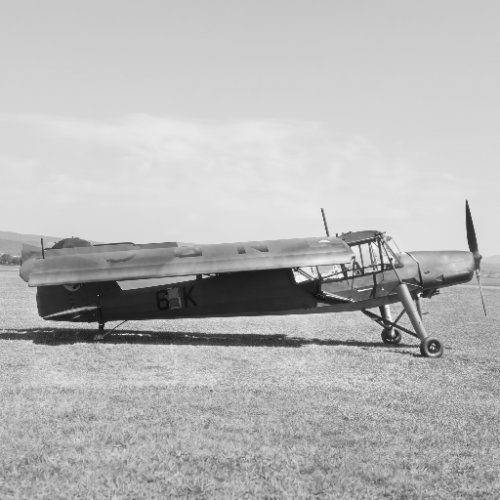
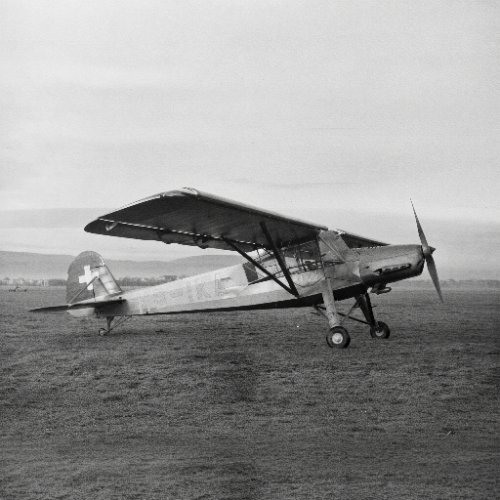
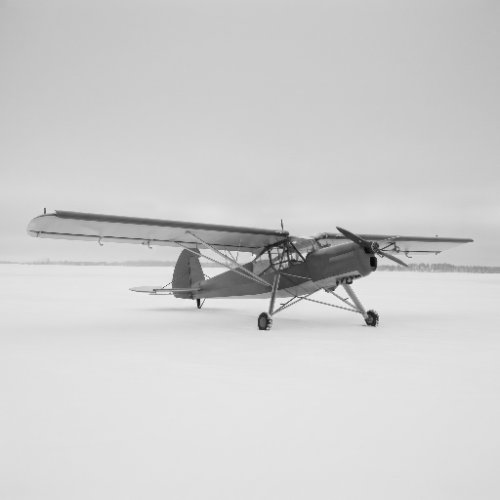
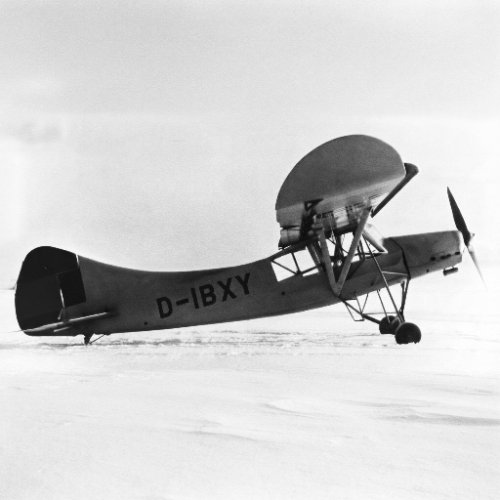
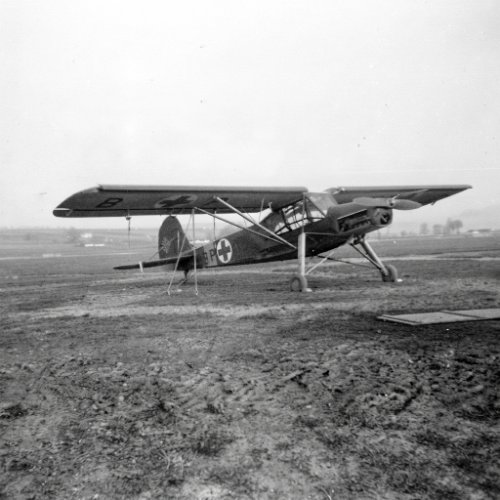
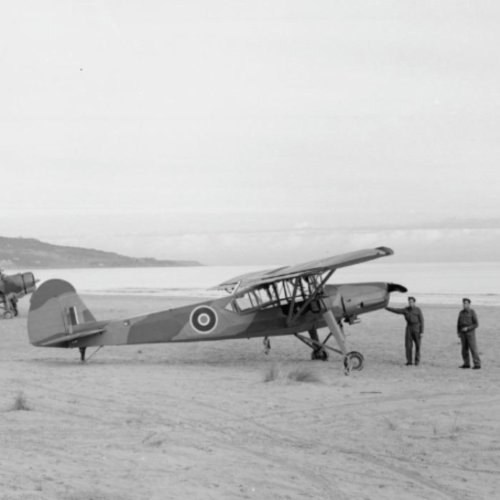
The Fieseler Fi 156 Storch (“Stork”) was one of the most remarkable aircraft of the Second World War and remains one of the most successful Short Take-Off and Landing (STOL) aircraft ever built.
Designed in Germany during the mid-1930s, it combined extraordinarily low-speed handling with the ability to operate from tiny improvised landing areas.
Unlike fighters or bombers that achieved fame through speed and firepower, the Storch earned its reputation through utility.
It served as a liaison aircraft, artillery spotter, reconnaissance platform, ambulance aircraft, command transport, and courier.
The type became closely associated with senior German commanders and participated in some of the most famous special operations of the war.
Origins and Development
German Requirement
In 1935 the German Air Ministry (Reichsluftfahrtministerium, or RLM) issued a requirement for a modern army cooperation and liaison aircraft capable of:
Operating near front lines.
Using extremely short and rough landing grounds.
Carrying officers, observers, or medical personnel.
Providing aerial observation and artillery spotting.
Operating from locations inaccessible to conventional aircraft.
The requirement demanded unprecedented low-speed control and field performance.
Fieseler’s Solution
The aircraft company founded by aerobatic champion Gerhard Fieseler responded with a radical design created principally by engineers Reinhold Mewes and Erich Bachem.
Instead of pursuing speed, the designers focused entirely on controllability at very low airspeeds.
The prototype, designated Fi 156 V1, first flew on 24 May 1936.
Flight testing quickly demonstrated exceptional performance, outperforming competitors and validating the unconventional design philosophy.
Production began shortly afterwards, and operational deliveries commenced in 1937.
Design Philosophy
The Storch was designed around one objective:
Maximum controllability at minimum speed.
Virtually every feature of the aircraft contributed towards this goal.
Airframe Design
High-Wing Configuration
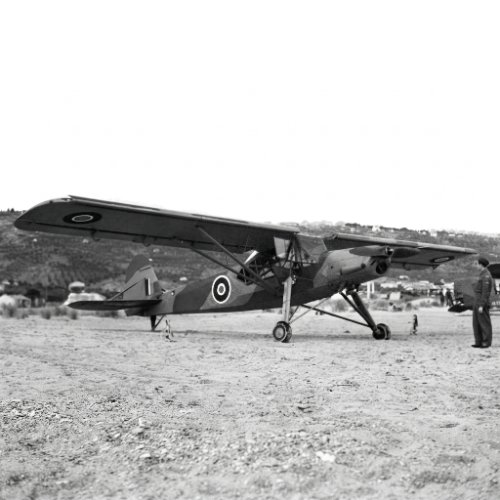
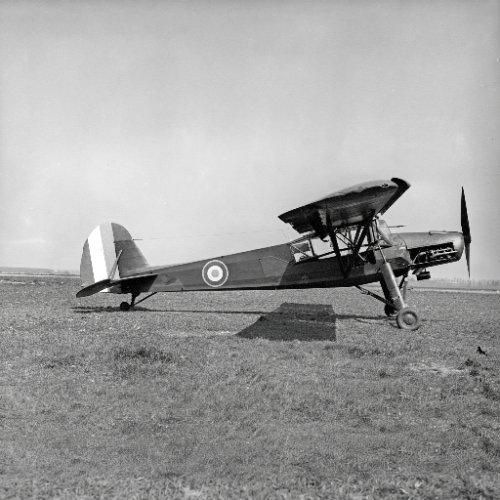
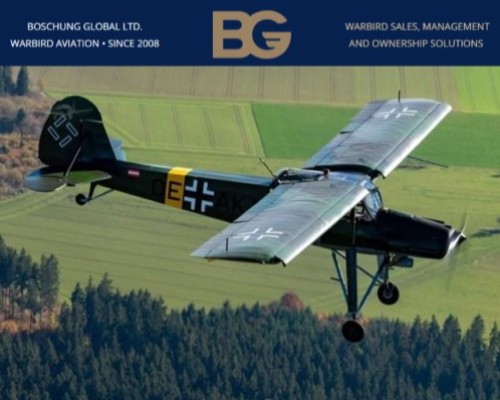
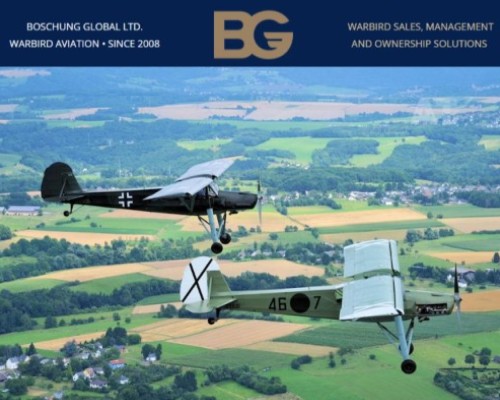
The aircraft used a strut-braced high wing.
Advantages included:
Excellent visibility downward.
Enhanced low-speed stability.
Better clearance over rough terrain.
Simplified operation from unprepared surfaces.
Extensive Glazing
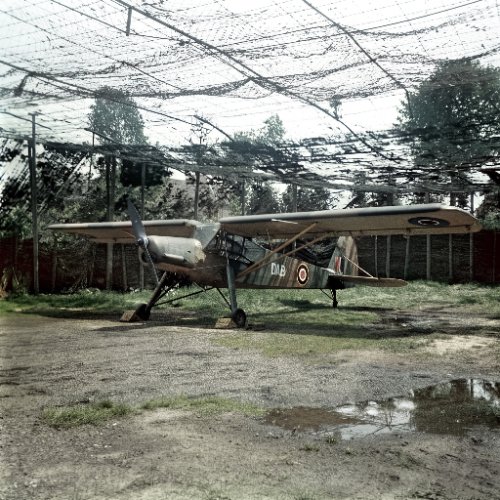
The cockpit featured exceptionally large windows extending into the roof and sides.
Benefits included:
Outstanding visibility.
Better reconnaissance capability.
Improved artillery observation.
Easier communication with troops on the ground.
The resulting appearance gave the aircraft a distinctive “glasshouse” look.
Long-Travel Landing Gear
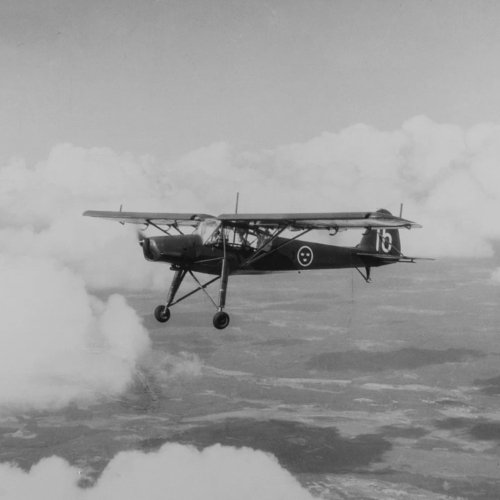
Perhaps the aircraft’s most visually distinctive feature was its extremely long landing gear.
The gear incorporated:
Long stroke oleo-pneumatic shock absorbers.
Significant vertical travel.
Excellent rough-field capability.
This arrangement allowed the aircraft to absorb steep landings on uneven terrain that would damage conventional aircraft.
The long legs also inspired the nickname “Storch” because they resembled the legs of a stork.
STOL Innovations
The Fi 156’s extraordinary performance came from an advanced high-lift wing system.
Automatic Leading-Edge Slats
The entire leading edge incorporated automatic slats.
These slats:
Opened automatically at low speed.
Delayed wing stall.
Maintained control at extreme angles of attack.
Improved lift during take-off and landing.
Large Slotted Flaps
Large trailing-edge flaps increased lift considerably during low-speed flight.
They enabled:
Very low stall speeds.
Steep approaches.
Extremely short landing rolls.
Drooping Ailerons
The ailerons functioned partly as additional flaps.
This increased:
Lift.
Roll control at slow speeds.
Short-field capability.
Powerplant
Most production variants used the:
Argus As 10 series inverted V-8 engine
Features included:
Air-cooled design.
Approximately 240 horsepower.
Good reliability.
Simple maintenance requirements.
The inverted arrangement improved pilot visibility compared to upright engines and reduced overall aircraft height.
Flying Characteristics
The Storch became legendary because of its unusual handling.
Low-Speed Flight
It could safely fly at speeds around:
50 km/h (31 mph)
This was dramatically slower than most aircraft of the era.
In strong winds, observers often described the aircraft as appearing almost stationary relative to the ground.
Take-Off Performance
The Fi 156 could become airborne in approximately:
45 metres (150 feet) under favourable conditions.
Landing Performance
Landing distances could be as short as:
18 metres (60 feet) with a modest headwind.
No contemporary operational aircraft matched these capabilities.
Technical Specifications (Fi 156 C-2)
Crew 2-3
Length 9.9 m
Wingspan 14.25 m
Height 3.03 m
Powerplant 1 × Argus As 10C-3 V-8
Power: 240 hp
Maximum Speed 175 km/h
Cruise Speed: Approximately 150 km/h
Range 380-400 km
Service Ceiling Approximately 5,270 m
Stall Speed About 50 km/h
Operational Roles
Liaison Aircraft
This was the aircraft’s primary function.
It carried:
Staff officers.
Commanders.
Couriers.
Dispatches.
The ability to land close to front-line units made it invaluable.
Artillery Observation
The Storch frequently directed artillery fire.
Observers could:
Detect targets.
Track shell impacts.
Relay corrections to artillery units.
Its slow speed and excellent visibility were major advantages.
Reconnaissance
The type conducted:
Tactical reconnaissance.
Battlefield observation.
Route surveys.
Unit location reporting.
Medical Evacuation
Special ambulance versions carried casualties from forward areas.
The aircraft’s STOL capability allowed evacuation from locations where ordinary aircraft could not operate.
prototype
Service During World War II
Early War Campaigns
The Storch saw extensive use during:
Poland (1939)
Norway (1940)
France (1940)
Balkans campaigns
Soviet Union (Eastern Front)
North Africa
Wherever German forces advanced, Storch aircraft usually followed close behind.
The Storch became strongly associated with Field Marshal Erwin Rommel.
Rommel used the aircraft extensively for:
Battlefield inspections.
Command visits.
Rapid travel between units.
Front-line observation.
Its ability to land almost anywhere in the desert made it particularly useful.
Operation Eiche (Gran Sasso Rescue)
The Storch’s most famous mission occurred on 12 September 1943.
Italian dictator Benito Mussolini was being held prisoner at the remote Gran Sasso mountain resort.
German commandos successfully raided the location.
A Fi 156 Storch then landed on the tiny rocky plateau and extracted Mussolini despite extremely challenging conditions.
The overloaded aircraft managed to take off from the mountaintop and escape successfully.
This operation became one of the most famous aviation episodes of the war.
Final Days of the Third Reich
During the Battle of Berlin in April 1945, the Storch undertook some of the last flights into and out of the German capital.
A Storch famously landed near the Brandenburg Gate and Tiergarten area, operating from improvised airstrips amid intense combat.
Major Variants
Fi 156 A Series
Initial production version.
Limited production.
Established operational configuration.
Fi 156 B
Experimental improvement.
Retractable leading-edge slats.
Slightly higher top speed.
Not adopted for large-scale production.
Fi 156 C Series
The most important production series.
C-1
Three-seat liaison aircraft.
C-2
Observation version.
Defensive machine gun installation.
C-3 Universal multi-role cockpit arrangement.
Most significant wartime model.
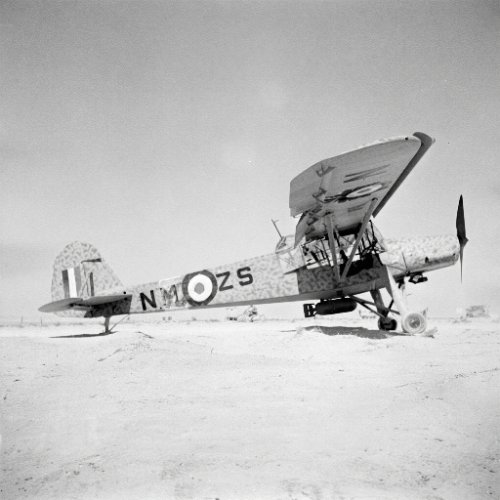
C-3/Trop
Tropicalised version.
Dust filtration equipment.
North African operations.
C-5
Camera installations and extended mission equipment.
Fi 156 D
Ambulance version.
Features:
Enlarged cabin.
Side loading door.
Stretcher accommodation.
Medical evacuation role.
Fi 156 E
Experimental tracked undercarriage version intended for difficult terrain and snow operations.
Fi 156 K-1
Export version supplied to Sweden.
Production
Approximately 2,900 aircraft were produced during and immediately after the wartime period.
Production occurred not only in Germany but also later in occupied and post-war facilities in:
France
Czechoslovakia
Romania
Soviet-controlled territories
Post-War Career
The end of the war did not end the Storch’s service life.
France
Morane-Saulnier continued production as the:
M.S. 500 Criquet
These aircraft served both civilian and military operators for decades.
Czechoslovakia
Production continued as the:
Mráz K-65 Čáp
using the established Fi 156 design.
Many post-war examples remained active into the 1960s and, in some countries, even later.
Assessment and Legacy
The Fieseler Fi 156 Storch occupies a unique place in aviation history.
It was never heavily armed, fast, or glamorous, yet it achieved something few aircraft have ever matched:
operational capability almost independent of conventional airfields.
Its combination of:
Automatic leading-edge slats,
Large high-lift devices,
Excellent visibility,
Long-stroke landing gear,
Exceptional slow-speed control,
produced an aircraft that could operate where almost no other fixed-wing aircraft could.
The Storch helped establish many of the principles later used in modern STOL aircraft and remains one of the finest examples of specialised utility aircraft design ever produced.
Nearly ninety years after its first flight, it is still widely regarded as one of the greatest STOL aeroplanes in aviation history.
Digital Artworks by Peter Coletti.
Sources
The Fieseler Fi 156 Storch-Jan Forsgren.
Fieseler Fi 156 Storch (Yellow Series)-Dariusz Karnas.
The Fieseler Fi-156 Storch-David Myhra.
Fieseler Fi-156 Storch in Italian Service-Gregory Alegi.
Gerhard Fieseler: The Man Behind the Storch-Neil Robinson.