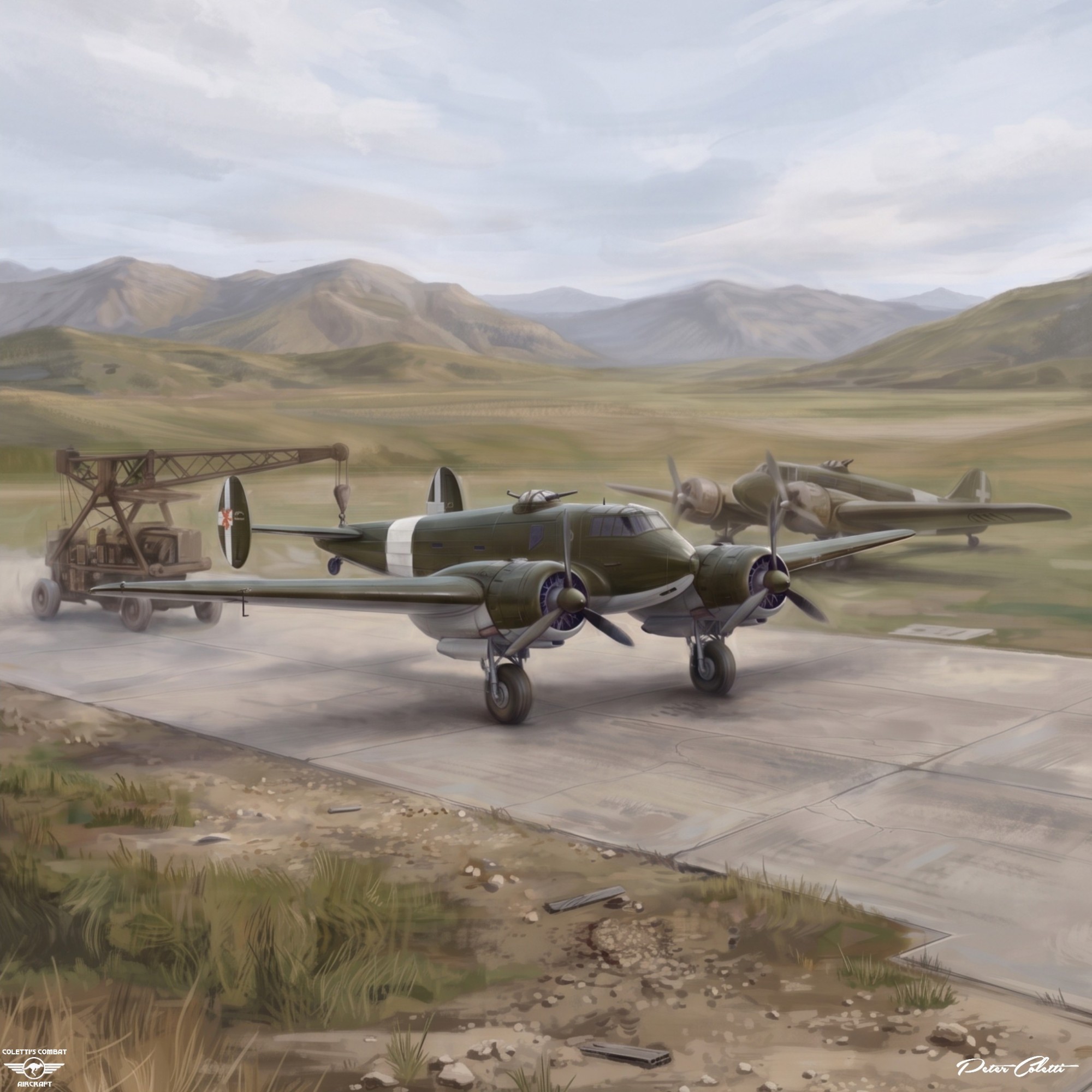
In the early years of World War II, the Regia Aeronautica recognised an urgent operational requirement for a dedicated, heavily armed ground-attack and anti-tank aircraft capable of suppressing armoured columns, fortified positions, and enemy shipping.
To fulfil this mandate, CANSA (Construzioni Aeronautiche Novaresi S.A.), the subsidiary of Fiat located in Cameri, initiated development of an aggressive twin-engine tactical combat aircraft in 1940.
Directed by lead engineer Giacomo Mosso, the design team set out to create a low-wing monoplane built around a heavy central cannon and robust defensive armament.
The resulting aircraft, designated the FC.20 (Fiat-Cansa), was envisioned as Italy’s counterpart to specialised foreign attack planes like the British Bristol Beaufighter or German Henschel Hs 129.
The prototype made its maiden flight on April 12, 1941.
While aerodynamic evaluations showed acceptable baseline handling, flight testing quickly exposed severe performance and engineering drawbacks.
The airframe suffered from directional stability issues, insufficient engine power relative to its mounting gross weight, and structural vibrations when firing heavy-calibre ordnance.
Despite these deficiencies, the critical need for ground-support assets forced a drawn-out and troubled development cycle.
Following various design iterations, a small batch of production airframes was completed, though the type never achieved widespread frontline success.
Technical Design and Structural Layout
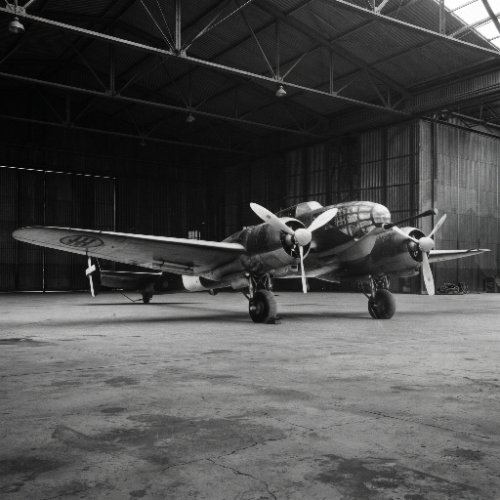
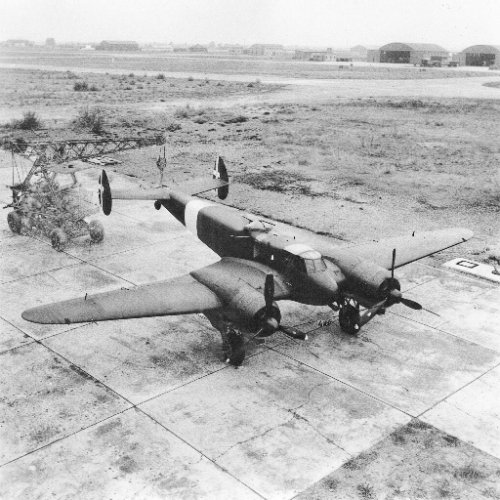
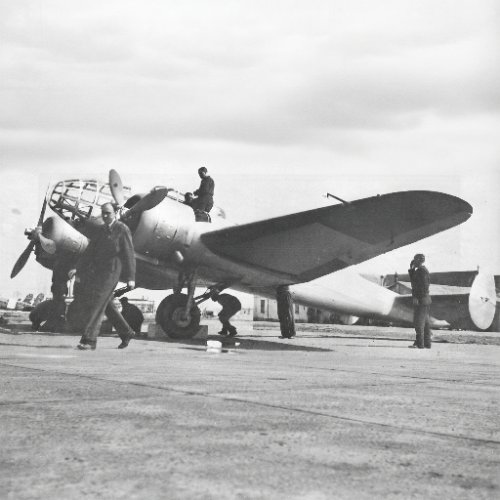
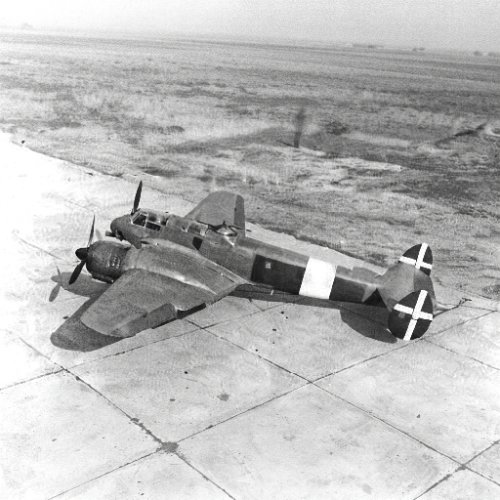
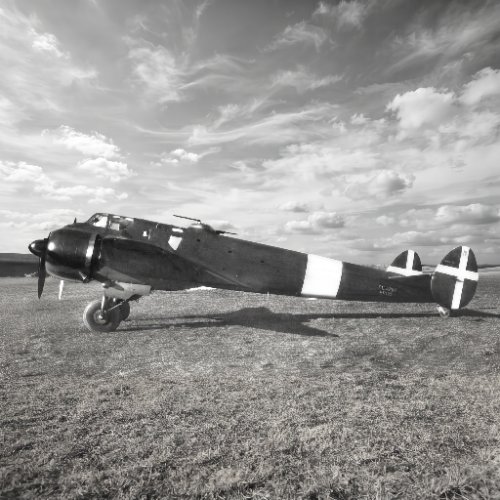
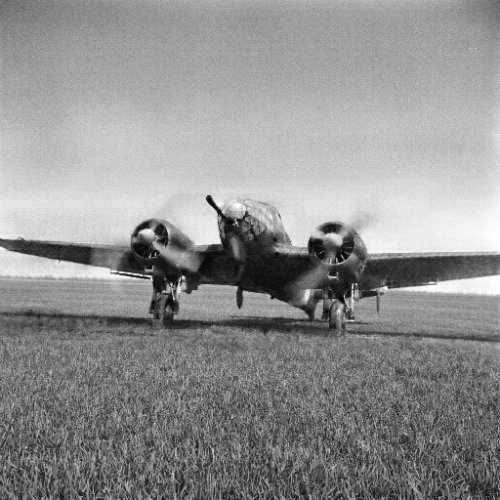
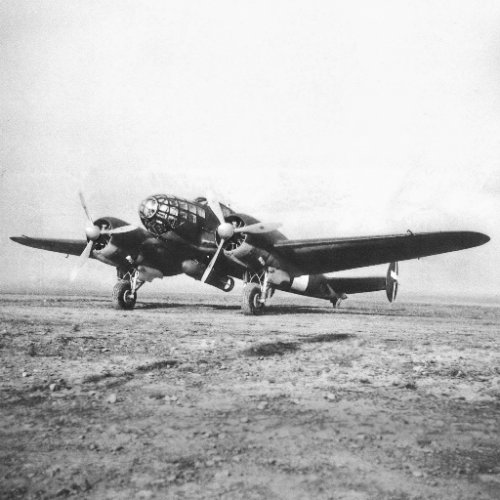
The Fiat-Cansa FC.20 was constructed as a twin-engine, low-wing cantilever monoplane utilising a mixed structural approach of steel tubing, light-alloy metal skinning, and wooden components.
Fuselage and Structure: The forward fuselage was structured around a welded steel-tube framework covered with light-alloy panels, while the rear section and empennage utilised a semi-monocoque duralumin structure.
Empennage: To clear the turbulent wake of the engines and provide stable gun-firing platforms, the aircraft featured a twin-tail (double-finned) vertical configuration mounted on the ends of a rectangular-section tailplane.
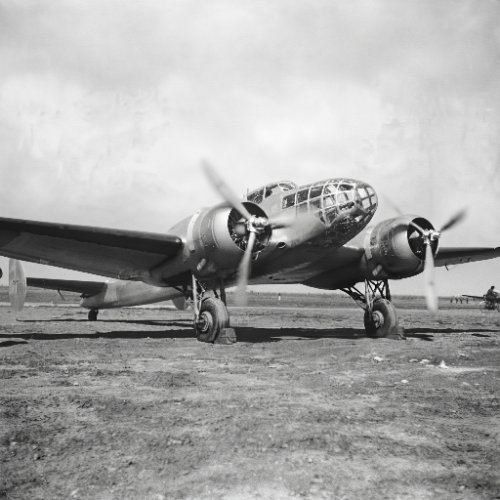
Landing Gear: The aircraft was equipped with a conventional retractable tailwheel undercarriage.
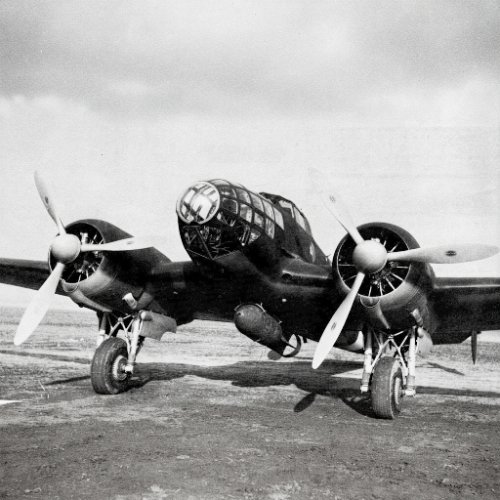
The main gear legs retracted rearward into the engine nacelles, though the large wheels remained partially exposed in the retracted position to simplify the mechanical retraction system.
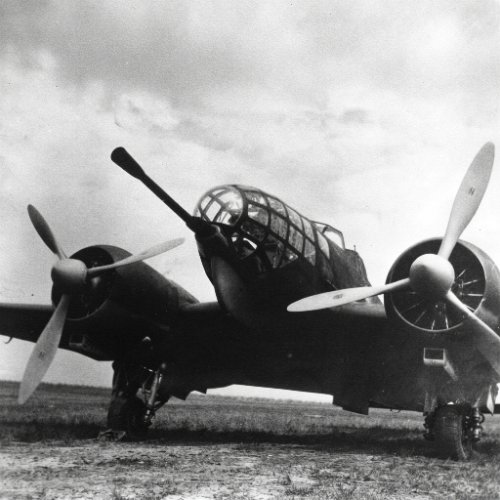
Powerplant: Power was provided by two Fiat A.74 R.C.38 14-cylinder, air-cooled radial piston engines, each rated at 840 hp (630 kW).
The engines drove three-bladed, variable-pitch metal propellers.
Accommodation: The crew of two (pilot and gunner/observer) sat in tandem enclosed cockpits under a continuous multi-pane greenhouse canopy.
Performance Specifications (FC.20bis Production Standard)
Crew: 2 (Pilot and rear gunner/radio operator)
Length: 11.92 m (39 ft 1 in)
Wingspan: 16.00 m (52 ft 6 in)
Height: 3.60 m (11 ft 10 in)
Wing Area: 39.00 m² (419.8 sq ft)
Empty Weight: 4,250 kg (9,370 lb)
Gross/Max Takeoff Weight: 6,250 kg (13,778 lb)
Powerplant: 2 × Fiat A.74 R.C.38 14-cylinder radial engines, 840 hp each
Maximum Speed: 430 km/h (267 mph / 232 kn) at 4,500 m (14,760 ft)
Cruising Speed: 340 km/h (211 mph)
Operational Range: 1,000 km (620 mi / 540 nmi)
Service Ceiling: 6,700 m (21,980 ft)
Variants and Modifications
Due to persistent development challenges and changing military requirements, the FC.20 went through multiple experimental iterations:
FC.20 (Prototype): The initial prototype evaluated in 1941, featuring a heavy 37 mm cannon and standard defensive positions.
FC.20bis: The primary production configuration. The nose-mounted heavy cannon was removed, and the armament was shifted to forward-firing machine guns and an under-fuselage bomb bay designed for tactical strike missions.
Approximately 10 to 12 production airframes of this variant were built.
FC.20ter: An experimental version intended to test alternative heavier cannon installations and reinforced structure, but it did not advance past preliminary testing.
FC.20quater: A variant outfitted with alternative engine selections (such as Isotta Fraschini Delta engines) in an attempt to correct the power-to-weight deficits of the base airframe, though performance gains remained marginal.
Armament
The defining characteristic of the FC.20 series was its heavy, specialised offensive weaponry:
FC.20 (Original Variant): One massive 37 mm Breda or Cannone da 37/54 anti-tank cannon mounted rigidly in the lower nose, intended to pierce armour plates, alongside two wing-mounted 12.7 mm Breda-SAFAT machine guns.
FC.20bis (Production Variant): The 37 mm cannon was omitted due to excessive recoil and reliability issues. Instead, offensive armament comprised three fixed, forward-firing 12.7 mm Breda-SAFAT heavy machine guns mounted in the nose.
Defensive: One flexible, manually operated 12.7 mm Breda-SAFAT heavy machine gun housed in a dorsal rear position or ring mount.
Ordnance: An internal bomb bay located beneath the central fuselage capable of carrying up to 500 kg (1,100 lb) of conventional drop ordnance, typically configured as a cluster of general-purpose or anti-personnel fragmentation bombs.
Operational History and WWII Context
The operational career of the Fiat-Cansa FC. 20 was brief, troubled, and largely insignificant on a strategic scale.
Entering service evaluation late in 1941 and early 1942, the aircraft was met with immediate scepticism by frontline pilots.
By 1942, the air war demanded high-speed, highly manoeuvrable fighters or heavily armoured ground-attack planes capable of surviving intense anti-aircraft fire; the FC.20 offered neither.
The twin A.74 engines provided sluggish performance when fully loaded, and the aircraft proved vulnerable to Allied fighters.
Furthermore, technical failures plagued the heavy weapons systems, and the structural integrity of the airframe struggled under combat loads.
While a small operational training unit or experimental flight section received a handful of FC.20bis airframes for evaluation in northern Italy; they were never deployed to active frontline combat theatres like North Africa or the Eastern Front.
By 1943, the type was relegated entirely to secondary training, local base hacking, and experimental trials.
Following the Italian armistice in September 1943, the remaining FC.20 airframes were abandoned or scrapped, closing out the history of one of Italy’s more ambitious yet flawed wartime aircraft design attempts.