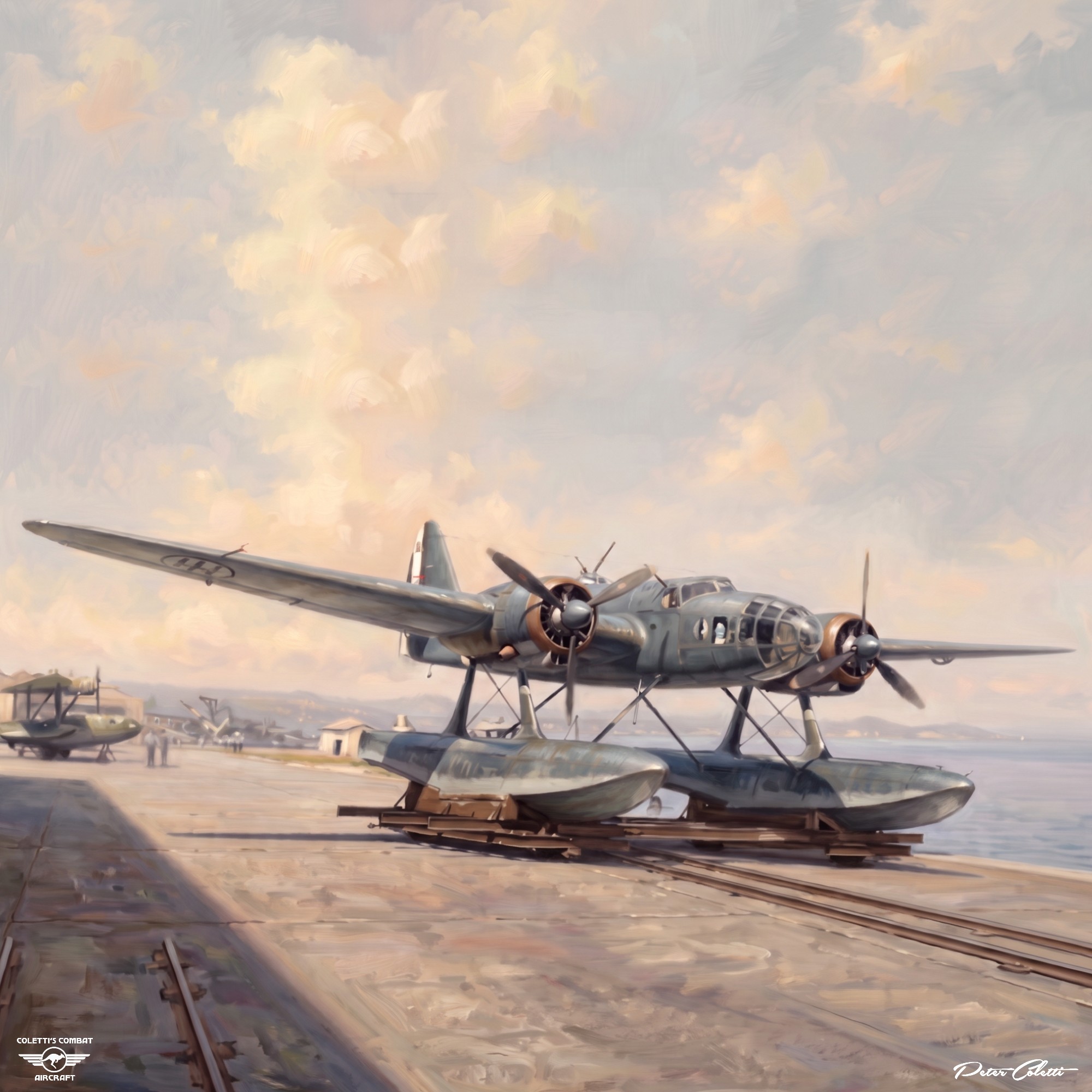
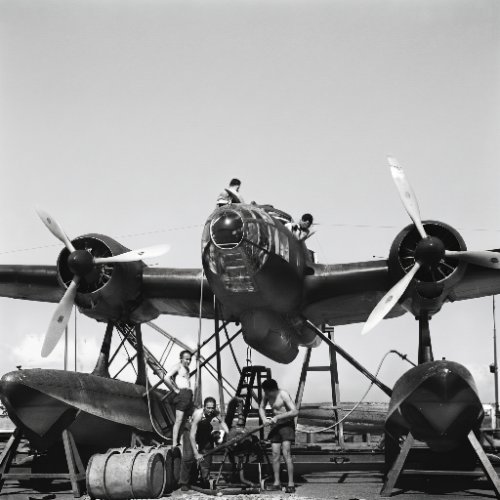
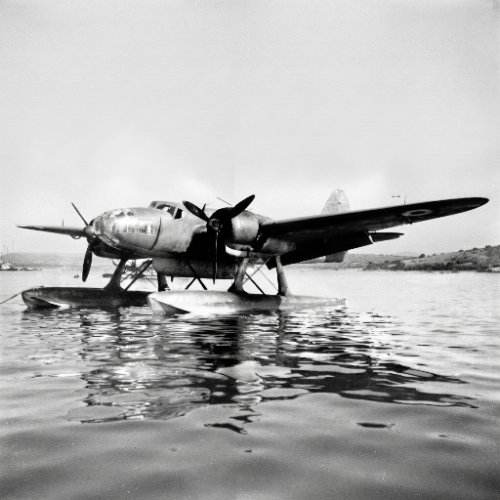
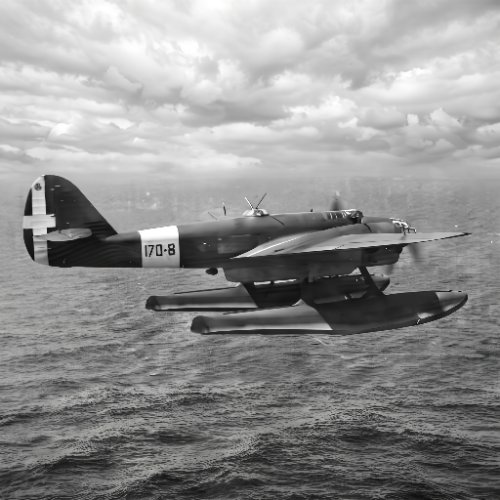
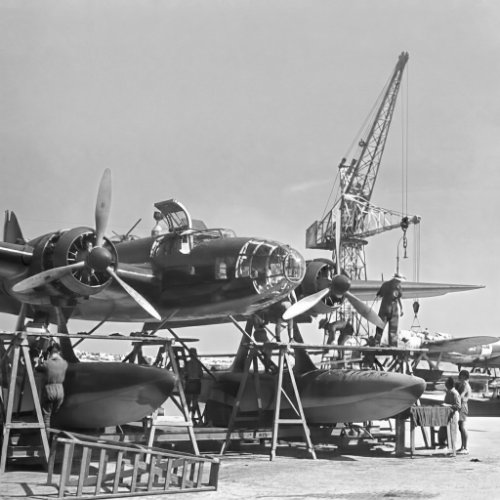
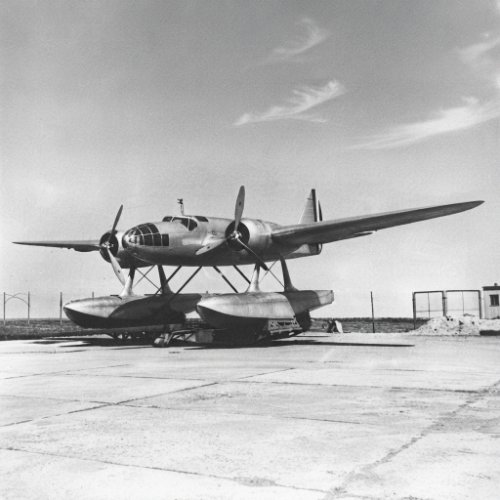
Introduction and Development Context In 1937, the Regia Aeronautica and the Regia Marina (Italian Royal Navy) issued a joint specification calling for a modern, high-performance, long-range maritime reconnaissance and anti-submarine floatplane to replace ageing operational types like the CANT Z.501.
Fiat’s naval aviation subsidiary, CMASA (Construzioni Meccaniche Aeronautiche Società Anonima) based in Marina di Pisa, answered the call.
The design bureau assigned the project to engineer Manlio Stiavelli (whose surname formed the “S” in the aircraft’s designation, with “RS” standing for Ricognizione Stiavelli), working in collaboration with Lucio Lazzarino.
Stiavelli envisioned a clean, all-metal monoplane floatplane that broke away from the fragile, parasol-wing wooden or mixed-construction flying boats traditionally favoured by the Italian military.
The first prototype made its maiden flight in May 1939.
Flight tests revealed exceptional speed, pleasant handling, and aerodynamic cleanliness that easily outpaced expectations.
However, structural evaluations exposed vulnerabilities in the heavy stress loads experienced by the float attachment struts during rough-water operations.
Rectifying these engineering challenges delayed serial production, meaning the first production machines did not reach operational units until mid-1941.
Despite this delay, the RS.14 matured into one of the most effective and structurally sound indigenous Italian maritime aircraft of World War II.
Technical Design and Structural Layout
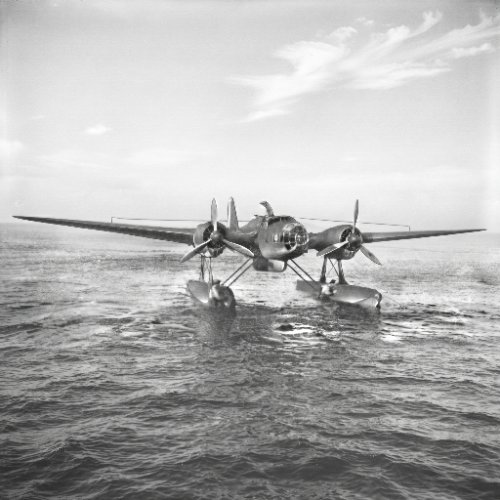
The FIAT RS.14 was a twin-engine, cantilever mid-wing monoplane of all-metal construction, utilising a stressed-skin light-alloy framework.
Fuselage and Internal Layout: The fuselage featured a semi-monocoque structure with a smooth aerodynamic profile.
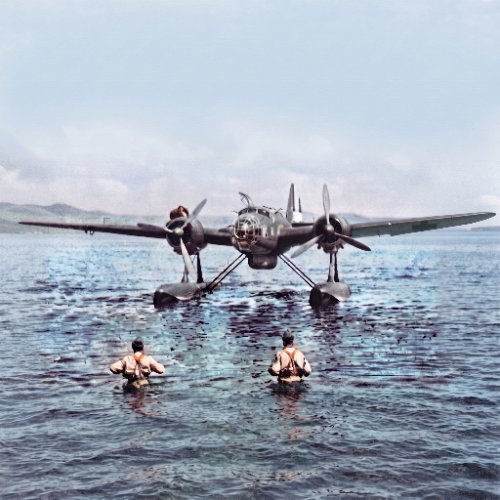
The nose was heavily glazed to provide optimal visibility for the bombardier, observer, and navigator.
The pilot and co-pilot sat side-by-side in an enclosed cockpit, directly behind which was a dedicated compartment for the radio operator and flight engineer.
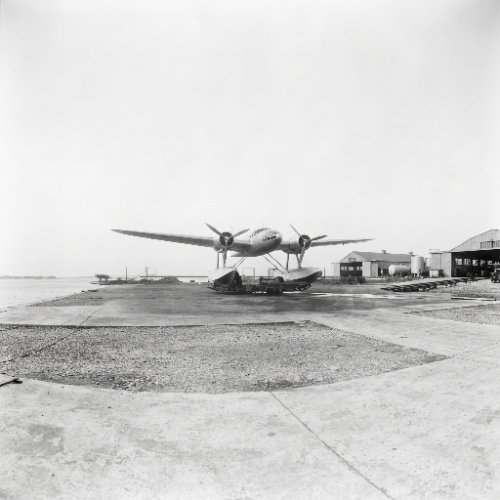
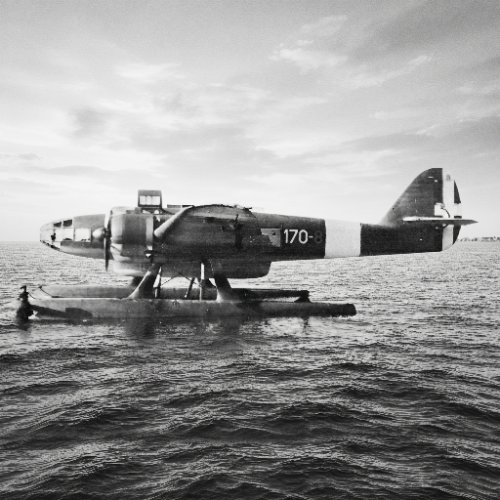
Float Undercarriage: The aircraft was supported by two large, single-step light-alloy metal floats attached to the underside of the fuselage and engine nacelles via robust, streamlined steel-strut bracing structures.
Powerplant: Power was provided by two Fiat A.74 R.C.38 14-cylinder, air-cooled radial piston engines, each rated at 840 hp (618 kW) at 3,800 metres.
The engines drove three-bladed, variable-pitch metal propellers.
Fuel was stored in internal leak-resistant wing tanks, offering an impressive operational range for long-distance maritime sweeps.
Empennage: The tail unit featured a conventional cantilever layout anchored by a single, tall vertical fin and balanced rudder, ensuring stable directional control during single-engine operations.
Performance Specifications (RS.14 Series)
Crew: 4 to 5 (Pilot, co-pilot, navigator/bombardier, radio operator, and gunner)
Length: 14.10 m (46 ft 3 in)
Wingspan: 19.54 m (64 ft 1 in)
Height: 5.63 m (18 ft 6 in)
Wing Area: 50.00 m² (538 sq ft)
Empty Weight: 5,470 kg (12,059 lb)
Gross/Max Takeoff Weight: 8,470 kg (18,673 lb)
Powerplant: 2 × Fiat A.74 R.C.38 14-cylinder radial engines, 840 hp each
Maximum Speed: 390 km/h (242 mph / 210 kn) at altitude
Cruising Speed: Approximately 300–330 km/h
Operational Range: 2,500 km (1,553 mi / 1,350 nmi)
Service Ceiling: 6,300 m (20,670 ft)
Variants and Modifications
Production quantities span approximately 186 total airframes (including prototypes), built across distinct batches:
RS.14 (Prototypes & Series I): The initial batch of production aircraft (e.g., Series I, delivered starting in mid-1941) used primarily for operational conversion, pilot training, and general coastal patrol duties.
RS.14B (Series II): Introduced enhancements to defensive weaponry and incorporated a specialised removable ventral “canoe-shaped” bomb bay pod underneath the fuselage, enabling the carriage of anti-submarine and conventional drop ordnance.
RS.14C (Series III): The most numerous production variant.
These aircraft featured minor structural refinements to the fuselage, optimised internal equipment layouts, and were often optimised exclusively for long-range reconnaissance or air-sea rescue (SAR) coordination, occasionally omitting the ventral bomb pod to maximise fuel range.
AS.14 (Landplane Variant): Developed in 1943 as a potential ground-attack and tactical assault aircraft.
The floats were removed and replaced with conventional, retractable wheeled landing gear.
Intended to carry a heavy offensive punch comprising a 37 mm anti-tank cannon and multiple 12.7 mm machine guns, the single prototype flew successfully on August 11, 1943.
However, the impending collapse of the Italian armistice halted further development before serial production could begin.
Armament
Defensive: One 12.7 mm Breda-SAFAT or Scotti heavy machine gun housed in a dorsal rotating top turret (such as a Lanciani “Delta” mounting).
Two 7.7 mm Breda-SAFAT machine guns firing from lateral beam ports or the side fuselage positions.
Offensive / Anti-Submarine:
Provision for up to 400 kg (880 lb) of ordnance housed within the ventral canoe fairing, typically comprising anti-submarine depth charges, general-purpose bombs, or anti-shipping mines.
Operational History and WWII Context
Entering active military service in the summer of 1941, the RS.14 units were assigned to strategic maritime reconnaissance squadrons stationed along the Italian coastline, Sicily, Sardinia, and the Aegean.
They played a critical operational role in the Mediterranean theatre, undertaking gruelling convoy escort patrols, anti-submarine sweeps, and fleet-shadowing missions.
Despite being fundamentally a reconnaissance and patrol platform, the RS.14 occasionally found itself engaged in unexpected aerial combat.
A notable incident occurred on May 9, 1942, when an operational RS.14 patrolling near Malta intercepted British Supermarine Spitfires dispatched from Royal Navy carriers (HMS Eagle and USS Wasp); aggressive manoeuvring by the Italian crew reportedly caused confusion, resulting in a collision between opposing British fighters that led to their loss.
As Allied air dominance grew across the Mediterranean through 1943, operating slow floatplanes became hazardous.
During the Allied invasions of Sicily and the Italian mainland, numerous grounded or moored RS.14s were destroyed to prevent capture.
Following the Italian armistice in September 1943, surviving RS.14s were divided: several flew with the Italian Co-Belligerent Air Force alongside Allied forces on anti-submarine patrols, while others were utilised in reduced capacities.
Remarkably, the sturdy construction of the RS.14 ensured its survival into the post-war era.
Several remaining airframes were reconditioned and utilised by the newly established Italian Air Force (Aeronautica Militare) for VIP transport, utility, and coastal liaison duties well into the late 1940s, with final examples retired around 1948–1950.