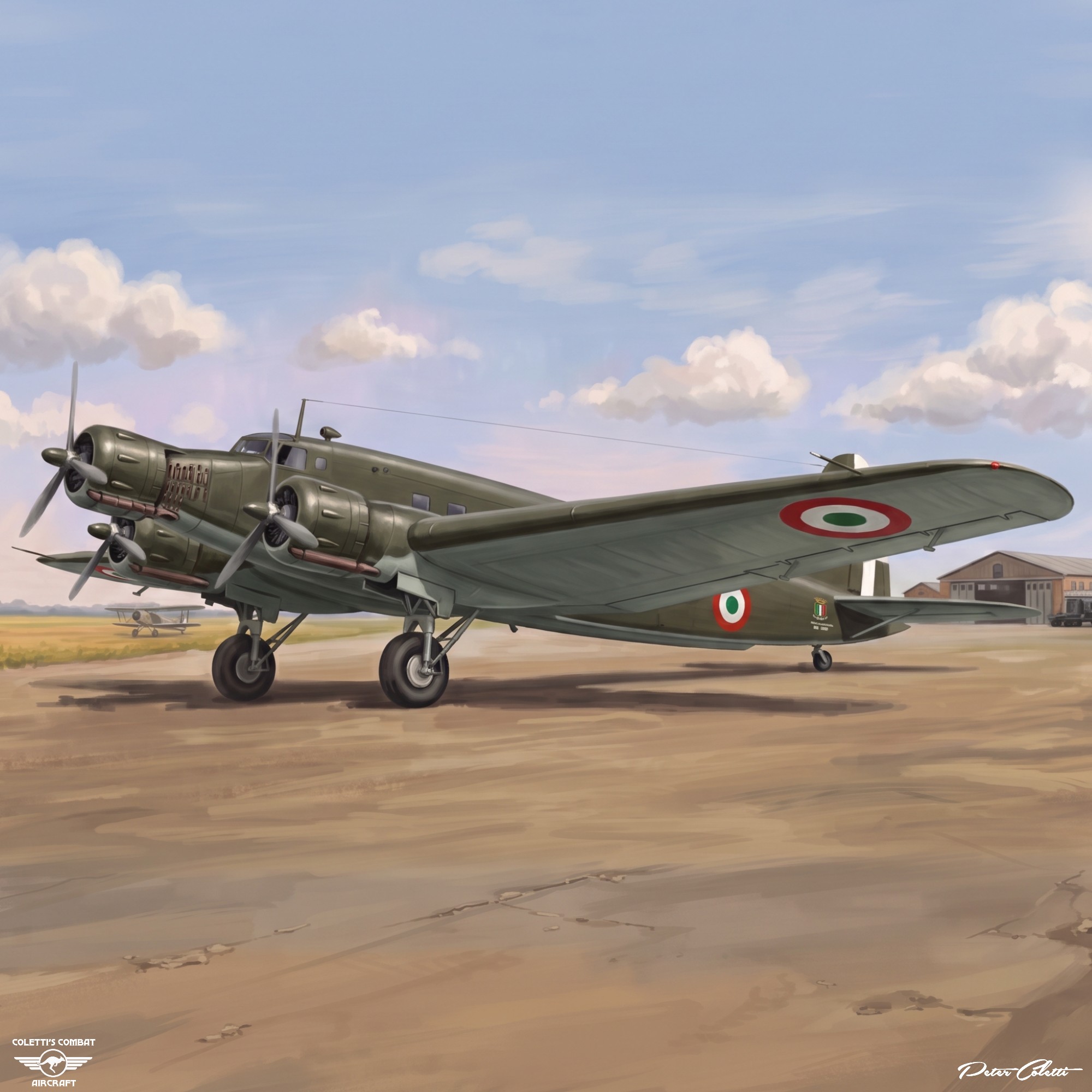
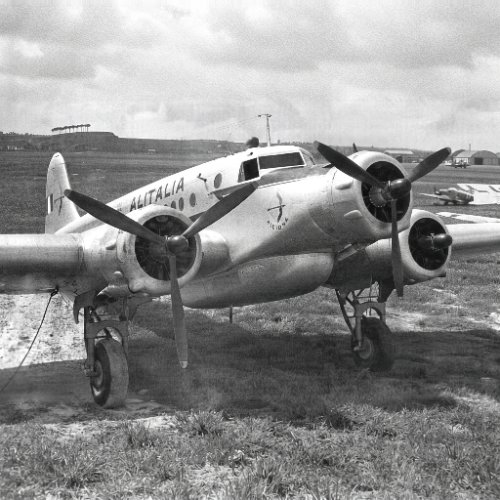
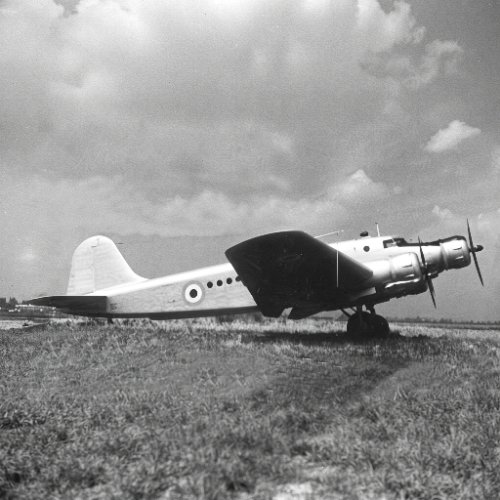
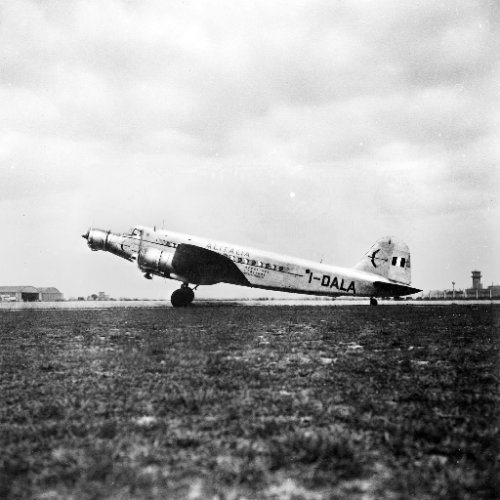
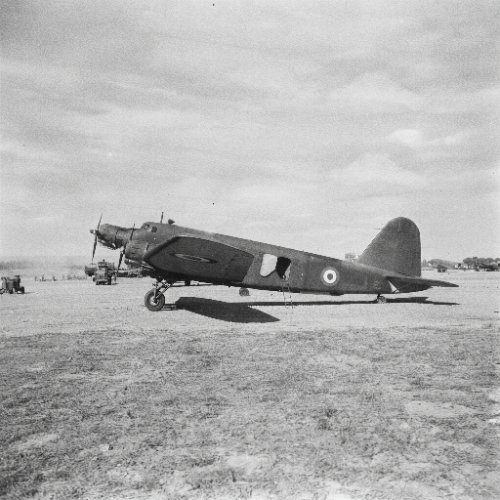
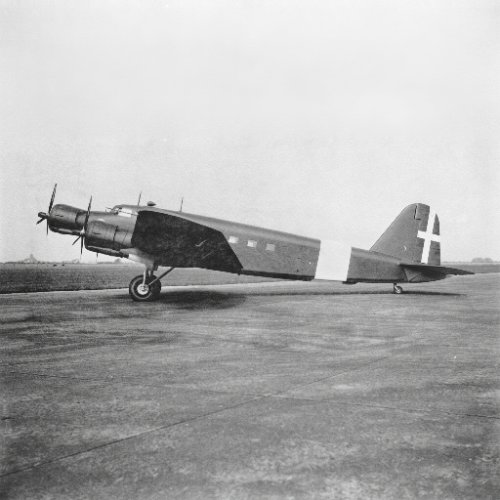
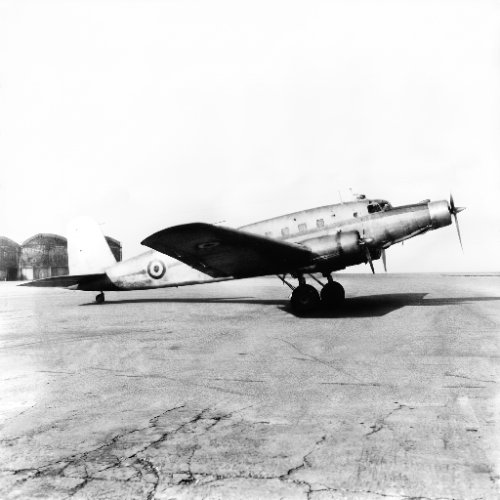
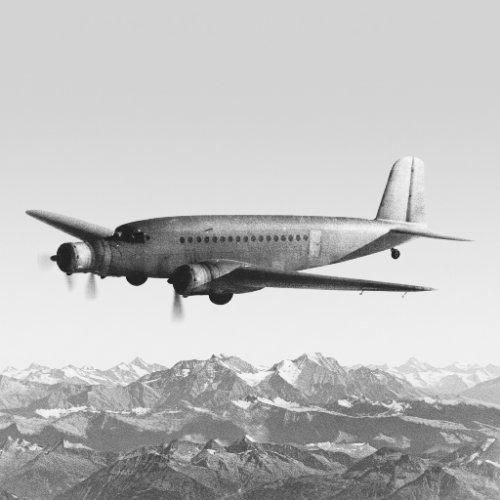
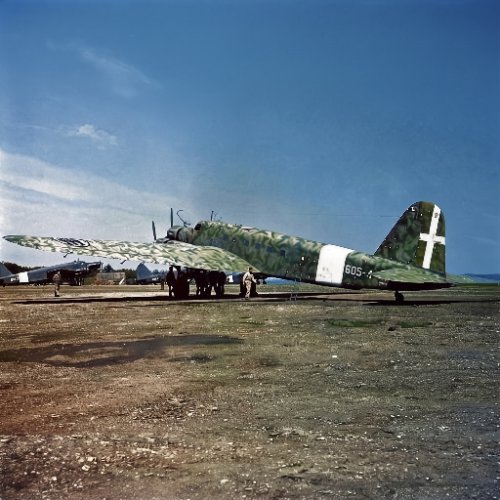
The FIAT G.12 was designed in 1939 under the direction of aeronautical engineer Giuseppe Gabrielli as a modern, medium-to-long-range civilian airliner intended for international and transcontinental routes operated by Avio Linee Italiane (ALI), the airline controlled by Fiat.
Recognising the growing necessity for high-capacity civil transports in the late pre-war era, Gabrielli conceived a low-wing, three-engine monoplane capable of balancing efficient passenger payload capacities with competitive cruising speeds.
The prototype made its maiden flight on October 15, 1940.
By this time, Italy had entered World War II, shifting the nation’s priorities away from commercial aviation.
Recognising the robust structural qualities, reliability, and cargo capacity of the design, the Regia Aeronautica quickly requisitioned the initial civil models and ordered militarised variants.
The G.12 rapidly transitioned from a prospective luxury airliner into one of the foundational heavy transport assets of the Italian military, seeing service across the Mediterranean, North African, and Eastern European theatres.
Over its production span (which extended even past the 1943 armistice through 1949), a total of 104 airframes across various military and civil modifications were built.
Technical Design and Structural Layout
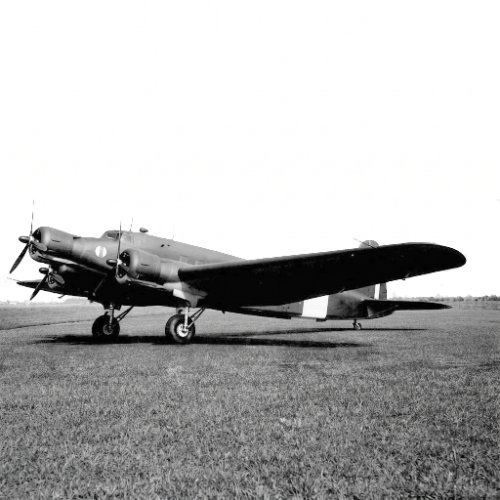
The FIAT G.12 was an all-metal, low-wing cantilever monoplane.
Its construction represented advanced Italian aeronautical engineering of the period, utilising a durable light-alloy framework and stressed-skin aluminium cladding.
Fuselage and Wings: The fuselage featured a semi-monocoque structure of oval cross-section.
The cantilever wing was built around a multi-spar duralumin structure, divided into a central section and detachable outer panels, housing integrated fuel tanks.
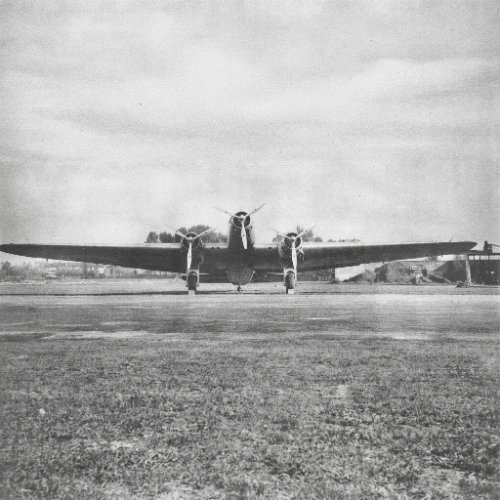
Powerplant: The aircraft relied on a three-engine configuration (trimotor): one radial engine mounted in the nose and two in nacelles integrated into the low wings.
The standard military variants were powered by three Fiat A.74 R.C.42 14-cylinder, air-cooled radial piston engines, each generating between 770 and 800 hp, driving three-bladed variable-pitch metal propellers.
Landing Gear: It featured a conventional retractable landing gear, with the heavy main wheels retracting rearward into the under-wing engine nacelles.
The tailwheel remained fixed.
Accommodation: The flight deck accommodated a crew of four (pilot, co-pilot, navigator, and radio operator/flight engineer).
Depending on the configuration, the main cabin could accommodate up to 24 civilian passengers or 14 to 22 fully equipped troops or equivalent metric tons of priority freight and military cargo accessed via a large portside cargo and passenger door.
Performance Specifications (G.12T Military Transport Variant)
Crew: 4
Capacity: 14 to 22 troops or up to 24 civilian passengers
Length: 20.10 m (65 ft 11 in)
Wingspan: 28.60 m (93 ft 10 in)
Height: 4.90 m (16 ft 1 in)
Wing Area: 113.00 m² (1,216 sq ft)
Empty Weight: 9,420 kg (20,768 lb)
Gross/Max Takeoff Weight: 15,000 kg (33,069 lb)
Powerplant: 3 × Fiat A.74 R.C.42 14-cylinder radial engines, 770–800 hp each
Maximum Speed: 390 km/h (242 mph / 210 kn) at 5,000 m (16,400 ft)
Cruising Speed: 303 km/h (188 mph)
Operational Range: 2,300 km (1,430 mi)
Service Ceiling: 8,500 m (27,900 ft)
Variants and Modifications
Because the G.12 bridged commercial and military domains, numerous sub-variants were developed to adapt to shifting wartime demands, powerplants, and range requirements:
G.12C: The initial civil series designed for ALI, configured as a 14-to-18 passenger airliner powered by Fiat A.74 R.C.42 engines.
G.12T (Traspunto): The primary mass-produced military transport variant.
Capable of carrying troops, cargo, or being adapted for airdropping supplies.
Later production blocks featured defensive machine-gun installations.
G.12CA & G.12LA: Civil and commercial variants powered alternatively by Alfa Romeo 128 radial engines.
G.12LB: A commercial passenger variant fitted with three 810 hp Bristol Pegasus 48 radial engines.
G.12LP: A version modified to accept American Pratt & Whitney R-1830-S1C3-G Twin Wasp engines.
G.12GA & “Gondar”: Long-range transport models outfitted with auxiliary internal fuel tanks to maximise operational radius for strategic supply missions.
Built to execute ultra-long-distance diplomatic and communication flights (such as the planned Axis connection flights between Rome and Tokyo), these featured massive fuel loads and extended ranges approaching 8,000 km.
G.12TR: Converted passenger variants featuring reinforced flooring, a specialised cargo loading hatch, and up to 40 troop/passenger configurations.
Armament
While conceived as an unarmed commercial transport, military variants (particularly the G.12T) were often fitted with defensive weaponry to survive contested airspace:
Defensive Guns: Typically armed with two or three 7.7 mm or 12.7 mm Breda-SAFAT machine guns installed in dorsal positions or lateral beam windows to fend off intercepting fighters.
However, armament was frequently omitted on long-range or high-priority courier runs to save weight and maximise fuel/cargo payload.
Operational History and WWII Context
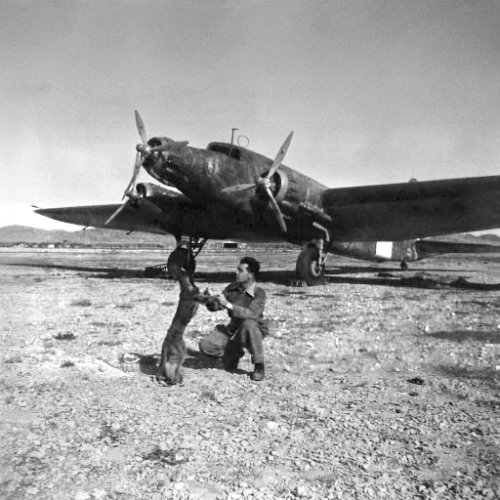
The G.12 entered active military service in 1941, arriving at a critical juncture for the Axis powers.
As the North African campaign intensified, Axis forces faced an acute logistical crisis across the Mediterranean.
The G.12, alongside the Savoia-Marchetti SM.75 and SM.82, formed the backbone of the vital aerial bridge supplying Axis armies in Libya and Tunisia.
Operating day and night, G.12s hauled fuel, munitions, replacement engines, and food to North Africa, returning to Italy with wounded personnel.
However, as Allied air and naval dominance over the Mediterranean grew absolute by late 1942 and early 1943, transport operations became increasingly hazardous.
A dark milestone occurred during the spring of 1943, when heavy Allied bombing raids on Tunisian and Sicilian airfields (such as El Aouin, Palermo, and Trapani) destroyed numerous grounded Axis transports.
Interceptions by Allied fighters over the Sicilian Straits further decimated transport formations.
Following the Italian armistice of September 1943, surviving G.12 airframes were divided. Some served the Allied-aligned Italian Co-Belligerent Air Force, while others were seized and operated by the German Luftwaffe or the Aeronautica Nazionale Repubblicana (ANR) of the Italian Social Republic.
Remarkably, the G.12’s structural integrity ensured its survival well past the war.
Post-war survivors were re-absorbed into the newly formed Italian Air Force (Aeronautica Militare) as utility transports and communication aircraft, flying until the mid-1950s and directly inspiring Fiat’s post-war three-engine successor, the G.212.