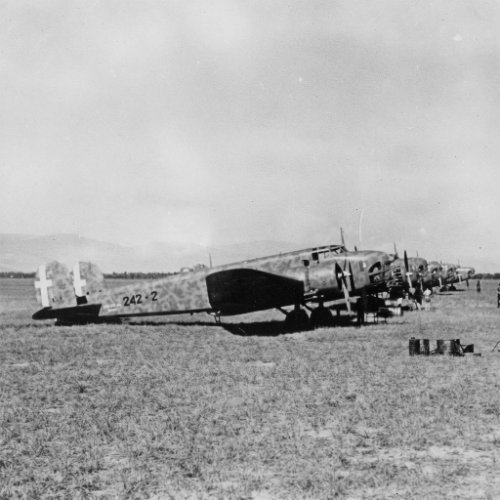
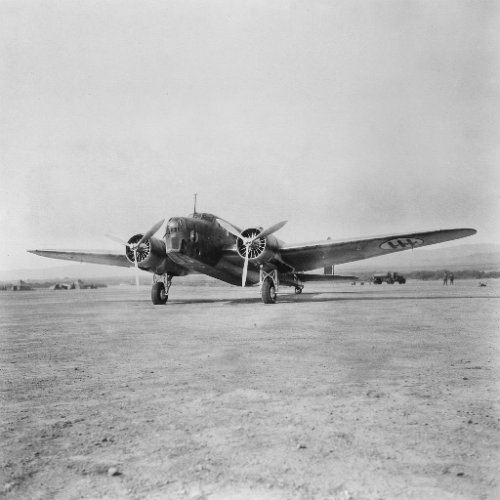
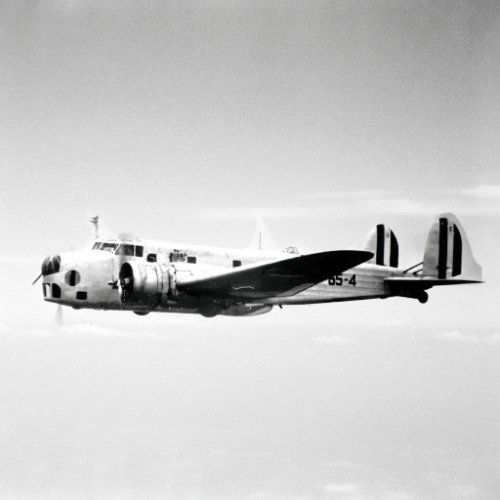
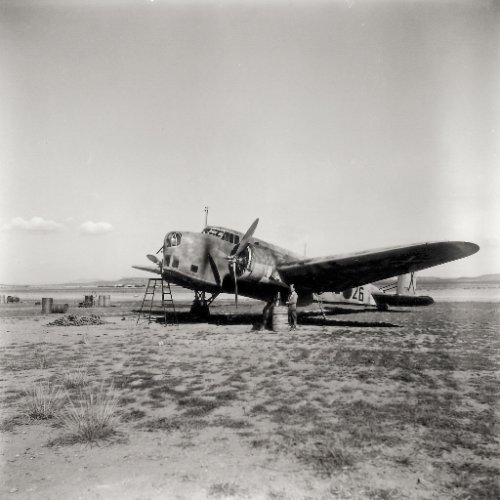
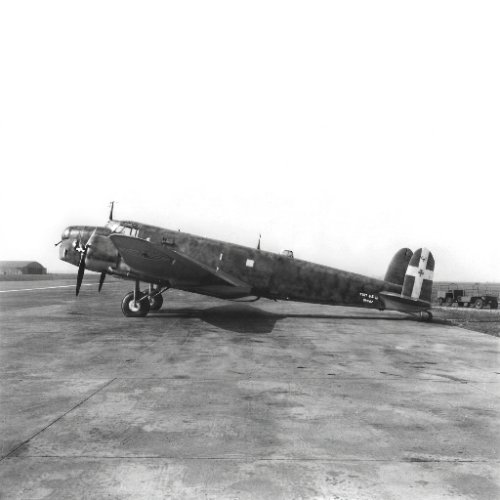
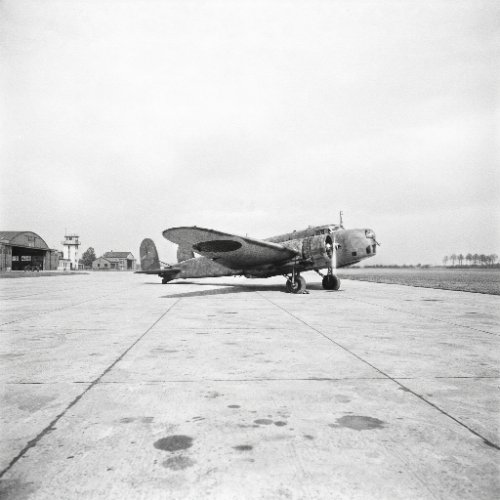
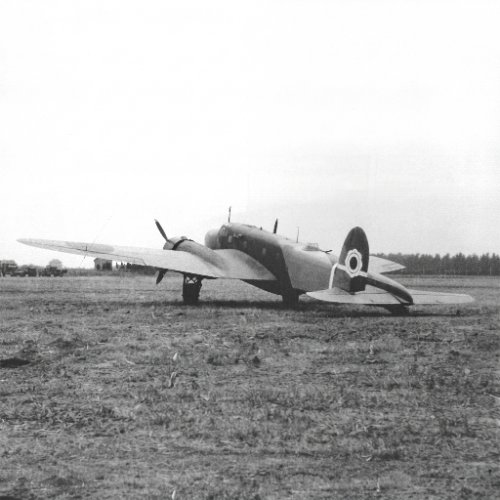
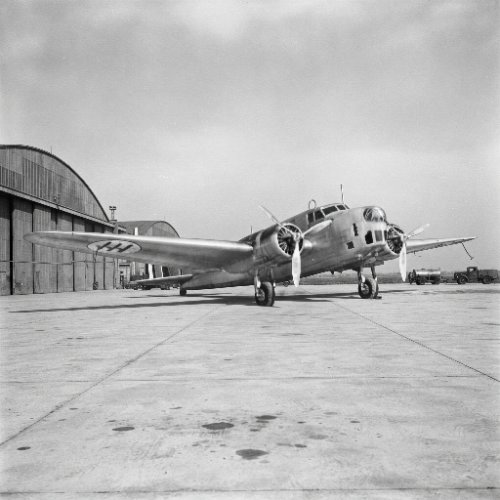
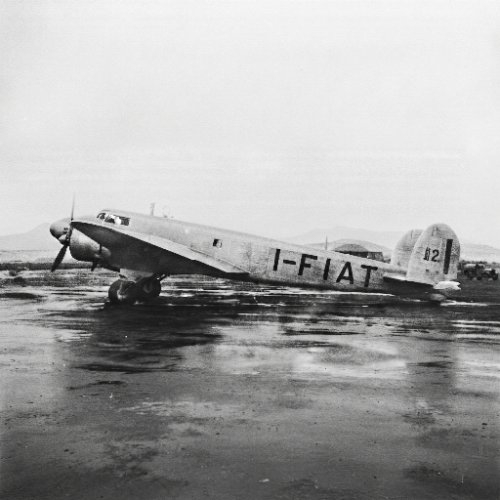
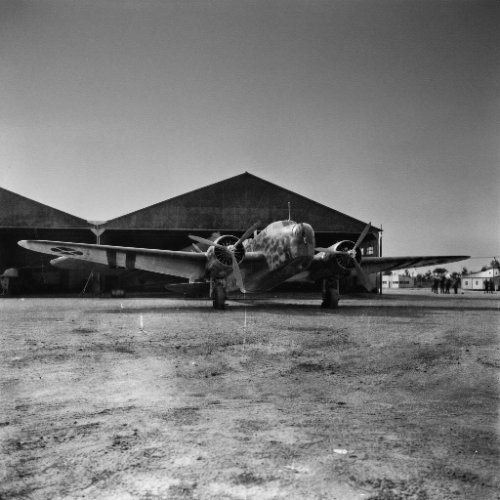
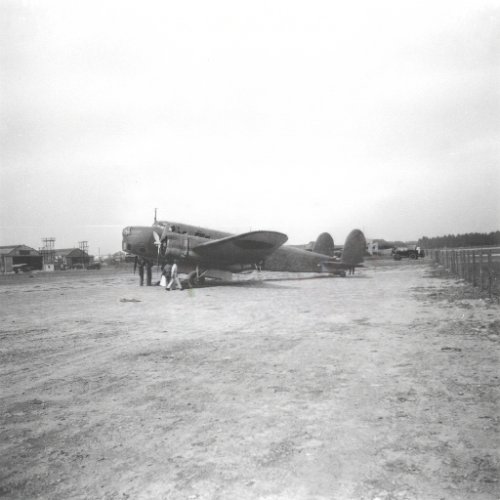
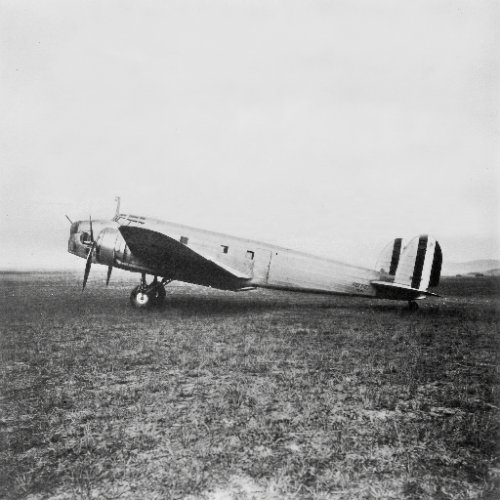
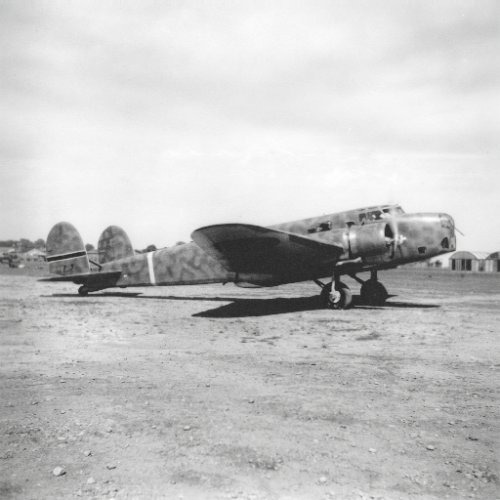
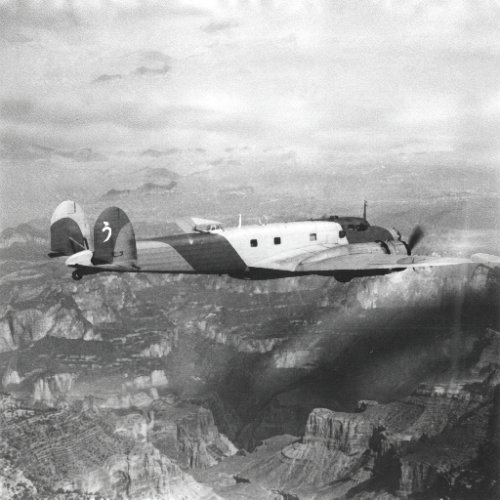
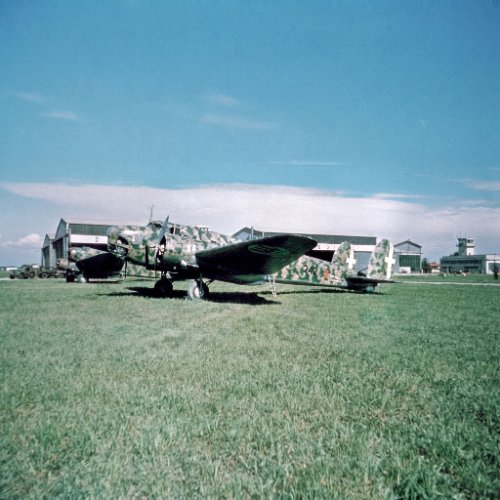
The Fiat BR.20 Cicogna was an Italian twin‑engined medium bomber developed during the mid‑1930s by Fiat Aviazione under the direction of designer Celestino Rosatelli.
First flown on 10 February 1936, it became the first all‑metal bomber to enter operational service with the Regia Aeronautica (Royal Italian Air Force).
At the time of its introduction, it was regarded as one of the most modern bombers in Europe, combining good speed, respectable range, and advanced construction methods.
Although innovative when introduced, the BR.20 was overtaken by rapid advances in bomber and fighter design during the late 1930s.
Nevertheless, it served in the Spanish Civil War, the Second Sino‑Japanese War, and throughout much of the Second World War, becoming one of the most significant Italian bombers of the period.
More than 500 aircraft were produced before production ended during the war.
Development History
Origins
In 1934, the Italian Air Ministry issued a requirement for a new medium bomber capable of:
High cruising and maximum speed
Long operational range
Significant bomb load
Good reliability
Modern structural design
Several Italian manufacturers submitted proposals, including Breda, Caproni, Macchi, Piaggio, and Fiat.
Fiat’s design emerged as particularly promising because it combined performance with practical operational qualities.
The resulting aircraft received the designation BR.20, with the “BR” standing for Bombardiere Rosatelli, recognising its chief designer.
Prototype and Testing
The prototype flew for the first time on 10 February 1936.
Testing demonstrated that the aircraft met or exceeded most of the Italian Air Force’s specifications, leading to rapid acceptance.
Within months of the maiden flight, production was authorised and deliveries to frontline units began in September 1936.
At the time, many air forces still relied on mixed metal‑and‑fabric bombers or biplane designs.
The BR.20’s all‑metal construction and streamlined monoplane layout represented a major technological step forward for Italy.
Design and Construction
General Configuration
The BR.20 was a:
Low‑wing monoplane
Twin‑engine medium bomber
Retractable landing gear aircraft
Five‑crew combat aircraft
The crew typically consisted of:
Pilot
Co‑pilot
Bombardier/navigator
Radio operator
Gunner
The aircraft featured a conventional fuselage with a stepped cockpit arrangement that provided good forward visibility for both pilots and the bombardier.
Airframe
The BR.20 was notable for its structural sophistication.
Key features included:
All‑metal wing construction
Steel‑tube fuselage framework
Combination of metal skinning and fabric covering
Retractable tailwheel undercarriage
This construction provided greater durability and aerodynamic efficiency compared with many earlier Italian bombers.
Powerplant
Most production aircraft used:
2 × Fiat A.80 RC.41 radial engines
Typical output:
Approximately 1,000 hp per engine
The engines drove three‑bladed propellers and provided adequate performance for the aircraft’s era.
Technical Characteristics
Dimensions
BR.20M variant dimensions:
Length: 16.7 m (54.7 ft)
Wingspan: 21.6 m (70.8 ft)
Height: about 4.8 m (15.6 ft)
Weight
Approximate figures:
Empty weight: around 6,500 kg
Maximum take‑off weight: around 10,000 kg
Performance
Typical performance:
Maximum speed: approximately 430 to 440 km/h (267 to 273 mph)
Range: up to about 2,700 km depending on load and variant
Service ceiling: approximately 8,000 m (26,000 ft)
When introduced, these figures compared favourably with contemporary medium bombers such as early versions of the Heinkel He 111 and Martin B‑10.
However, by 1940 they were increasingly inadequate against modern fighter aircraft.
Armament
Offensive Armament
The BR.20 carried bombs internally.
Maximum bomb load:
Approximately 1,600 kg (3,500 lb) of bombs
Bombs could be carried in a variety of sizes depending on mission requirements, including:
General‑purpose bombs
Fragmentation bombs
Incendiary bombs
Defensive Armament
Early versions possessed relatively light defensive weaponry.
Typical arrangement included:
Dorsal machine gun position
Ventral machine gun position
Forward defensive gun
Later variants gained improved Breda-SAFAT machine guns and redesigned turret arrangements.
Despite improvements, the BR.20’s defensive armament remained weaker than many contemporary bombers, a limitation that became evident during wartime operations.
Operational History
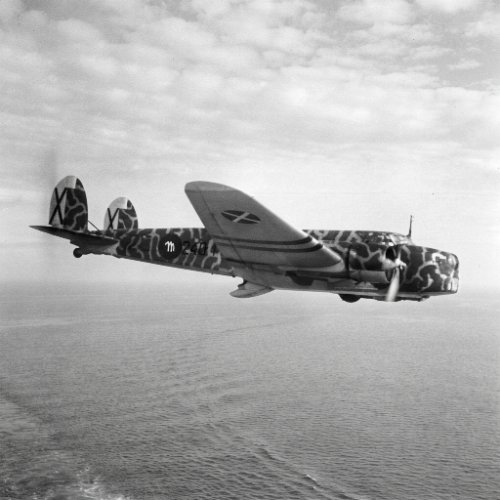
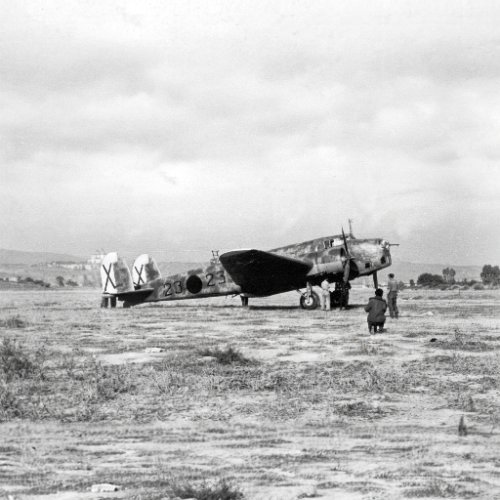
Spanish Civil War
The BR.20 first saw combat with the Italian Aviazione Legionaria supporting Nationalist forces during the Spanish Civil War in 1937.
Operations demonstrated:
Good reliability
Effective bombing capability
Relatively high speed for the period
In Spain the bomber generally operated successfully and suffered relatively low losses.
These favourable results strengthened Italian confidence in the concept of the fast, lightly defended bomber.
However, the lessons drawn from Spain would later prove misleading because enemy fighter capabilities there were generally less advanced than those encountered during the Second World War.
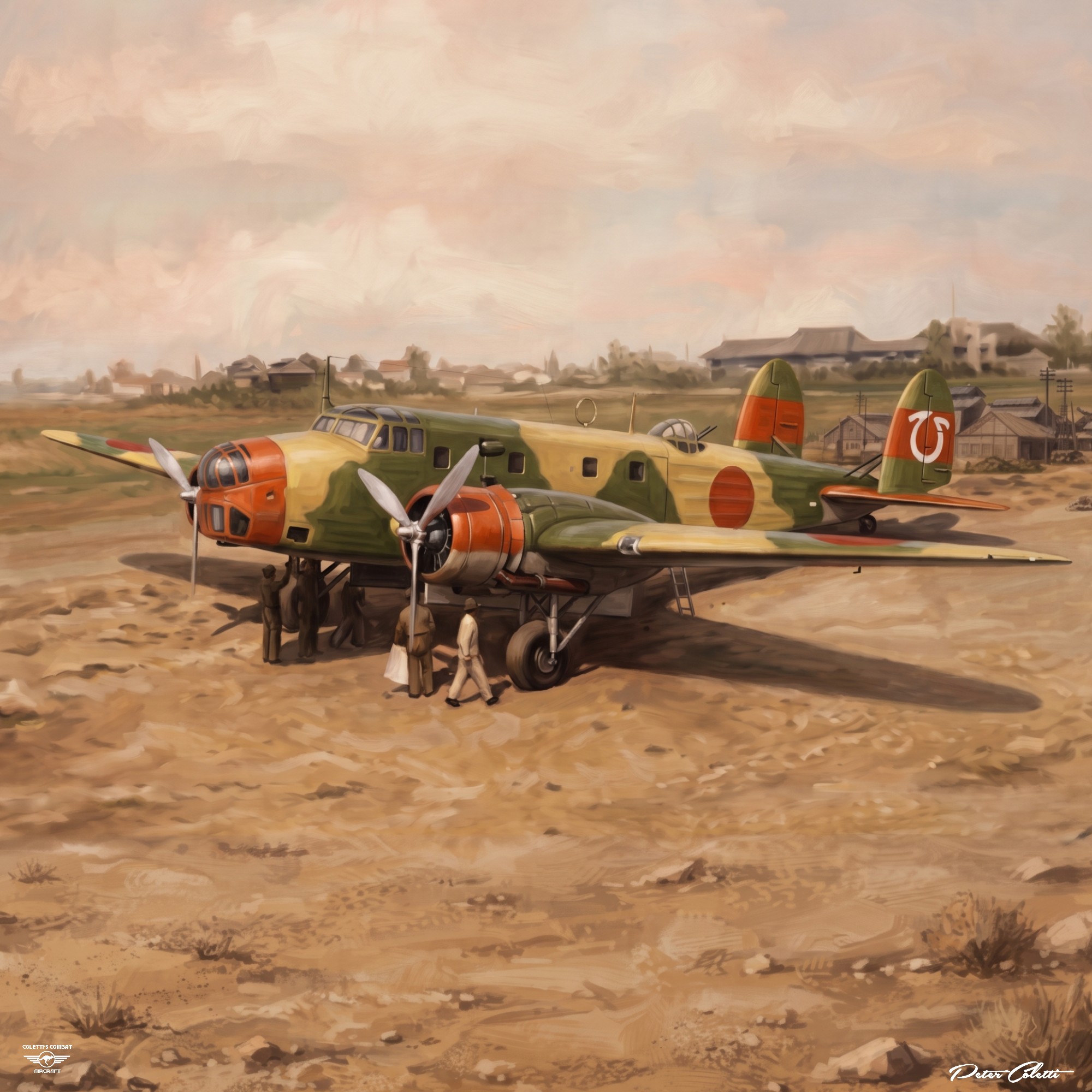
Service with Japan
One of the most unusual aspects of the BR.20’s career was its export success.
Japan purchased more than eighty aircraft, making it one of the rare European bombers acquired in significant numbers by the Imperial Japanese Army Air Service.
The aircraft served in China during the Second Sino‑Japanese War.
Japanese experience differed sharply from Spanish operations:
Long‑range missions exposed bombers to fighter interception.
Losses were considerably higher.
The type was eventually replaced by more modern Japanese bombers such as the Mitsubishi Ki‑21.
The Allied reporting name for Japanese‑operated BR.20s was “Ruth”.
The BR.20 in the Second World War
Italy Enters the War
When Italy entered the war in June 1940, the BR.20 formed one of the Regia Aeronautica’s principal medium bomber forces.
Unfortunately, aircraft design had advanced significantly since 1936.
By 1940 the BR.20 faced several disadvantages:
Insufficient defensive armament
Limited armour protection
Modest speed by contemporary standards
Vulnerability to modern fighters
Battle of France
BR.20 units participated in Italian operations against France during June 1940.
These missions represented the aircraft’s first major combat service of the war and demonstrated that the bomber could still perform effectively under favourable conditions.
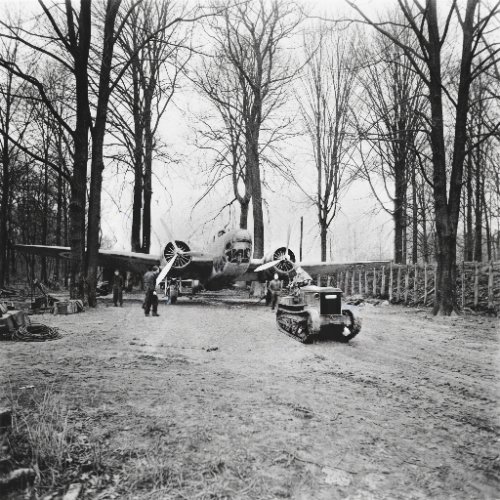
Battle of Britain
One of the most famous chapters in the aircraft’s history was its participation in the Battle of Britain.
The Italian Corpo Aereo Italiano deployed BR.20 bombers to Belgium in late 1940 to assist German operations against Britain.
Newer BR.20M aircraft participated in these raids.
The experience proved disappointing:
British fighters intercepted many formations.
Combat losses increased.
The aircraft’s limited defensive capability became apparent.
Harsh northern European weather complicated operations.
The campaign illustrated how much bomber warfare had changed since the Spanish Civil War.
Mediterranean and Balkan Operations
The BR.20 also operated across:
North Africa
The Mediterranean
Greece
Yugoslavia
Missions included:
Tactical bombing
Strategic attacks
Anti‑shipping strikes
Maritime reconnaissance
Despite respectable service records, losses and operational wear steadily reduced its value as a front‑line bomber.
Later Service
By 1942 the type had largely been withdrawn from major front‑line bombing operations.
Remaining aircraft served in:
Maritime patrol roles
Training duties
Secondary operational assignments
As more modern aircraft became available, the BR.20 gradually disappeared from combat service, although some examples survived until the end of the war in 1945.
Variants
BR.20
The original production model.
Features:
Standard nose section
Early defensive gun arrangement
Fiat A.80 engines
Approximately 233 aircraft were built.
BR.20M
The principal improved the production version.
Changes included:
Enlarged glazed nose
Revised cockpit arrangement
Improved defensive positions
Enhanced operational equipment
Approximately 279 aircraft were produced.
BR.20L
A specialised long‑range version.
Most famous for the aircraft Santo Francesco, which completed a celebrated nonstop flight from Rome to Addis Ababa in 1939.
Japanese Export Aircraft
Aircraft delivered for Japanese service featured local equipment modifications and served extensively in China before retirement.
Assessment and Legacy
The Fiat BR.20 occupies an important place in aviation history because it marked Italy’s transition to modern bomber design.
When introduced in 1936, it was among the most advanced medium bombers in the world and demonstrated the growing maturity of Italian aircraft engineering.
Its combat career also illustrates the extraordinary pace of aviation development between 1936 and 1945.
An aircraft considered cutting‑edge before the war became increasingly obsolete only a few years later.
The BR.20’s experiences in Spain, China, and Britain highlighted a key lesson of the era: speed alone could no longer guarantee bomber survival in the face of increasingly capable fighter aircraft and air defence systems.
Although overshadowed by more famous contemporaries such as the Heinkel He 111, Vickers Wellington, and Martin B‑26, the Fiat BR.20 remains one of the most historically significant Italian bombers of the Second World War and an important example of interwar military aviation development.