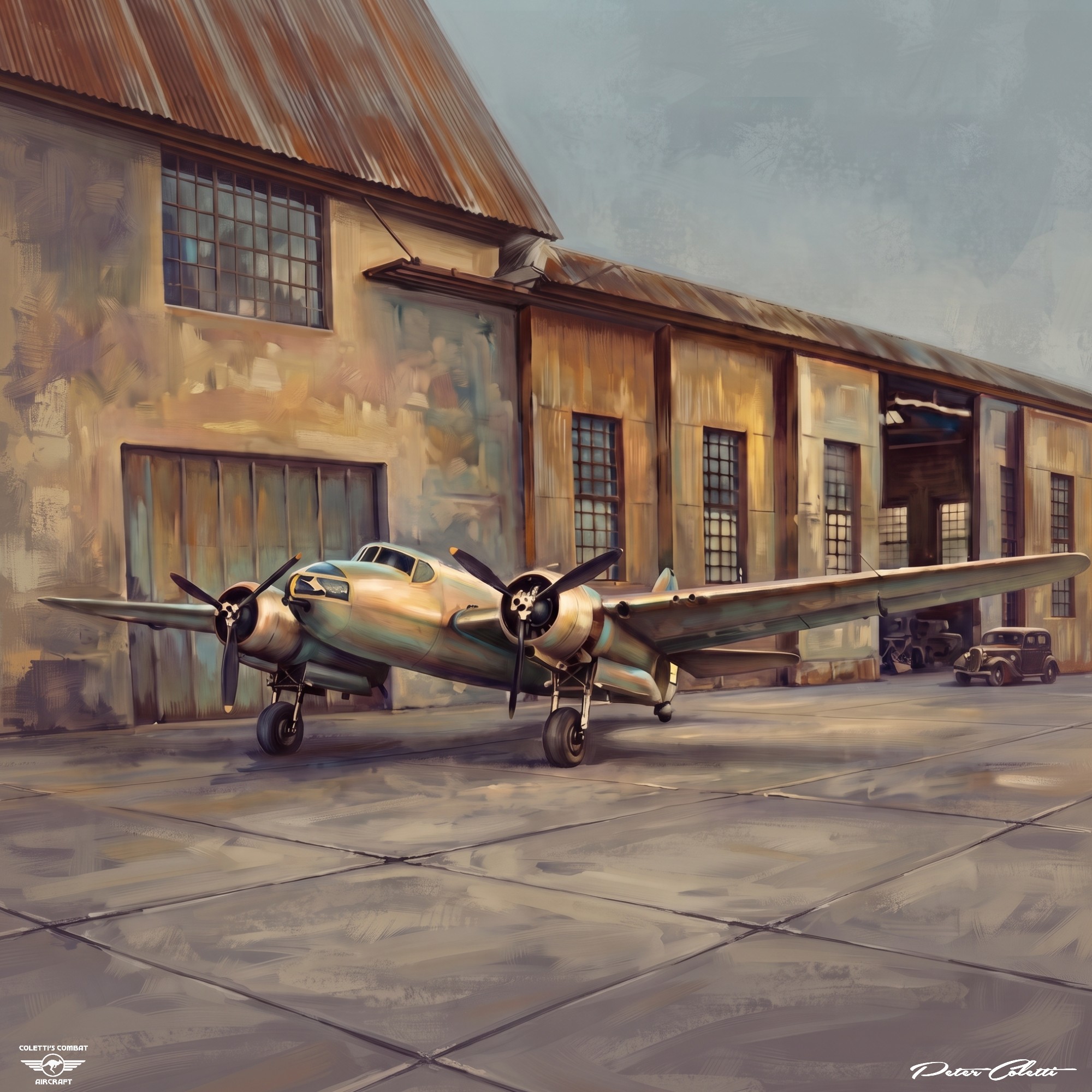
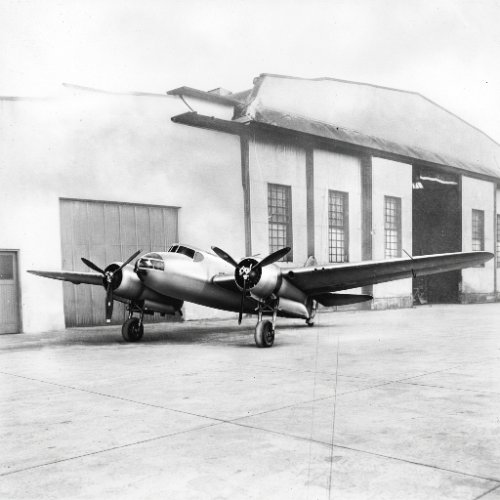
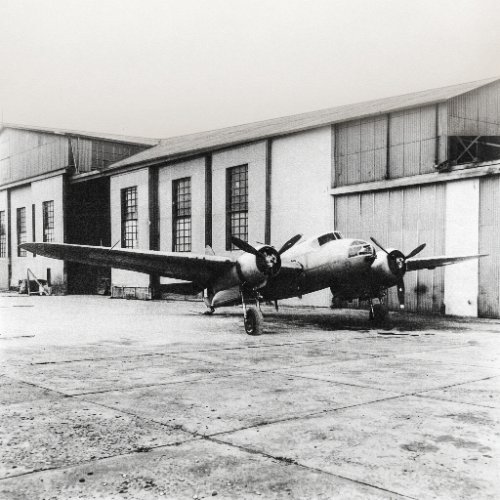
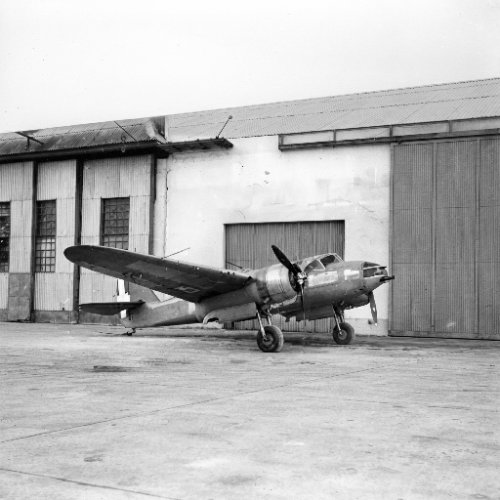
The Fiat AS.14 was an Italian World War II experimental military aircraft developed by Fiat-CMASA as a heavily armed land-based attack and assault aircraft.
It was derived directly from the successful Fiat RS.14 maritime reconnaissance floatplane and represented an attempt to adapt an existing aircraft design into a specialised ground-attack platform capable of supporting battlefield operations.
Only a single prototype was completed, and the programme never advanced beyond the experimental stage.
Although relatively obscure today, the AS.14 illustrates the difficulties faced by the Italian aviation industry during the later years of the Second World War, when limited resources and changing military priorities forced manufacturers to seek new uses for existing aircraft designs rather than developing entirely new types.
Historical Background
By 1942, the military situation confronting Italy had deteriorated significantly.
The Regia Aeronautica required aircraft capable of carrying heavy armament while operating in support of ground forces.
Existing fighter aircraft often lacked the payload and endurance needed for sustained battlefield attack missions.
At the same time, Fiat-CMASA possessed the RS.14, a twin-engine reconnaissance floatplane that had demonstrated good range, stability, and load-carrying characteristics.
Engineers recognised that the basic airframe might serve as a useful foundation for a land-based attack aircraft if the floats were removed and conventional landing gear installed.
This concept became the AS.14, with the designation generally interpreted as “Assalto” (Assault).
Development proceeded during 1943, a period when Italy was experiencing increasing strategic pressure from Allied bombing and military setbacks throughout the Mediterranean theatre.
The prototype was completed during the first half of 1943 and made its first flight on 11 August 1943.
Unfortunately for the project, the aircraft entered testing at a time when Italy’s military and industrial systems were approaching collapse.
Development delays, changing operational requirements, and the political upheaval surrounding the Italian armistice effectively ended any chance of production.
The programme was cancelled after completion of the sole prototype.
Design and Configuration
The AS.14 retained much of the structural design of the RS.14 reconnaissance aircraft.
It was a twin-engine, low-wing monoplane of all-metal construction with a conventional tail arrangement.
The conversion from maritime reconnaissance aircraft to assault aircraft required significant modifications:
Removal of the original floatplane configuration.
Installation of conventional wheeled landing gear.
Reinforcement of the airframe for combat operations.
Addition of heavy forward-firing armament.
Revision of crew stations for attack duties.
Adaptation of internal space for weapons and military equipment.
The aircraft’s dimensions reflected its origins as a long-range reconnaissance machine:
Length: approximately 14.1 metres.
Wingspan: approximately 19.54 metres.
Height: approximately 5.63 metres.
Compared with contemporary fighters, the AS.14 was considerably larger and heavier.
Its size allowed it to carry substantial armament and fuel but limited manoeuvrability and overall performance.
Powerplant
The AS.14 was powered by two Fiat A.74 R.C.38 Ciclone fourteen-cylinder radial engines.
Each engine produced approximately 840 horsepower (840 CV).
The Fiat A.74 was one of Italy’s most important wartime radial engines and powered several major combat aircraft, including the Fiat G.50 and Macchi C.200 fighters.
The engine featured:
Fourteen cylinders arranged in two radial rows.
Air cooling.
A supercharger.
Proven operational reliability by Italian wartime standards.
Although dependable, the A.74 was no longer particularly powerful by 1943 standards.
As a result, the AS.14’s performance was reasonable but not exceptional when compared with newer Allied and German combat aircraft.
Armament
The principal purpose of the AS.14 was to deliver heavy firepower against ground targets.
The prototype was equipped with:
One 37 mm Breda cannon mounted in the nose.
Five 12.7 mm Breda-SAFAT machine guns.
Two 7.7 mm Breda-SAFAT machine guns.
This armament was unusually heavy for an Italian aircraft and reflected contemporary interest in heavily armed attack aircraft capable of destroying vehicles, fortifications, and concentrations of troops.
The large calibre nose cannon was especially notable.
Weapons of this size had the potential to threaten armoured vehicles, shipping, and hardened targets.
However, the weight of such weaponry also increased aircraft mass and reduced overall performance.
Performance
Available figures indicate performance broadly comparable to other medium-sized attack aircraft of the period.
Approximate characteristics included:
Maximum speed: about 390 km/h.
Range: approximately 2,500 km.
Service ceiling: approximately 6,300 metres.
Crew: three to four personnel.
Gross weight: approximately 8,470 kg.
The aircraft’s greatest strength was endurance rather than speed.
Its long range reflected its reconnaissance ancestry, making it capable of extended patrols and potential maritime strike missions.
However, by 1943 a maximum speed below 400 km/h left it vulnerable to modern Allied fighters.
Operational Assessment
Had the AS.14 entered production, it would likely have served in several possible roles:
Ground attack.
Maritime strike.
Armed reconnaissance.
Convoy interdiction.
Anti-shipping operations.
Coastal patrol missions.
Its combination of long range and heavy armament was attractive on paper.
Nevertheless, the aircraft faced significant disadvantages:
Relatively low speed.
Large target profile.
Limited manoeuvrability.
Obsolescent engine power.
Increasing Allied air superiority.
Consequently, even if production had begun, it is uncertain whether the type would have achieved notable operational success.
Variants
Fiat-CMASA RS.14
The direct predecessor of the AS.14 was the RS.14 maritime reconnaissance floatplane.
Designed for long-range coastal patrol and reconnaissance duties, the RS.14 provided the airframe from which the AS.14 evolved.
Fiat-CMASA AS.14
The assault and ground-attack version is fitted with a conventional undercarriage and heavy offensive armament.
Only one prototype was completed.
No production models or further variants are known to have been constructed.
WWII Context
The AS.14 emerged during the final phase of Italy’s wartime aviation effort.
By 1943 the Italian aircraft industry faced severe shortages of materials, engines, skilled labour, and production capacity.
Allied bombing campaigns and worsening military conditions further disrupted development programmes.
Rather than representing a major new generation of aircraft, the AS.14 reflected a practical attempt to extract additional military value from an existing design.
Its cancellation was less a consequence of technical failure than of strategic circumstances and the collapse of Fascist Italy during 1943.
In this sense, the AS.14 serves as an example of the many promising but ultimately unrealised aircraft concepts that appeared during the final years of the Second World War.
Technical Specifications (Prototype)
Manufacturer: Fiat-CMASA
Role: Assault / Ground-Attack Aircraft
Country: Italy
First Flight: 11 August 1943
Crew: 3-4
Length: 14.1 m
Wingspan: 19.54 m
Height: 5.63 m
Loaded Weight: Approximately 8,470 kg
Powerplant: 2 × Fiat A.74 R.C.38 fourteen-cylinder air-cooled radial engines
Power Output: 840 hp each
Maximum Speed: Approximately 390 km/h
Range: Approximately 2,500 km
Service Ceiling: Approximately 6,300 m
Armament: 1 × 37 mm Breda cannon
5 × 12.7 mm Breda-SAFAT machine guns
2 × 7.7 mm Breda-SAFAT machine guns
Production: One prototype completed.
Summary
The Fiat AS.14 was an ambitious attempt to transform the RS.14 reconnaissance aircraft into a heavily armed assault machine suited to the increasingly desperate conditions faced by Italy during 1943.
Possessing substantial range and formidable firepower, it nevertheless suffered from modest performance and arrived too late to influence the war.
Only a single prototype was completed before the programme was abandoned, leaving the AS.14 as one of the lesser-known but intriguing experimental aircraft of the Regia Aeronautica’s final wartime years.