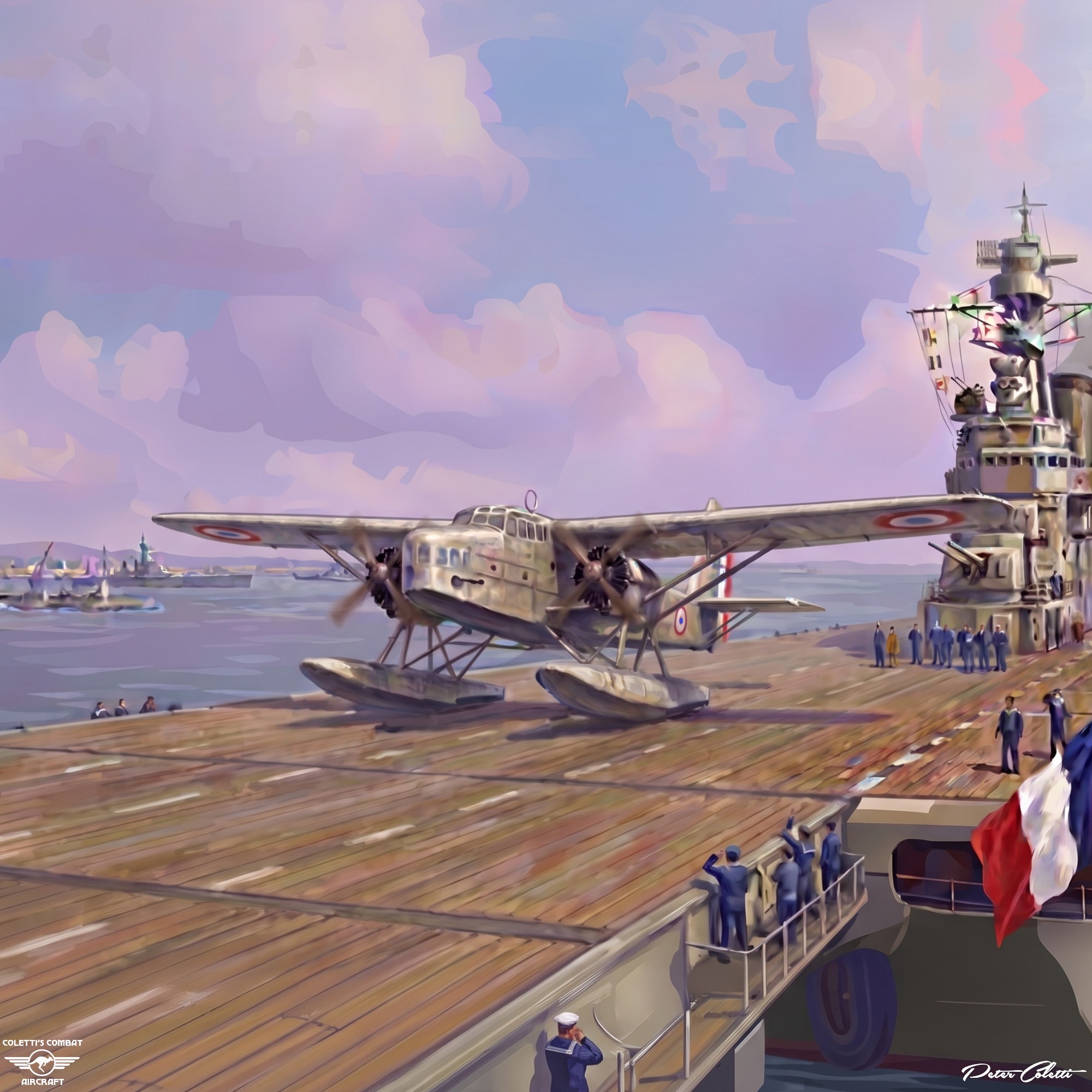
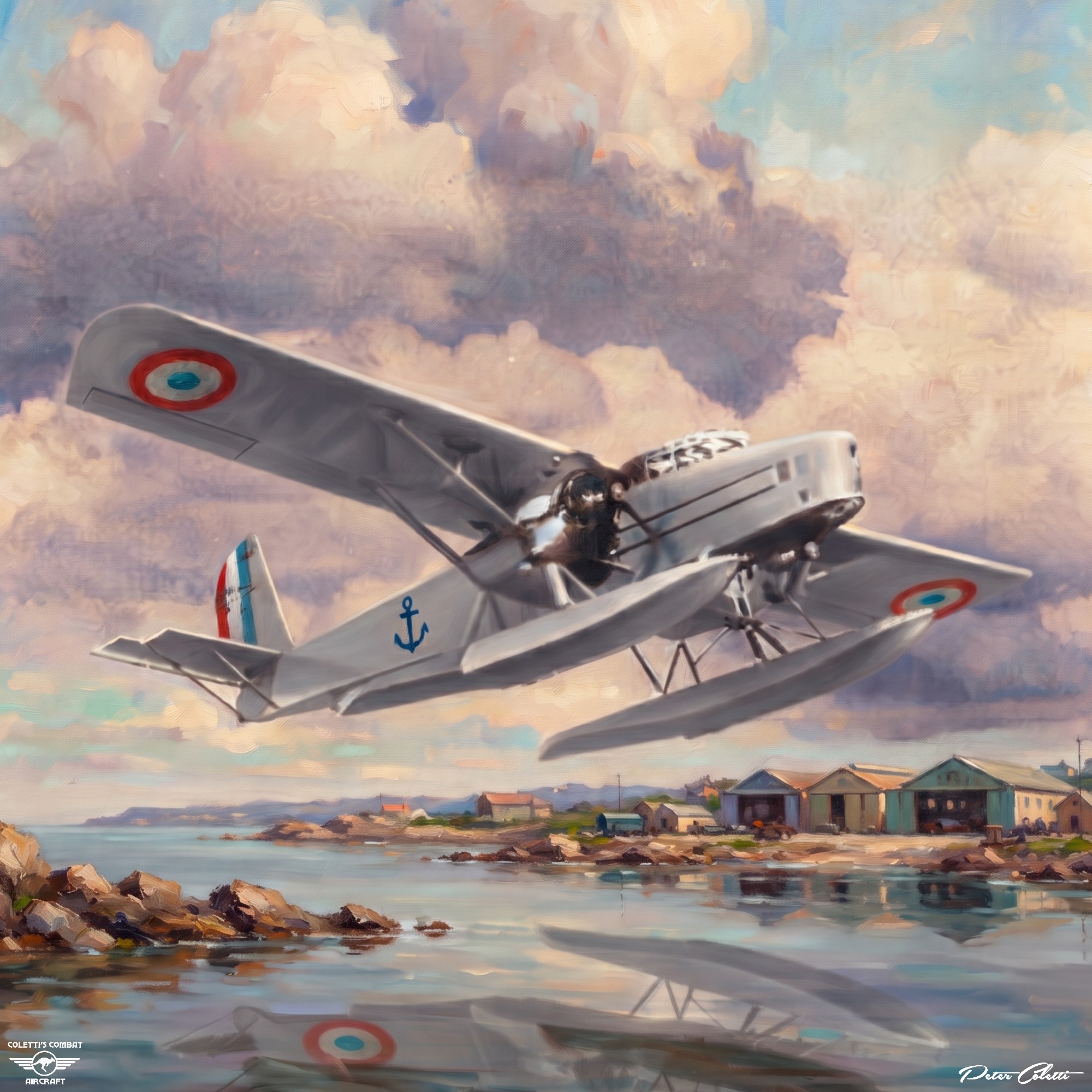
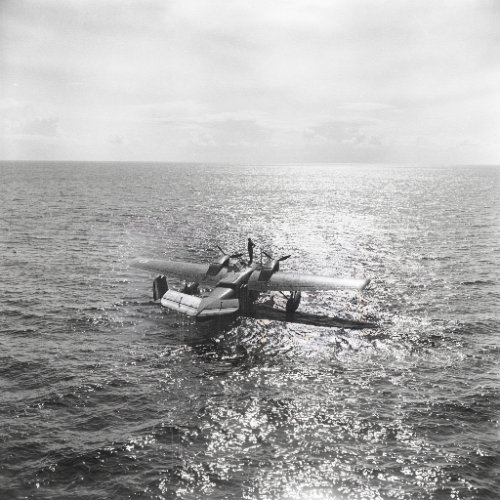
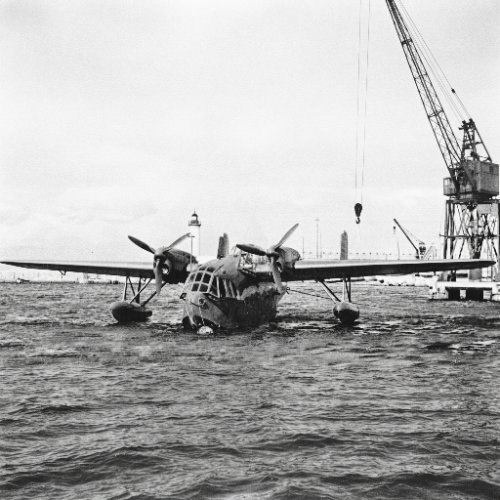
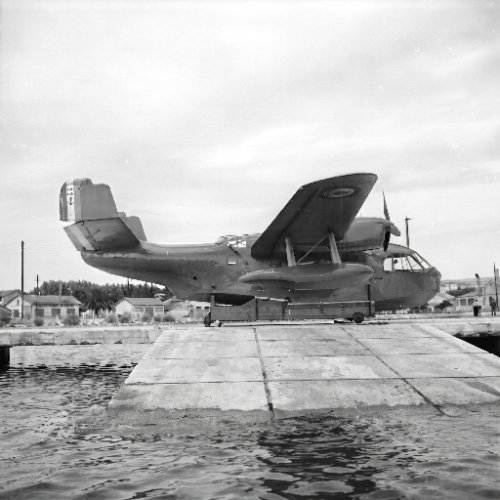
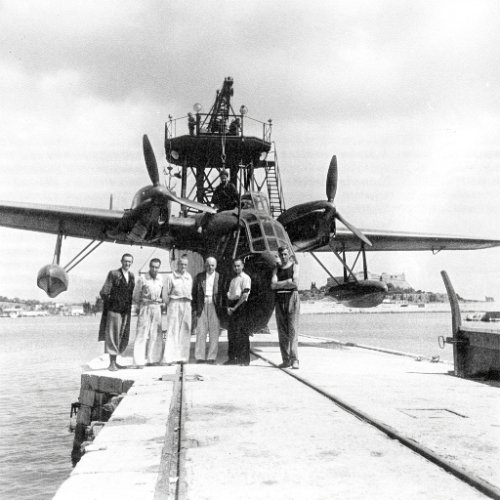
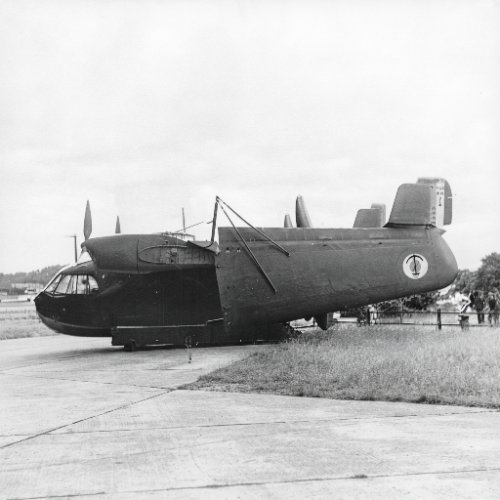
The Farman NC.470 was a French twin-engined floatplane developed during the late interwar period as a specialised naval crew trainer for the French Navy.
Originally conceived by the Farman company as the Farman F.470, it later became the NC.470 after the French aircraft industry was nationalised and Farman was absorbed into the Société Nationale de Constructions Aéronautiques du Centre (SNCAC).
Although intended primarily as a training aircraft, the type was drawn into operational service at the outbreak of the Second World War, serving in coastal reconnaissance and maritime patrol duties when more suitable aircraft were unavailable.
The NC.470 was neither a famous combat aircraft nor a major production type, but it provides an excellent example of the difficulties faced by French naval aviation on the eve of war.
Designed as a practical trainer, it became an operational aircraft through necessity and served throughout one of the most turbulent periods in French aviation history.
Origins and Development
The French Naval Training Requirement
During the mid-1930s, the French Navy sought a dedicated aircraft for training multi-crew maritime aviators.
Existing training arrangements relied heavily upon operational aircraft, which increased operating costs and reduced the availability of combat-capable machines.
Recognising this gap, the Farman design team began work during 1935 on a new aircraft intended specifically for naval crew instruction.
The project was undertaken as a private venture and was initially designated Farman F.470.
The aircraft was designed to train personnel in navigation, radio operations, maritime reconnaissance procedures, engine management, formation flying, and general seaplane handling.
An order for ten aircraft was placed on 8 March 1936, demonstrating official confidence in the design before the prototype had flown.
To reduce costs, the French Navy intended that many components, including engines, propellers, and floats, would be sourced from retired Farman F.168 torpedo bombers.
Nationalisation and Redesignation
A major political development intervened during the programme’s development.
In 1936, the French government nationalised much of the country’s aviation industry in an attempt to improve efficiency, standardise production, and strengthen military preparedness.
Farman and Hanriot were incorporated into the newly created SNCAC.
As a consequence, the F.470 was redesignated NC.470, the initials standing for the state-owned company responsible for its manufacture.
The prototype eventually completed flight testing in this form.
Prototype and First Flight
The first NC.470 flew on 27 December 1937.
Interestingly, the aircraft initially operated with a temporary wheeled landing gear before receiving its intended float installation.
This arrangement simplified early testing and development trials.
Following successful evaluation, the aircraft entered limited production for French naval aviation.
Design Characteristics
General Configuration
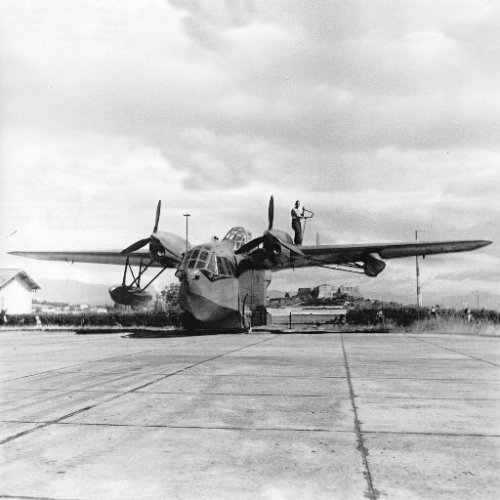
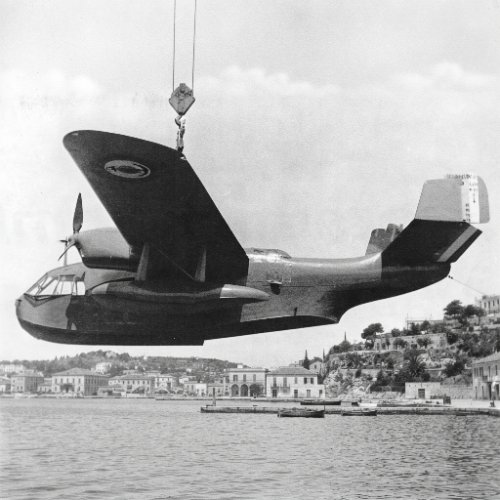
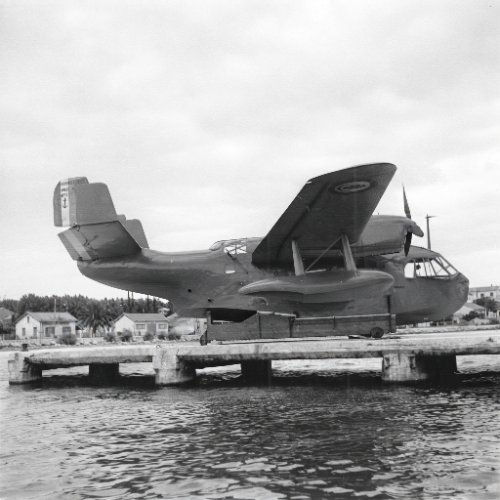
The NC.470 was a high-wing twin-engined monoplane floatplane designed around stability, simplicity, and ease of instruction rather than combat performance.
The aircraft featured:
High-mounted cantilever wing
Twin radial engines
Large central float arrangement
Multi-crew cabin
Robust maritime operating characteristics
The aircraft was intended to accommodate a complete operational crew and therefore offered facilities for training multiple specialists simultaneously.
Structural Design
The design reflected French construction practices of the late 1930s.
The NC.470 employed a mixed-construction airframe, combining:
Metal structural members
Wooden framework sections
Fabric-covered elements
Metal spars within the wing
This approach provided adequate strength while conserving strategic materials and simplifying manufacture.
The resulting aircraft possessed a distinctly utilitarian appearance characterised by:
A deep rectangular fuselage
Straight wing planform
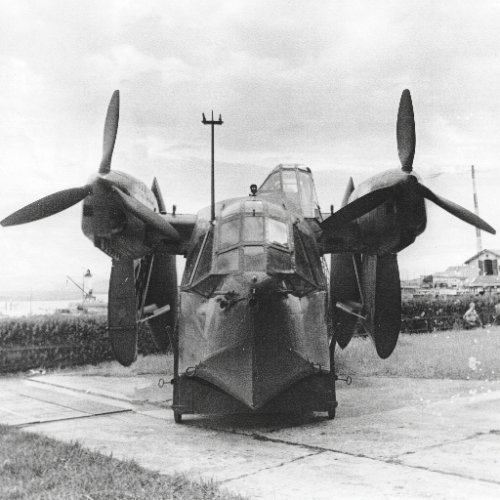
Large side windows
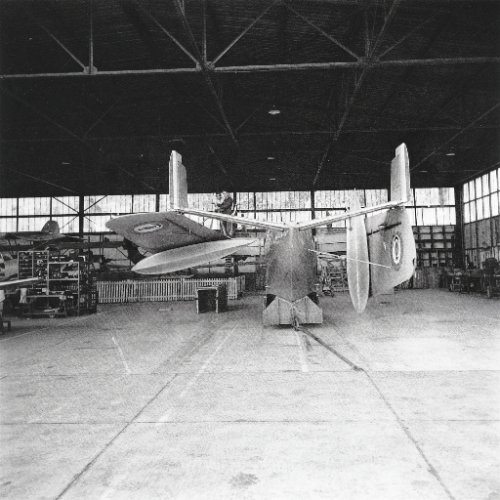
Broad vertical tail surfaces
Substantial twin-float installation
Unlike streamlined combat aircraft of the era, the NC.470 prioritised visibility, crew accommodation, and stability.
Crew Arrangement
One of the most distinctive aspects of the NC.470 was its large crew complement.
The aircraft could accommodate six crew members, typically including:
Pilot
Second pilot
Navigator
Bombardier
Radio operator
Flight engineer/gunner
The pilots sat in tandem while the navigator occupied a position in the nose.
Other crew members were stationed further aft in the fuselage.
This layout permitted realistic operational training for entire naval aircrews.
Powerplant
The standard NC.470 was powered by:
Two Gnome-Rhône 9Akx radial engines
Each engine produced approximately:
480 horsepower 358 kW
The engines were mounted on stub wings projecting from the fuselage sides, providing adequate clearance above the water surface and improving accessibility for maintenance.
Although dependable, these engines were modest in power for an aircraft of the NC.470’s size.
Consequently, the type was not especially fast but offered acceptable endurance and reliability for training and patrol duties.
Armament and Payload
Although primarily designed as a trainer, the NC.470 was given limited military capability.
Armament consisted of:
One 7.5 mm Darne machine gun in a dorsal position
The aircraft could also carry:
Up to 200 kg of bombs
Some contemporary descriptions additionally refer to a limited maritime strike capability and the ability to carry small naval ordnance, although reconnaissance and training remained the type’s principal functions.
The defensive armament was minimal, reflecting the aircraft’s intended role rather than any expectation of front-line combat.
Technical Specifications (NC.470)
General Characteristics
Type: Naval crew trainer and reconnaissance floatplane
Crew: 6
Powerplant: 2 × Gnome-Rhône 9Akx radial engines 480 hp each
Dimensions
Length: 16.10 m
Wingspan: 24.45 m
Height: 4.85 m
Wing Area: 95 m²
Weights
Empty Weight: 4,115 kg
Maximum Take-off Weight: 5,830 kg
Performance
Maximum Speed: 212 km/h
Cruising Speed: 185 km/h
Range: 1,200 km
Service Ceiling: 5,500 m
Armament
One 7.5 mm Darne machine gun
Up to 200 kg of bombs
Production
Production remained modest.
The initial order covered ten aircraft, completed by 1939.
Additional orders subsequently increased total NC.470 production to 34 aircraft, while one or two examples of the improved NC.471 variant were completed depending on the source consulted.
The relatively small production run reflected the specialised training role for which the aircraft had been designed.
Operational Career
Peacetime Training
The aircraft’s primary role within French naval aviation was crew instruction.
The NC.470 trained:
Pilots
Navigators
Radio operators
Engineers
Maritime reconnaissance crews
The type was particularly useful because it could train an entire operational crew in realistic flying conditions over water.
Transition to Operational Service
When war approached in 1939, French naval aviation suffered shortages of modern reconnaissance aircraft.
As a result, aircraft originally intended solely for training were pressed into operational use.
Several NC.470s, together with the sole NC.471 and CAMS 55 flying boats, equipped Escadrille 3S4 at Berre.
Their mission included:
Coastal reconnaissance
Maritime patrol
Observation duties
Training support
This diversion from their intended mission illustrates the broader readiness problems encountered by France during the late 1930s.
The NC.470 During World War II
The Phoney War and the Battle of France
At the outbreak of the Second World War, the NC.470 found itself performing operational duties for which it had never been intended.
Its low speed, limited defensive armament, and modest performance made it unsuitable for contested airspace.
Nevertheless, it performed useful coastal patrol and surveillance missions during the opening stages of the war.
The aircraft’s long endurance, seaworthiness, and large crew capacity helped offset its lack of speed and combat capability.
Vichy France and German Capture
Following the French defeat in 1940, surviving NC.470s remained in service with French naval aviation under Vichy administration.
A significant turning point occurred in November 1942, when Germany occupied southern France following Allied landings in North Africa.
During this occupation, fourteen NC.470s were captured by German forces, effectively ending the aircraft’s operational significance.
The type did not play any major role thereafter and was gradually withdrawn from service.
Variants
Farman F.470
Original pre-nationalisation designation of the design during development.
NC.470
Main production version.
Features:
Two 480 hp Gnome-Rhône 9Akx engines
Trainer and reconnaissance capability
Production: 34 aircraft.
NC.471
Improved variant featuring:
Two Gnome-Rhône 9Kgr radial engines
Approximately 500 hp each
Only a very small number were completed, with sources generally citing one prototype and up to two aircraft built.
NC.472
Projected development using:
Pratt & Whitney R-1340 Wasp engines
Approximately 600 hp class powerplants
The project did not proceed beyond the proposal stage.
Assessment and Legacy
The Farman NC.470 occupies an unusual niche in French aviation history.
It was not designed as a combat aircraft and was never intended to challenge contemporary patrol flying boats or maritime bombers.
Instead, it represented a pragmatic attempt to provide the French Navy with an economical and specialised crew-training platform.
The aircraft’s wartime service resulted largely from necessity rather than design intent.
French naval aviation’s shortage of suitable reconnaissance aircraft compelled the NC.470 to perform front-line maritime duties despite its limitations.
In this role it provided useful service but remained clearly inferior to dedicated patrol aircraft.
Today the NC.470 is remembered as one of the last significant aircraft designs to originate from the Farman tradition before nationalisation transformed France’s aviation industry.
It also serves as an illustration of the broader challenges facing French military aviation during the years immediately preceding and during the early stages of the Second World War.