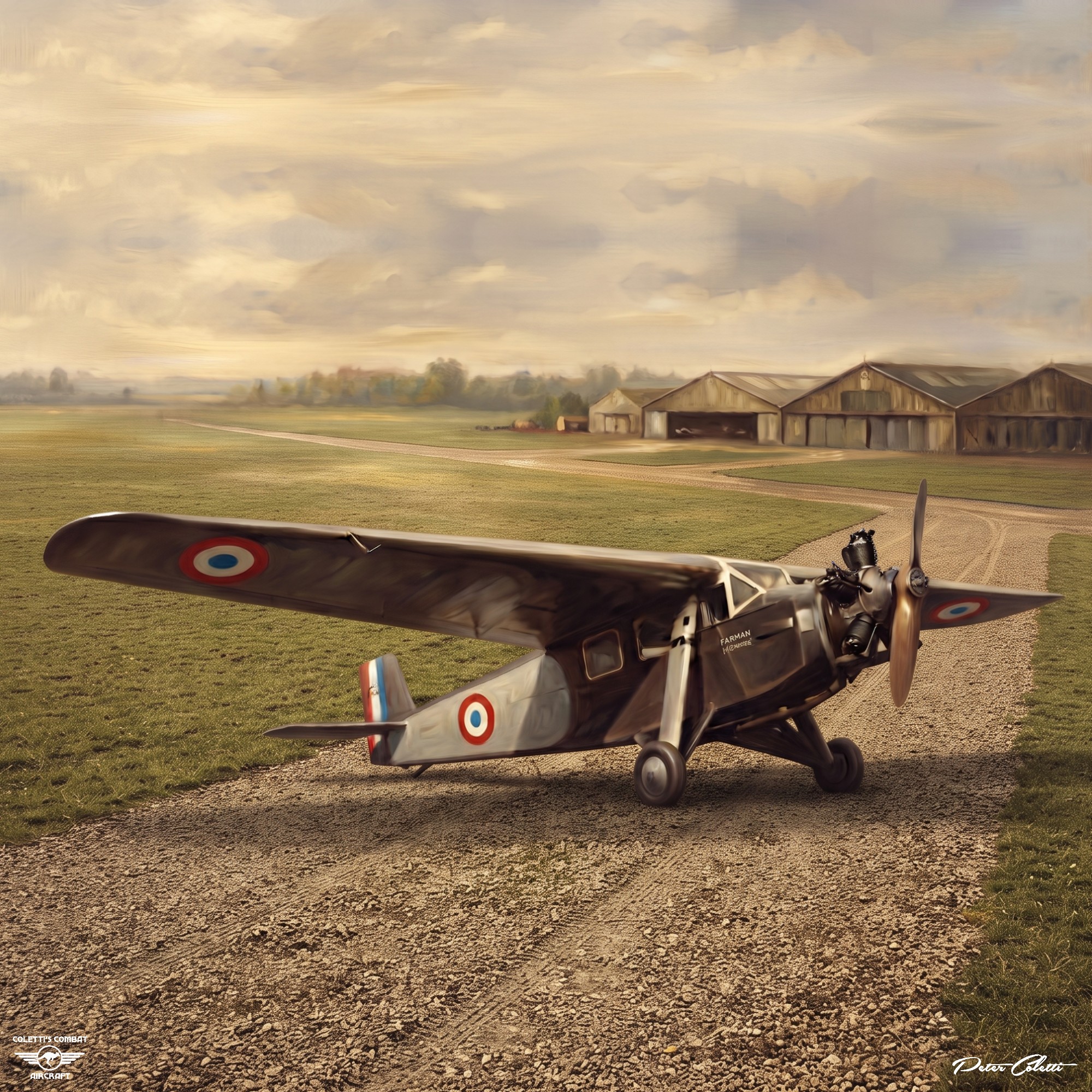
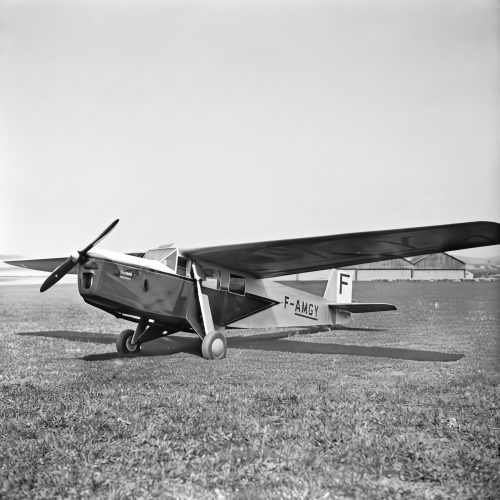
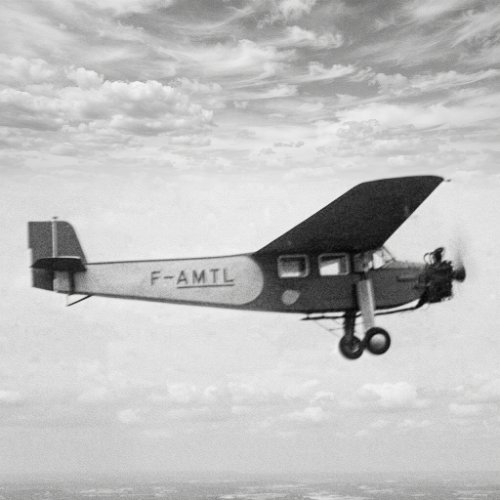
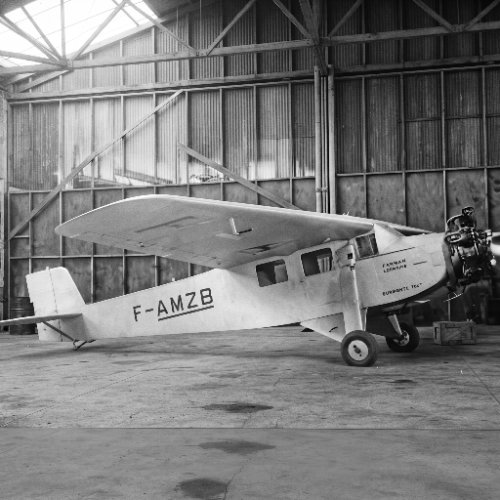
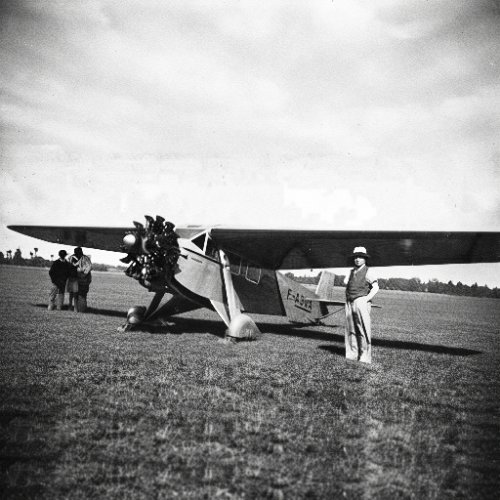
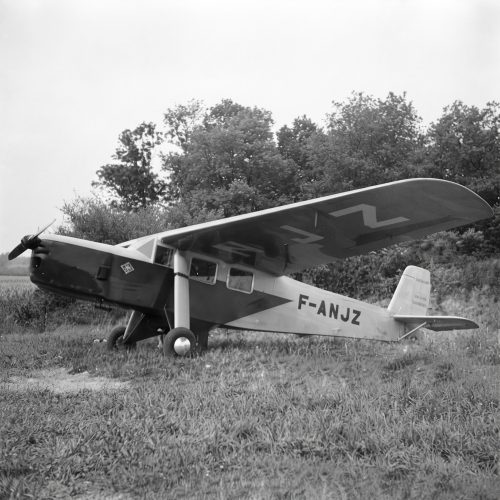
The Farman F.402 was a French light utility and touring monoplane of the early 1930s, developed by the renowned Farman Aviation Works as part of the wider Farman F.400 family.
Although modest in size and performance, the aircraft represented an important step in Farman’s transition from the company’s earlier, more traditional aircraft designs to cleaner, more modern monoplanes.
It combined civil touring capabilities with military utility and would later see operational service during the Spanish Civil War, one of the key conflicts that preceded the Second World War.
Development History
By the early 1930s, aviation design was rapidly evolving.
Aircraft manufacturers across Europe were moving away from externally braced biplanes towards streamlined cantilever monoplanes, offering improved performance, reduced drag, and greater efficiency.
Farman, a company founded and operated by the brothers Henri, Maurice, and Richard Farman, had built its reputation on pioneering aircraft from the earliest days of aviation.
However, by the 1930s the company faced increasing competition from newer manufacturers embracing modern aerodynamic principles.
The response was the creation of the Farman 400 series, a family of light cabin monoplanes first flown in 1934.
The F.400 series represented a significant departure from many previous Farman products.
Instead of strut-braced wings and more traditional layouts, the aircraft featured a thin cantilever high wing of relatively clean aerodynamic form.
The wing could also be removed for storage and transport, a useful feature for private owners and operators.
Within this family, the F.402 emerged as one of several engine variations.
Farman utilised the same basic airframe while offering customers different engines to suit operational needs and market preferences.
The F.402 specifically employed the Lorraine 5Pb radial engine, making it one of the standard production members of the series.
Design and Construction
General Layout
The Farman F.402 was a high-wing cabin monoplane designed to accommodate:
One pilot
Two passengers
The enclosed cabin represented a considerable improvement in comfort compared with the open cockpits that had dominated earlier decades.
The aircraft was intended for civil touring, communication duties, liaison work, and light transport roles.
Structure
The aircraft employed a mixed-construction method typical of the period.
Fuselage
The fuselage was built around a framework of:
Welded steel tubing
Plywood skin covering
This gave the aircraft a good compromise between strength, repairability, and manufacturing simplicity.
Wings
The wing structure consisted of:
Wooden spars and ribs
Plywood covering
The cantilever wing eliminated the need for extensive external bracing wires and struts, reducing drag and giving the aircraft a much more modern appearance than many contemporary light aeroplanes.
Landing Gear
The aircraft featured:
Fixed conventional landing gear
Robust tubular construction
The undercarriage was intentionally sturdy, allowing operation from relatively rough or short airfields.
Contemporary descriptions note its ability to absorb hard landings effectively.
Cockpit and Flying Controls
One of the most unusual aspects of the F.402 was its control arrangement.
Rather than the conventional floor-mounted control column found in most aircraft, the F.402 utilised a control stick suspended from the cockpit roof.
The rudder system was operated through a vertical steering-wheel-type control, an uncommon design even for its era.
This arrangement reflected Farman’s willingness to experiment with cockpit ergonomics and control systems, although such features did not become standard in later aircraft designs.
The enclosed cockpit provided:
Better visibility
Greater comfort
Protection from weather
Improved suitability for long-distance touring flights compared with earlier open-cockpit designs.
Powerplant
The Farman F.402 was powered by a:
Lorraine 5Pb
Five-cylinder
Air-cooled radial engine
Approximately 110-120 hp (82-89 kW)
Power was transmitted through a fixed-pitch two-bladed wooden propeller.
The engine provided adequate power for a light aircraft of the period and permitted respectable cruise and range performance rather than exceptional speed.
Some surviving examples were later fitted with alternative engines, including Salmson radial units, but these modifications were not representative of the original F.402 production standard.
Technical Specifications (Farman F.402)
Dimensions
Length: 8.25 m
Wingspan: 11.72 m
Height: 2.07 m
Wing Area: 21.5 m²
Weights
Empty Weight: 681 kg
Gross Weight: 1,150 kg
Powerplant
1 × Lorraine 5Pb radial engine
Output: 110-120 hp
Performance
Maximum Speed: 194 km/h
Cruising Speed: 170 km/h
Range: 1,000 km
Service Ceiling: 4,000 m
Crew and Capacity
Pilot: 1
Passengers: 2
Operational Use
Civil Aviation
The primary role of the F.402 was civil.
Typical uses included:
Touring
Private ownership
Executive transport
Courier service
Communications flights
Its enclosed cabin and long range made it attractive for regional travel during an era when air transport infrastructure remained limited.
Military Utility
Although not designed as a combat aircraft, the F.402’s useful load, endurance, and ability to operate from small airfields made it adaptable for military support roles.
Military operators used aircraft from the F.400 series for:
Liaison work
Personnel transport
Ambulance missions
Communications duties
General utility flying
Spanish Civil War Service
The most significant military chapter in the F.402’s history came during the Spanish Civil War (1936-1939).
Aircraft of the F.400 family, including the F.402, were operated in Spain and served on both Republican and Nationalist sides at various stages of the conflict.
Because the war involved a diverse collection of imported and requisitioned aircraft, relatively small numbers of utility aeroplanes such as the F.402 found employment in non-combat functions.
Their duties included:
Communication flights
Staff transport
Liaison missions
Ambulance work
Light logistics support
Unlike fighter aircraft such as the Polikarpov I-16 or Messerschmitt Bf 109 prototypes that gained fame in Spain, the F.402 worked behind the front lines, contributing to operational mobility and communications.
A surviving aircraft displayed today in Madrid reportedly served in Zaragoza during the conflict as a communications, transport, and ambulance aircraft.
The F.402 and the Second World War Context
The Farman F.402 was largely a product of the pre-war period and was already becoming outdated by the late 1930s.
Several factors limited its relevance during the Second World War:
Low engine power compared with rapidly advancing aircraft technology.
Limited payload capacity.
Lack of military equipment or defensive armament.
Relatively low speed compared with wartime liaison and training aircraft.
By 1939, military aviation was moving towards all-metal monoplanes capable of speeds well over 400 km/h.
Against such machines, the F.402 belonged to an earlier generation.
Nevertheless, aircraft of its type remained useful in secondary roles:
Training
Local transport
Communications
Administrative flying
Its greatest historical importance lies less in direct wartime service and more in illustrating the transitional stage of aviation development between the classic interwar light aircraft and the more sophisticated military and civil designs that emerged immediately before World War II.
Variants
The F.402 belonged to a broader family whose variants were distinguished largely by engine selection.
F.400
Baseline: three-seat cabin monoplane.
F.402
Powered by the Lorraine 5Pb radial engine.
F.403
Fitted with a more powerful 150 hp Farman engine.
F.404
Powered by a Renault engine of approximately 140 hp.
F.405
Alternative version employing a Lorraine powerplant.
F.406
Equipped with the de Havilland Gipsy Major engine.
Legacy
The Farman F.402 occupies a modest but interesting place in aviation history.
It embodied the gradual evolution of French light aircraft design during the interwar years, combining mixed construction, cantilever-wing aerodynamics, and practical cabin accommodation in a compact airframe.
Although never produced in large numbers nor remembered as a major military aircraft, it served effectively as a transport and communication platform and became one of many lesser-known aircraft drawn into the turbulence of the Spanish Civil War.
Today, the best-known surviving example is preserved at the Museo del Aire in Madrid, where it remains a rare representative of the Farman 400 series and a reminder of a transitional era in European aviation.