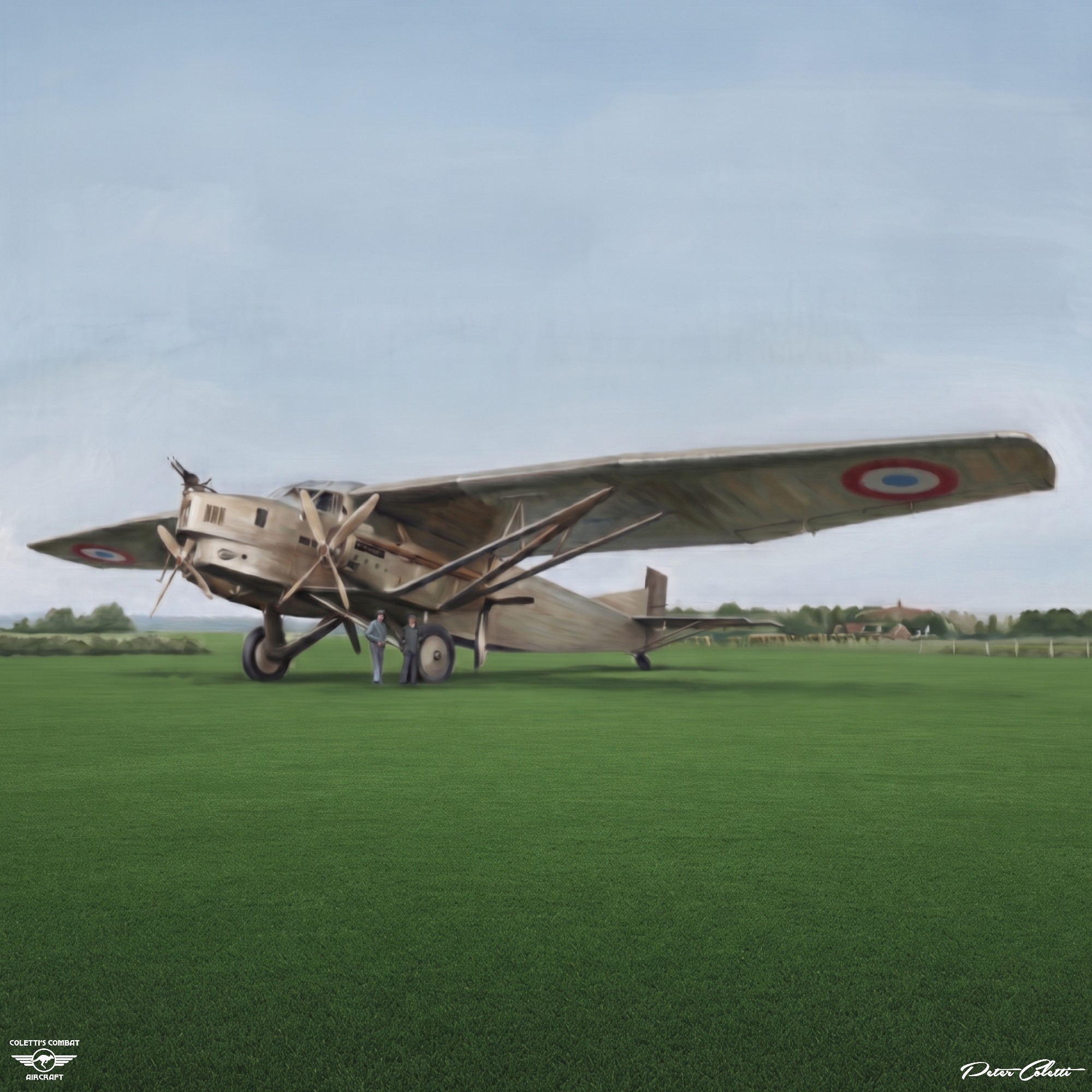
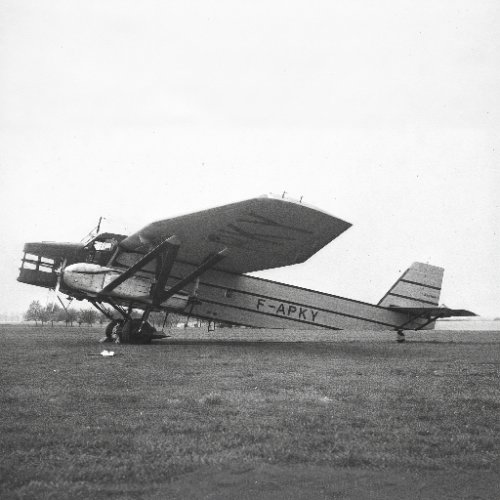
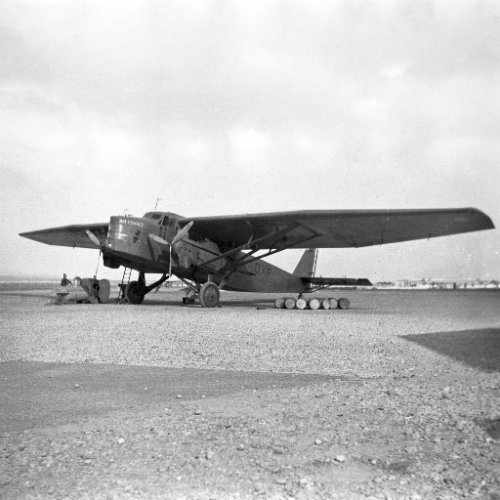
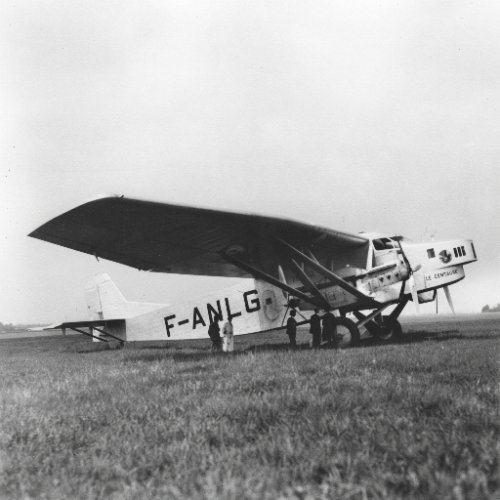
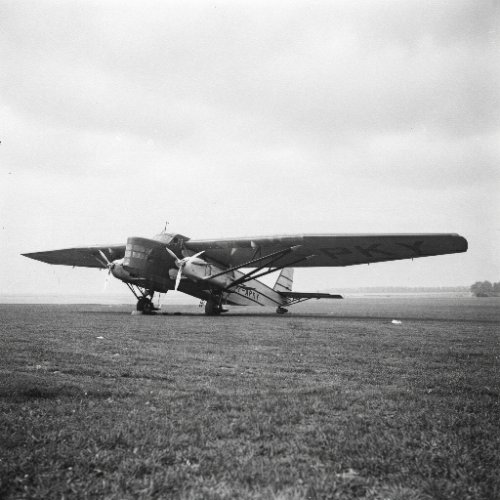
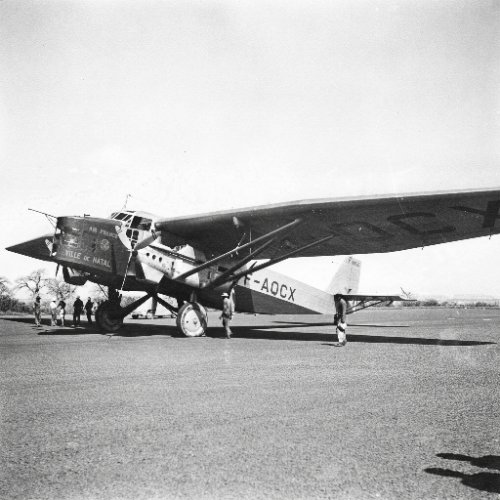
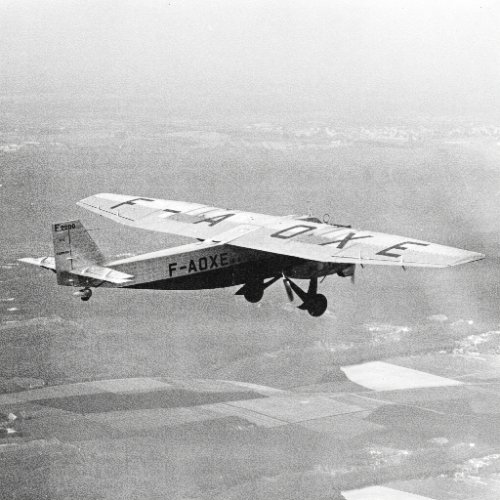
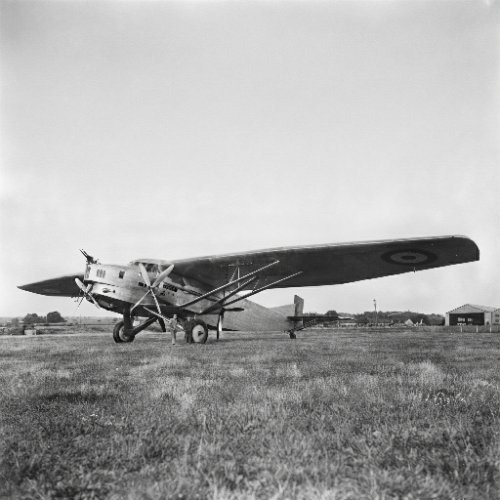
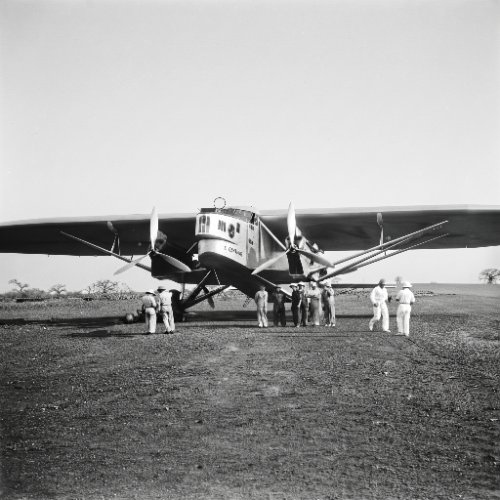
The Farman F.220 was a French four-engined heavy bomber family developed during the interwar period by Farman Aviation Works.
First flown on 26 May 1932, it became the foundation for a series of increasingly capable bombers that included the F.221, F.222, F.223, and later NC.223 derivatives.
The family represented France’s first significant heavy bomber programme and, by the outbreak of the Second World War, formed the only numerically important four-engined bomber force available to the French Air Force.
Though already somewhat outdated by contemporary international standards, the Farman bomber series played a notable role during the early stages of the war.
Its aircraft conducted leaflet-dropping missions, strategic night bombing operations, and several historically significant long-range raids.
Development History
Origins The origins of the F.220 can be traced to Farman’s experimentation with large multi-engined aircraft during the 1920s.
French military planners desired a long-range night bomber capable of carrying substantial bomb loads over strategic distances.
To satisfy these requirements, Farman began work in August 1925 on a new heavy bomber design derived from experience gained with the earlier Farman F.211.
The project evolved slowly as the French aviation industry struggled with changing requirements, technological transitions, and limited military budgets.
Farman pursued an unconventional configuration featuring paired engines arranged in push-pull nacelles mounted beneath a thick high wing.
The arrangement offered reduced asymmetric thrust following engine failure while allowing a large aircraft to be powered by available engines.
The prototype F.220 finally flew on 26 May 1932.
At the time, it was among the largest aircraft built in France and represented a major step forward in indigenous heavy bomber development.
Design Philosophy
Strategic Concept
The F.220 was conceived as a long-range heavy bomber capable of:
Night bombing missions.
Strategic bombardment.
Long-distance reconnaissance.
Maritime and colonial operations.
Transport and mail-carrying duties when required.
French doctrine during the late 1920s envisioned aircraft attacking industrial centres and transport networks far beyond the front lines.
Consequently, range and payload were emphasised more heavily than speed.
Airframe Design
General Layout
The F.220 family was characterised by a distinctive configuration:
High-mounted cantilever wing.
Four-engine powerplant arrangement.
Large box-section fuselage.
Conventional tail assembly.
Fixed or retractable landing gear depending on the variant.
Multiple gunner positions.
The thick wing section provided the necessary lift for carrying fuel, crew, and bomb loads while maintaining acceptable performance despite the relatively low engine power available during the early 1930s.
Fuselage
The fuselage was unusually deep and spacious compared with contemporary bombers.
It contained:
Pilot and co-pilot positions.
Navigator station.
Radio operator facilities.
Bombay.
Crew rest areas on some models.
Defensive gun positions.
While bulky in appearance, the large fuselage made the aircraft adaptable to multiple roles, including transport and mail-carrying duties.
Crew Stations
Crew positions evolved throughout development.
Early aircraft featured:
Open gun positions.
Less streamlined nose sections.
Basic crew protection.
Later versions introduced:
Enclosed gun turrets.
Better crew communications.
Improved visibility.
More aerodynamic glazing arrangements.
Powerplant Development
One of the defining characteristics of the F.220 family was its continual engine evolution.
Prototype F.220
The original aircraft used liquid-cooled Hispano-Suiza engines mounted in paired push-pull nacelles.
This arrangement reflected Farman’s earlier heavy-aircraft philosophy.
F.221
Operational experience led Farman to adopt more powerful radial engines while redesigning the airframe.
The change improved reliability and maintenance efficiency.
F.222
Further development introduced more powerful Gnome-Rhône radial engines and substantially improved performance.
The F.222 became the principal operational bomber version.
F.223
The final major development stage employed improved engines and a more aerodynamic airframe, resulting in better payload, speed, and endurance.
Technical Characteristics
Because the F.220 designation commonly refers to the entire bomber family, the best-known operational performance figures are those of the mature F.222.2 variant.
F.222.2 Specifications
Type: Heavy bomber
Crew: Approximately 5-6 personnel
Engines: Four Gnome-Rhône 14N-11 radial engines
Power: 950 hp each
Maximum Speed: Approximately 360 km/h
Cruising Speed: Approximately 280 km/h
Service Ceiling: Approximately 8,000 m
Empty Weight: Approximately 11,000 kg
Maximum Take-off Weight: Approximately 18,700 kg
Bomb Load: Up to approximately 2,500 kg operationally, with greater loads possible on shorter-range missions
Defensive Armament: Three 7.5 mm machine guns in nose, dorsal, and ventral positions
For the mid-1930s these figures were respectable, though by 1940 the aircraft’s speed and defensive capability lagged behind newer German bombers and fighters.
Variants
F.220 Prototype
The original prototype embodied Farman’s basic heavy-bomber concept.
Characteristics included:
Four-engine push-pull arrangement.
Large high-wing configuration.
Fixed landing gear.
Single-fin tail.
Only one true prototype was completed.
F.220B
The prototype was later converted for civil use and sold to Air France.
Named Le Centaure, it operated as a long-range mail aircraft on South Atlantic routes.
The success of these operations led to the construction of additional mail-carrying aircraft derived from the design.
F.221
Following evaluation of the prototype, Farman redesigned the aircraft extensively.
Improvements included:
New tail unit.
Enclosed gun positions.
Radial engines in place of liquid-cooled engines.
Improved crew protection.
The first F.221 flew in May 1933, and ten production aircraft were eventually delivered to the French Air Force.
F.222.1 The F.222 represented a major advancement.
Improvements included:
Retractable landing gear.
Improved defensive armament.
Refined aerodynamics.
More efficient engine installation.
The retractable undercarriage significantly reduced drag and increased performance.
F.222.2
This became the primary operational heavy-bomber model.
Changes included:
Redesigned nose.
More powerful engines.
Improved wing geometry.
Greater overall effectiveness.
Twenty-four examples were produced.
F.223 / NC.223
The final and most sophisticated development introduced:
Completely revised fuselage.
Twin-fin tail.
Better aerodynamic efficiency.
Enhanced payload capability.
Long-range transport and bomber versions.
After Farman became part of the nationalised French aviation industry, these aircraft were redesignated NC.223.
Operational Service
French Air Force Service
The F.220 family entered service during a period when France urgently sought to modernise its bomber force.
Production remained modest, but the aircraft filled an important gap while more advanced bombers were still under development.
By the late 1930s, Farman heavy bombers equipped several French bomber groups and represented the nation’s principal four-engined strategic bomber capability.
World War II Operations
Early War Missions
When war broke out in September 1939, Farman bombers were already becoming obsolete.
Nevertheless, they remained available in useful numbers.
Their initial operations concentrated on:
Long-range reconnaissance.
Propaganda leaflet drops.
Strategic patrols.
Night bombing missions.
The aircraft’s relatively low speed made daylight operations hazardous, encouraging greater use in nocturnal missions.
Bombing Operations Against Germany
During the Battle of France in May and June 1940, Farman bombers carried out night attacks against German industrial and military targets.
These operations demonstrated the aircraft’s excellent endurance but also highlighted its vulnerability in modern air warfare. Several aircraft were lost during these missions.
The Berlin Raid
Perhaps the most famous achievement of the series came with the NC.223 derivative.
On the night of 7-8 June 1940, the NC.223.3 Jules Verne conducted the first Allied bombing raid against Berlin.
Although the physical damage inflicted was limited, the operation possessed considerable symbolic importance and demonstrated that German territory was not beyond Allied reach.
Collapse of France
During the final weeks of France’s defeat, surviving Farman bombers participated in evacuation, transport, and escape operations.
One notable incident involved French pilot James Denis, who flew a Farman F.222 to Britain with fellow personnel after concluding that the campaign was lost, subsequently joining the Free French forces.
Assessment
The Farman F.220 family occupies an important place in French aviation history.
Although cumbersome in appearance and technologically conservative, it gave France a practical heavy-bomber capability at a time when few European nations possessed operational four-engined bombers.
It also served as a valuable experimental platform for large-aircraft development.
The series evolved dramatically from the original 1932 prototype into the much more refined NC.223, illustrating the rapid pace of aeronautical progress during the interwar years.
By 1940 its limitations were obvious, yet the aircraft remained capable of carrying heavy loads over long distances and performed several historically significant missions.
Consequently, the Farman F.220 and its derivatives stand as the most important French heavy bombers to enter operational service before and during the opening phase of the Second World War.