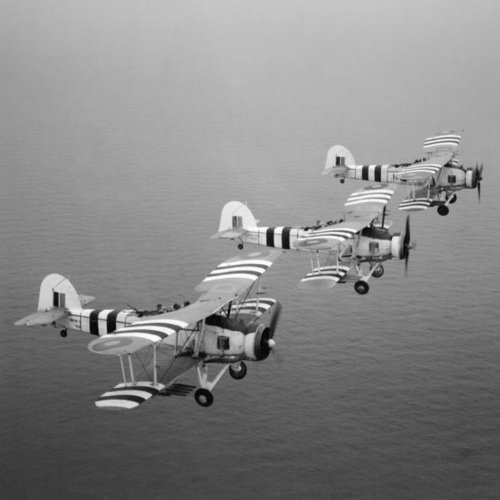
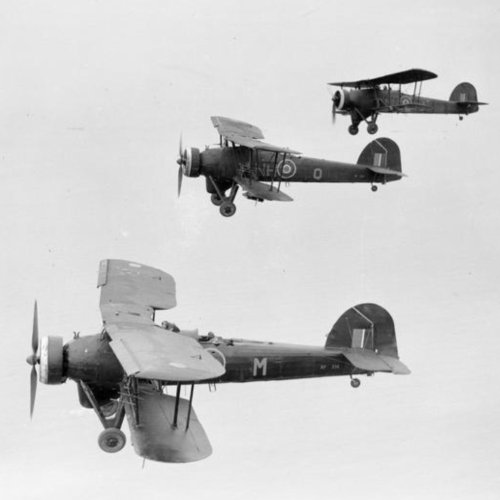
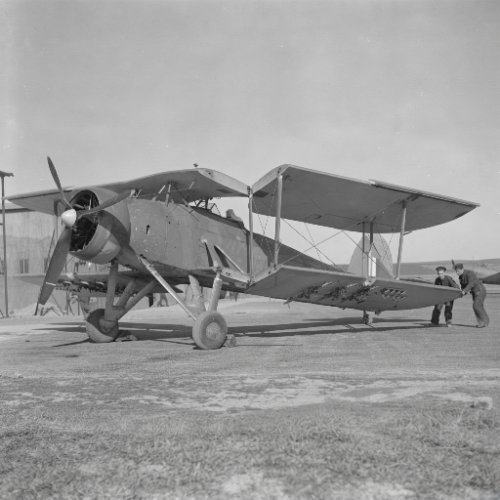
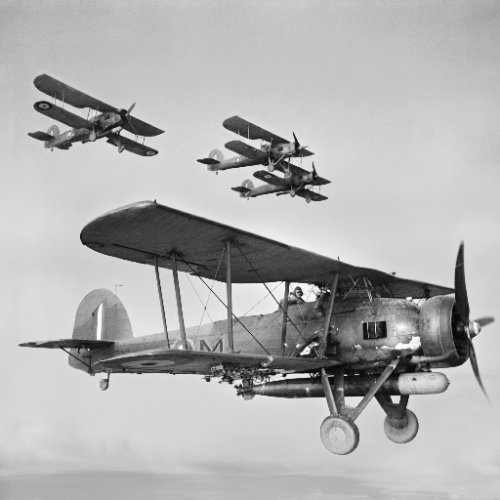
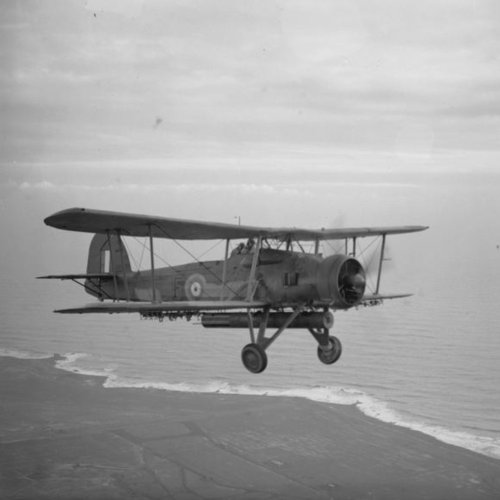
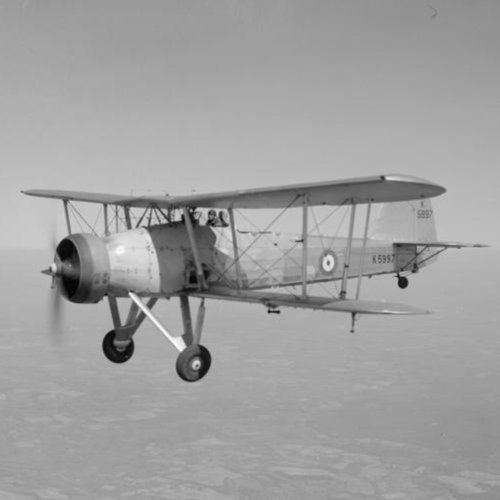
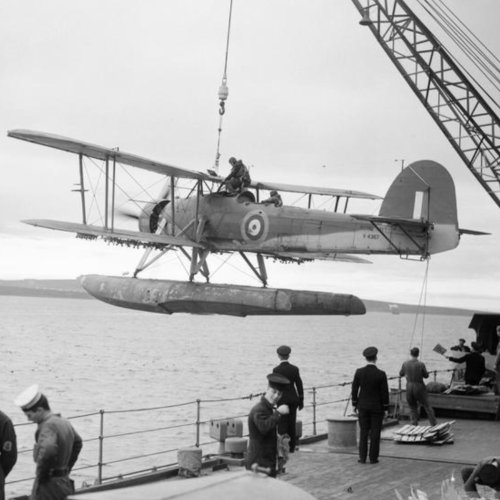
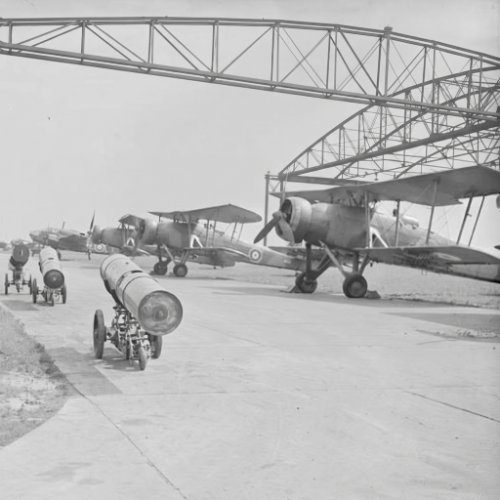
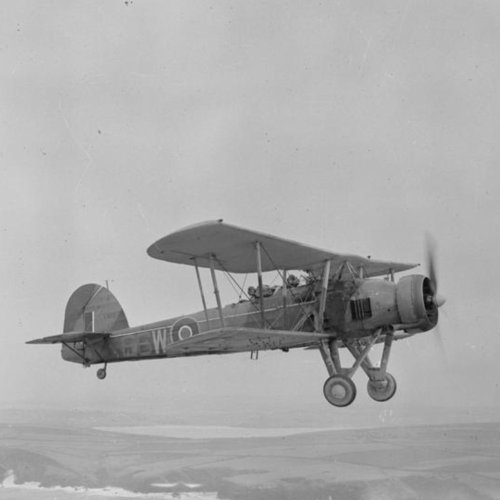
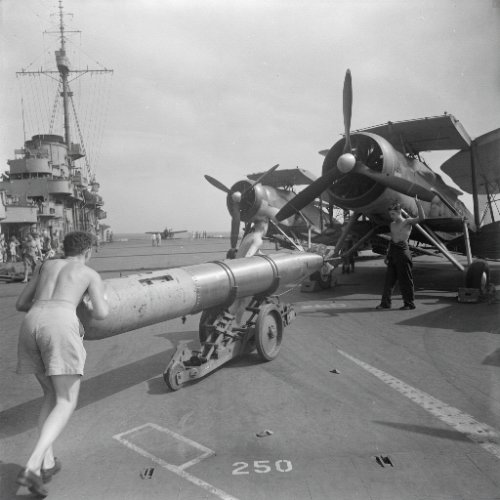
The Fairey Swordfish originated in 1933 when Fairey Aviation began developing a new three‑seat naval aircraft for reconnaissance and torpedo‑attack roles.
The internal designation was T.S.R.I. (Torpedo‑Spotter‑Reconnaissance I), a private‑venture biplane powered by a 645 hp Bristol Pegasus IIM radial engine.
Development ran parallel to Fairey’s work on Air Ministry Specification S.9/30, and the design also drew on Fairey’s proposals for the Greek Naval Air Service and earlier British specifications M.1/30 and S.9/30.
The prototype Swordfish (TSR II) first flew on 17 April 1934, and after stability‑related refinements, production began in 1935.
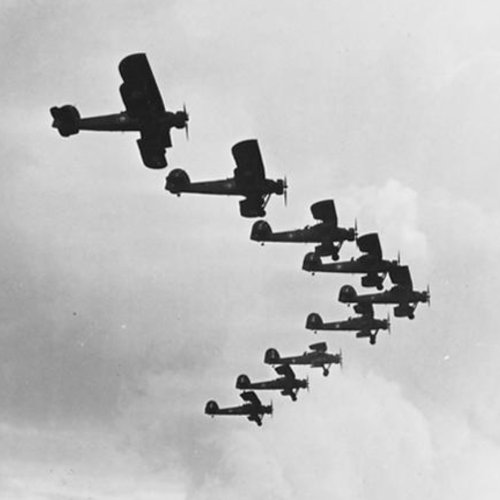
The aircraft entered Fleet Air Arm service with No. 825 Naval Air Squadron in July 1936, immediately proving itself an exceptionally stable torpedo platform.
Design and Technical Characteristics
Airframe
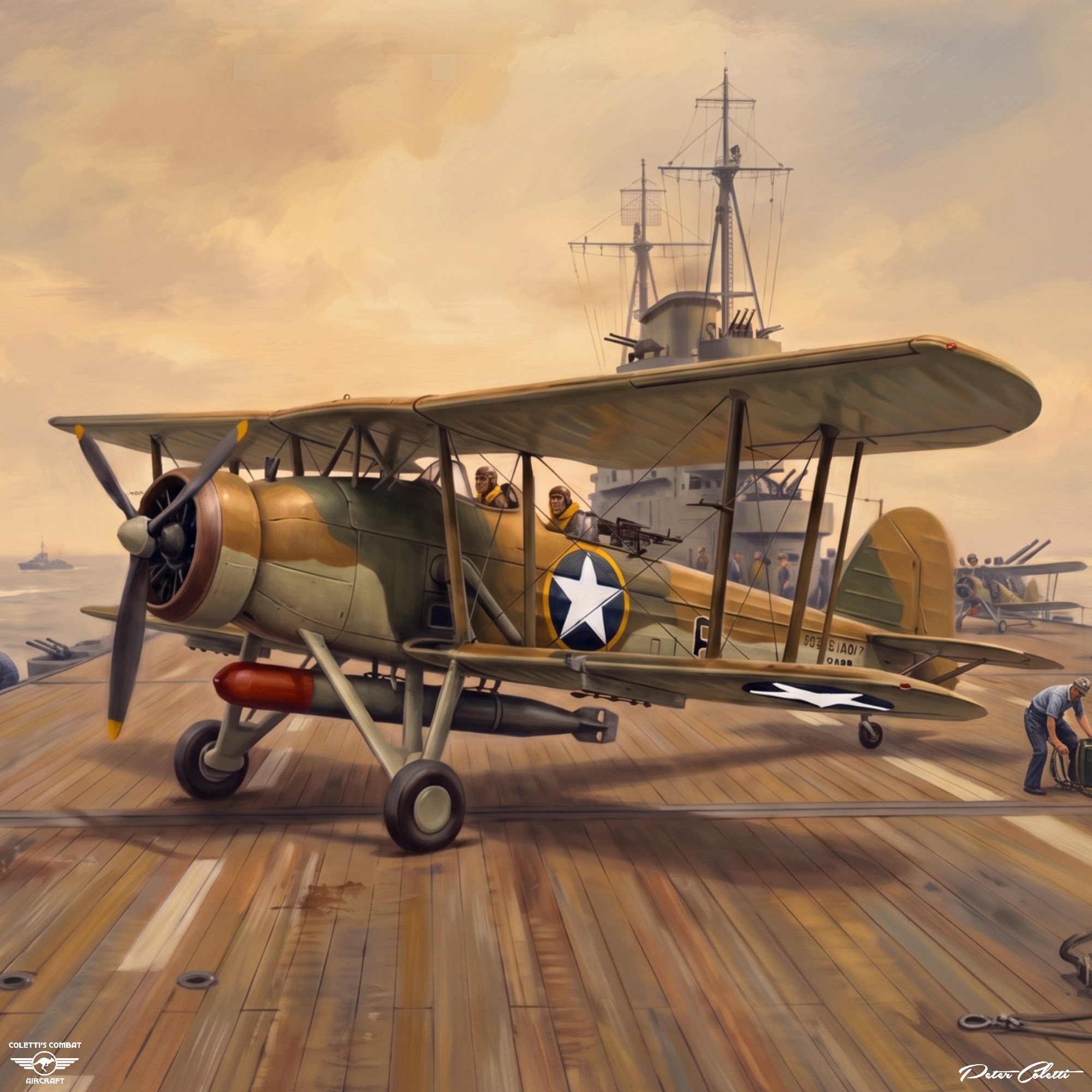
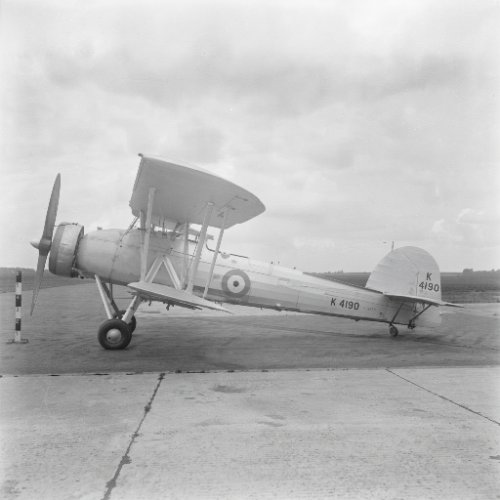
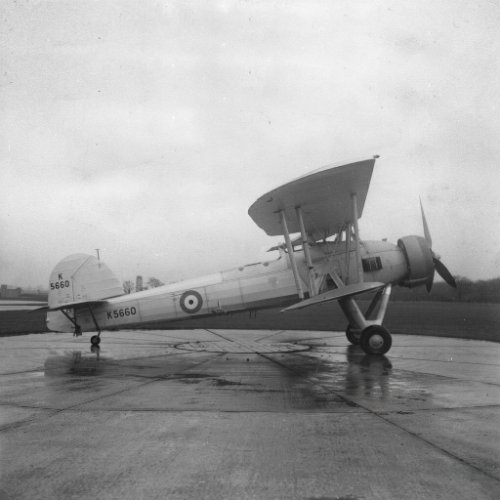
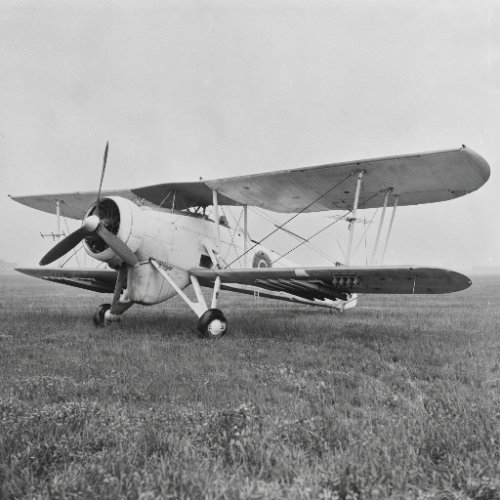
The Swordfish was a large three‑seat biplane with:
All‑metal structure covered in fabric (unlike WWI‑era wooden structures).
Fixed landing gear and open cockpits.
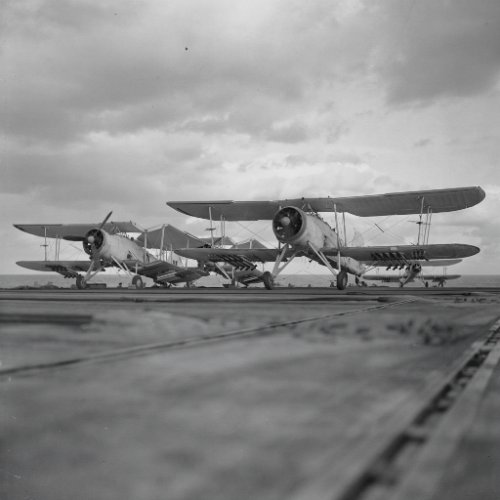
Folding wings for carrier stowage.
Enormous wing area (607 sq ft), giving extremely low wing loading and superb low‑speed handling.
This combination made the Swordfish slow but remarkably controllable, especially during low‑level torpedo attacks.
Crew
Pilot
Observer/Navigator
Telegraphist‑Air Gunner
Powerplant
The primary production variant used the Bristol Pegasus IIIM.3, producing 690 hp.
Armament
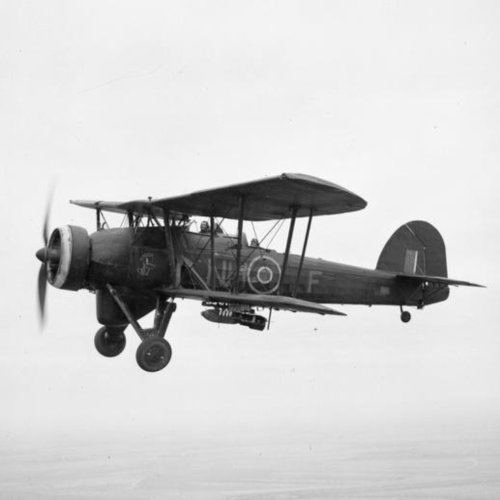
Forward‑firing .303‑in Vickers gun
Rear .303‑in Lewis or Vickers K gun
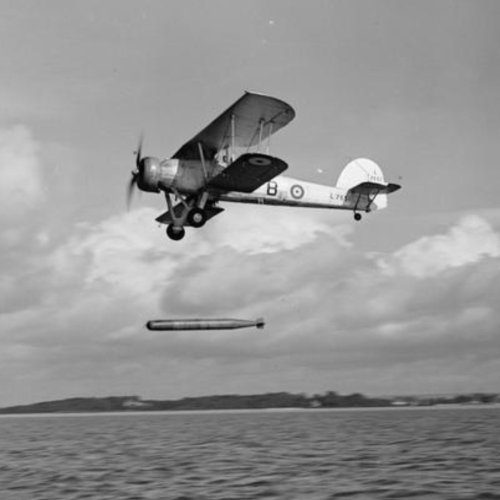
Torpedoes or bombs carried under the fuselage
Later ASW variants carried depth charges.
Dimensions and Performance (Swordfish Mk I)
Max speed: 139 mph at 4,750 ft
Range: 546 miles
Service ceiling: 10,700 ft
Rate of climb: 1,220 ft/min
Crew: 3
Engine: Bristol Pegasus IIIM.3, 690 hp
Although slow—even slower than some ships it attacked—the Swordfish’s low‑speed stability made it ideal for torpedo delivery.
Variants
Swordfish Mk I
Original production model
Torpedo‑spotter‑reconnaissance aircraft
Powered by Pegasus IIIM.3
86 aircraft in the initial batch; later expanded massively
Swordfish Mk II
Strengthened lower wings
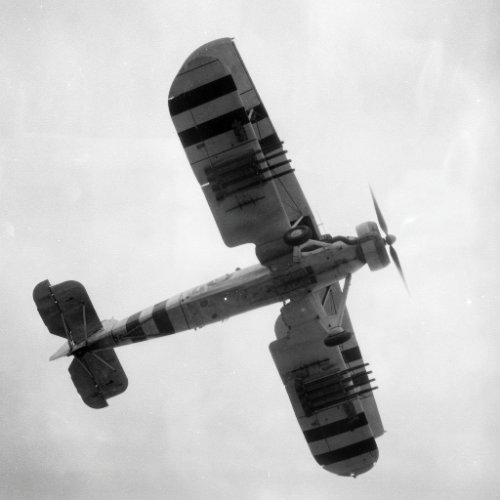
Metal‑skinned undersides for rocket firing
Optimised for anti‑submarine warfare
Swordfish Mk III
Equipped with ASV radar for night and poor‑weather ASW patrols
Served extensively in the Battle of the Atlantic
Production Summary
A total of 2,391 swordfish were built (692 by Fairey, 1,699 by Blackburn).
Operational History and WWII Context
Early War Service
The Swordfish was already considered obsolete by 1939, yet it remained in frontline service throughout the war.
Its simplicity, reliability, and low‑speed handling made it indispensable.
Battle of Taranto (1940)
Swordfish from HMS Illustrious launched a night torpedo attack on the Italian fleet at Taranto, sinking one battleship and damaging two others—an operation that influenced Japanese planning for Pearl Harbour.
Attack on Bismarck (1941)
Swordfish from HMS Ark Royal crippled the German battleship Bismarck by jamming her rudder with a torpedo hit, enabling Royal Navy surface ships to destroy her.
Anti‑Submarine Warfare
Later in the war, Swordfish Mk II and Mk III aircraft equipped with rockets and radar became highly effective ASW platforms, sinking more Axis shipping tonnage than any other Allied aircraft type.
Longevity
The Swordfish remained in frontline service until V‑E Day (May 1945), outlasting its intended replacement, the Fairey Albacore.
Assessment and Legacy
The Fairey Swordfish was:
Technically obsolete but operationally brilliant
The most successful Allied naval strike aircraft in terms of shipping tonnage sunk
A symbol of the Fleet Air Arm’s ingenuity and courage
A design whose low‑speed characteristics became an unexpected tactical advantage
Nicknamed the “Stringbag” because it could carry almost anything, the Swordfish became one of WWII’s most iconic naval aircraft—an ungainly biplane that achieved legendary results.