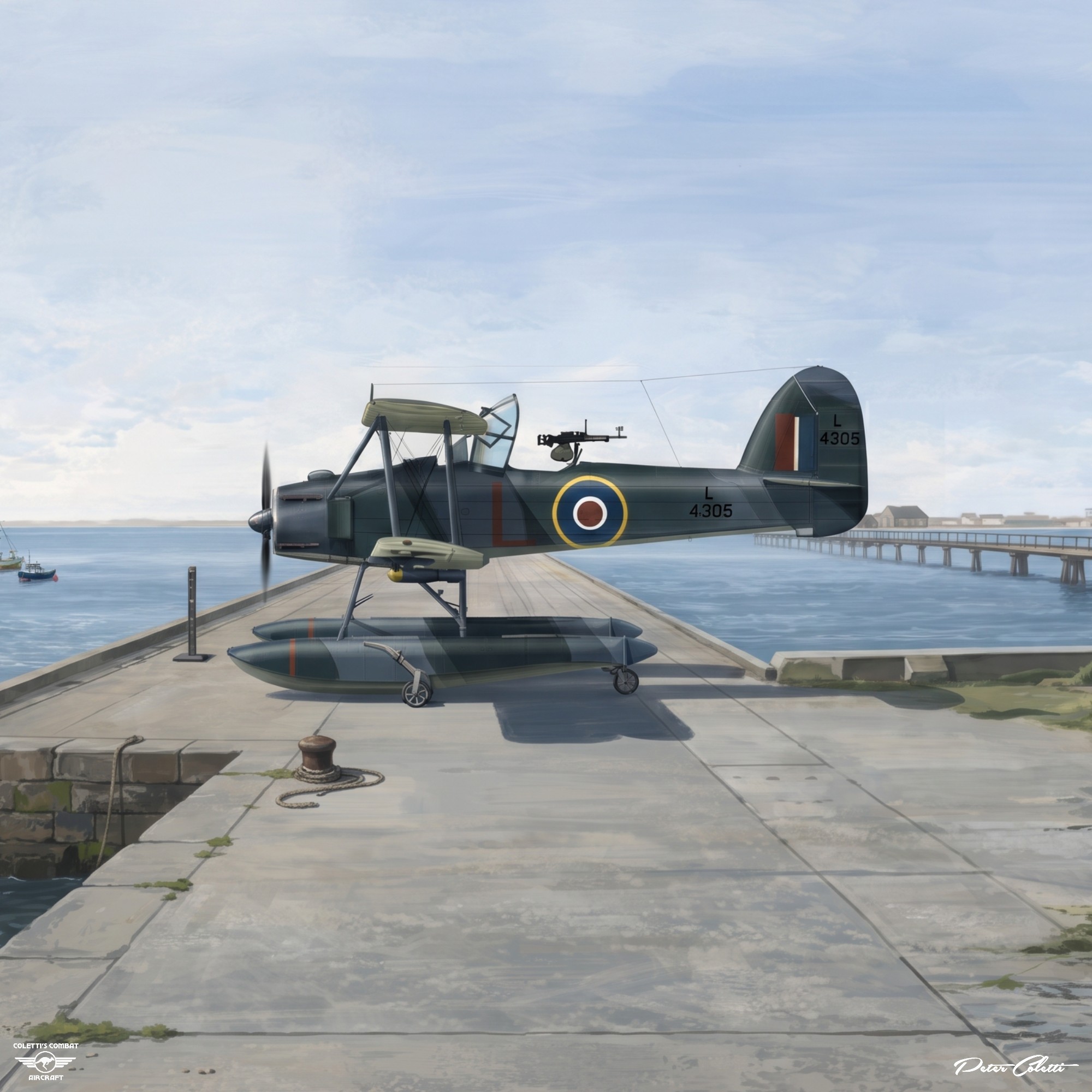
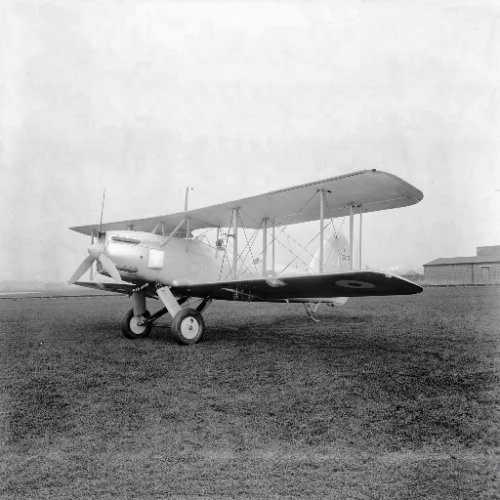
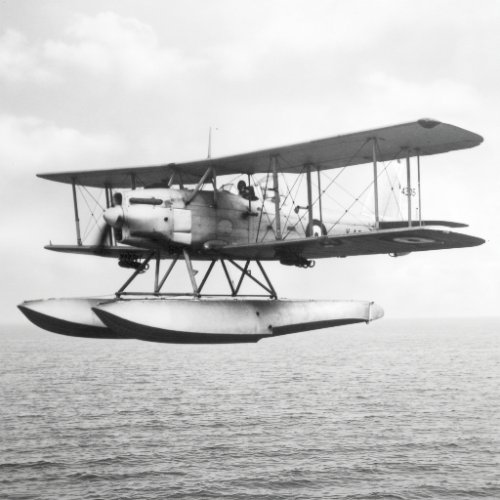
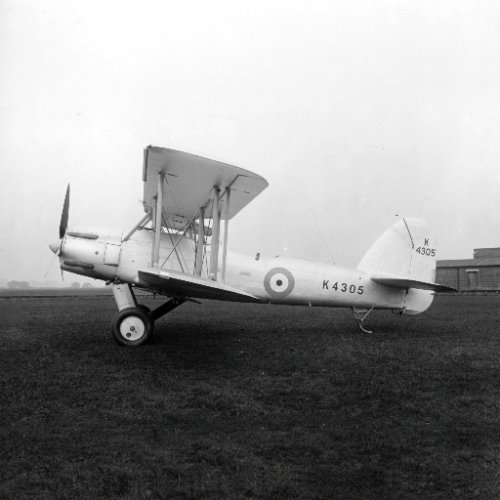
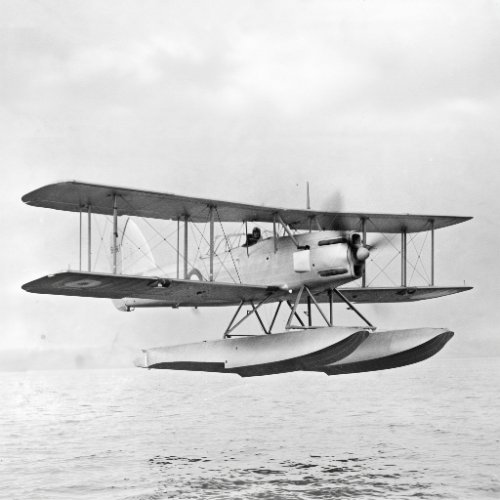
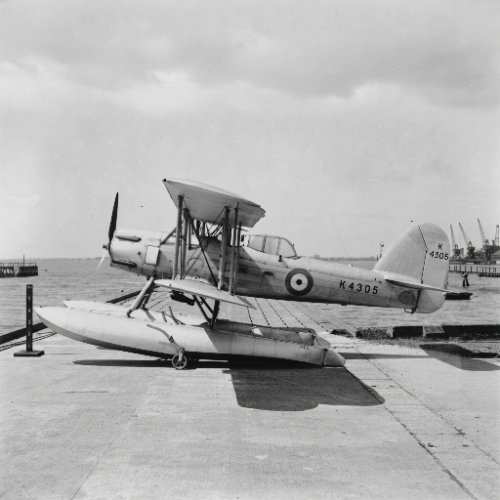
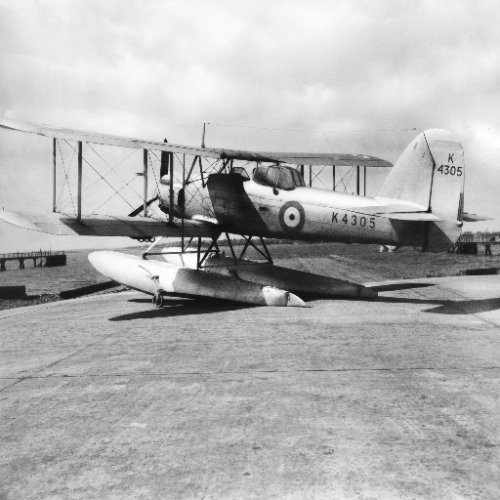
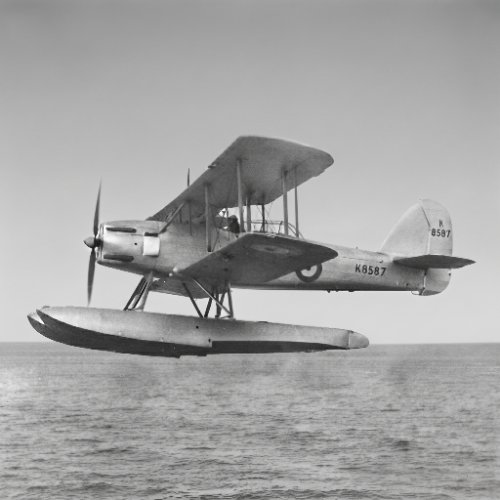
The Fairey Seafox was developed in response to Air Ministry Specification S.11/32, issued in 1932, which called for a two‑seat, catapult‑launched spotter‑reconnaissance floatplane for Royal Navy light cruisers and other warships lacking flight decks.
This requirement reflected interwar naval doctrine: treaty‑limited cruisers needed compact aircraft that could be launched by catapult for gunnery spotting, reconnaissance, and limited anti‑submarine patrols, extending fleet situational awareness without relying on aircraft carriers.
Fairey Aviation received an initial contract for 49 aircraft in January 1936, later expanded to 66.
Two prototypes were built, and the first flew on 27 May 1936.
Production aircraft began entering Fleet Air Arm service in April 1937.
Design and Technical Characteristics
Airframe and Structure
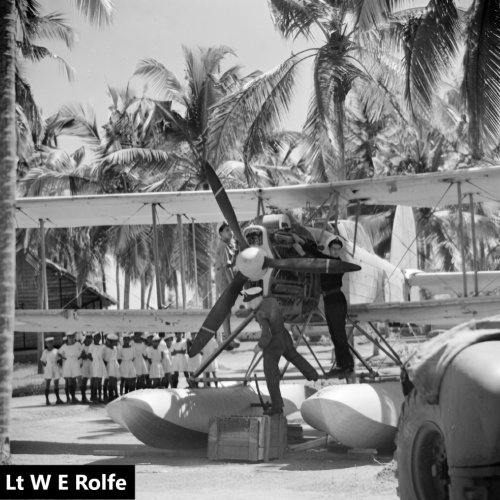
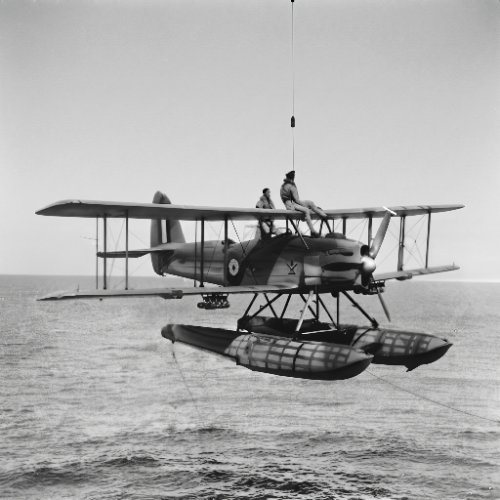
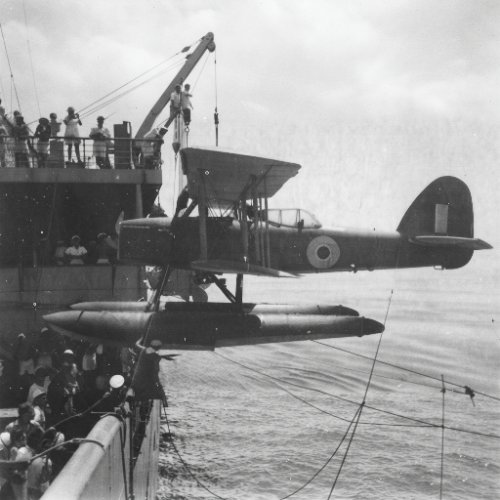
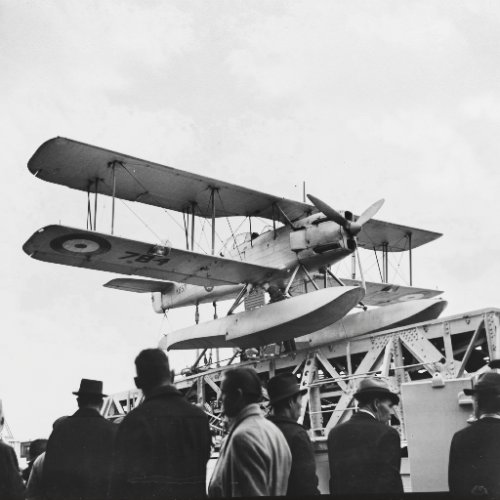
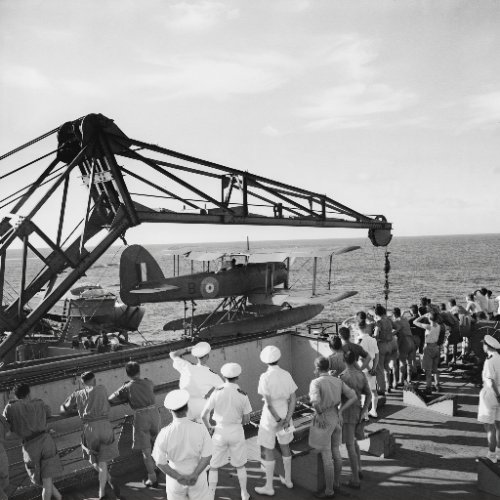
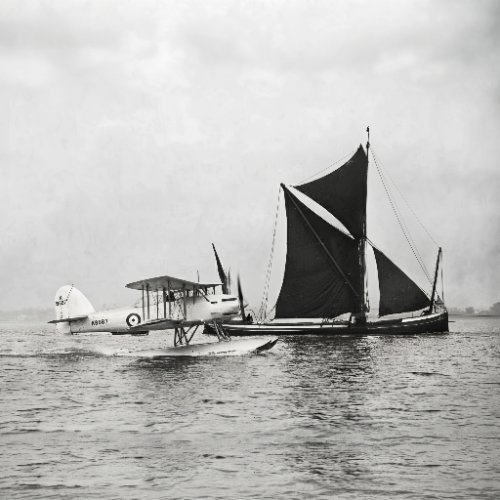
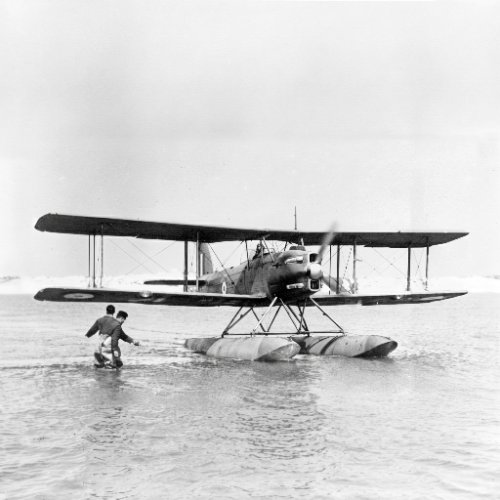
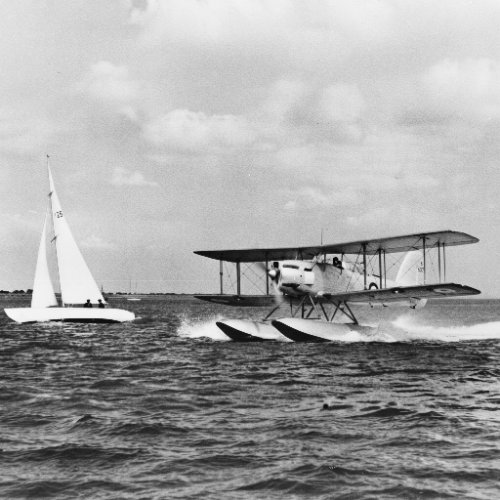
The Seafox was a two‑seat biplane floatplane, designed specifically for catapult launch and crane recovery aboard cruisers.
Its structure combined:
All‑metal monocoque fuselage, providing strength for catapult stresses.
Fabric‑covered wings and tail surfaces, with metal leading edges.
Twin floats mounted by a reinforced strut network.
The pilot sat in an open cockpit, while the observer sat aft under a small canopy.
This arrangement balanced visibility for spotting with weight savings.
Powerplant
The aircraft was powered by a Napier Rapier VI, a 16‑cylinder, air‑cooled H‑block engine producing 395 hp (295 kW).
Although compact, the Rapier was underpowered, suffered cooling problems, and contributed to higher‑than‑desired landing speeds—issues repeatedly noted by crews.
Armament and Payload
Typical armament included:
One 0.303‑in (7.7 mm) machine gun for the observer.
Under‑wing racks for two 100‑lb bombs and eight 20‑lb bombs, or flares for marking targets.
Dimensions and Performance
Authoritative specifications list:
Crew: 2
Length: 33 ft 5 in (10.19 m)
Wingspan: 40 ft (12 m)
Height: 12 ft 2 in (3.71 m)
Empty weight: 3,805 lb (1,726 kg)
Gross weight: 5,420 lb (2,458 kg)
Maximum speed: 124 mph (200 km/h)
Cruise speed: 106 mph (171 km/h)
Range: 440 mi (710 km)
Service ceiling: 9,700 ft (3,000 m)
Endurance: 4 hours 15 minutes
These figures made the Seafox adequate for reconnaissance and spotting but unsuitable for combat against enemy aircraft.
Variants
The Seafox had a simple variant structure:
Two prototypes (1936).
64 production floatplanes.
Two landplane conversions without floats.
No major sub‑variants were produced; changes were limited to minor equipment updates and bomb‑rack additions.
Operational History and WWII Context
Entry into Service
The Seafox entered Fleet Air Arm service in April 1937, operating with 700 Naval Air Squadrons and later across 11 squadrons, including 702, 703, 713, 714, 716, 718, 754, 764, 765, and 773 NAS.
It operated from cruisers such as HMS Ajax, Neptune, Orion, Emerald, and Arethusa, and armed merchant cruisers, including HMS Pretoria Castle, Asturias, and Alcantara.
Battle of the River Plate (1939)
The Seafox’s most famous action occurred during the Battle of the River Plate on 13 December 1939, when a Seafox from HMS Ajax spotted British naval gunners engaging the German pocket battleship Admiral Graf Spee.
Its corrections helped force Graf Spee into Montevideo, ultimately leading to her scuttling.
Other WWII Operations
Seafoxes also supported:
Mediterranean reconnaissance, including the evacuation of Crete (1941).
Anti‑submarine patrols and gunnery spotting during early‑war convoy operations.
However, by 1941–42, the Seafox was increasingly outclassed by faster, more capable floatplanes and shipborne aircraft.
Withdrawal
The type was withdrawn from frontline service in 1943, replaced by aircraft such as the Supermarine Walrus and more modern catapult‑launched designs.
Some Seafoxes briefly served with Australian and New Zealand naval forces, though none were exported formally.
Assessment and Legacy
The Fairey Seafox was:
A purpose‑built reconnaissance floatplane optimised for cruiser catapult operations.
Technically innovative in its monocoque fuselage and compact design.
Operationally limited by its underpowered Rapier engine, modest speed, and handling quirks.
Historically significant for its role in the Battle of the River Plate, one of the Royal Navy’s earliest WWII victories.
Although overshadowed by more capable successors, the Seafox filled a crucial niche during the early war years, providing vital spotting and reconnaissance capability to cruisers operating far from carrier support.