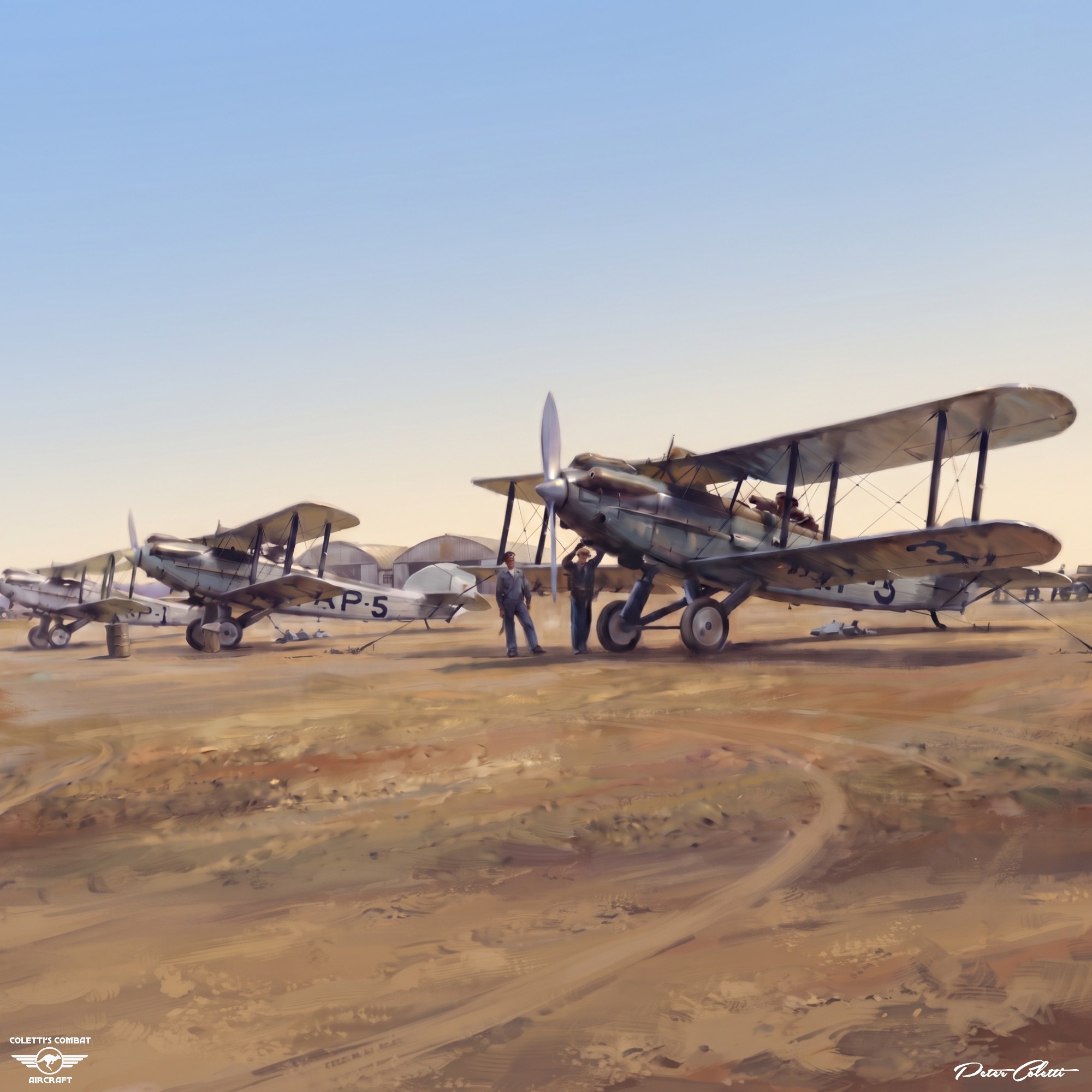
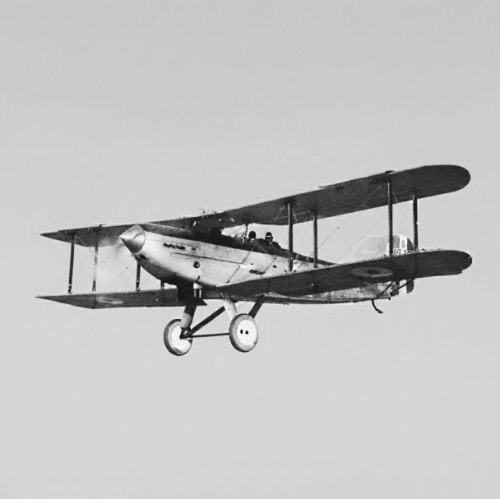
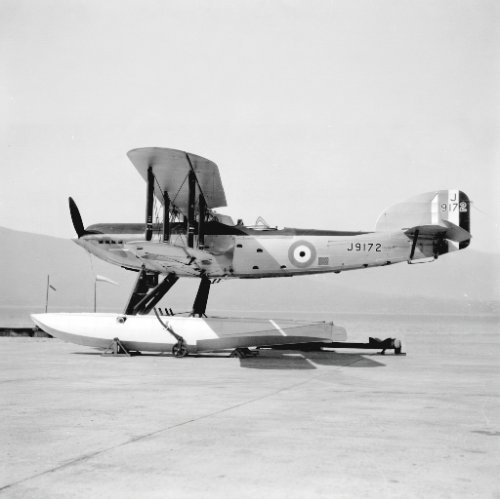
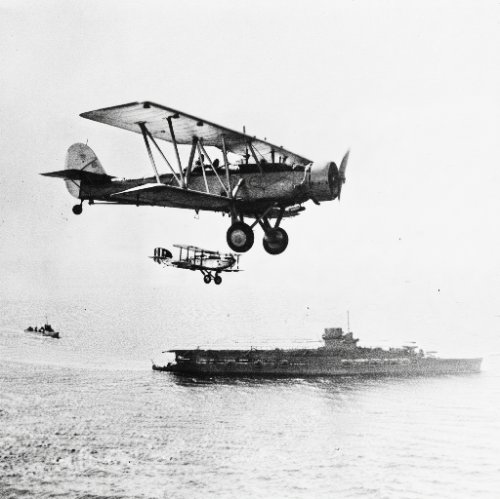
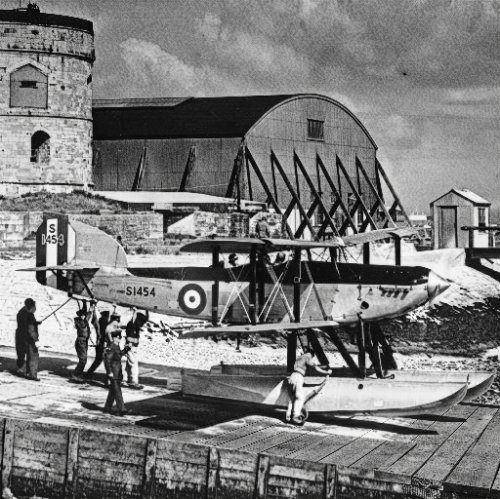
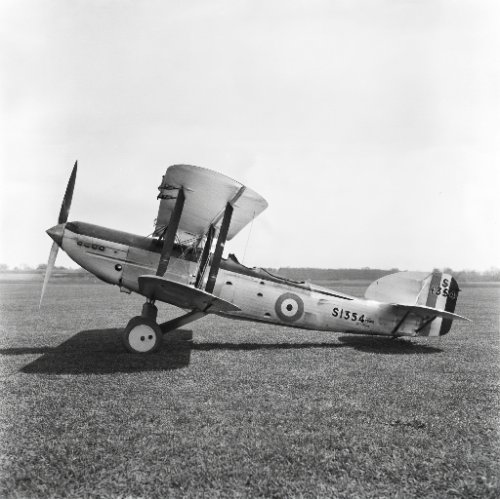
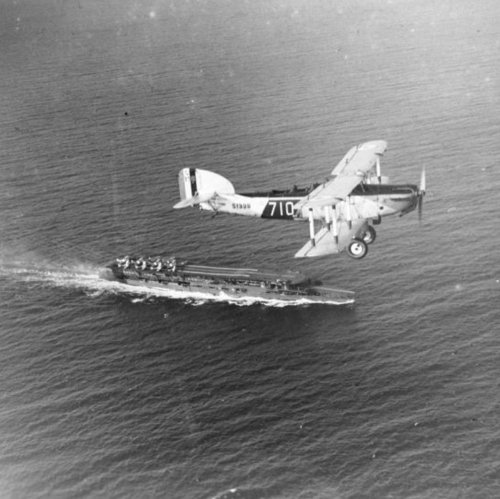
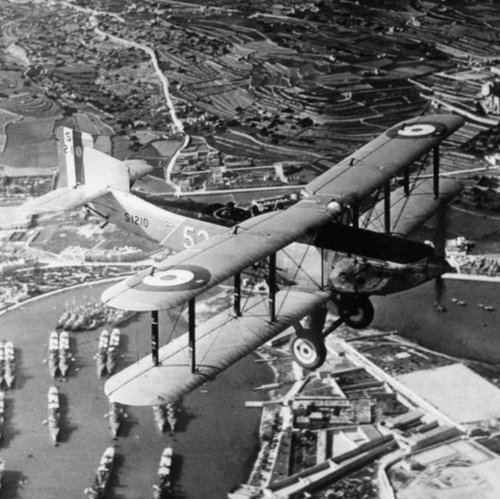
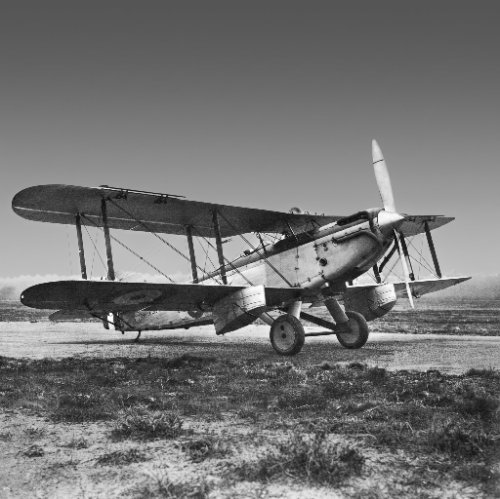
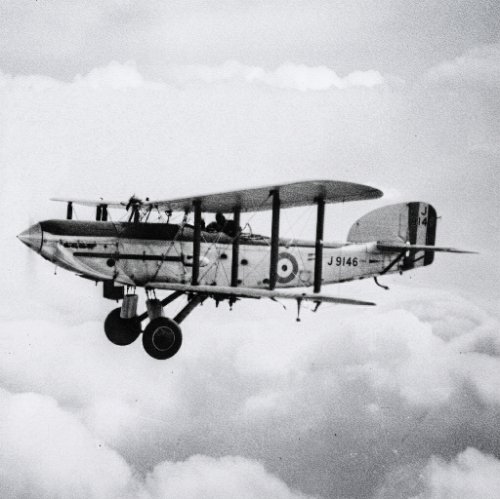
The Fairey IIIF was developed as part of the long‑running Fairey III family of reconnaissance biplanes, which first appeared in 1917 and evolved through multiple landplane and floatplane variants.
The IIIF itself was created to meet Air Ministry Specification 19/24, calling for a three‑seat carrier‑borne reconnaissance aircraft for the Fleet Air Arm and a two‑seat general‑purpose aircraft for land‑based RAF units.
The IIIF was an aerodynamic and structural refinement of the earlier Fairey IIID, retaining the Napier Lion engine but incorporating a more streamlined installation, improved fuselage shaping, and updated tail surfaces.
The prototype (N198) first flew on 19 March 1926.
The type was ordered in large numbers by both the RAF and the Fleet Air Arm, becoming one of the most widely used British military aircraft of the interwar period.
Design and Technical Characteristics
Airframe and Structure
The Fairey IIIF was a two‑bay biplane with mixed construction:
Metal fuselage frame with wooden wings, all fabric‑covered in early versions.
Later variants adopted all‑metal fuselage and wing structures, reflecting evolving RAF and FAA durability requirements.
Folding wings on naval versions for carrier stowage.
The fuselage was reshaped from the earlier IIID’s flat‑sided form into a more aerodynamic oval section.
A strengthened V‑strut undercarriage allowed for the high descent rates required for carrier landings.
Crew and Roles
Depending on variant and operator, the IIIF carried:
Three crew (pilot, observer, and gunner) in Fleet Air Arm reconnaissance versions.
Two crews in RAF general‑purpose and light‑bomber versions.
Its roles included:
Naval reconnaissance
Army co‑operation
Light bombing
Training
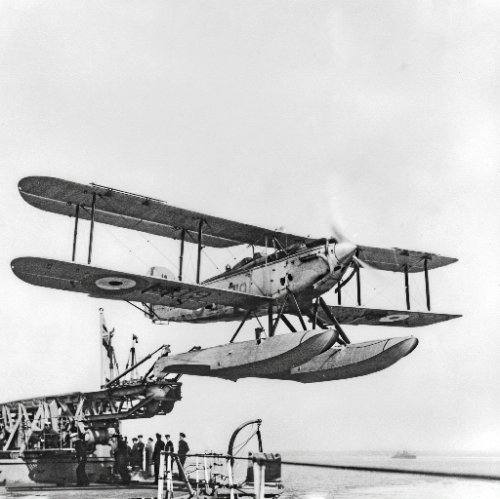
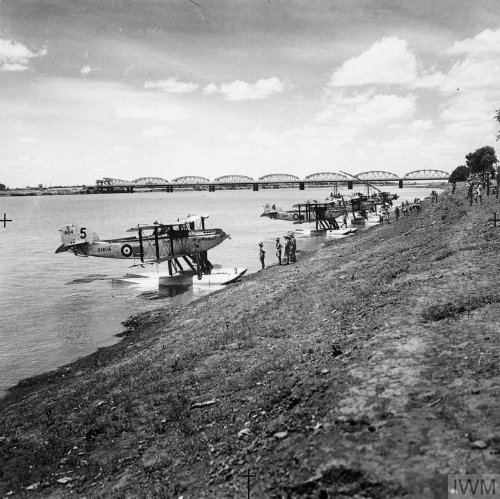
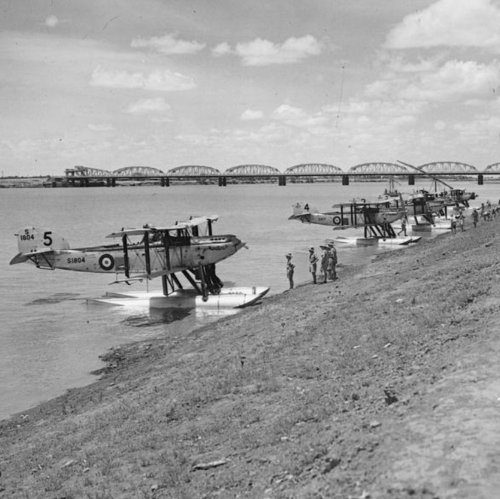
Floatplane operations from cruisers and seaplane tenders (e.g., HMAS Australia, Canberra, and Albatross)
Powerplant
The IIIF was produced with a wide range of engines, reflecting its long production run and international use:
Napier Lion XIA (typical FAA versions), ~570 hp
Rolls‑Royce Kestrel II, 635 hp
Armstrong Siddeley Jaguar VI, 460 hp
Armstrong Siddeley Panther IIA, 525 hp
Bristol Jupiter VIII, 520 hp
Napier Culverin (Junkers Jumo diesel), an experimental two‑stroke diesel
This engine diversity made the IIIF adaptable to many climates and mission types.
Performance (Typical Fairey IIIF)
From authoritative specifications:
Max speed: 193 km/h (120 mph) at 10,000 ft
Landing speed: 94 km/h (58 mph)
Climb to 5,000 ft: 6 minutes
Rate of climb: 335 m/min (1,100 ft/min)
Service ceiling: 5,761 m (18,900 ft)
Range: 1,424 km (885 miles) with standard fuel
2,336 km (1,520 miles) with extended fuel
Empty weight: 1,779 kg (3,923 lb)
Loaded weight: 3,406 kg (7,510 lb)
Armament
One fixed 0.303‑in Vickers gun (pilot)
One 0.303‑in Lewis gun on a Scarf ring (observer)
Bomb load: Two 250‑lb bombs or four 112‑lb bombs
Variants
The IIIF family was extensive, with hundreds of aircraft built across multiple marks.
Key variants include:
Fairey IIIF Mk I
First production version
Three‑seat FAA reconnaissance aircraft
Napier Lion VA engine
Mixed wood‑metal construction
50 built
Fairey IIIF Mk II
Improved FAA reconnaissance version
Napier Lion XIA engine
33 built
Fairey IIIF Mk III
Major production variant
Napier Lion XIA
Metal‑structured fuselage
269 built
Fairey IIIF Mk III (Intermediate)
93 built
First flight: 26 March 1929
Fairey IIIF Mk III (DC)
10 dual‑control trainers
Fairey IIIF Mk IIIB
166 built
Strengthened for catapult launching
First flight: 6 June 1930
Fairey IIIF Mk IV
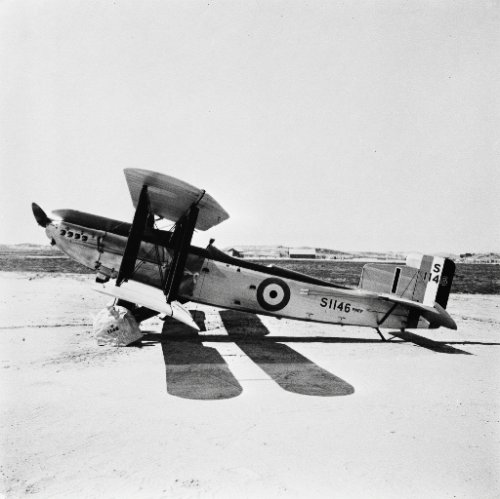
Two‑seat general‑purpose RAF version
243 built across sub‑variants
Used extensively in the Middle East
(first 25 aircraft: J9053–J9077)
Conversions
In the 1930s, many RAF IIIFs were re‑engined with the Armstrong Siddeley Panther and converted into Fairey Gordon light bombers.
Operational History and WWII Context
Interwar Service
The Fairey IIIF became:
The most widely used Fleet Air Arm aircraft between the world wars (over 350 delivered).
One of the most numerous RAF aircraft of the interwar period, second only to the Hawker Hart family.
It served in:
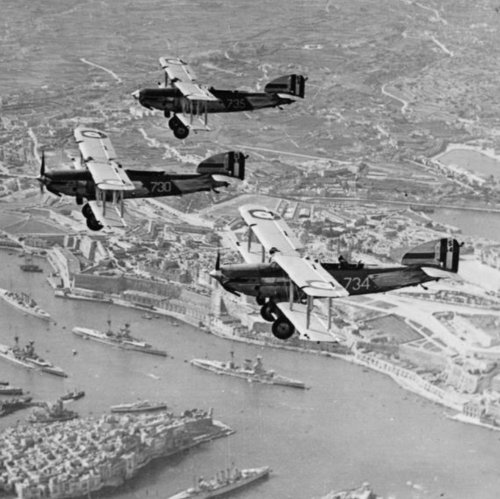
The Mediterranean
Middle East (Egypt, Iraq, Palestine)
India
Australia (RAN cruisers and seaplane tender HMAS Albatross)
Portugal and other export customers
Roles included reconnaissance, patrol, gunnery spotting, light bombing, and naval floatplane operations.
WWII Context
Although the IIIF was obsolete by 1939, some aircraft—especially floatplane and colonial‑stationed examples—remained in limited use at the outbreak of WWII.
Its primary WWII relevance lies in:
Continued service of late‑production IIIFs in training and second‑line duties.
The large number of IIIFs were converted into Fairey Gordons, which did see combat in early WWII (e.g., the Anglo‑Iraqi War, 1941).
The IIIF itself was retired from frontline service by 1942.
Assessment and Legacy
The Fairey IIIF was:
A cornerstone of British military aviation between the wars.
The Fleet Air Arm’s most numerous aircraft of the interwar period.
A versatile platform that served as a landplane, floatplane, bomber, reconnaissance aircraft, and trainer.
The basis for later Fairey designs, including the Fairey Gordon and Fairey Seal.
Its long service life (1926–1942) and widespread use across the RAF, FAA, and Commonwealth navies make it one of the most historically significant British biplanes of the era.