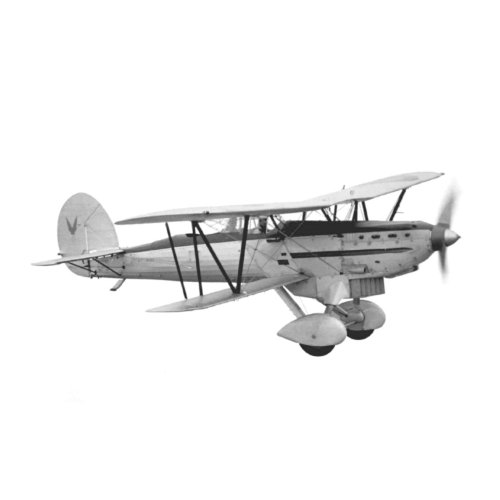
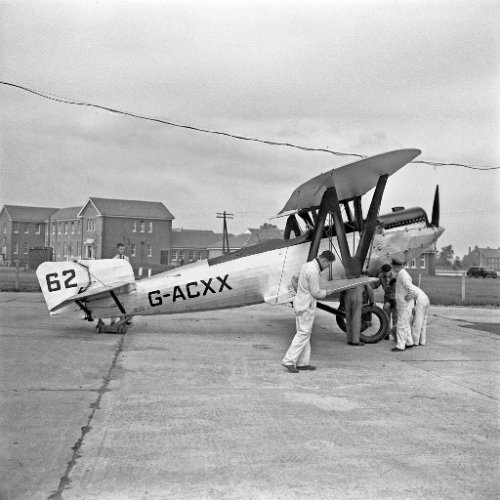
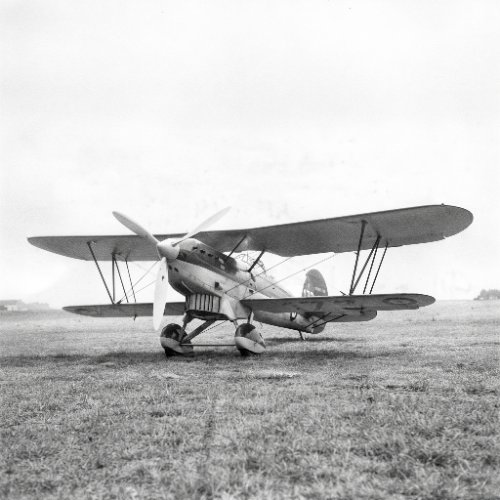
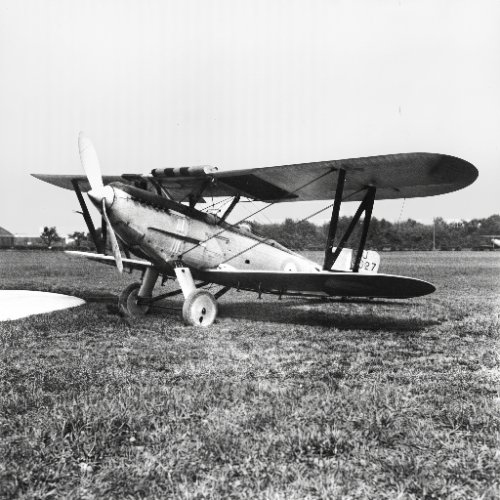
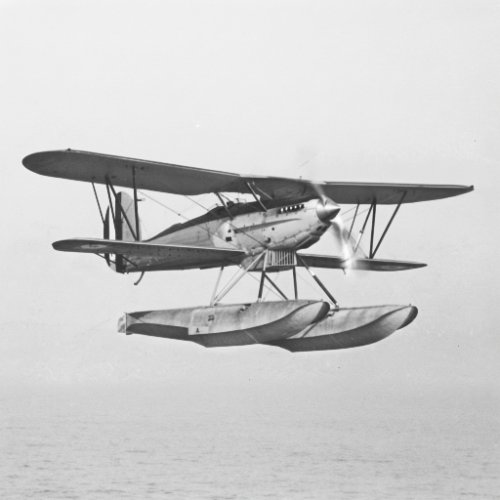
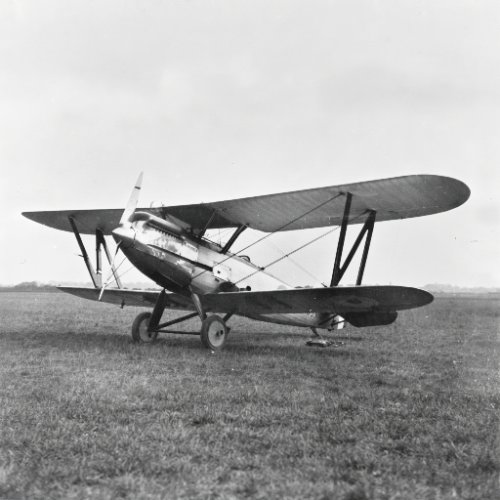
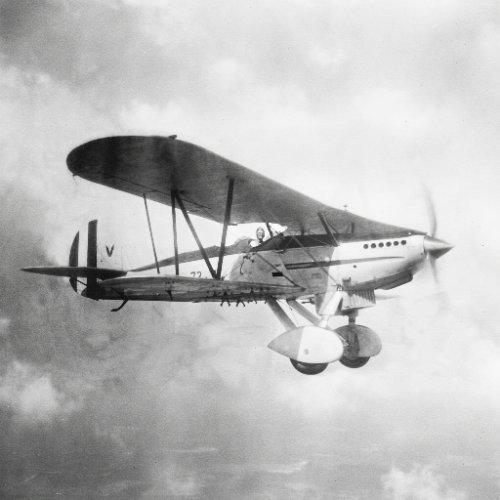
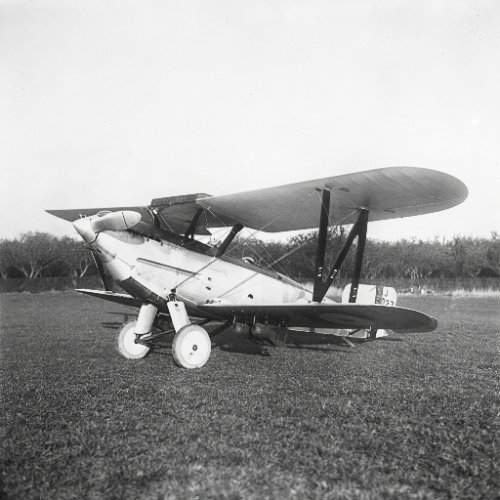
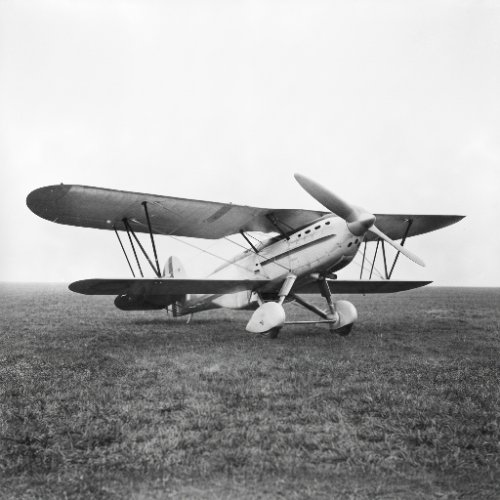
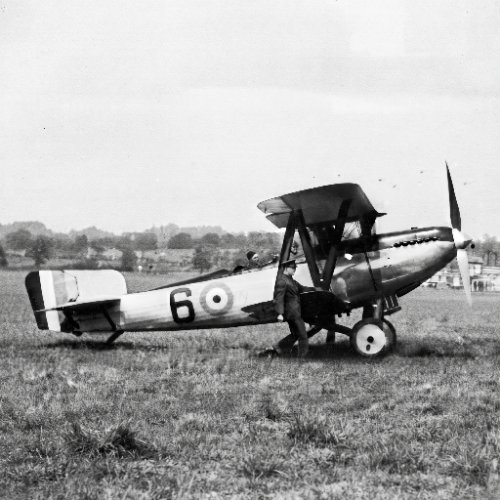
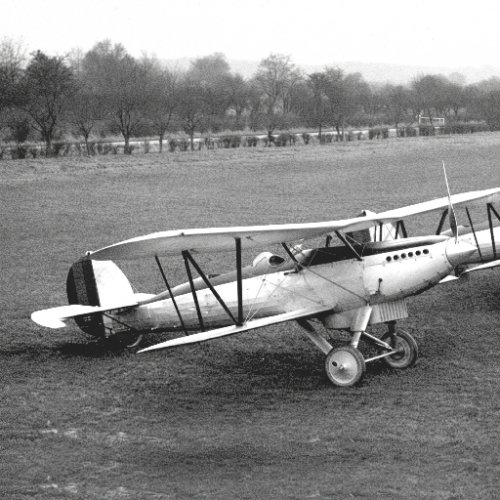
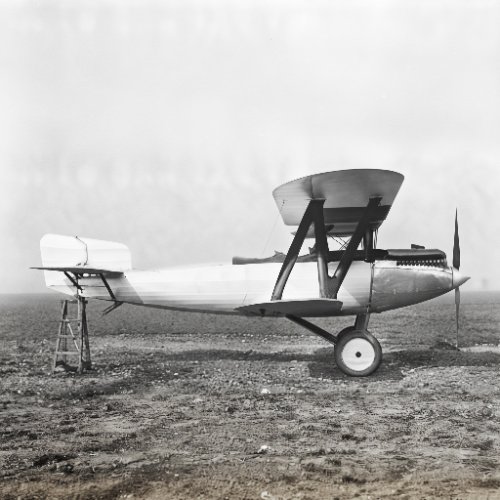
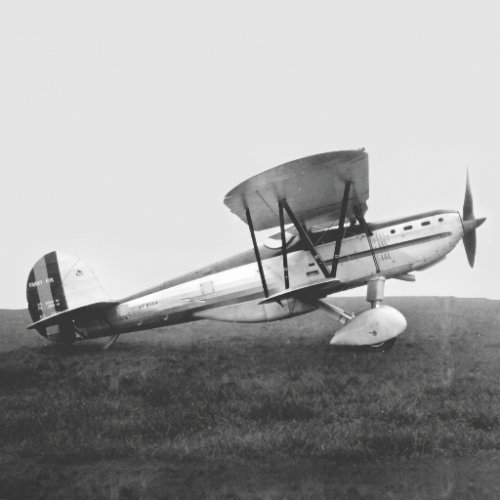
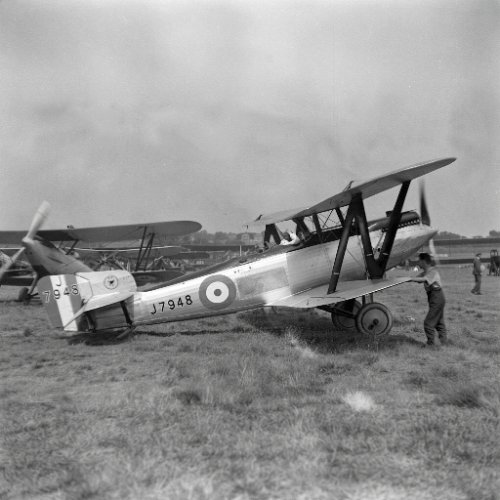
The Fairey Fox originated as a private‑venture light bomber conceived in 1923 by Charles Richard Fairey.
He was dissatisfied with the performance limitations imposed by Air Ministry specifications on earlier bombers such as the Fairey Fawn, which ended up being slower than the Airco DH.9A it was meant to replace.
Fairey sought to demonstrate what a bomber could achieve without restrictive official requirements.
The breakthrough came when Fairey observed the Curtiss CR racing aircraft winning the 1923 Schneider Trophy using the Curtiss D‑12 V‑12 liquid‑cooled engine, notable for its low frontal area and aerodynamic installation.
Fairey acquired an example of the engine and a licence to produce it, intending to build a bomber around its high power and low drag.
Design work began under Frank Duncanson and later the Belgian engineer Marcel Lobelle, who shaped the Fox into a compact, fast, and aerodynamically clean biplane.
Development and Prototyping
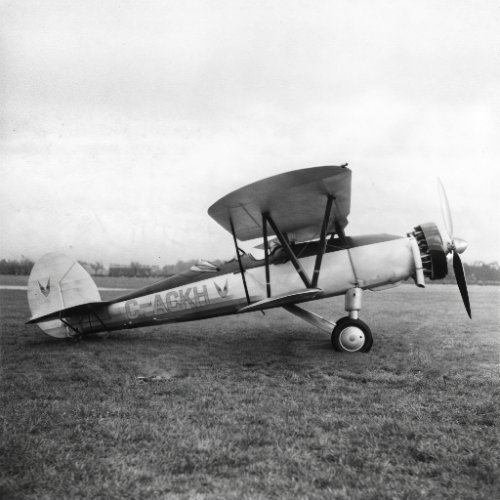
The prototype Fairey Fox I first flew on 3 January 1925 at RAF Hendon, piloted by Norman Macmillan.
It demonstrated excellent speed and handling, significantly outperforming contemporary RAF bombers.
Despite resistance within the Air Ministry—largely due to its American engine and deviation from official norms—Air Chief Marshal Hugh Trenchard personally intervened after witnessing a demonstration on 28 July 1925, ordering a squadron’s worth of aircraft and bypassing bureaucratic objections.
The Fox entered RAF service in June 1926, becoming one of the fastest bombers in the world at the time and even outpacing many fighters.
Technical Design and Construction
Airframe
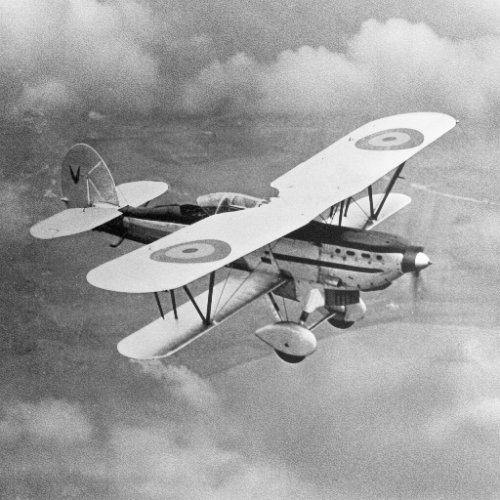
The Fairey Fox was a single‑bay biplane with highly staggered wings and a composite wood‑and‑metal structure, designed for aerodynamic efficiency.
Key structural features included:
Closely cowled tractor engine installation to minimise drag.
Dual radiators: one fixed under the upper wing and a second retractable radiator that could be wound in and out of the fuselage.
Tandem cockpits with the pilot and gunner seated close together for communication and operational efficiency.
Crew and Armament
The Fox carried:
One synchronised Vickers machine gun for the pilot.
One Lewis gun on a high‑speed mounting for the gunner, designed to be stowed to reduce drag.
Up to 460 lb (210 kg) of bombs under the wings, aimed by the gunner using a folding seat and bombsight.
Powerplant
The original Fox used the Curtiss D‑12 V‑12 liquid‑cooled engine, chosen for its high power and low drag profile.
Later variants—especially Belgian‑built models—used Rolls‑Royce Kestrel engines of 480–640 hp, significantly improving performance.
Performance
Performance varied by mark, but the Fox was revolutionary for its time:
Early RAF Foxes were around 50 mph faster than preceding RAF bombers, making them faster than many fighters in service in 1926.
Belgian Fox IIIC examples achieved 304 km/h with the Kestrel IIS and up to 350 km/h with the supercharged Kestrel V.
This performance leap was due to the clean aerodynamic layout and powerful inline engines.
Variants and Production
British Production
Fox I (RAF) – Initial production version with the Curtiss D‑12 engine.
Fox IA / IB – Minor refinements and equipment changes.
Belgian Production
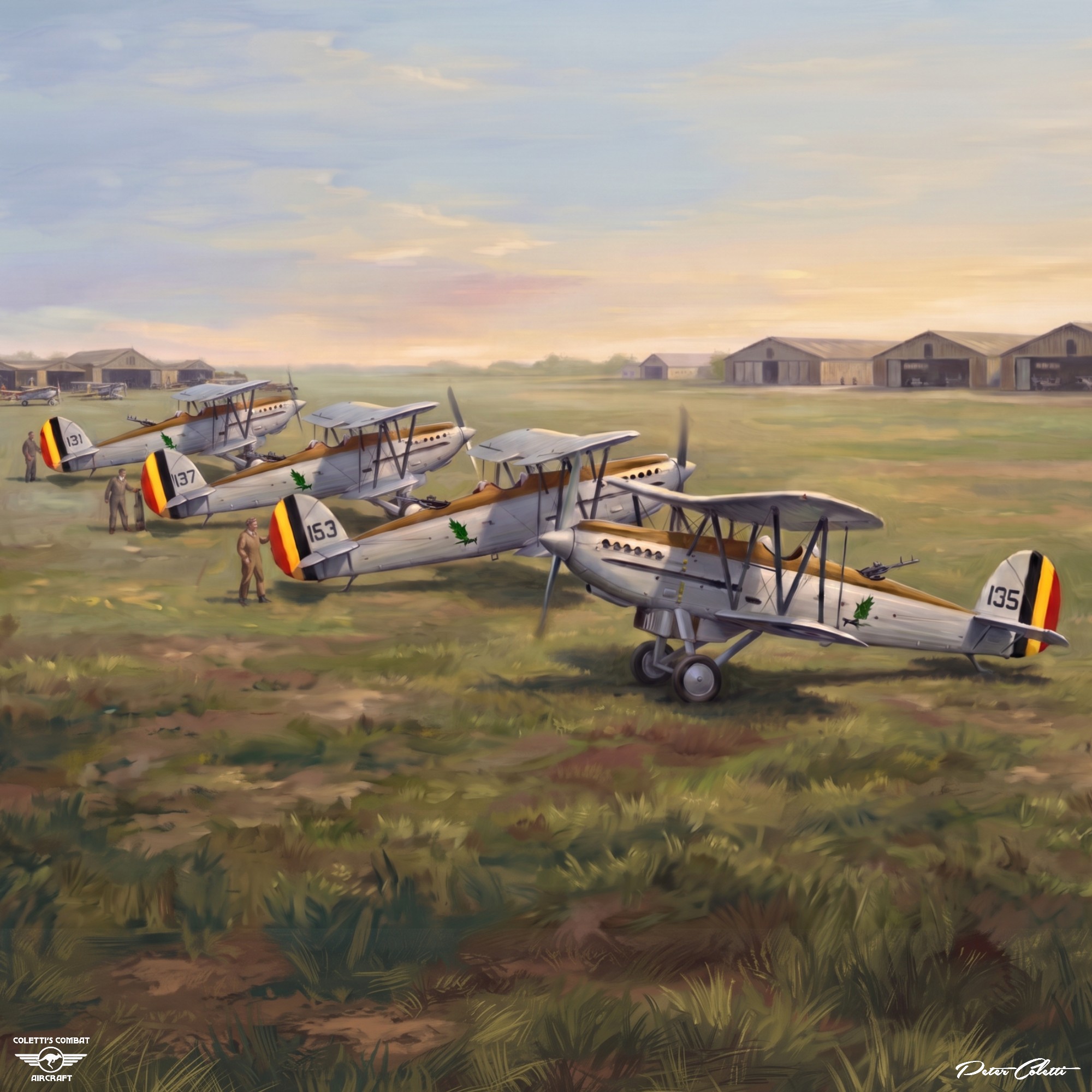
Belgium became the primary user and producer of later Fox variants.
After evaluating the Fox IIM in 1930, Belgium ordered aircraft and transferred production to Avions Fairey at Gosselies.
Approximately 191 Belgian Foxes were built, including two for Switzerland.
Belgian variants included:
Fox II / IIM – Improved airframe and systems.
Fox IIIC – Kestrel‑powered, used as a bomber, reconnaissance aircraft, and two‑seat fighter.
Fox IIIC (supercharged) – Higher‑power Kestrel V engine for improved speed.
Operational History and Context
RAF Service
The Fox served with the RAF from 1926 into the early 1930s as a fast light bomber and reconnaissance aircraft.
It demonstrated the value of private‑venture innovation and influenced later Air Ministry specifications by proving that higher performance was achievable.
Belgian Service
Belgium operated the Fox extensively throughout the 1930s in roles including:
Light bomber
Observation aircraft
Army co‑operation
Two‑seat fighter (D.A.T. air defence units)
Remarkably, despite being obsolete by WWII standards, the Fox remained in Belgian frontline service during the German invasion of May 1940.
On 10 May 1940, nine Belgian Foxes engaged six Messerschmitt Bf 109s; one Fox pilot, Lt. Étienne Dufossez, reportedly hit a Bf 109 before being shot down.
Other Operators
Peru operated small numbers.
Switzerland received two Belgian‑built Foxes.
WWII Context
Although the Fox was not used by the RAF in WWII, its Belgian service placed it briefly into combat during the early days of the conflict.
Its survival into 1940 illustrates Belgium’s limited resources and the fox’s adaptability to multiple roles despite its age.
Assessment and Legacy
The Fairey Fox was one of the most influential interwar British aircraft:
It redefined RAF bomber performance, proving that high‑speed light bombers were feasible.
It showcased the value of private‑venture innovation outside restrictive specifications.
Its Belgian service extended its operational life into WWII, making it one of the longest‑serving interwar biplane bombers.
It helped establish Fairey Aviation’s reputation for advanced aerodynamic design and powerful inline‑engine installations.