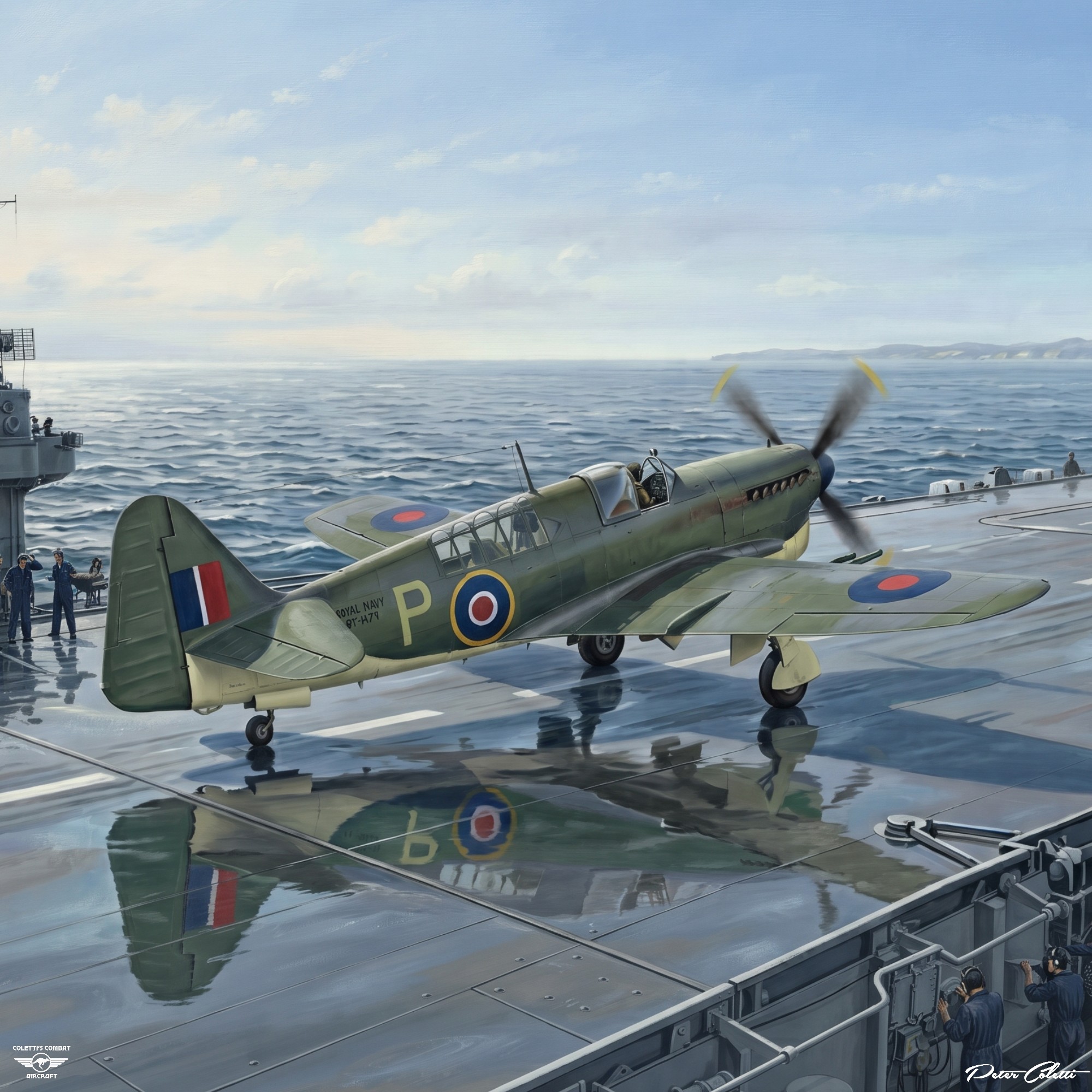
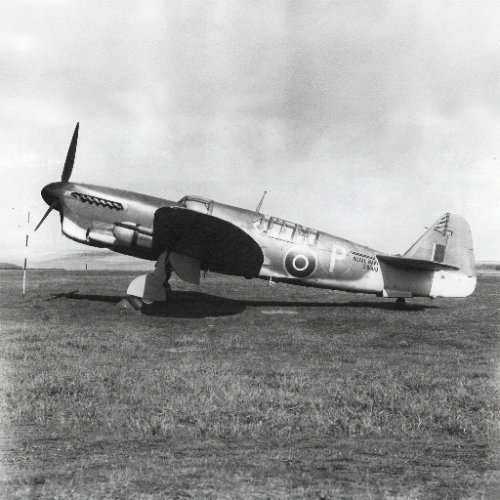
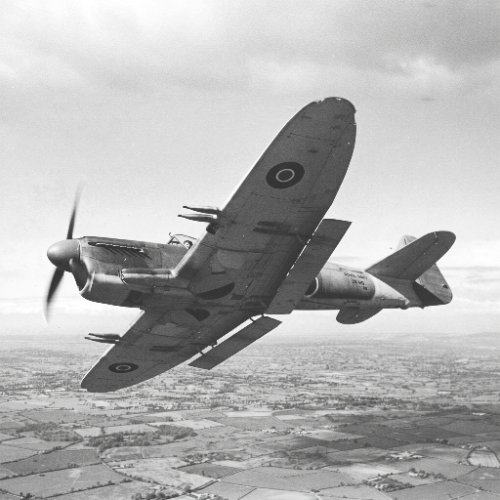
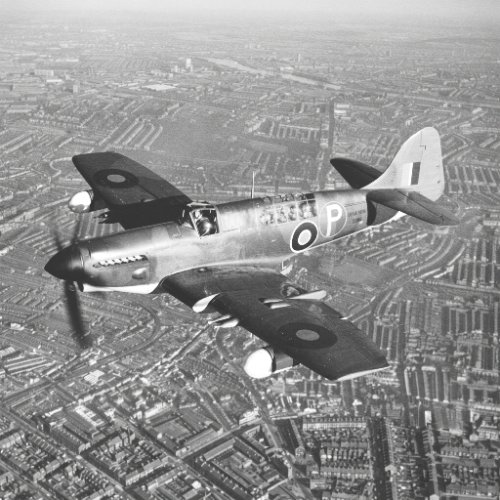
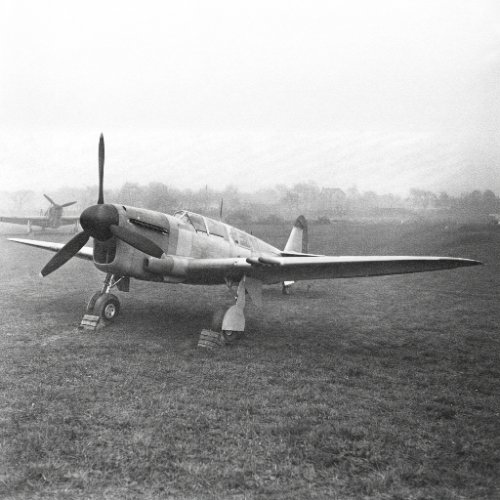
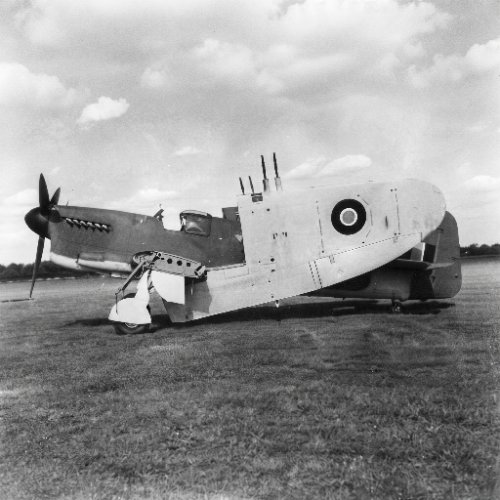
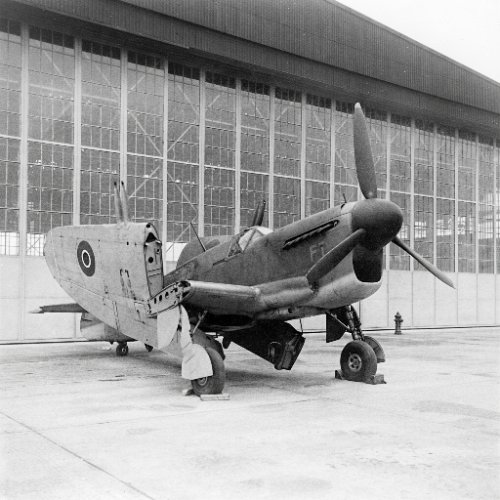
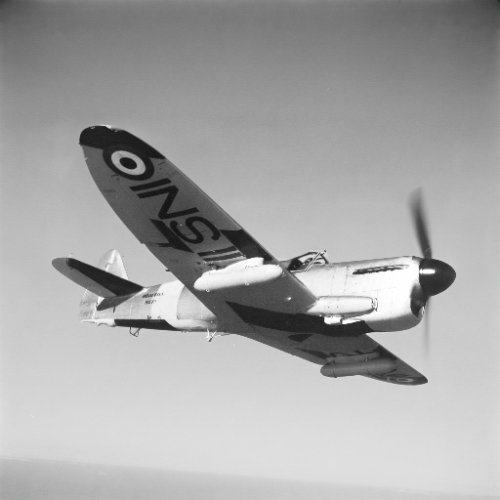
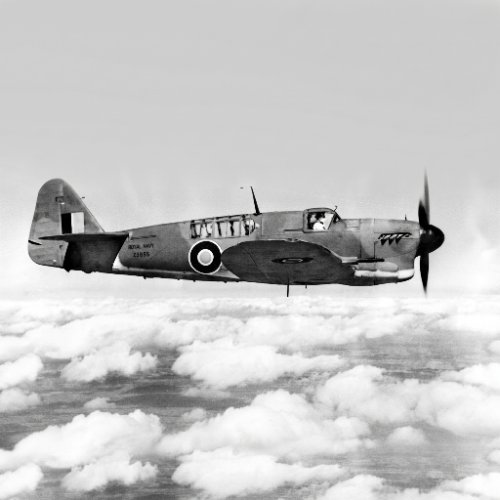
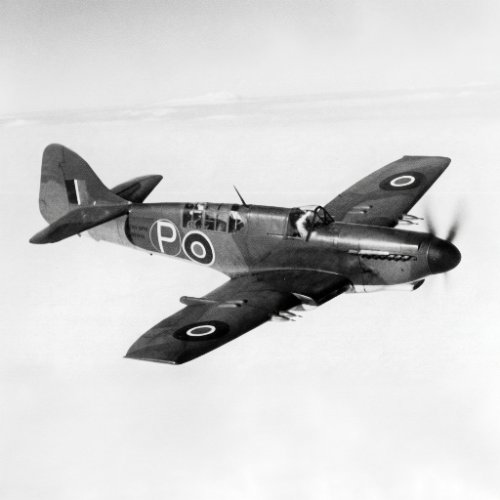
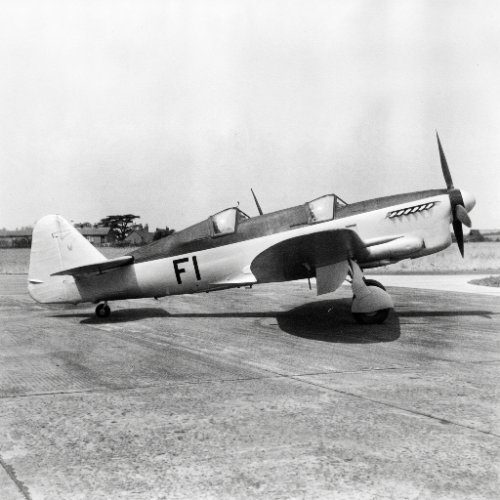
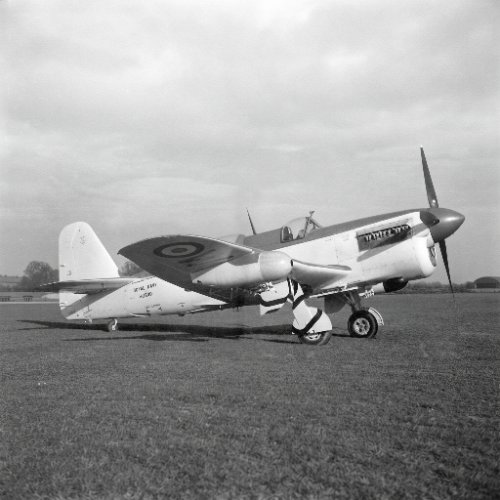
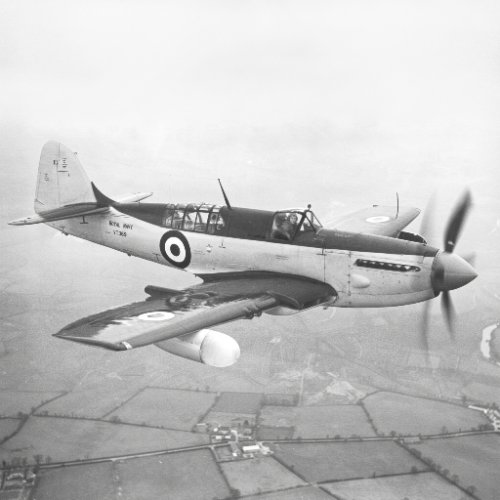
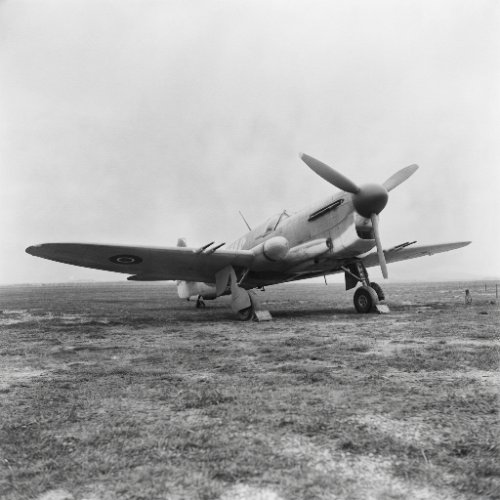
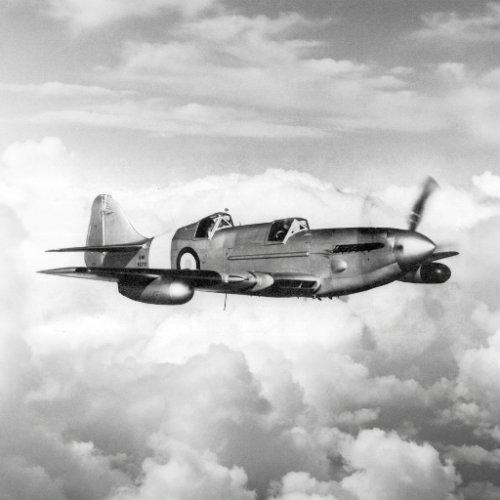
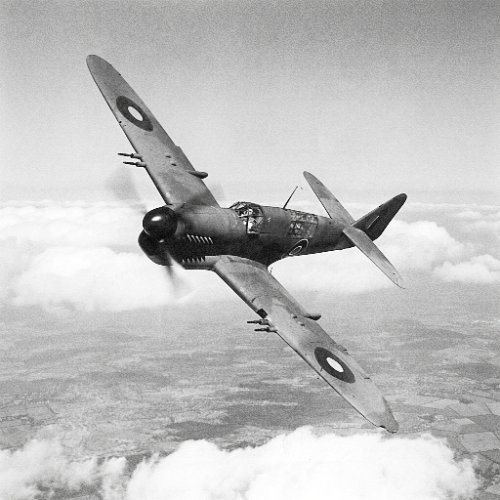
The Fairey Firefly grew out of the late‑1930s Fleet Air Arm thinking about what a “fleet fighter” should be.
The Air Ministry issued naval fighter specifications in 1938, seeking both a conventional fighter and a turret fighter, with performance requirements around 275 knots at 15,000 ft and heavy armament—either eight machine guns or four 20 mm cannons.
At the same time, the FAA concept favoured a two‑seat reconnaissance fighter, able not just to intercept but to scout ahead of the fleet.
Fairey had already produced the Fulmar in this mould; the Firefly was conceived as its more powerful, more heavily armed successor under Specification N.5/40.
The Royal Navy ordered 200 aircraft before the prototype had flown, reflecting wartime urgency and confidence in Fairey’s design.
The first prototype (Z1826) flew on 22 December 1941, and the type formally entered service in March 1943, though it did not become operational until mid‑1944.
Design and technical characteristics
Airframe and layout
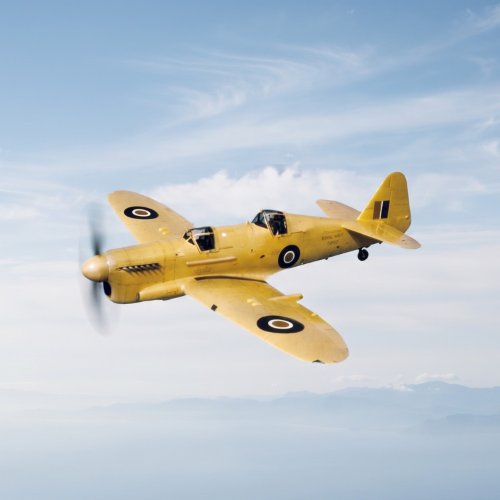
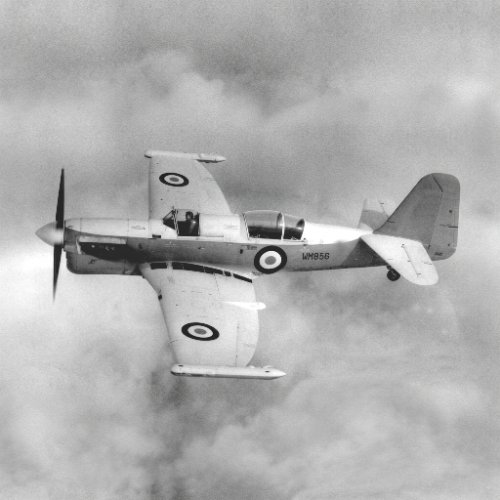
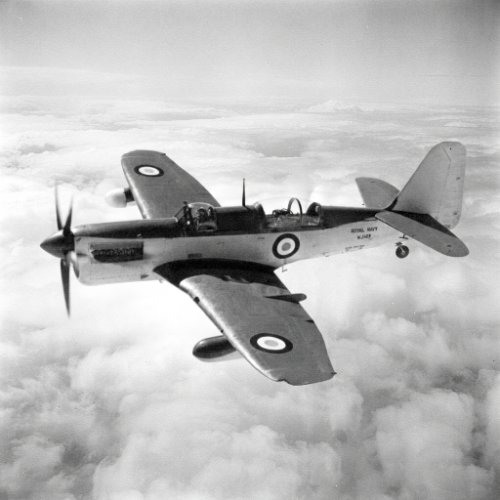
The Firefly was a low‑wing, all‑metal monoplane with folding wings for carrier stowage.
The pilot sat well forward, ahead of the wing leading edge, giving good visibility for deck operations and combat; the observer/radio operator sat in a separate cockpit aft, reflecting its reconnaissance‑fighter role.
Key features:
Two‑seat, tandem layout with separate canopies for pilot and observer.
Folding wings and a strengthened undercarriage for carrier use.
Tail dragger undercarriage with arrestor hook.
Youngman flaps on the trailing edge—large, broad flaps that could act as both high‑lift devices and dive brakes, recessed into the wing when not in use, similar to the Fairey Barracuda.
Structurally, it was a robust, stressed‑skin design, intended to withstand carrier operations, high‑g manoeuvres, and the loads of strike missions.
Powerplant
The Firefly was powered by the Rolls‑Royce Griffon series:
Early marks used the Griffon IIB; later production FR.1 aircraft adopted the Griffon XII of about 1,765 hp.
The Griffon’s power gave the Firefly better performance than the Fulmar, but the combination of a single engine and a relatively heavy two‑seat airframe limited ultimate speed and climb compared with contemporary single‑seat fighters.
Armament and payload
The Firefly was heavily armed for a naval fighter:
Four 20 mm Hispano cannons, two in each wing—significantly more firepower than the Fulmar’s machine guns.
Provision for bombs and rockets on underwing hardpoints in later strike and ASW variants.
Radar (ASH and later ASV/AI sets) in reconnaissance and night‑fighter versions.
This combination made it suitable not only for fleet defence but also for ground‑attack and anti‑shipping missions.
Performance
Figures vary slightly by mark, but it’s typical Firefly FR.1 performance:
Maximum speed: around 316 mph (509 km/h) at 15,000 ft (meeting the original specification target).
Range: long‑ranged for a carrier fighter, enabling extended patrols and strike missions.
Crew: 2 (pilot and observer).
Number built: about 1,702 aircraft across all variants between 1941 and 1955.
In flight, the Firefly was superior in performance and firepower to the Fulmar, but by the time it reached frontline service in numbers (1944), it was no longer competitive as a pure fighter against late‑war single‑seat types.
Its strengths lay in range, stability, and versatility rather than raw speed.
Variants
Production and development produced a wide family of Firefly marks:
Firefly F Mk I
Role: Initial fighter version.
Features: Four 20 mm cannons, Griffon engine, Youngman flaps.
Production: 429 built by Fairey and General Aircraft Ltd.
Firefly FR Mk I
Role: Fighter‑reconnaissance.
Features: ASH radar for surface search; retained cannon armament.
Production: 376 built; became the main late‑war operational type.
Firefly NF Mk II / NF Mk I (night fighters)
NF Mk II: Early night‑fighter version with twin leading‑edge fairings housing AI radar scanners and a slightly lengthened fuselage.
NF Mk I: Improved radar in a single under‑nose pod, structurally similar to other Mk I airframes.
Firefly Mk IV and later
Mk IV: Major post‑war development with Griffon 72 (around 2,330 hp), structural refinements, and improved systems; flown in 1944 and produced in several sub‑variants for strike and ASW roles.
Subsequent marks (Mk V, Mk VI, etc.) further specialised in anti‑submarine warfare, with updated radar, sonobuoy equipment, and weapons fits.
Across all marks, the Firefly evolved from a fleet fighter to a multi‑role strike and ASW platform, mirroring the shift in naval air warfare after WWII.
WWII operational history
Entry into service
The Firefly entered operational service with the Fleet Air Arm in July 1944, when 1770 Naval Air Squadron aboard HMS Indefatigable took the type into combat.
European theatre
Fireflies participated in attacks on the German battleship Tirpitz, flying strike and reconnaissance missions during the late‑war operations against the ship in Norwegian waters.
Their long range and heavy cannon armament made them useful for both escort and strike roles alongside Barracudas and other types.
Far East and Pacific
In the Far East, fireflies flew from British carriers against Japanese targets in the East Indies and Pacific.
In July 1945, a Firefly became the first British aircraft to overfly Tokyo, symbolically marking the reach of the Royal Navy’s carrier air power at the end of the war.
By VJ‑Day, the Firefly had established itself as a capable fleet fighter‑strike aircraft, though its fighter role was already being overshadowed by emerging single‑seat types and, soon, jets.
Post‑war service and Korean War
After WWII, the Firefly quickly shifted from pure fighter duties to strike and anti‑submarine warfare.
It remained a mainstay of the Fleet Air Arm into the mid‑1950s, adapted with radar and specialised ASW equipment.
Both British and Australian fireflies flew ground‑attack missions during the Korean War, operating from carriers against North Korean and Chinese targets.
The type also served with:
Royal Australian Navy
Royal Canadian Navy
Royal Netherlands Navy
Indian Navy
Dutch Fireflies were still flying attack sorties as late as 1962, striking Indonesian infiltrators in Dutch New Guinea—remarkably long service for a WWII‑era piston aircraft.
In its final years, the Firefly was used as a trainer, target tug, and drone, gradually replaced by jets and more modern ASW aircraft.
Assessment and legacy
The Fairey Firefly was:
The Royal Navy’s most capable two‑seat fighter of WWII, outclassing the Fulmar in firepower and performance.
A versatile platform that transitioned smoothly into strike and anti‑submarine roles, staying relevant well into the 1950s and even early 1960s in some navies.
A symbol of the FAA’s preference for long‑range, two‑seat fleet fighters that could scout, fight, and strike from carriers.