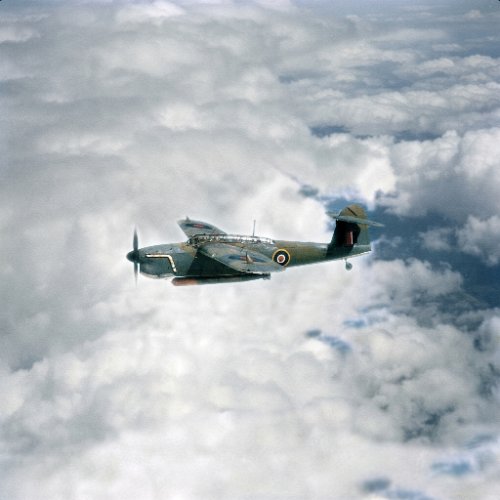
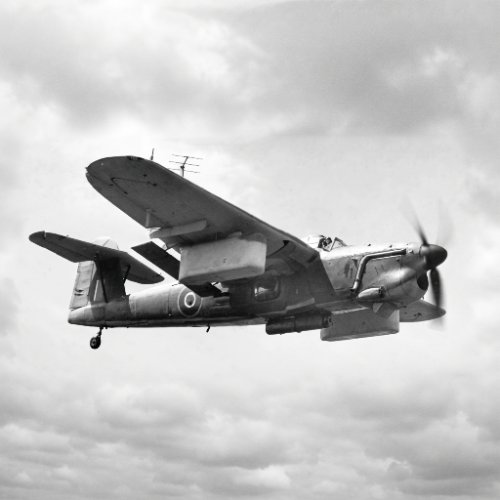
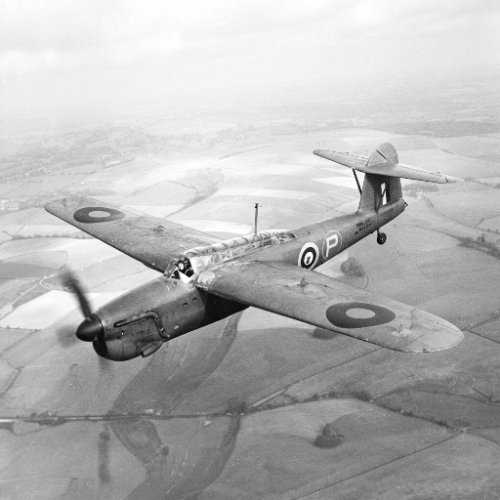
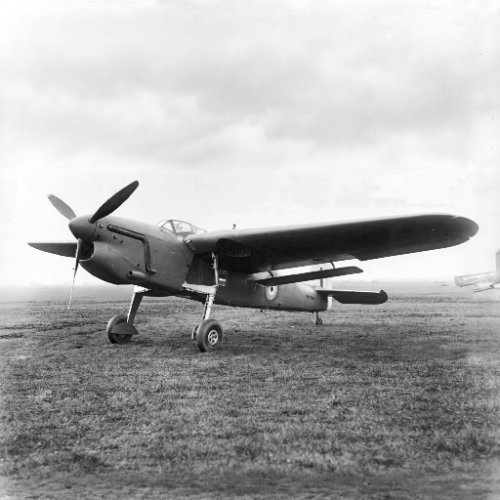
In the late 1930s the Fleet Air Arm knew its biplane strike aircraft—Swordfish and Albacore—were living on borrowed time.
Modern air defences and faster ships demanded a monoplane torpedo/dive bomber with more speed, range, and payload.
In 1937 the Air Ministry issued Specification S.24/37 (Operational Requirement OR.35) for a three‑seat monoplane torpedo bomber with high payload capacity and good maximum speed, capable of carrier operations and reconnaissance.
Several firms responded, but Fairey’s design, the Type 100, and Supermarine’s Type 322 were selected for prototype construction.
Fairey’s proposal was a shoulder‑wing monoplane with retractable undercarriage, internal bomb/torpedo carriage, and advanced high‑lift devices to give carrier‑friendly low‑speed handling while still offering higher cruise and attack speeds than the biplanes it was meant to replace.
The aircraft was named Barracuda, continuing Fairey’s tradition of maritime predatory fish names.
It was conceived from the outset as the Fleet Air Arm’s main strike aircraft—torpedo bomber, dive bomber, and reconnaissance platform rolled into one.
Development and prototyping
Engine troubles and redesign
The original design centred on the Rolls‑Royce Exe (often called the “X” engine), a 24‑cylinder powerplant promising high output in a compact package.
Before the Barracuda prototypes were complete, Rolls‑Royce cancelled the Exe programme, forcing Fairey to redesign the aircraft around the more conventional Rolls‑Royce Merlin.
This change had two big consequences:
Weight and balance: The Merlin’s different dimensions and weight distribution required structural and aerodynamic adjustments, particularly around the nose and centre of gravity.
Power shortfall: Early Merlin marks used in the Barracuda were less powerful than the planned Exe, leaving the prototype underpowered and limiting performance until later Merlin variants—and eventually Griffon engines—were adopted.
The first prototype (P9619) flew on 7 December 1940.
Flight testing quickly revealed tail buffeting and stability issues in certain configurations, especially with flaps deployed and at high angles of attack.
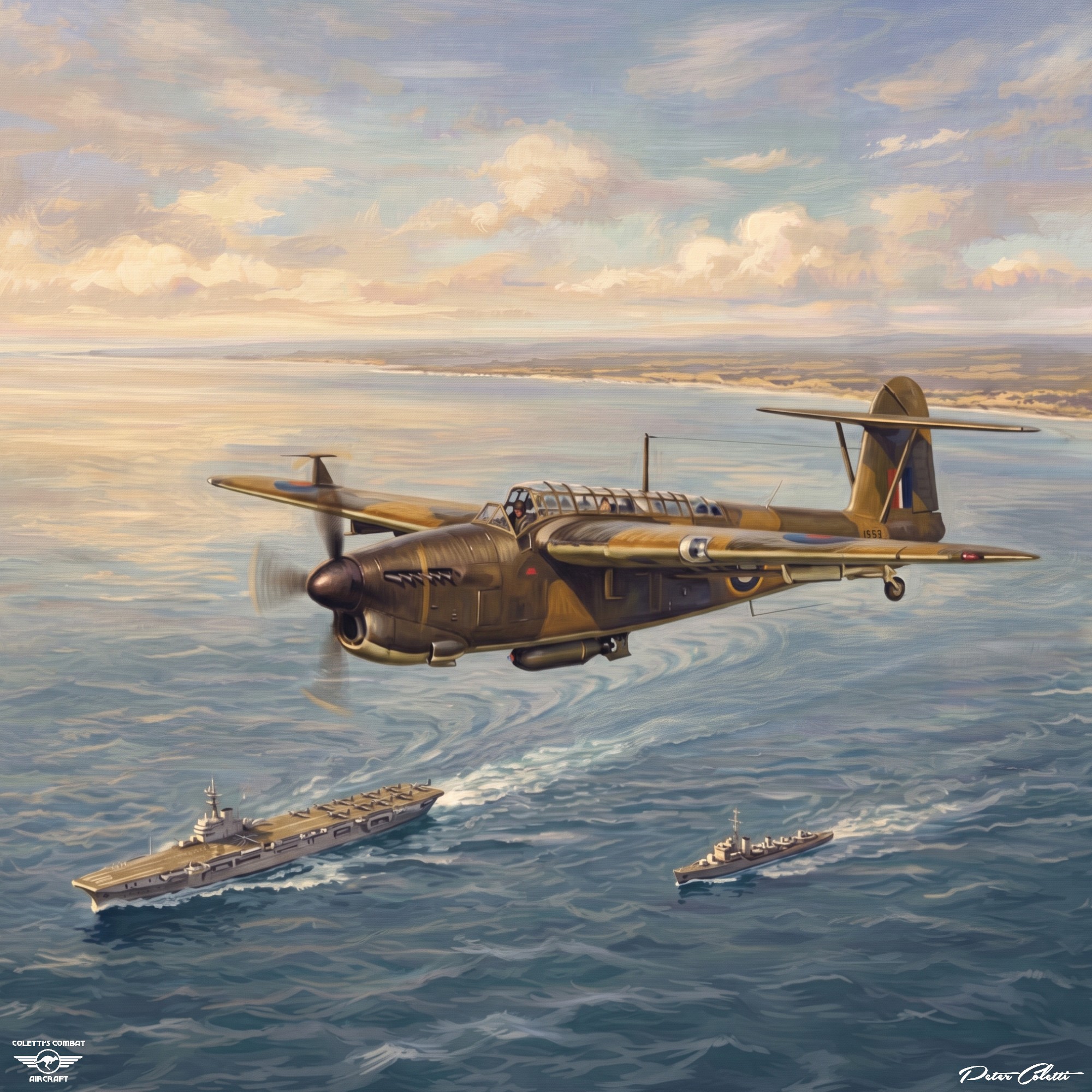
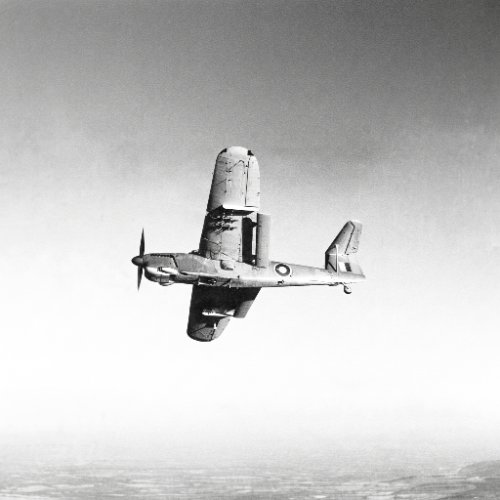
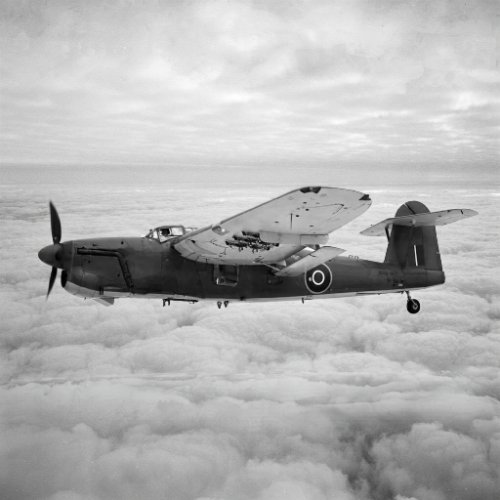
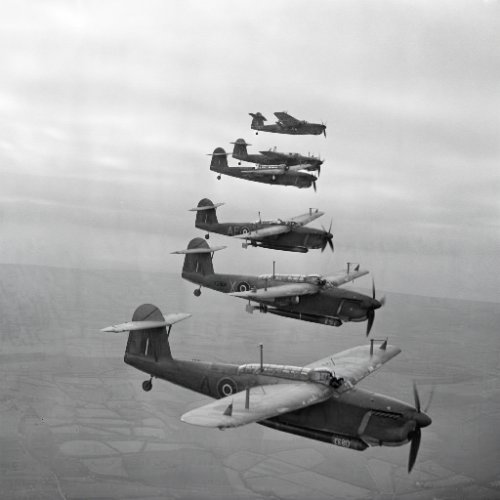
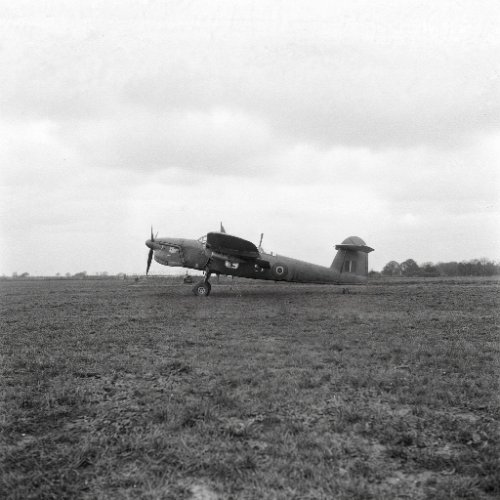
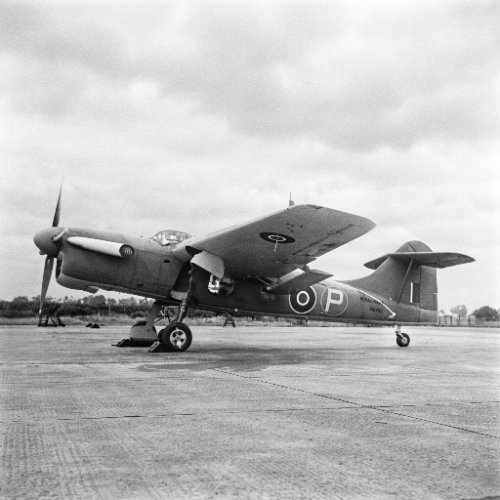
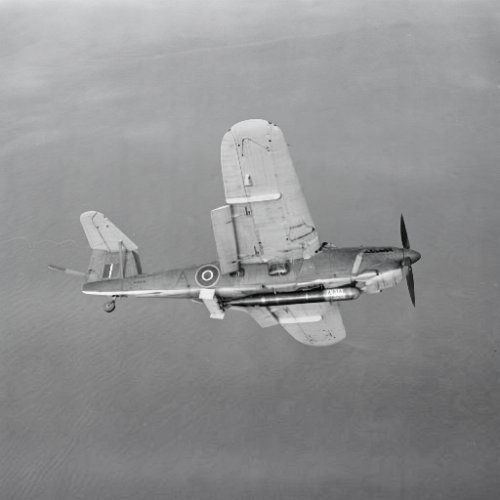
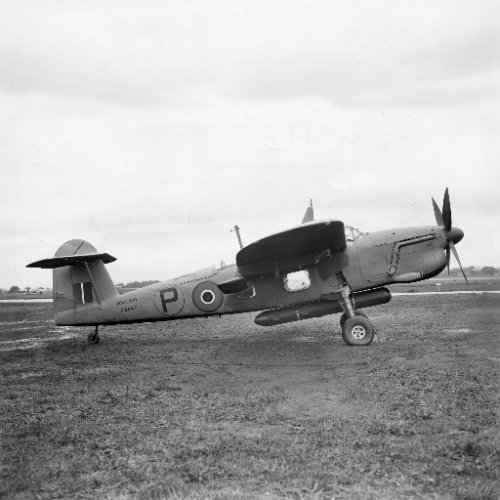
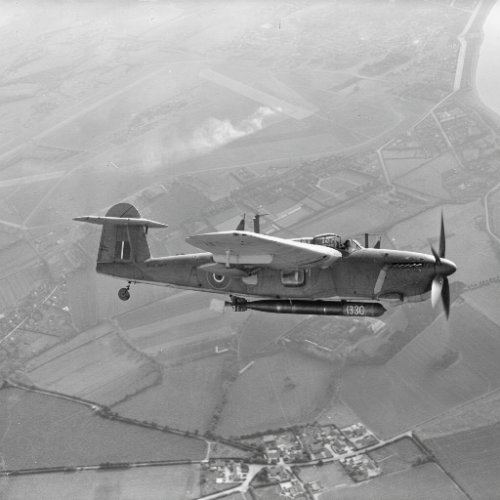
The tail unit was redesigned, resulting in the Barracuda’s distinctive high‑mounted tailplane and deep fin—a configuration that became one of its visual trademarks.
Deck trials aboard HMS Victorious in 1941 confirmed that, despite its quirks, the Barracuda could operate safely from carriers.
The second prototype, incorporating the revised tail, flew in June 1941 and led into service trials at Boscombe Down later that year.
Airframe and design features
Overall configuration
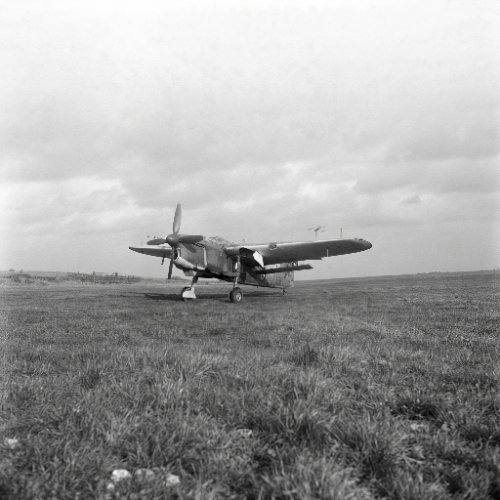
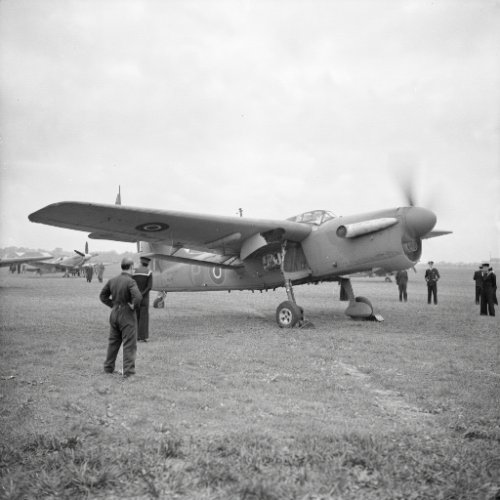
The Barracuda was a shoulder‑wing, all‑metal monoplane—the first all‑metal torpedo/dive bomber operated by the Fleet Air Arm.
Key structural and aerodynamic features:
Shoulder‑mounted wing: Provided good downward visibility for the pilot and observer, and left space beneath the fuselage for torpedo or bomb carriage.
Retractable main undercarriage: Reduced drag compared with the fixed gear of earlier biplanes, improving speed and range.
Non‑retracting tailwheel: A compromise between simplicity and performance.
Three‑seat cockpit: pilot, observer/navigator, and telegraphist air gunner, arranged in tandem under a multi‑section canopy.
The Barracuda’s most distinctive technical feature was its Fairey‑Youngman flaps—large, hinged trailing‑edge surfaces that could be lowered or “dropped” to act both as high‑lift devices and as dive‑brakes.
In the landing configuration they increased lift and allowed slower approach speeds; in the dive‑bombing role they could be set to act as drag surfaces, stabilising the aircraft in steep dives without excessive speed build‑up.
Crew and cockpit
The three‑man crew reflected the multi‑role nature of the aircraft:
Pilot: Responsible for flying, attack runs, and carrier operations.
Observer: Navigation, bomb aiming, reconnaissance, and often radar operation in later marks.
Telegraphist air gunner: Communications, defensive armament, and assistance with lookout and systems.
The cockpit was enclosed and more ergonomic than the open cockpits of the Swordfish and Albacore, though crews often criticised the Barracuda’s cramped layout and limited visibility in certain phases of flight.
Powerplant and performance
Engines
Across its main variants, the Barracuda used:
Rolls‑Royce Merlin 30/32 (Mk I and Mk II): Around 1,300–1,640 hp, driving a three‑ or four‑bladed propeller depending on mark.
Rolls‑Royce Griffon (Mk V): A larger, more powerful engine giving improved performance, especially at higher altitudes.
Performance (typical Barracuda Mk II)
Maximum speed: About 228 mph (367 km/h) at low altitude.
Range: Roughly 650–700 miles, depending on load and profile.
Service ceiling: around 16,000–18,000 ft.
Crew: 3
Dimensions: Length about 39 ft 9 in, wingspan about 49 ft 2 in.
In practice, the Barracuda was not a fast aircraft by mid‑war standards, and its climb and high‑altitude performance were modest.
However, its combination of reasonable speed, good low‑speed handling with Youngman flaps, and ability to carry substantial loads made it a workable strike platform from British carriers.
Armament and payload
The Barracuda was designed as a flexible strike aircraft:
Defensive armament: Typically two 0.303‑in Vickers K machine guns in the rear cockpit on a flexible mount.
Offensive payload:
One 18‑inch aerial torpedo (around 1,600 lb).
Up to 2,000 lb of bombs in various combinations.
Depth charges for anti‑submarine warfare.
Later aircraft could carry radar sets (ASV) and specialised loads for anti‑submarine patrols, coastal strikes, and shipping interdiction.
Variants
Barracuda Mk I
Engine: Merlin 30 (~1,300 hp).
Role: Initial production version, used mainly for trials and training.
Production: Relatively small—around 30 aircraft.
The Mk I established the basic configuration but was quickly superseded by the improved Mk II.
Barracuda Mk II
Engine: Merlin 32 (~1,640 hp), optimised for low‑altitude performance.
Role: Main operational variant; torpedo bomber, dive bomber, and ASW platform.
Production: The bulk of the total 2,600+ barracudas built between 1941 and 1945.
Mk II aircraft formed the backbone of Fleet Air Arm strike squadrons from 1943 onward.
Barracuda Mk III
Role: Specialised anti‑submarine and reconnaissance version.
Features: Typically equipped with radar and modified equipment fit for ASW patrols.
Barracuda Mk V
Engine: Rolls‑Royce Griffon (significantly more powerful than Merlin).
Changes: Structural and aerodynamic refinements to handle the new engine and improve performance.
Role: Later‑war and post‑war development, but produced in smaller numbers compared with the Mk II.
Production was spread across several manufacturers—Fairey, Blackburn, Boulton Paul, and Westland—to meet wartime demand.
Operational history and WWII context
Entry into service
The Barracuda entered operational service on 10 January 1943 with 827 Naval Air Squadron.
By this time, the aircraft carriers of the Royal Navy were transitioning from mixed biplane/monoplane air groups to more modern strike complements.
The Barracuda replaced Albacores and Swordfish in many torpedo and dive‑bombing roles, though the Swordfish lingered in specialised night and ASW duties.
Theatres of operation
Barracudas served widely:
North Atlantic and Arctic: Convoy protection, anti‑shipping strikes, and anti‑submarine patrols from escort and fleet carriers.
Mediterranean: Operations against Axis shipping and coastal targets, supporting Allied advances in Italy and the central Mediterranean.
Indian Ocean and Pacific: Carrier‑borne strikes against Japanese targets, including shipping, coastal installations, and island bases.
Operation Tungsten and the Tirpitz attacks
The Barracuda’s most famous combat role came in the series of attacks on the German battleship Tirpitz in Norwegian waters.
In Operation Tungsten on 3 April 1944, 42 barracudas from HMS Victorious and HMS Furious launched a mass dive‑bombing attack.
They scored multiple hits that damaged Tirpitz’s radar, fire‑control systems, and other vital equipment, temporarily neutralising her as a threat to Arctic convoys.
Barracudas participated in subsequent operations against Tirpitz as well, though later attacks involved mixed strike forces and evolving tactics.
Other operators
While primarily a Fleet Air Arm aircraft, the Barracuda also served with:
Royal Air Force (in limited roles).
Royal Canadian Navy.
Netherlands Naval Aviation Service.
French Air Force / Naval Aviation.
These users typically employed the Barracuda in maritime strike, training, and ASW roles.
Post‑war service and retirement
After the war, Barracudas continued in service into the early 1950s, but rapid advances in aircraft design and the availability of more capable types—such as the Grumman Avenger and newer British designs—made them increasingly obsolete.
By the mid‑1950s the Barracuda had been withdrawn from frontline service.
Despite more than 2,600 built, no complete airframe survived intact; only partial remains and restoration projects exist today, including a reconstruction effort at the Fleet Air Arm Museum.
Assessment and legacy
The Fairey Barracuda was a transitional aircraft—Britain’s first all‑metal monoplane torpedo/dive bomber, yet still constrained by engine changes and mid‑war design compromises.
Crews often criticised its performance and handling quirks, but it gave the Fleet Air Arm a modern, carrier‑borne strike platform capable of torpedo attacks, dive‑bombing, and ASW patrols across multiple theatres.
Its role in neutralising Tirpitz and in countless convoy and carrier operations anchors its historical significance.