The Fairchild Super 71 was conceived in 1933 when Fairchild Aircraft Ltd (Canada) undertook a study to improve upon the earlier Fairchild 71 bush plane.
Engineers sought a design optimised specifically for remote northern operations, with greater cargo capacity, improved float performance, and more modern aerodynamic features.
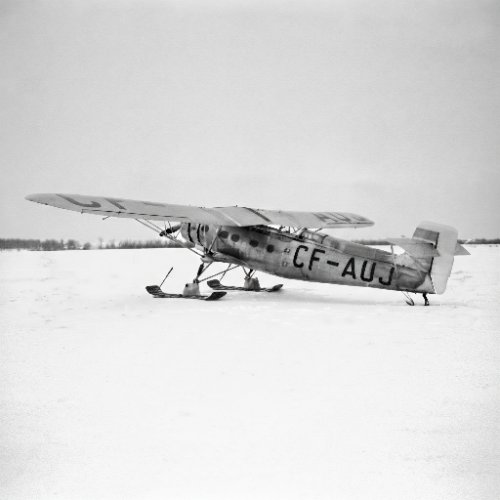
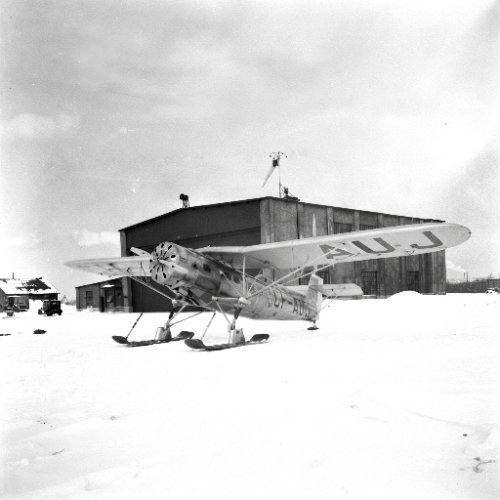
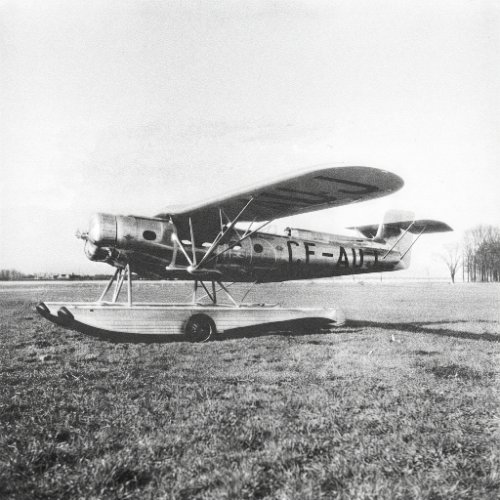
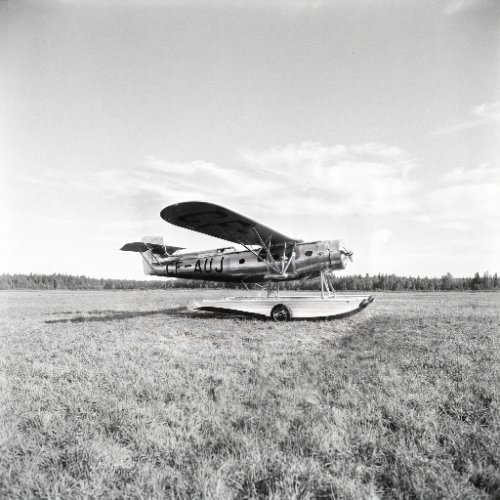
The resulting aircraft—designated Super 71—was a parasol‑mounted high‑wing monoplane with a radically different configuration from the Fairchild 71, including a rear cockpit and a large forward cargo compartment.
This layout was chosen to improve load distribution and maximise cargo volume, though it severely compromised forward visibility.
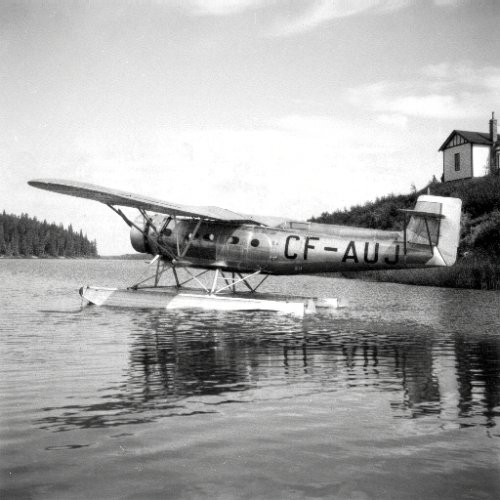
The prototype, registered CF‑AUJ, first flew on 31 October 1934, marking the debut of one of Canada’s earliest purpose‑built civilian bush planes.
Design and Construction
Airframe and Structural Innovations
The Super 71 introduced several first‑of‑its‑kind features in Canadian aircraft manufacturing:
Duralumin monocoque fuselage—the first metal‑skinned fuselage built in Canada specifically for bush operations.
Streamlined oval fuselage cross‑section, refined through wind‑tunnel testing.
Strut‑braced metal wing and tail surfaces, replacing the fabric‑covered wooden structures of earlier Fairchild designs.
High‑mounted tailplane, relocated from an initial T‑tail configuration to reduce water spray during float take-off.
Cockpit and Cargo Arrangement
The prototype featured:
Rear cockpit, positioned behind the cargo bay
Large forward cargo compartment, capable of carrying heavy loads including gold bullion and mining supplies
Float‑equipped configuration for lake and river operations
Pilot feedback quickly revealed that the rear cockpit’s visibility was dangerously poor.
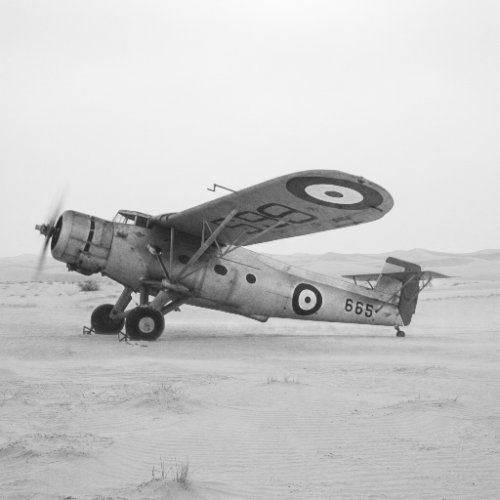
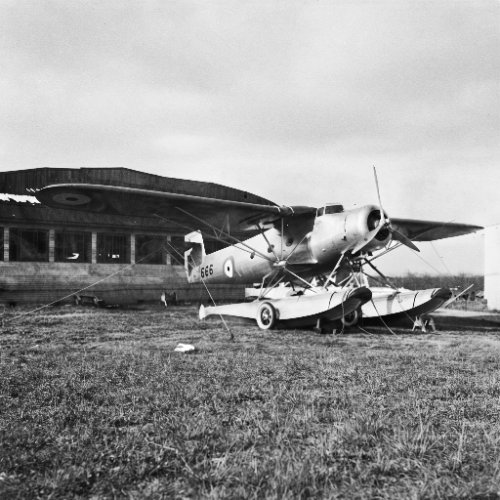
When the Royal Canadian Air Force (RCAF) ordered photographic variants, they required a new forward cockpit placed immediately behind the engine.
Powerplant and Performance
The Super 71 was offered with six different radial engines, ranging from 493 hp to 610 hp, including:
Armstrong Siddeley Jaguar (493 hp)
Pratt & Whitney Wasp variants (520–525 hp)
Pratt & Whitney Hornet (560 hp)
Wright Cyclone variants (585–610 hp)
The prototype CF‑AUJ flew with a 525 hp Pratt & Whitney S1D1 Wasp.
Representative Performance (Prototype)
Maximum speed: 139 mph (223.6 km/h)
Range: 817 miles (1,314 km)
Payload: Up to 2,000 lb (907 kg)
Configuration: Floatplane only during trials
These figures made the Super 71 well‑suited for long‑range supply flights to isolated northern communities.
Variants
Super 71 (Prototype CF‑AUJ)
First flight: 31 October 1934
Rear cockpit, large forward cargo bay
Float‑equipped
Used by Canadian Airways for operational trials
Written off after striking a submerged log and sinking in 1940
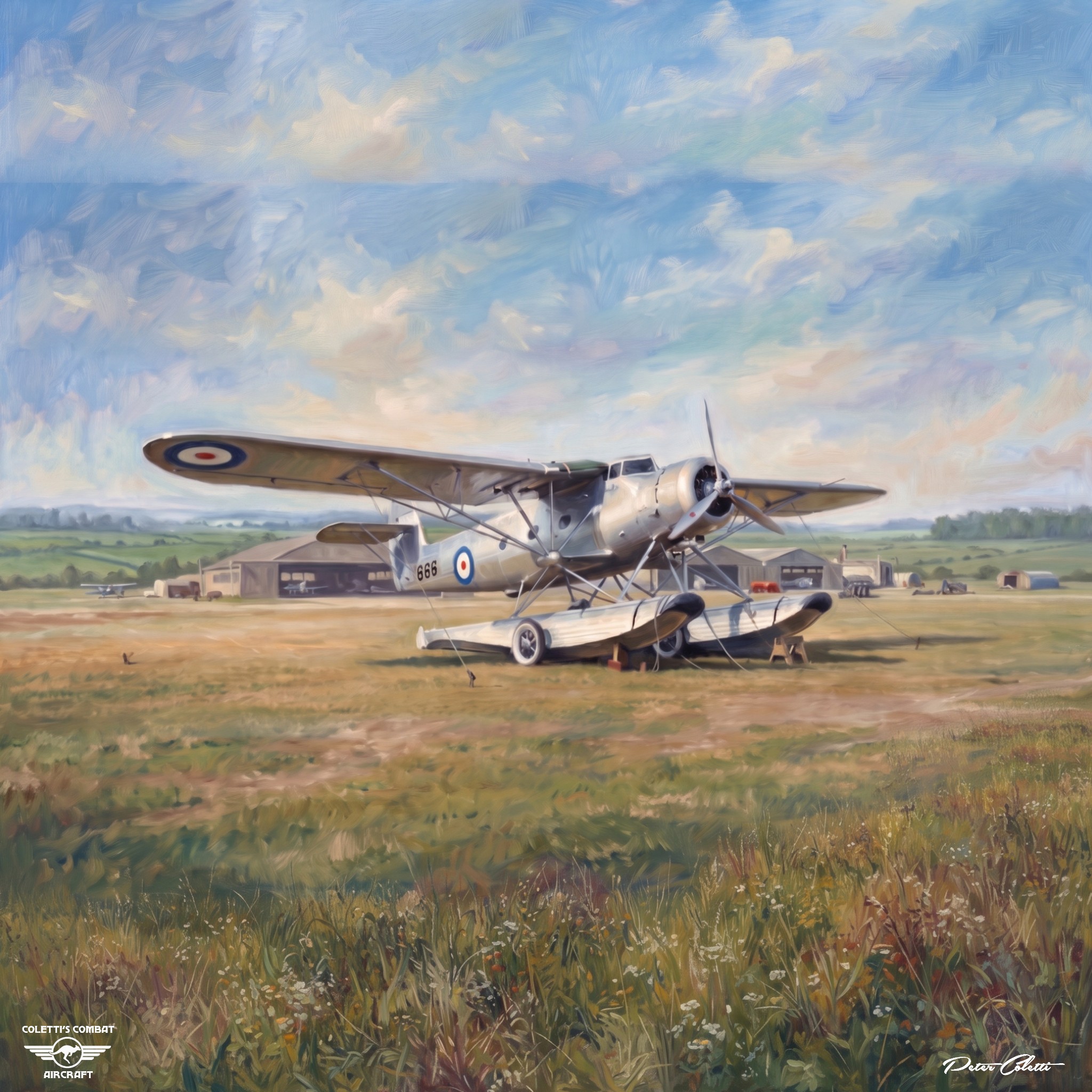
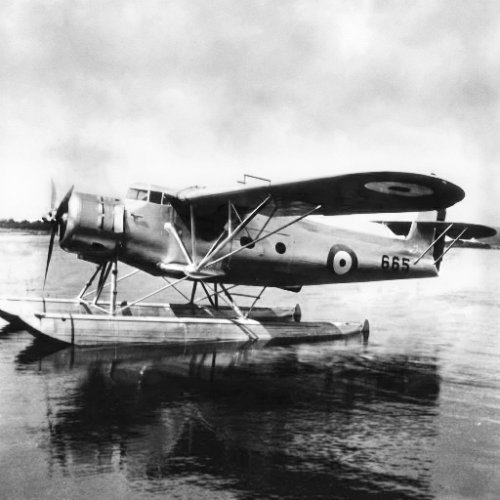
Super 71P (Photographic Variant)
Ordered by the RCAF
Forward cockpit replacing the rear cockpit
Provision for multiple cameras and additional radio equipment
Modified wing mount
Two aircraft were built; one crashed in 1936.
Production Summary
Only four Super 71 aircraft were built in total.
Operational History and WWII Context
Civilian Use
The prototype CF‑AUJ was loaned to Canadian Airways, where it demonstrated excellent cargo‑hauling capability in Quebec and Ontario.
It transported mining supplies, mail, and even gold bullion to remote camps.
Its operational life ended in October 1940 when it struck a submerged tree during take-off and sank.
The airframe was salvaged but never returned to service.
RCAF Use
The two Super 71P aircraft served with the No. 7 (Photo) Squadron of the RCAF for photographic reconnaissance.
One crashed in 1936; the other saw limited service.
WWII Context
By the outbreak of WWII, the Super 71 was already obsolete and produced in very small numbers.
Its role in the war was minimal:
No combat use
Limited photographic reconnaissance by RCAF pre‑war
No wartime production
However, its design influenced later Canadian bush planes and contributed to the evolution of northern aviation infrastructure.
Postwar Fate and Legacy
The prototype CF‑AUJ was rediscovered and salvaged in 1978 by museum volunteers.
It was fully restored by 1997 and is now preserved at the Royal Aviation Museum of Western Canada, the sole surviving Super 71.
Legacy
The Fairchild Super 71 is remembered as:
One of Canada’s first purpose‑built bush planes
A pioneering example of metal monocoque construction in Canadian aviation
A bold but short‑lived experiment in specialised northern transport design
Its innovative structure and cargo‑centric layout influenced later bush aircraft and demonstrated the importance of purpose‑built designs for Canada’s remote regions.
Summary
The Fairchild Super 71 was a groundbreaking Canadian bush plane developed from the Fairchild 71 and first flown in 1934.
Featuring a duralumin monocoque fuselage, parasol wing, and large forward cargo bay, it was designed for remote northern operations.
Despite excellent cargo performance, its rear cockpit caused severe visibility issues, leading to a redesigned forward‑cockpit variant for the RCAF.
Only four aircraft were built, and the type saw limited pre‑war service and no significant WWII role.
Today, the restored prototype CF‑AUJ stands as a unique artefact of early Canadian bush‑plane innovation.