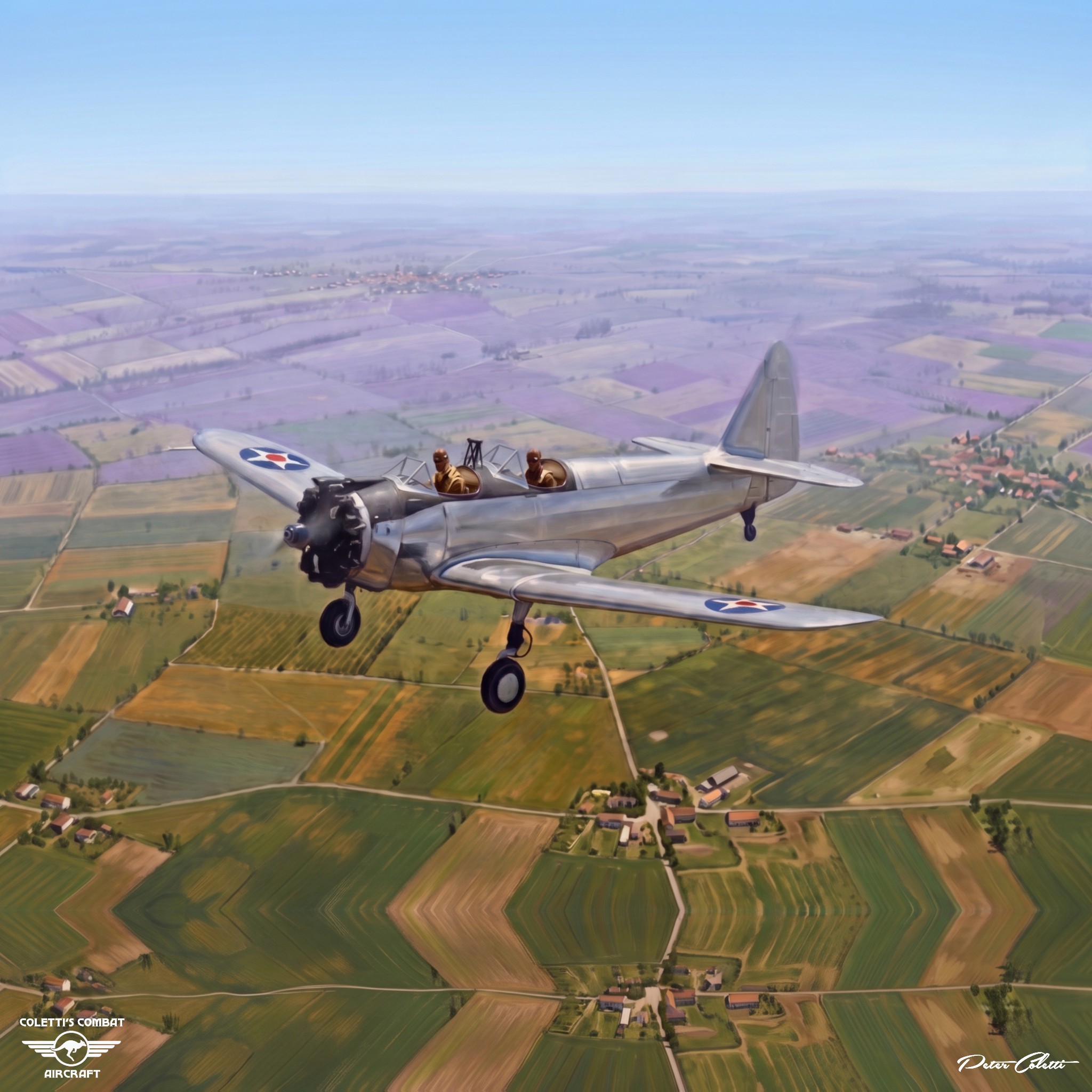
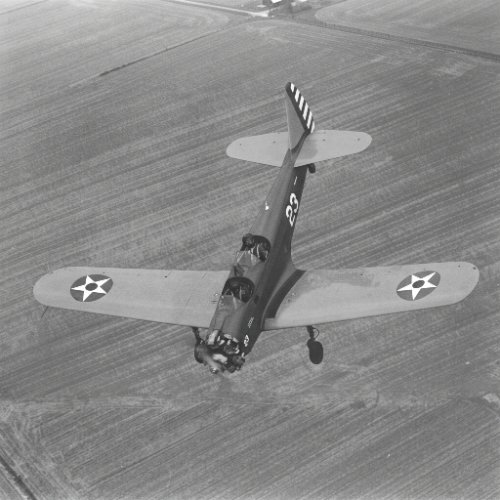
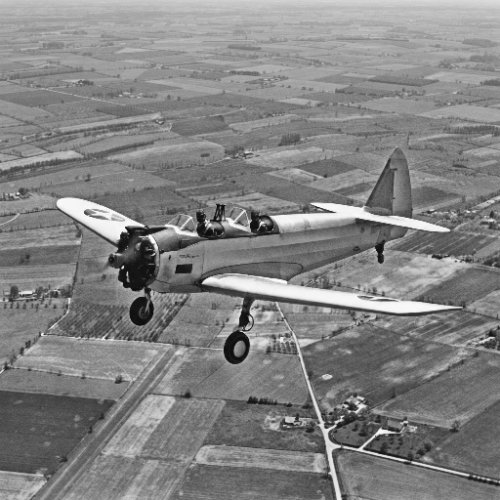
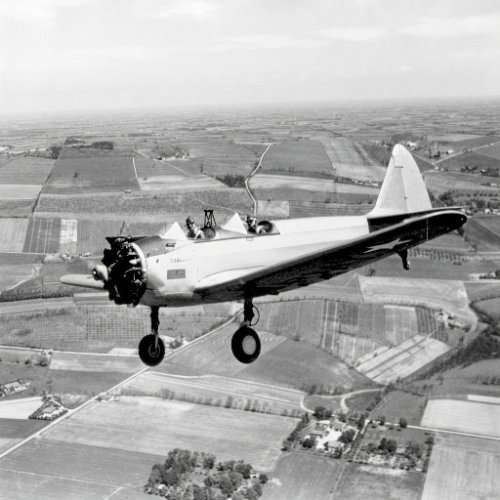
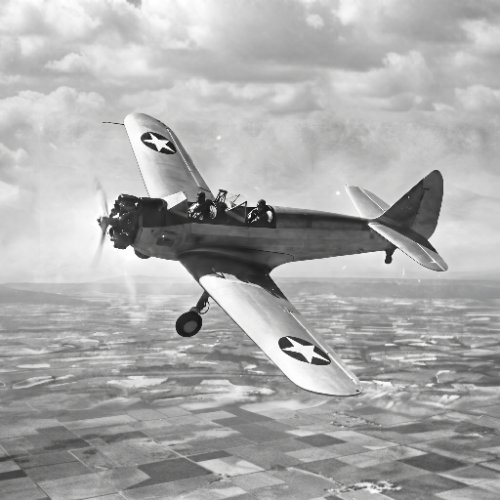
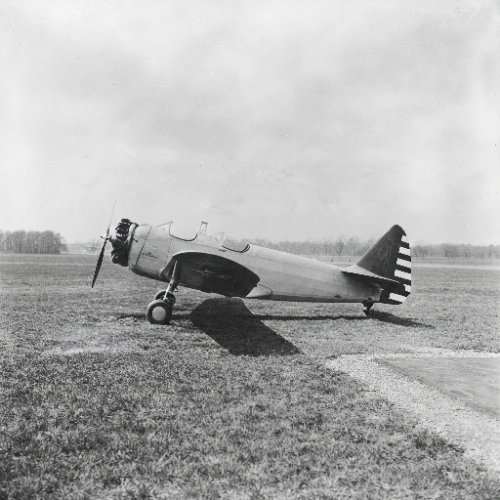
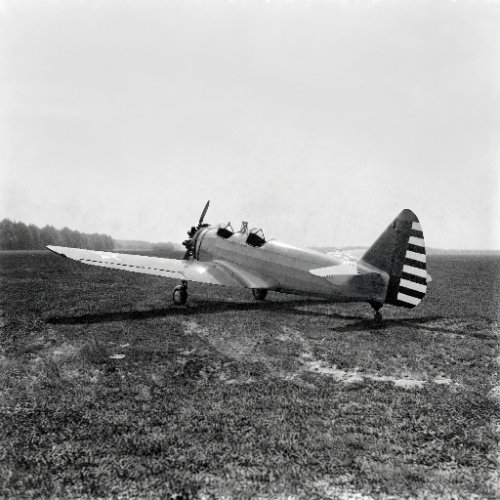
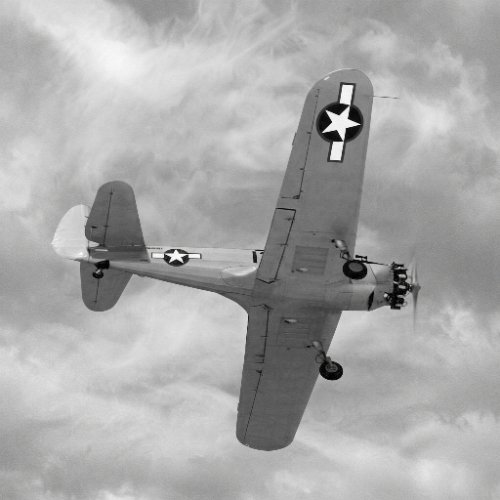
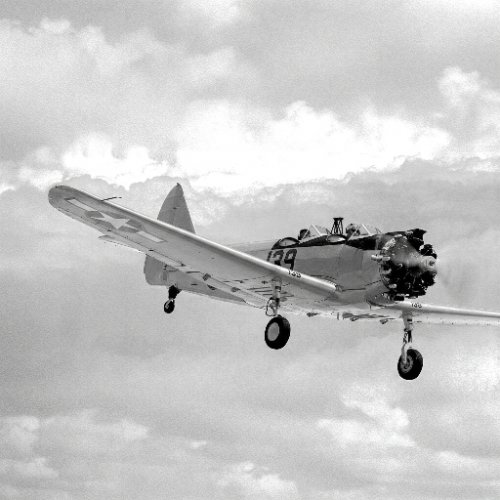
The Fairchild PT‑23 was a World War II primary trainer developed as part of the Fairchild M‑62/”Cornell”” family, alongside the PT‑19 and PT‑26.
The story begins in 1938, when Fairchild recognised that most military pilots were still learning in biplanes whose handling no longer matched modern combat aircraft.
The company designed a new low‑wing monoplane trainer—the M‑62—to better approximate fighter‑like characteristics while remaining forgiving enough for ab‑initio students.
The prototype flew on 15 May 1939, won a fly‑off against 17 competing designs, and led to the first U.S. Army Air Corps contract for 270 aircraft on 22 September 1939.
The initial production version became the PT‑19, powered by a Ranger inline engine.
After Pearl Harbour, demand for trainers exploded, and Fairchild brought in multiple subcontractors—Aeronca, St. Louis Aircraft, Howard, Fleet (Canada), and Fabrica do Galeão (Brazil)—to meet production needs.
As concerns grew over a possible shortage of Ranger engines, Fairchild introduced the PT‑23 in 1942, identical to the PT‑19 from the firewall aft but fitted with a
Continental R‑670 radial engine.
Design and construction
Airframe and layout
The PT‑23 shares the same basic airframe as the PT‑19 and PT‑26:
Structure: Fabric‑covered welded steel‑tube fuselage; plywood‑covered wooden centre section, outer wing panels, and tail assembly.
Landing gear: Fixed, wide‑track main gear with tailwheel, designed to minimise ground loops common in earlier trainers.
The low‑wing cantilever design gave smoother, more fighter‑like handling than biplane trainers, while the wide gear and relatively benign stall made it suitable for novice pilots.
The PT‑23 retained the open tandem cockpits of the PT‑19, with basic instrumentation and dual controls for instructor and student.
Construction materials
Fairchild’s primary trainers used “Duramold” plywood techniques for the wings and tail, producing smooth aerodynamic surfaces.
Early examples had durability issues in humid climates, prompting later moves towards all‑metal wings, but the PT‑23 as originally built remained largely wood‑and‑fabric aft of the firewall.
The airframe behind the engine is essentially identical to the PT‑19B, simplifying production and maintenance.
Powerplant and performance
The defining difference between the PT‑23 and PT‑19 is the engine.
The PT‑23 was introduced specifically to address shortages of Ranger inline engines by using the more readily available Continental radial.
Engine: Continental R‑670‑4 or R‑670‑11, 7‑cylinder air‑cooled radial.
Power output: Approximately 220 hp (164 kW).
Representative performance figures for a PT‑23 with the R‑670 engine are:
Wingspan: ~36 ft (10.97 m).
Length: ~26 ft 7.5 in (8.11 m).
Empty weight: ~1,970 lb (894 kg).
Gross weight: ~2,800 lb (1,270 kg).
Cruise speed: ~103–108 mph (IAS/TAS at 3,000 ft).
Maximum diving speed: ~191 mph (never approached in normal training).
Stall speed: ~61 mph.
Service ceiling: ~13,500 ft.
Rate of climb: ~870 ft/min.
Fuel capacity: 49 gal total, 45 gal usable; typical range of 220–320 statute miles depending on fuel load and power setting.
These numbers place the PT‑23 squarely in the primary‑trainer category: modest speed, good climb, and forgiving stall behaviour, yet with handling that prepared students for more advanced aircraft.
Variants and production
PT‑23 (base model)
Role: Primary trainer (PT).
Engine: Continental R‑670 radial, 220 hp.
Configuration: Open tandem cockpits, identical fuselage and wings to PT‑19 from firewall aft.
Production: Fairchild built the first two prototypes; all subsequent production was undertaken by licensed manufacturers (Aeronca, St. Louis Aircraft, Howard, etc.).
Total PT‑23 production is generally cited as 1,125–1,126 aircraft, including sub‑variants.
PT‑23A
Role: Instrument‑training variant.
Modification: Equipped with a collapsible hood and additional instruments to allow students to practice flying solely by reference to instruments.
Production: About 256 PT‑23A aircraft built.
Paint and markings
Early PT‑series trainers (before June 1942) carried the classic U.S. Army blue fuselage with chrome‑yellow wings and tail, plus red‑white‑blue rudder stripes and a red centre in the national star.
From June 1942 onward, all new trainers—including production PT‑23s—left the factory in overall silver, and the red centre of the star and rudder bars were removed in August 1942 to avoid confusion with Japanese markings.
Only the PT‑23 factory prototype ever wore the blue‑and‑yellow scheme.
Operational history and WWII context
Role in the U.S. training system
The PT‑23 entered service in 1942 as part of the U.S. Army Air Forces’ massive wartime training programme.
It was used at primary flying schools such as Fletcher Field (Clarksdale, Mississippi) and Stuttgart Army Airfield (Arkansas), where thousands of cadets took their first military flights.
Like the PT‑19, the PT‑23’s mission was to teach basic flying skills:
Take-off and landing techniques.
Basic aerobatics and stalls.
Coordination, turns, and navigation.
Instrument basics (especially in PT‑23A).
Its wide‑track gear and predictable handling reduced accidents compared to some earlier trainers, while the radial engine gave it a distinctive rounded nose and sound.
Relationship to PT‑19 and PT‑26
The PT‑23 was one of three core Fairchild primary trainers:
PT‑19: Inline Ranger engine, open cockpit.
PT‑23: Radial Continental engine, open cockpit, otherwise identical airframe.
PT‑26 (“Cornell”): Enclosed canopy and cockpit heating, primarily for Canadian service.
Together, these types formed a large portion of the Allied primary‑training fleet, especially under the U.S. Army Air Forces and the British Commonwealth Air.
Training Plan (though the PT‑23 itself was mainly U.S.‑based).
Postwar fate
After WWII, many PT‑23s were sold as surplus.
They found new lives in:
Civilian flying clubs and flight schools.
Agricultural work (crop‑dusting and spraying).
Private ownership and sport flying.
A number of PT‑23s survive today, restored and flown by museums and enthusiasts.
Estimates suggest around 40–50 aircraft remain airworthy worldwide, with examples preserved at institutions such as the Golden Age Flight Museum and Golden Wings Museum.
Summary The Fairchild PT‑23 was a radial‑engined member of the Fairchild primary‑trainer family, created in 1942 to address shortages of Ranger inline engines while retaining the successful M‑62 airframe.
With its Continental R‑670 radial, low‑wing monoplane layout, wide‑track fixed gear, and wood‑and‑fabric construction, it offered forgiving yet realistic handling for novice pilots.
Over a thousand PT‑23s and PT‑23As were built by licensed manufacturers, and they played a significant role in the U.S. Army Air Forces’ WWII training pipeline.
Although overshadowed somewhat by the PT‑19 and later trainers, the PT‑23 remains an important link in the evolution of primary training aircraft—bridging the gap between prewar biplanes and more advanced wartime types and leaving a small but enduring footprint in postwar civilian aviation.