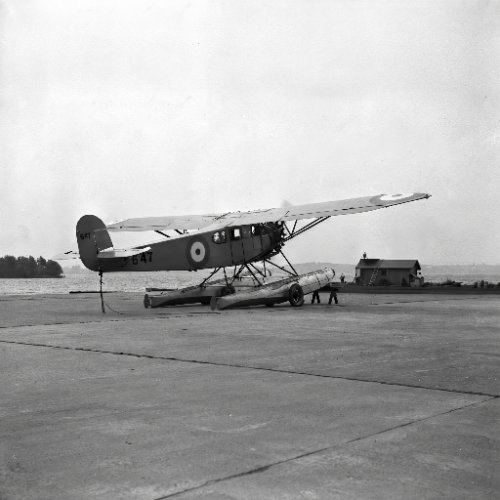
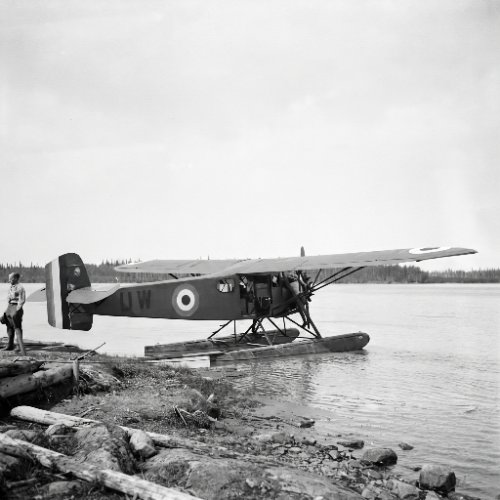
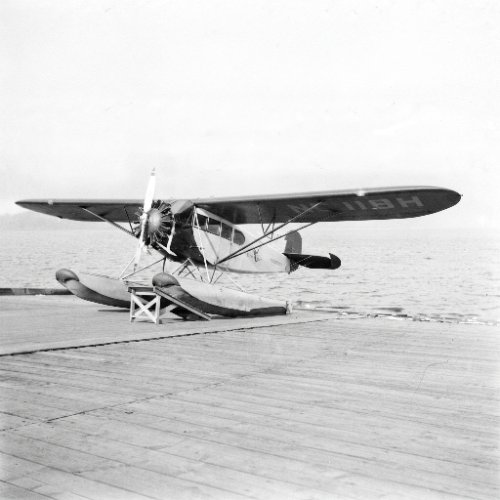
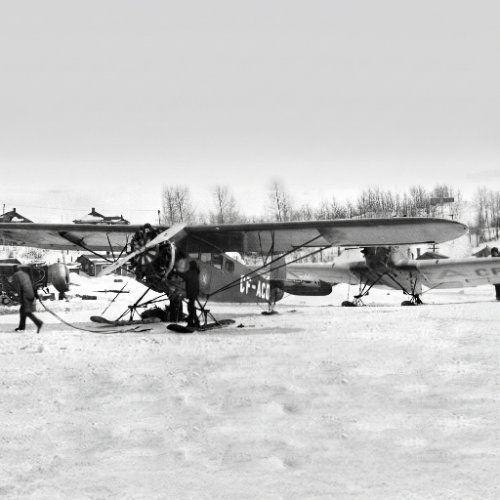
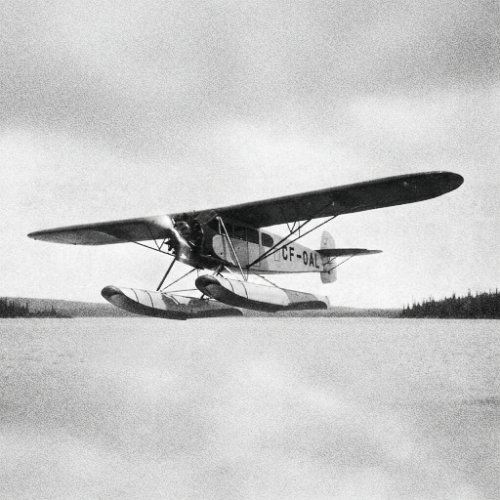
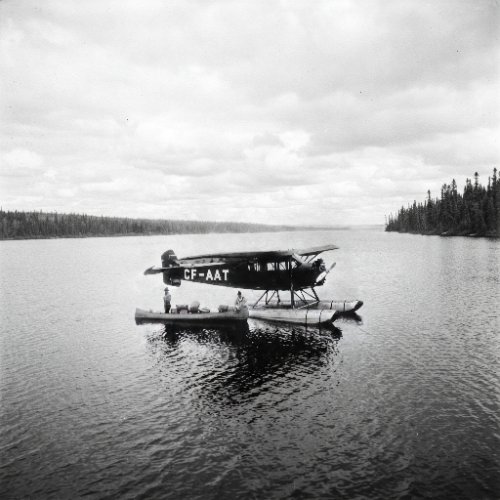
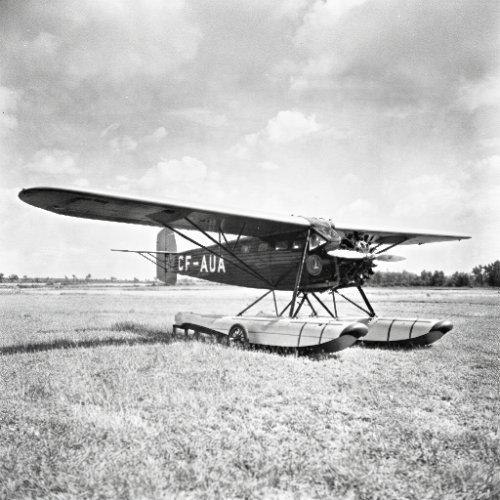
The Fairchild 71 originated as a direct evolution of the Fairchild FC‑2 and FC‑2W series, which themselves were progressive refinements of Sherman Fairchild’s early aerial‑survey aircraft.
The FC‑2 first flew in 1926 and introduced several improvements over earlier Fairchild designs, including swept‑back wings, increased wingspan, nearly doubled engine power, and cabin refinements for passenger comfort.
The FC‑2W variant added specialised features for aerial photography—such as a vertical camera bay and low‑cut aft windows for oblique photography—while retaining the mixed construction of welded steel‑tube fuselage and strut‑braced wooden wings.
This FC‑2W became the basis for what was designated the Model 71, built in the United States between 1928 and 1930.
In 1929, Fairchild established Fairchild Aircraft Ltd. (Canada) at Longueuil, Quebec, to support Canadian operators and begin local production.
Canadian‑built aircraft differed from U.S. versions by removing passenger‑comfort features and optimising the airframe specifically for aerial photography and northern operations.
Design and Construction
Airframe and Structural Layout
The Fairchild 71 is a high‑wing, strut‑braced monoplane designed for stability, visibility, and rugged utility.
Its construction followed the proven Fairchild formula:
Canadian military and survey variants often removed comfort features to maximise space for cameras and equipment.
Powerplant and Performance
Most Fairchild 71s used Pratt & Whitney Wasp radial engines, with the Canadian‑built Model 71C commonly powered by a 310‑kW Pratt & Whitney R‑1340‑B Wasp.
These performance characteristics made the aircraft suitable for long‑range survey missions, mail delivery, and transport across vast northern territories.
Variants
Model 71 (Baseline)
The original production version derived from the FC‑2W2, used for passenger transport, cargo hauling, and aerial photography.
Built in the U.S. from 1928 to 1930.
Model 71C
Canadian‑built variant with an enclosed cabin for all‑season use.
Often configured for aerial photography and northern operations.
Powered typically by the Pratt & Whitney R‑1340‑B Wasp.
This became the most widely used version in Canada.
Military Designations (U.S.)
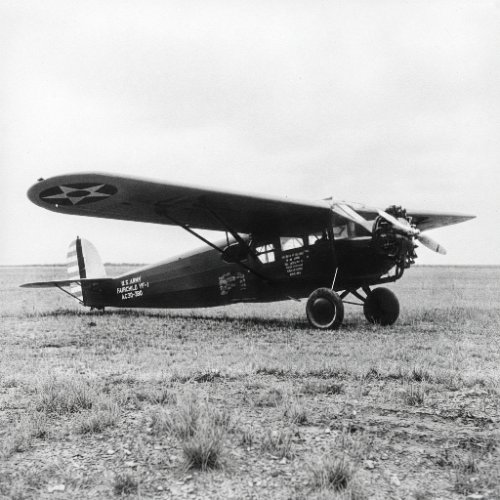
XC‑8 / XF‑1: One aircraft acquired by the U.S. Army Air Service for evaluation and photographic work.
YF‑1: Eight service‑test aircraft ordered.
C‑8: Final designation applied to all nine aircraft.
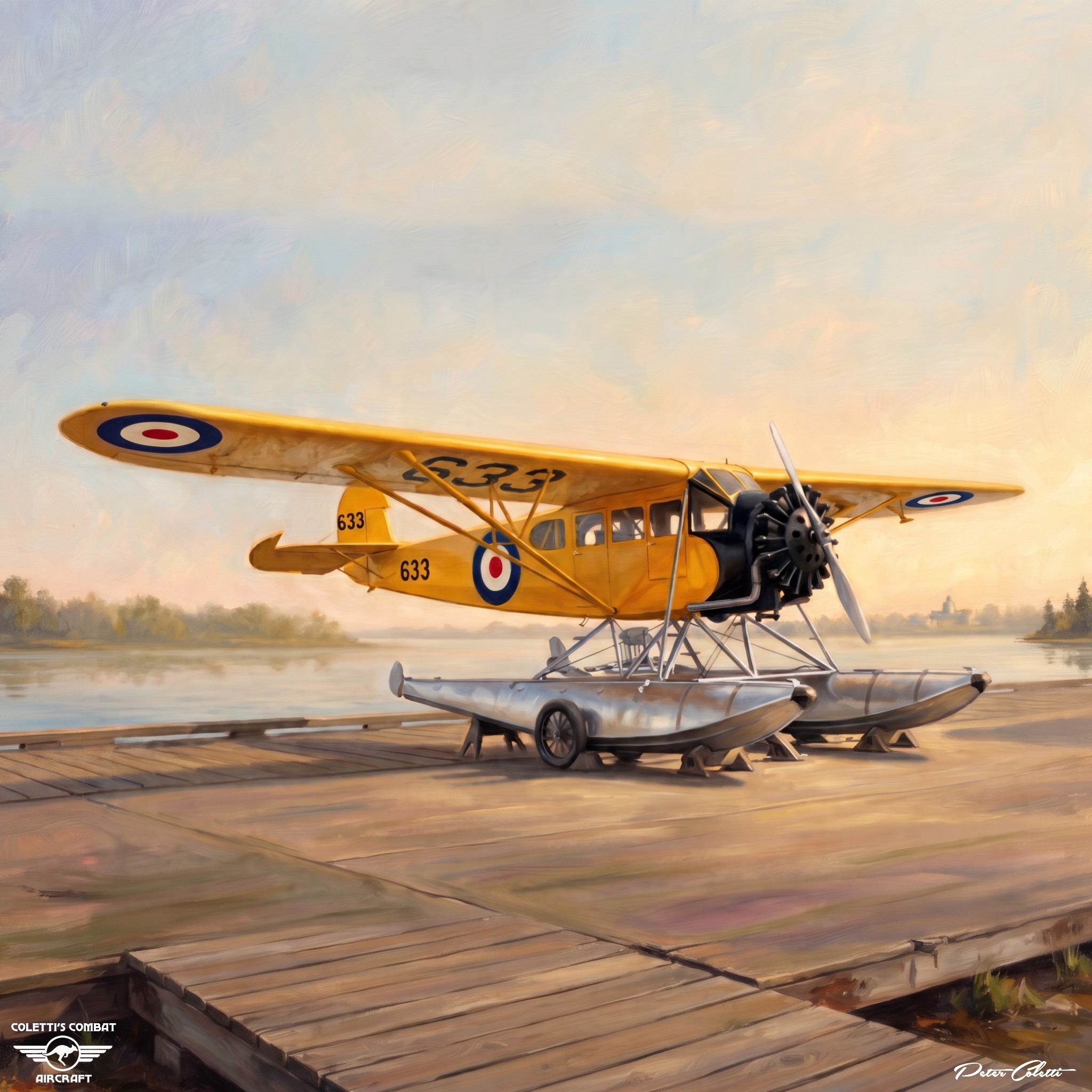
Canadian Military Variant (RCAF F‑71)
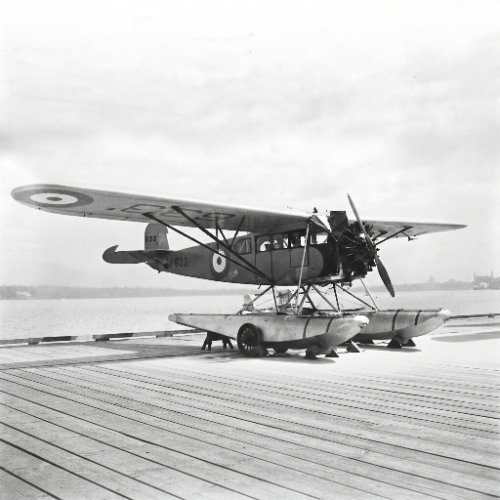
Canadian‑built aircraft optimised for aerial photography and northern patrol duties. Thirty‑four operated from 1930 to 1946.
Operational History and WWII Context
United States Military Use
The U.S. Army Air Service/Army Air Corps used the Fairchild 71 primarily for photographic reconnaissance and light transport, evaluating it under the XC‑8/XF‑1 programme and later operating nine aircraft as C‑8s.
Royal Canadian Air Force (RCAF)
The RCAF was the largest military operator, using the Fairchild 71 extensively for:
Aerial photographic survey of Canada’s northern territories
Northern transport of personnel and supplies
Anti‑smuggling and illegal immigration patrols (in cooperation with the RCMP), especially from No. 5 (Flying Boat) Squadron at RCAF Station Dartmouth after 1934
During World War II, the Fairchild 71 continued in these support roles.
Although not a combat aircraft, it contributed significantly to wartime infrastructure mapping, domestic security patrols, and logistical support in remote regions.
Civilian Use
Civilian operators—including Canadian Airways Limited—used the Fairchild 71 for:
Mail delivery
Cargo transport
Exploration and survey missions
Emergency medical evacuations
Its reliability and ability to operate on floats and skis made it a staple of North American bush flying.
It also participated in notable expeditions, including Richard E. Byrd’s 1928–1929 Antarctic expedition (using Fairchild aircraft of the same family) and appeared in cultural works such as Captains of the Clouds (1941).
Production and Legacy
Production of the Fairchild 71 totalled around 30 units across U.S. and Canadian variants.
Despite the small production run, its impact on bush flying and aerial surveying was substantial.
Many aircraft served into the 1940s and 1950s, especially in Canada.
Surviving examples—such as the Fairchild 71C preserved at the Western Canada Aviation Museum in Winnipeg—highlight the type’s importance in early northern aviation and aerial mapping history.
Summary
The Fairchild 71 was a rugged, adaptable high‑wing monoplane that played a major role in North American bush flying, aerial photography, and remote‑region transport.
Developed from the FC‑2W2 and produced in both the U.S. and Canada, it served civilian operators, the U.S. Army, and the RCAF—particularly in survey and patrol roles throughout the WWII era.
Its ability to operate on wheels, skis, and floats, combined with long range and substantial payload, made it one of the most important early aircraft for northern operations.