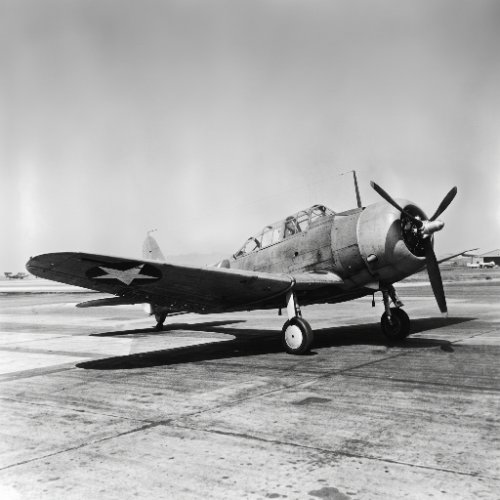
The Douglas SBD Dauntless traces its lineage to the Northrop BT series of carrier‑based dive bombers.
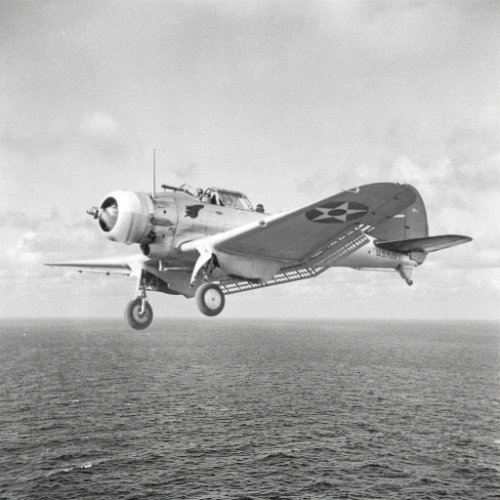
Development began with the Northrop BT‑1 in the mid‑1930s, a design that showed promise but suffered from handling and structural issues.
When the Northrop Corporation was absorbed by Douglas in 1937, ongoing BT‑1 improvement work continued under Douglas engineers, including the influential designer, Ed Heinemann.
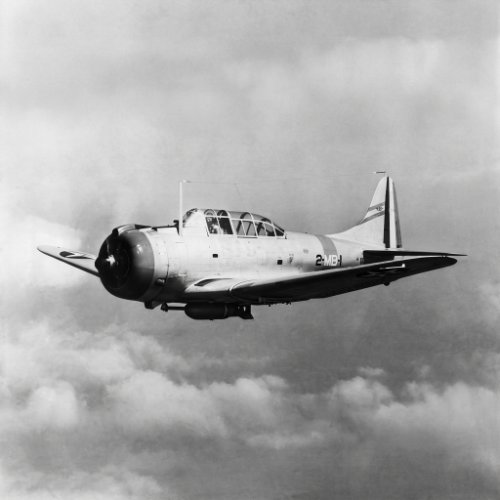
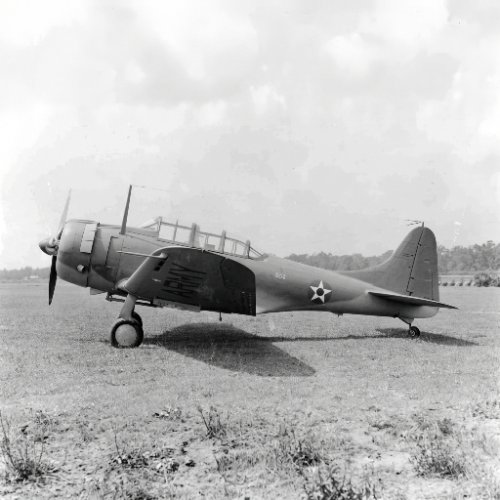
Douglas XBT
In late 1937, the U.S. Navy ordered modifications to the BT‑1, resulting in the BT‑2, which incorporated aerodynamic refinements and structural strengthening.
This aircraft was further redesigned into the XBT‑2, then standardised as the XSBD‑1, the direct prototype of the Dauntless.
The first production SBDs entered service in mid‑1939, and full operational introduction occurred in 1940.
Production initially took place at Douglas’s El Segundo plant, but demand quickly outstripped capacity.
A second production line was established at Douglas’s Oklahoma City facility in 1940, enabling mass production that ultimately reached 5,936 aircraft across all variants by 1944.
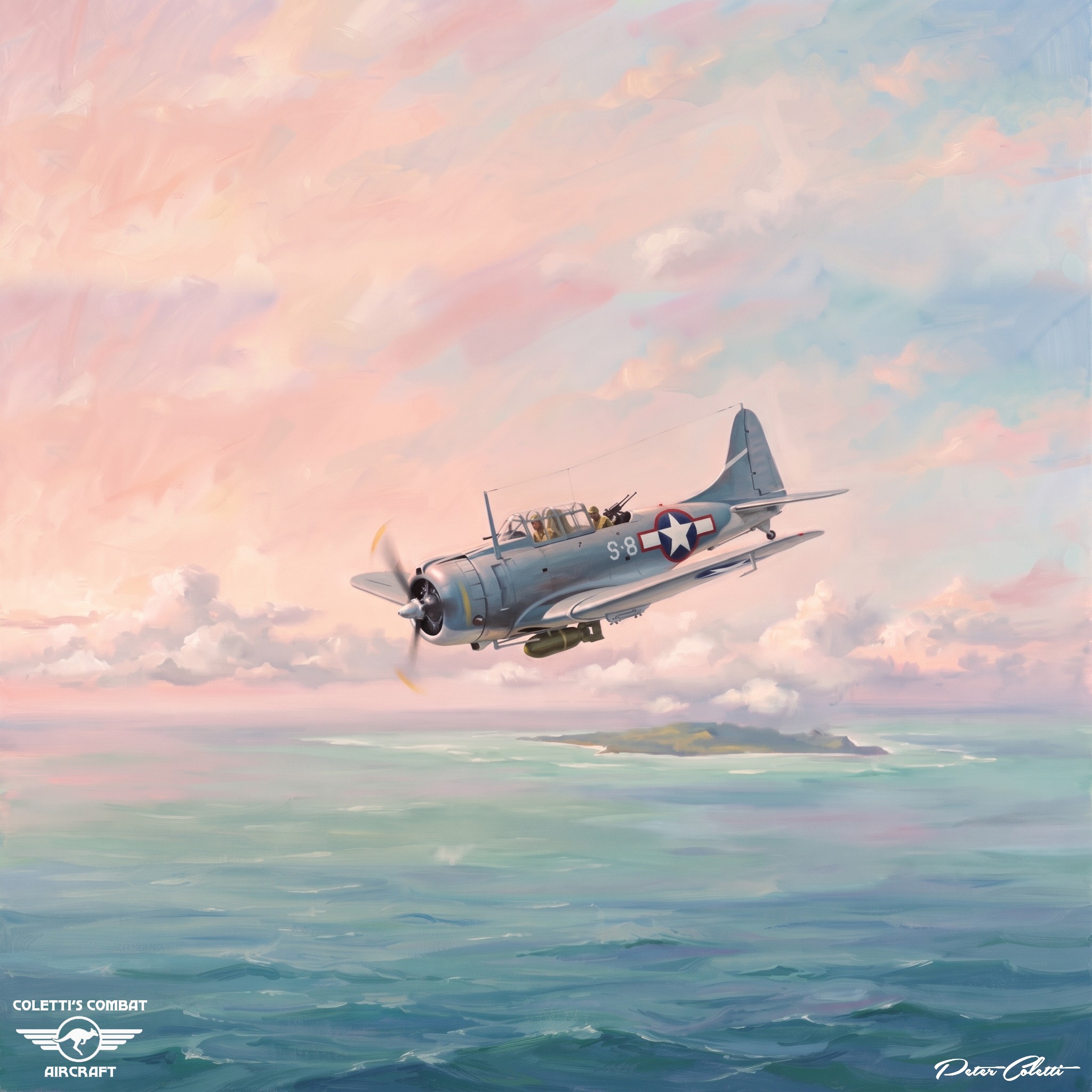
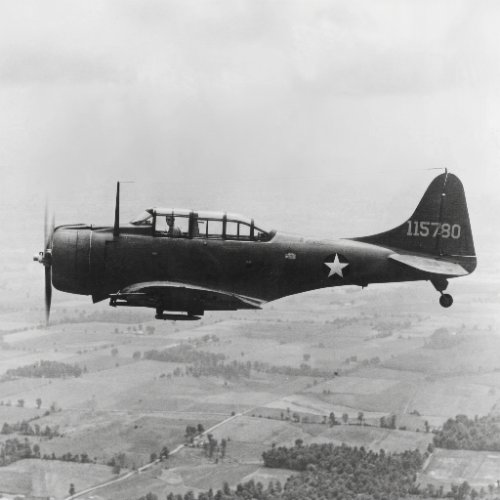
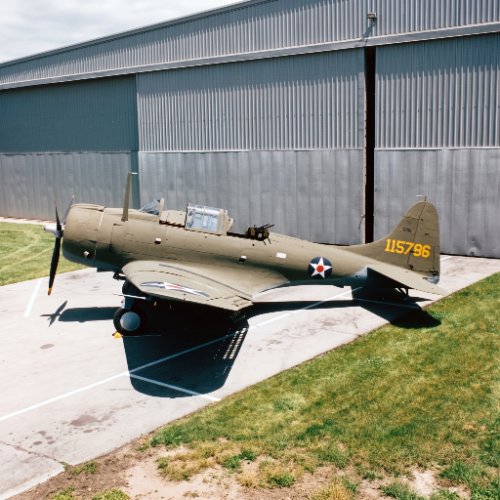
Douglas SBD Dauntless
Design Philosophy and Technical Characteristics
The Dauntless was conceived as a carrier‑based scout and dive bomber, optimised for accuracy, ruggedness, and reliability rather than raw speed.
Its design emphasised:
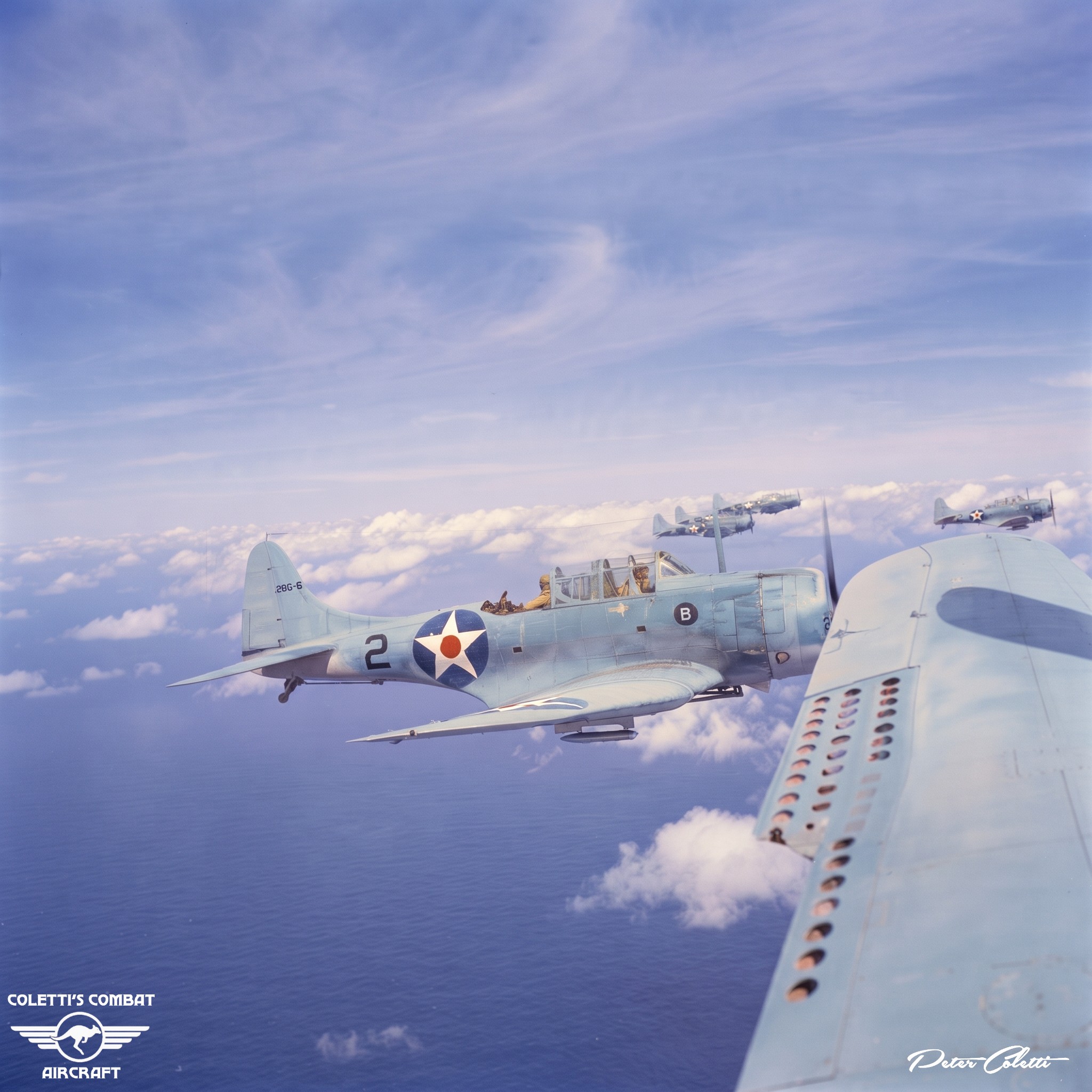
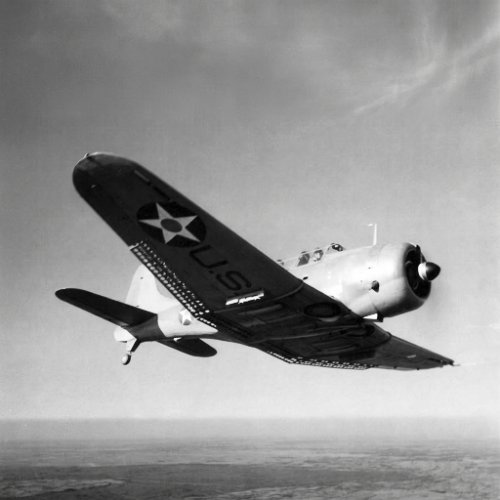
Excellent dive stability, enabled by distinctive perforated dive brakes on the trailing edges of its wings.
Long range for scouting and strike missions.
Good manoeuvrability and forgiving handling characteristics.
Strong defensive armament for a two‑seat aircraft.
Structural toughness, allowing steep dives and carrier operations.
The aircraft was powered by variants of the Wright R‑1820 Cyclone radial engine, typically producing around 1,000 hp.
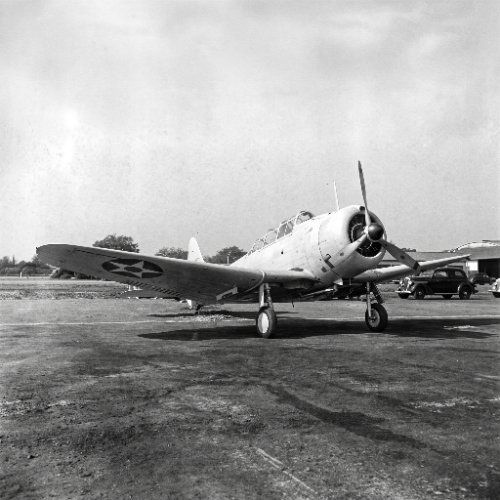
Its fuselage was compact and robust, with a greenhouse canopy providing excellent visibility for both pilot and rear gunner.
Douglas SBD Dauntless
SBD‑5 Specifications (Representative Variant)
Crew: 2
Length: 33 ft 1.25 in (10.09 m)
Wingspan: 41 ft 6.375 in (12.66 m)
Height: 13 ft 7 in (4.14 m)
Empty Weight: 6,404 lb (2,905 kg)
Max Takeoff Weight: 10,700 lb (4,853 kg)
Max Speed: 255 mph (410 km/h) at 14,000 ft
Combat Range: 1,115 mi (1,794 km)
Service Ceiling: 25,530 ft (7,780 m)
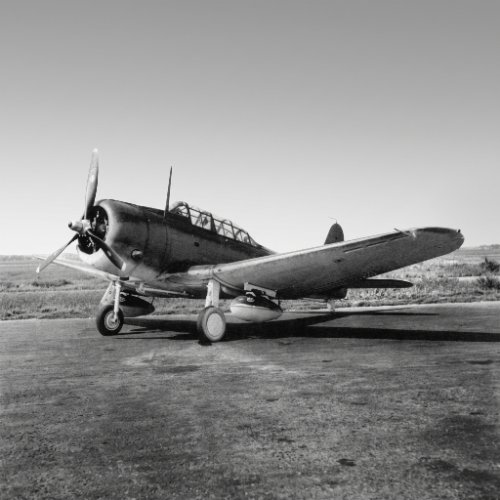
Douglas SBD Dauntless
Armament
2 × forward‑firing .50 cal Browning M2 machine guns
2 × rear‑mounted .30 cal Browning M1919 machine guns
Up to 2,250 lb of bombs (one centreline, two wing racks)
The Dauntless’s dive‑bombing accuracy was legendary.
Pilots routinely executed 70‑degree dives, relying on the perforated dive brakes to maintain stability and prevent overspeeding.
This precision made the SBD one of the most effective naval strike aircraft of WWII.
Douglas SBD Dauntless
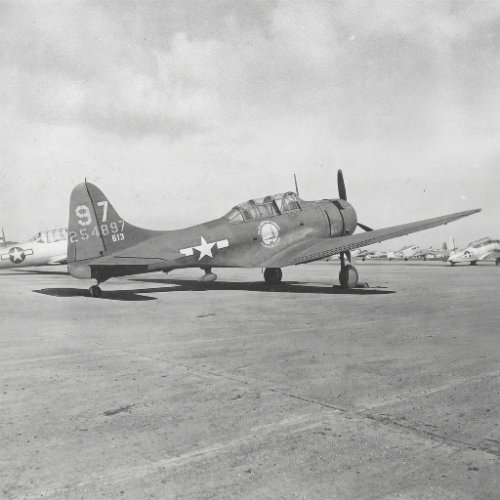
The A‑24 Banshee: Land‑Based Derivative
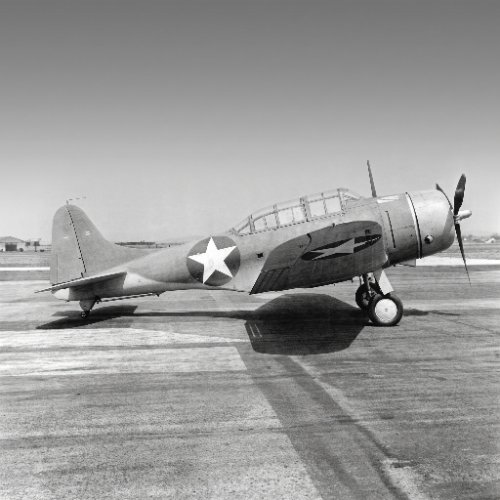
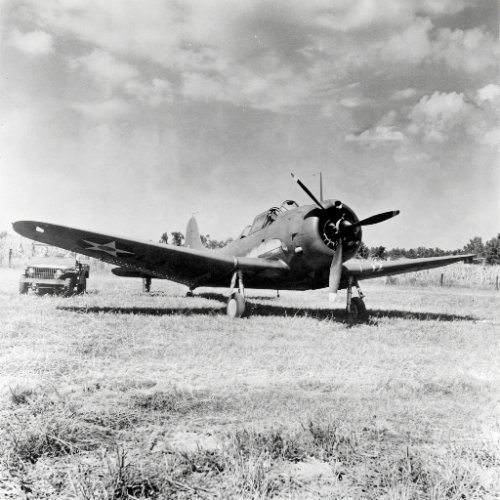
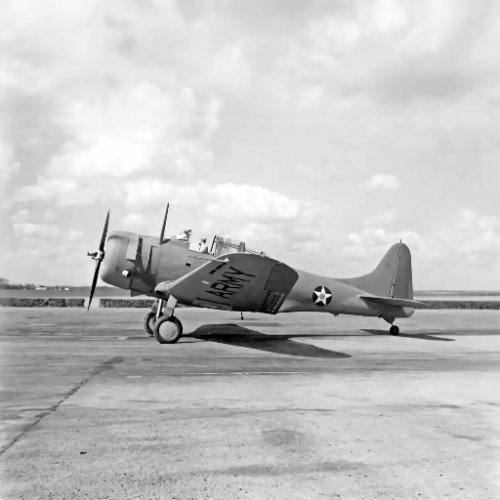
The U.S. Army Air Forces adopted a land‑based version of the Dauntless, designated A‑24 Banshee.
It was essentially an SBD without carrier‑specific equipment such as the arrestor hook.
Douglas A-24 Banshee
However, the A‑24 suffered from:
Lack of specialised dive‑bombing training among Army pilots
Vulnerability due to relatively slow speed and modest defensive armament
Operational environments where its strengths (carrier suitability, naval scouting) were irrelevant
By mid‑1943, the A‑24 was considered too vulnerable for frontline combat and was relegated to training and secondary roles.
Douglas SBD Dauntless
Operational History and WWII Context
Early Service and Pearl Harbour Aftermath
The Dauntless entered service just before the U.S. entered WWII.
Its first combat success occurred three days after Pearl Harbour, when SBDs from USS Enterprise sank the Japanese submarine I‑70 on December 10, 1941.
This marked the beginning of a distinguished combat record.
Douglas A-24 Banshee
The Battle of Midway (June 4, 1942)
The Dauntless achieved immortality at Midway, where its pilots delivered decisive blows that sank four Japanese fleet carriers—Akagi, Kaga, Soryu, and later Hiryu.
These attacks crippled the Kido Butai, the world’s most formidable naval air arm at the time.
Midway’s outcome fundamentally shifted the strategic balance in the Pacific.
The Dauntless’s accuracy, reliability, and ability to press attacks under extreme conditions made it central to the victory.
Douglas A-24 Banshee
Guadalcanal and the Long Campaign
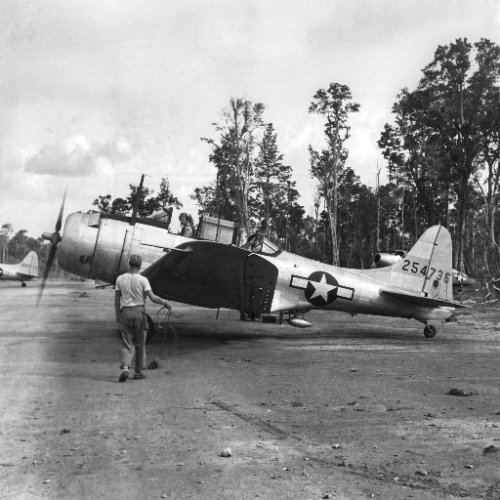
Throughout 1942–43, the Dauntless served relentlessly in the Solomon Islands campaign, including the grinding battles around Guadalcanal.
It provided:
Close air support
Anti‑shipping strikes
Scouting and reconnaissance
Defensive patrols over U.S. naval forces
Its ruggedness and reliability allowed it to operate from both carriers and austere land bases.
Douglas A-24 Banshee
Later War Service and Replacement Attempts
Although officially replaced by the Curtiss SB2C Helldiver beginning in 1944, the Dauntless often outperformed its successor, which suffered from developmental problems.
As a result, both aircraft served side‑by‑side until the end of the war.
The Dauntless remained in U.S. service until 1945 and continued flying with foreign operators—including Mexico—into the late 1950s.
Douglas A-24 Banshee
Variants
Major SBD variants included:
SBD‑1: Initial production model for the U.S. Marine Corps.
SBD‑2: Improved fuel capacity for extended range.
SBD‑3: Armour protection, self‑sealing fuel tanks, and upgraded armament.
SBD‑4: Electrical system improvements.
SBD‑5: The most produced variant; more powerful engine and refined systems.
SBD‑6: Final wartime variant with further engine and equipment upgrades.
A‑24 / A‑24A / A‑24B Banshee: Land‑based Army versions without carrier gear.
Douglas A-24 Banshee
Assessment and Legacy
The Douglas SBD Dauntless is widely regarded as the most effective American dive bomber of WWII.
Its combination of accuracy, ruggedness, and reliability made it indispensable during the critical early years of the Pacific War.
It earned the affectionate nickname “Slow But Deadly”, reflecting its modest speed but devastating combat effectiveness.
Its role at Midway alone secured its place in aviation history, but its sustained performance across countless battles demonstrated its enduring value.
Even after newer aircraft arrived, the Dauntless’s superior handling and dive characteristics kept it in frontline service.
The A‑24 Banshee, while less successful due to doctrinal and training limitations, remains an important part of the Dauntless story as a testament to the aircraft’s adaptability.
Douglas A-24 Banshee
Conclusion
The Douglas SBD Dauntless and A‑24 Banshee represent one of the most consequential aircraft families of WWII.
From their origins in prewar Northrop designs to their decisive role in the Pacific, these aircraft exemplified the virtues of sound engineering, pilot‑friendly handling, and mission‑focused design.
Their legacy endures not only in museums and surviving airframes but also in the strategic history of the Pacific War, where the Dauntless helped turn the tide at a moment when the future of the conflict hung in the balance.