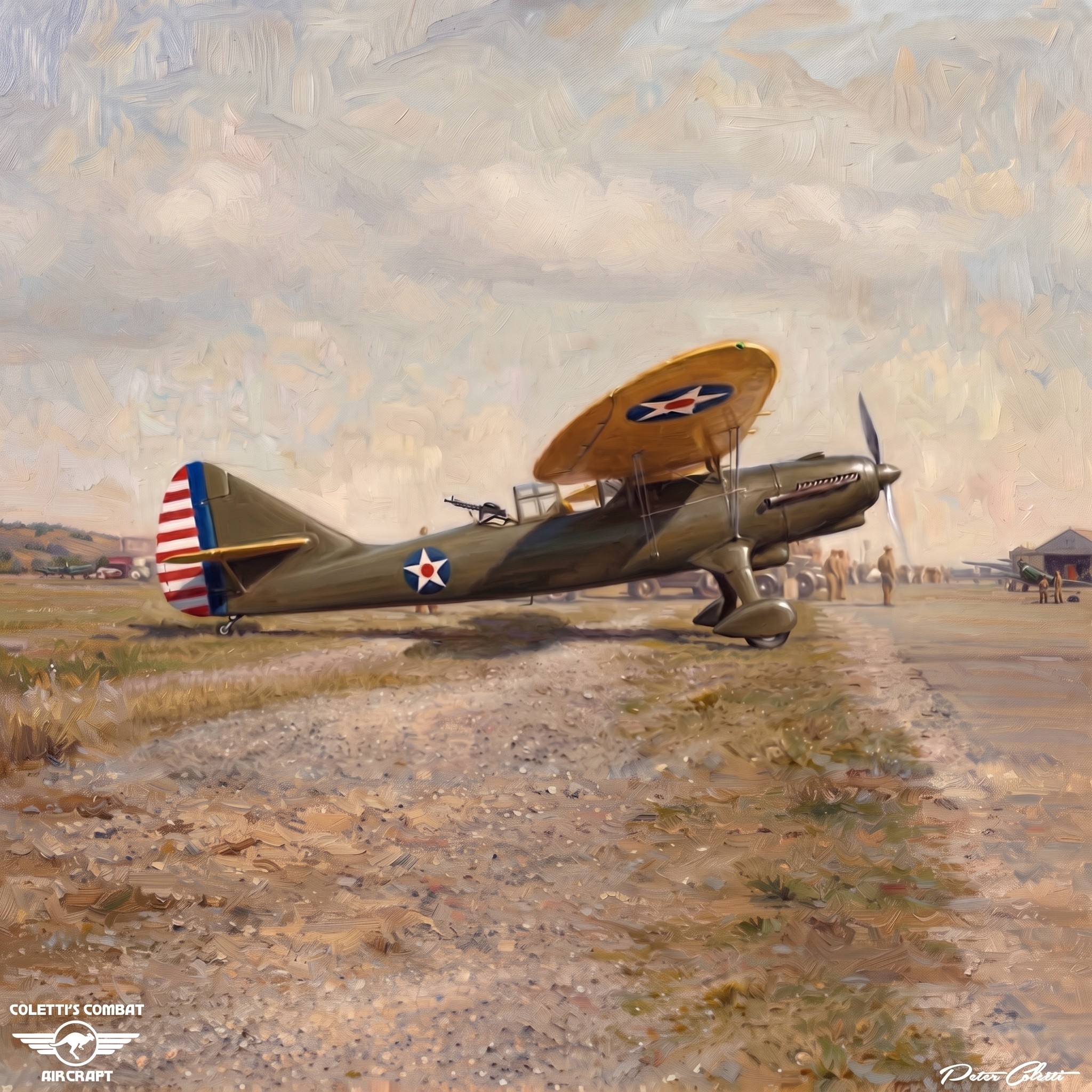
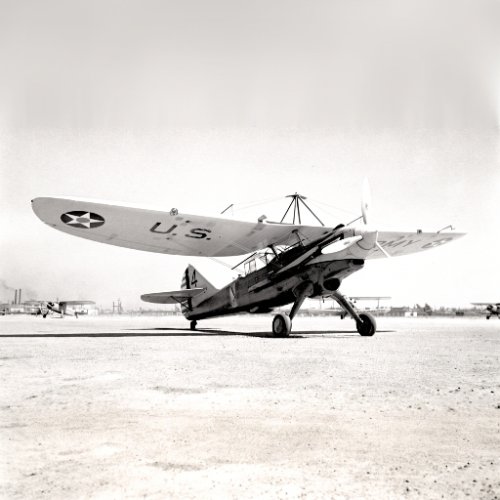
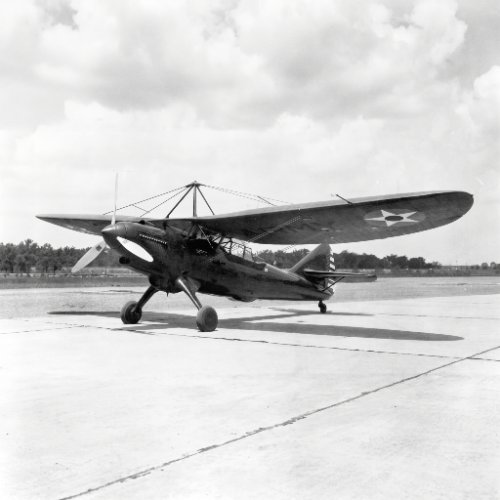
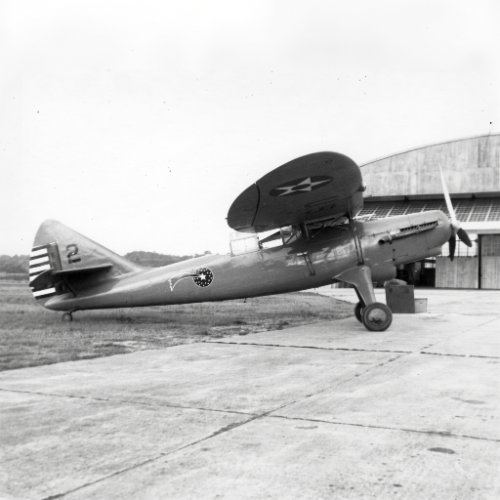
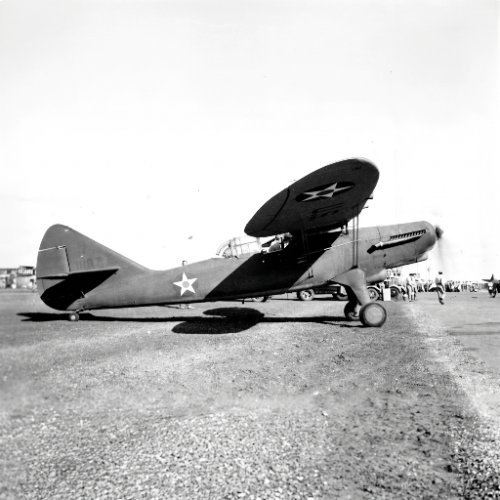
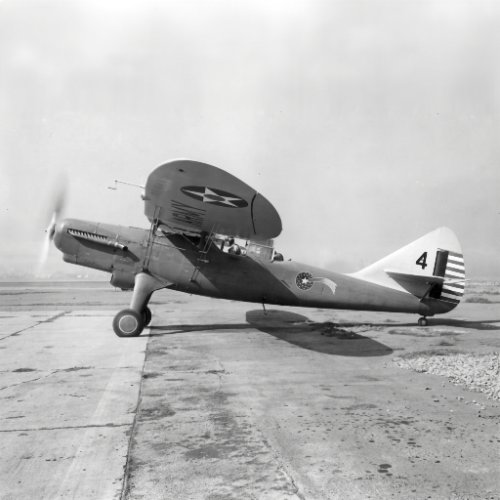
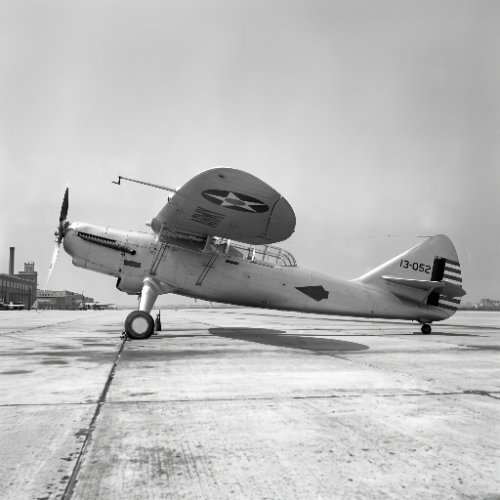
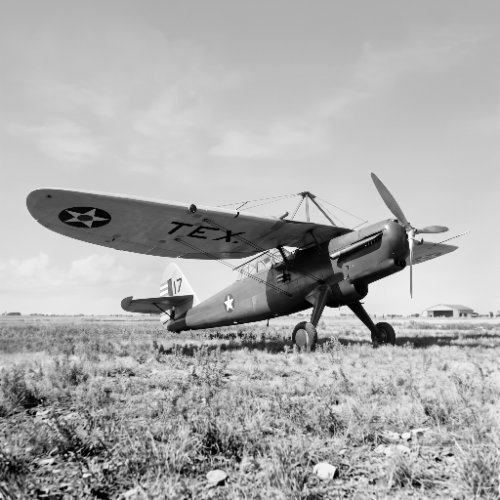
The Douglas O‑43 was an American parasol‑wing monoplane observation aircraft developed by the Douglas Aircraft Company in the early 1930s for the United States Army Air Corps (USAAC).
It represented a transitional step between the biplane observation types of the 1920s and the more modern monoplanes that followed, and it embodied the interwar doctrine of reconnaissance and artillery spotting from relatively secure rear‑area airfields.
Though built in small numbers and overshadowed by later designs, the O‑43 and its main production variant, the O‑43A, were important waypoints in Douglas’s evolving observation aircraft line, leading directly to the better‑known O‑46.
O-43
Development and origins
The O‑43’s story begins with the experimental Douglas O‑31, a gull‑winged observation aircraft that first flew in December 1930.
Early tests revealed directional instability, prompting a series of modifications to improve handling and suitability for the observation role.
Engineers experimented with different wing positions, a tall, pointed tail with an inset rudder, and a cantilevered undercarriage.
They also introduced a bulged lower fuselage to give the observer more room to stand and operate a defensive gun.
These changes were trailed on prototypes such as the YO‑31A and YO‑31C.
In August 1931, the War Department ordered five service‑test aircraft under contract AC‑4534, originally designated Y1O‑31A.
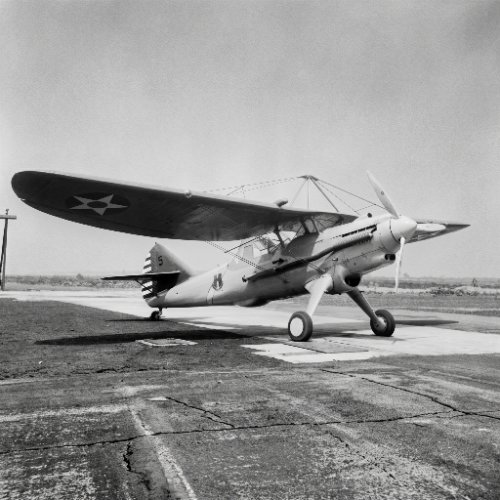
Douglas Y1O-43
During development, these were completed instead as Y1O‑43, incorporating lessons from the O‑31 series.
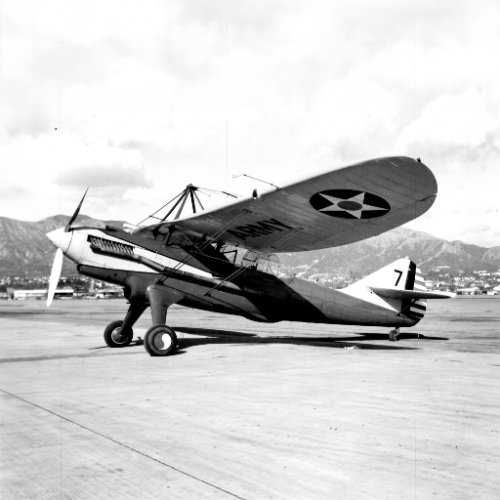
The Y1O‑43 used the semi‑monocoque fuselage of the YO‑31C, including the ventral bulge for the observer, but replaced the gull wing with a wire‑braced parasol wing mounted above the fuselage on cabane struts.
The vertical tail was shorter than that of later O‑31 variants, and the rudder extended the full height of the fin.
These five aircraft were delivered to the USAAC in the spring of 1933 and entered service as O‑43.
On 2 March 1933, the War Department placed a production order for 24 additional aircraft.
The first 23 were completed as O‑43A, while the 24th airframe was finished as the prototype XO‑46, fitted with a radial engine and serving as the direct precursor to the Douglas O‑46.
O-43
Design and configuration
The Douglas O‑43 was a two‑seat parasol‑wing monoplane designed for observation, reconnaissance, and artillery spotting.
Its configuration aimed to provide good downward visibility, stable flight characteristics, and adequate performance for the mid‑1930s.
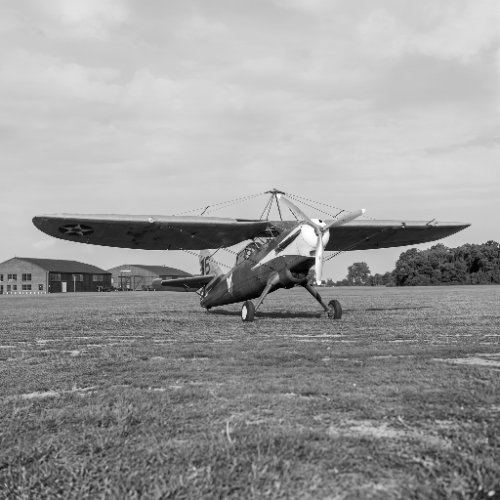
The airframe combined a semi‑monocoque fuselage with a high‑mounted parasol wing supported by cabane and wing struts.
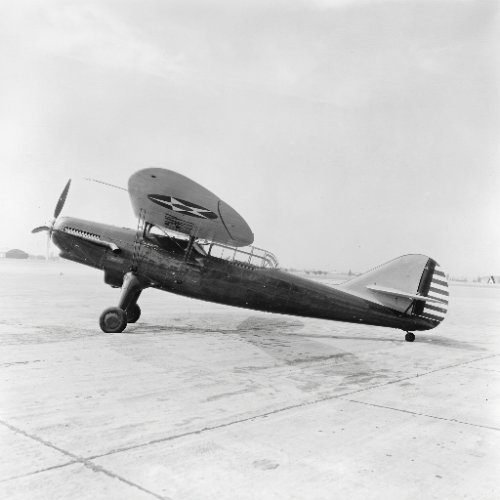
The early O‑43 retained the ventral bulge under the observer’s position, allowing the rear crew member to stand and operate a flexible machine gun with an improved field of fire.
The landing gear was fixed, with a tailwheel and main wheels on struts, typical of the era and suited to prepared airfields rather than rough strips.
Douglas Y1O-43
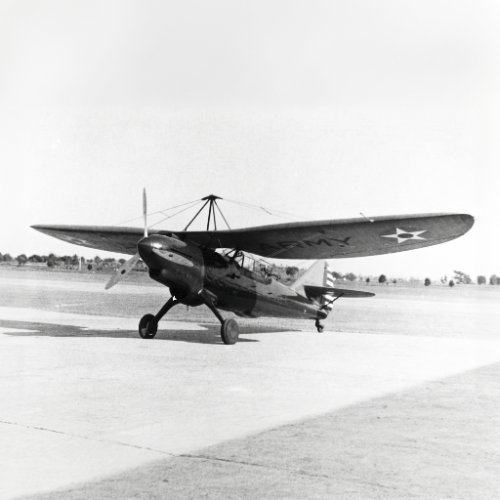
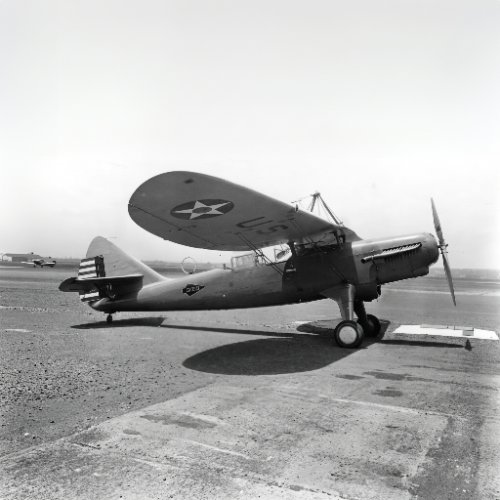
The O‑43A introduced several refinements.
Its fuselage was deepened, eliminating the need for the ventral bulge while still providing adequate space for the observer.
The canopy, which on the O‑43 had covered the pilot and part of the observer’s position, was enlarged and extended to fully enclose both cockpits, improving crew comfort and reducing drag.
The O‑43A also dispensed with the large propeller spinner used on the O‑43, giving the aircraft a cleaner nose profile.
The vertical tail was redesigned with a taller fin and inset rudder similar to that developed for the O‑31A, improving directional stability.
Douglas O-43
Powerplant and technical characteristics
Both the O‑43 and O‑43A were powered by a single Curtiss V‑1570‑59 Conqueror liquid‑cooled V‑12 inline engine, rated at about 675 hp.
This engine drove a three‑bladed metal propeller and reflected the USAAC’s preference at the time for inline engines in observation and bomber types, which offered a streamlined nose and good forward visibility.
For the O‑43A, typical technical specifications were:
Crew: 2
Length: 33 ft 11 in (10.34 m)
Wingspan: 45 ft 11 in (14.00 m)
Height: 12 ft 3 in (3.73 m)
Wing area: 334 sq ft (31.0 m²)
Empty weight: 4,135 lb (1,876 kg)
Gross weight: 5,300 lb (2,404 kg)
Douglas O-43A
Performance
Maximum speed: 190 mph (310 km/h)
Cruise speed: about 163 mph (262 km/h)
Service ceiling: 22,400 ft (6,800 m)
Time to 5,000 ft: approximately 3 minutes 18 seconds
Wing loading: 15.8 lb/sq ft
Power‑to‑weight ratio: about 0.127 hp/lb
These figures made the O‑43A reasonably fast for an observation aircraft of its time, with adequate climb and ceiling for high‑altitude reconnaissance, though it was not intended to compete with contemporary fighters.
Douglas O-43A
Armament and mission equipment
Armament was modest, reflecting the aircraft’s primary role as an observation platform rather than a combat aircraft.
The standard fit comprised:
One fixed forward‑firing. 30‑cal (7.62 mm) Browning machine gun for the pilot.
One flexible .30‑cal Browning machine gun in the observer’s cockpit for rear defence.
The observer’s position, especially in the early O‑43 with its ventral bulge, was designed to allow good visibility and a wide arc of fire.
The aircraft could also carry cameras and basic radio equipment for reconnaissance and artillery spotting, though these were not as sophisticated as later wartime systems.
O-43A
Operational history and roles
The O‑43 and O‑43A entered service with USAAC observation squadrons beginning in 1933.
They were used for routine reconnaissance, artillery spotting during manoeuvres, border patrol, and general utility missions.
Their parasol wing and tandem seating made them well‑suited to visual observation tasks, and their performance was adequate for peacetime training and exercises.
As newer aircraft entered service later in the 1930s, the O‑43 series gradually migrated from frontline observation units to National Guard squadrons.
Units such as the 111th Observation Squadron at Brownwood Airfield, Texas; the 15th Observation Squadron at Fort Sill, Oklahoma; and the 3rd Observation Squadron at Langley Field, Virginia, operated the type for several years.
In these roles, the aircraft continued to provide useful service, but its limited production and evolving doctrine meant it never became a major component of the USAAC inventory.
Douglas O-43A
Variants and evolution
The Douglas O‑43 family comprised several closely related variants, each marking a step in the design’s evolution:
Y1O‑43 (original service‑test aircraft):
The five aircraft originally ordered as Y1O‑31A were completed as Y1O‑43.
They used the semi‑monocoque fuselage with the observer’s bulge from the YO‑31C, combined with a parasol wing and cabane wire bracing.
These aircraft were delivered in 1933 and redesignated O‑43 in service.
Douglas Y1O-43
O‑43 (initial production configuration):
Essentially the Y1O‑43 in operational guise, with the ventral bulge and partial canopy over the pilot and observer.
It retained the large propeller spinner and shorter fin with a full‑height rudder.
O‑43A (main production variant):
The principal version, with 23 aircraft built.
It featured the deeper fuselage without a ventral bulge, a fully enclosed canopy for both crew members, a taller fin with inset rudder, and no propeller spinner.
The engine remained the Curtiss V‑1570‑59 inline V‑12.
Y1O-43
XO‑46 (derivative prototype):
The 24th airframe of the O‑43A contract was completed as XO‑46, fitted with a 725 hp Pratt & Whitney R‑1535 radial engine and revised wing bracing.
This aircraft served as the prototype for the Douglas O‑46, which represented the next step in Douglas’s observation aircraft line and the last of the USAAC “O” designated observation monoplanes before the shift to “L” (liaison) types.
Douglas O-43A
World War II context and legacy
By the time World War II broke out in Europe in 1939, the Douglas O‑43 series was already obsolescent.
Its design reflected early‑1930s assumptions about observation aircraft operating from secure rear‑area bases, rather than from rough forward strips under threat from fast enemy fighters.
As doctrine shifted and technology advanced, the USAAC moved towards lighter, more agile liaison aircraft and more capable reconnaissance platforms.
The O‑43 and O‑43A did not play a significant direct role in World War II combat.
By the early 1940s, most had been relegated to training, utility, and National Guard duties, and they were overshadowed by newer types such as the Douglas O‑46 and, later, the Piper and Stinson liaison aircraft that carried the “L” designation.
Nonetheless, the O‑43 family occupies an important place in the interwar evolution of American observation aircraft, bridging the gap between experimental gull‑wing designs and the more refined parasol‑wing monoplanes that followed.