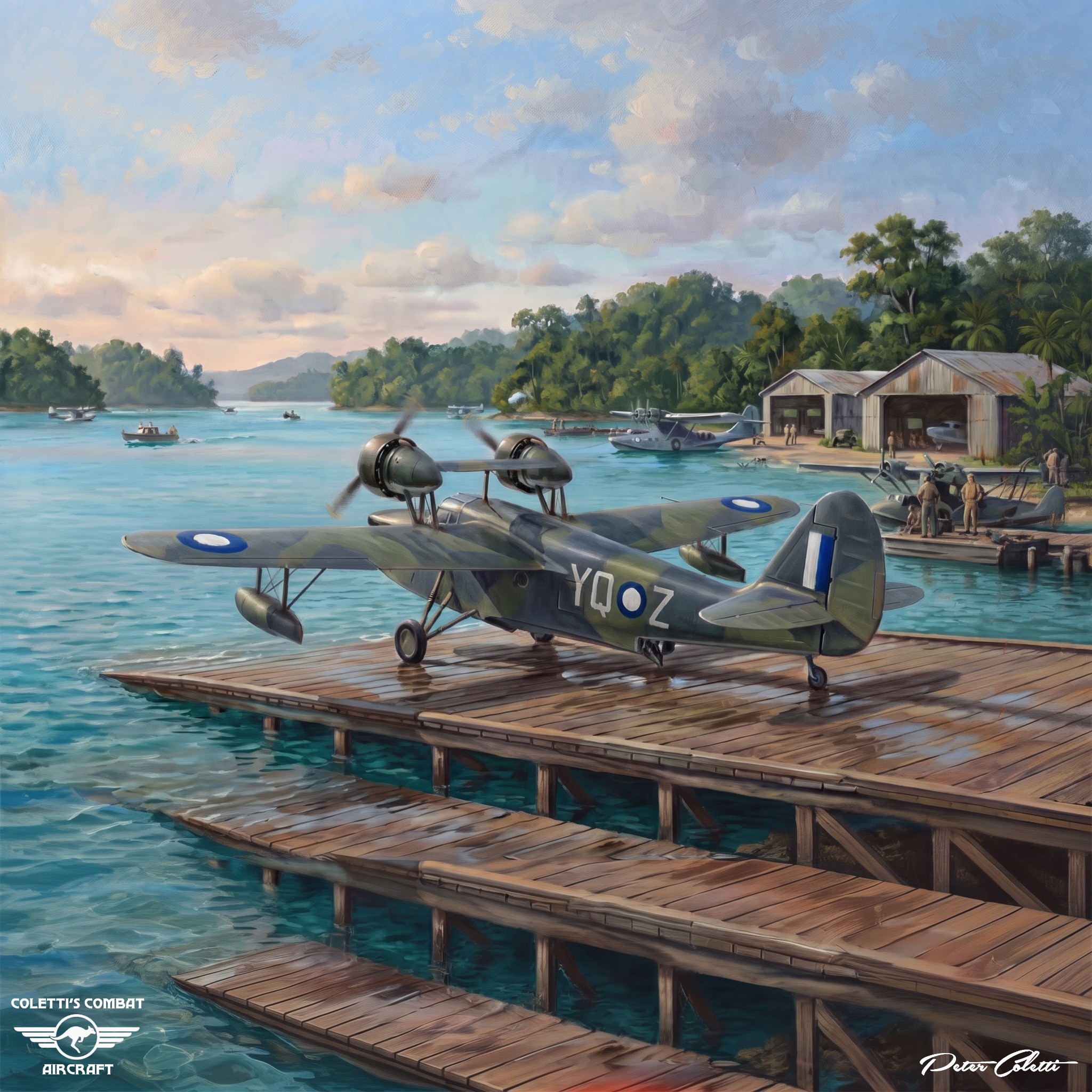
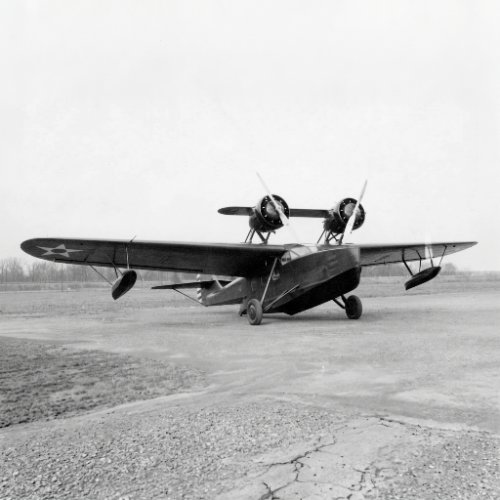
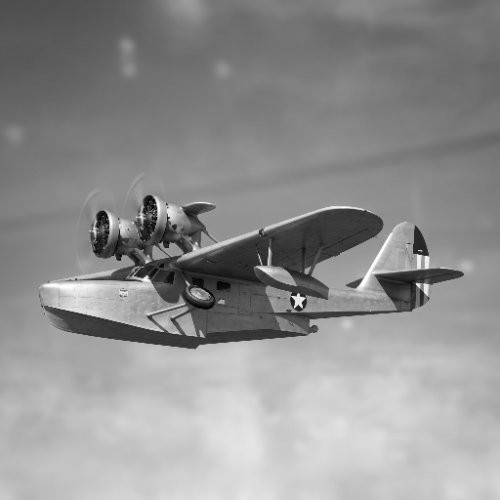
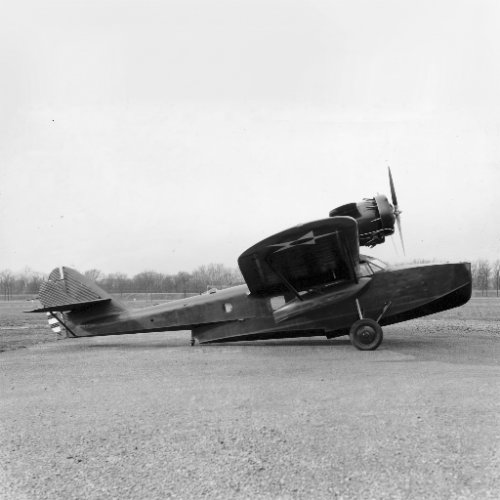
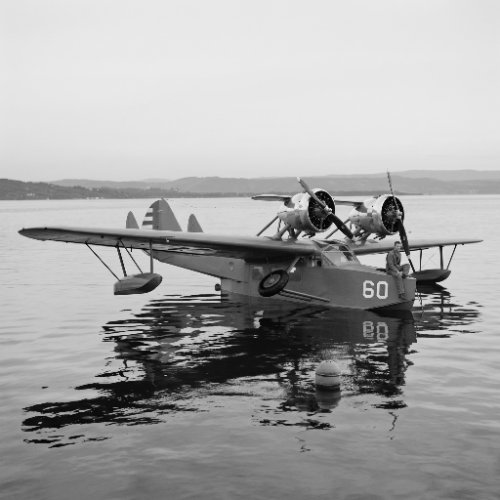
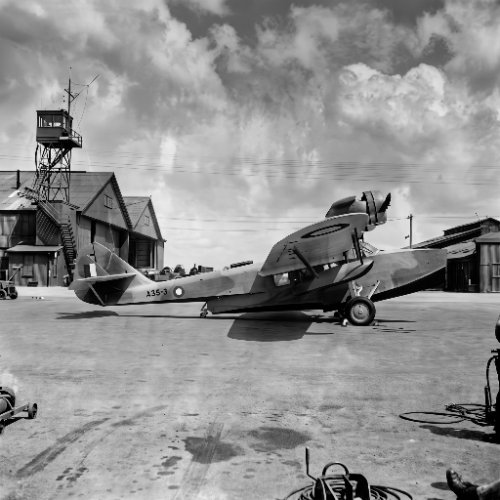
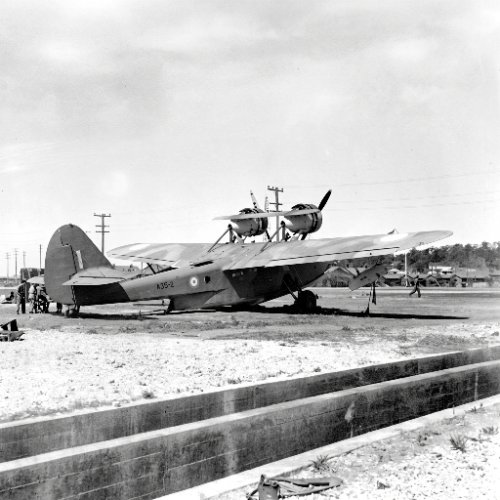
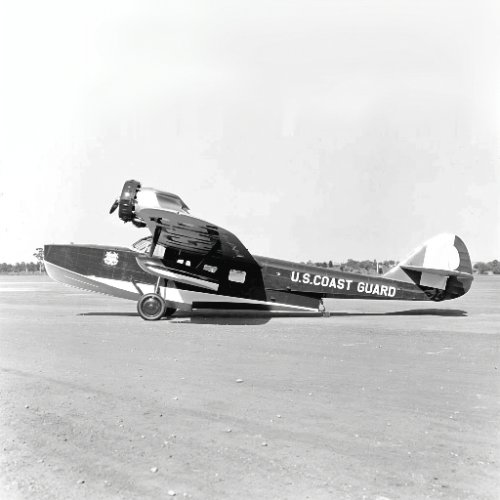
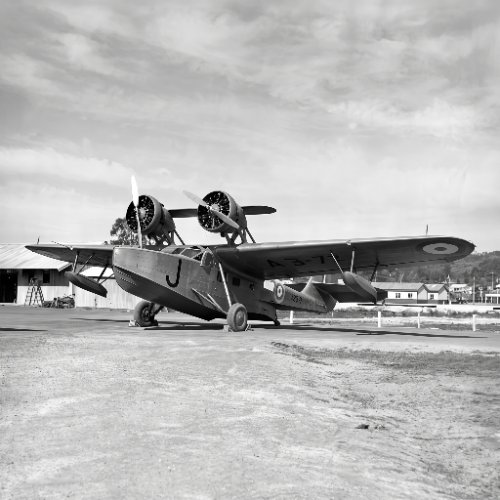
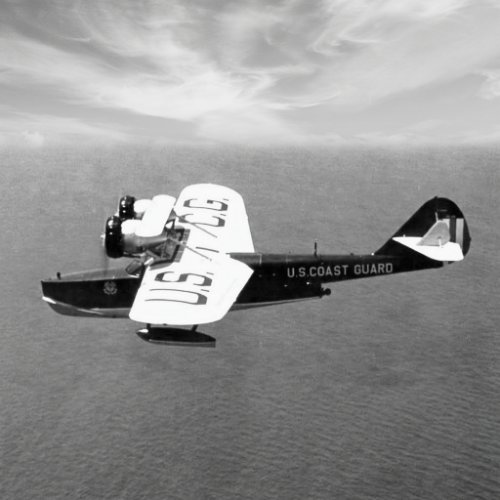
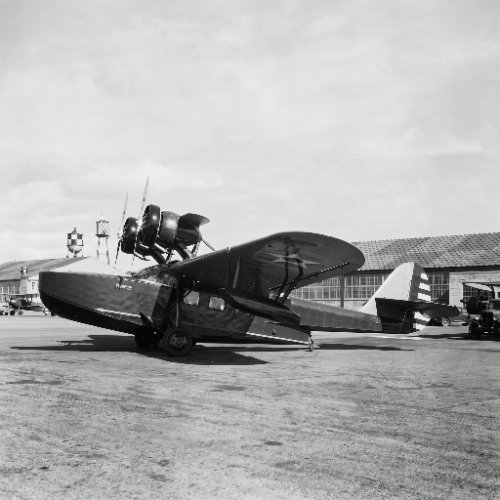
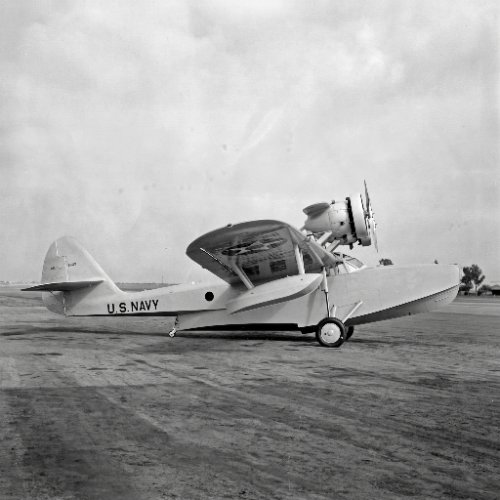
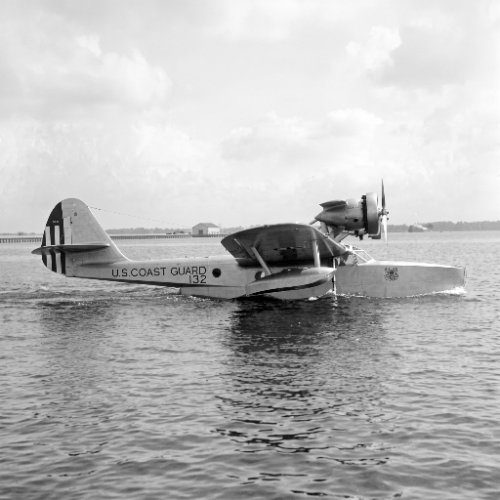
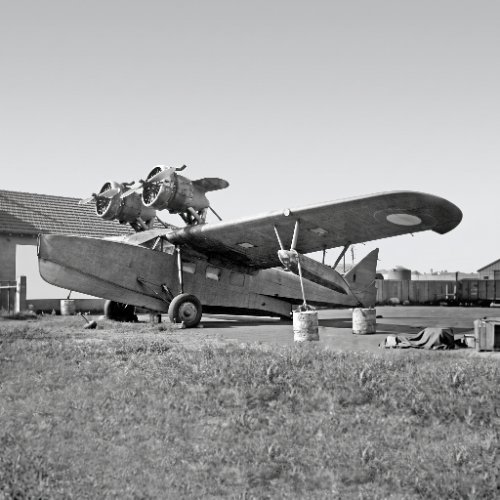
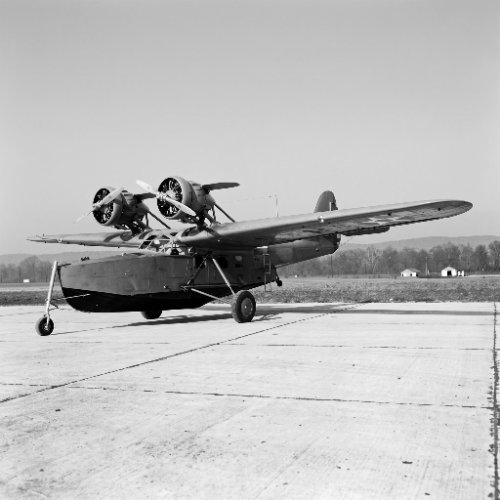
The Douglas Dolphin was an American twin‑engine amphibious flying boat developed by the Douglas Aircraft Company during the early 1930s.
Although only 58 aircraft were produced, the Dolphin became one of the most versatile and widely adapted amphibians of its era, serving in civilian luxury transport, regional airline service, and multiple branches of the U.S. military.
Origins and Development
The Dolphin originated from Douglas’s earlier experimental flying boat, the Sinbad, which first flew in July 1930 at Santa Monica Bay.
The Sinbad was conceived as a luxury flying yacht, built as a pure flying boat without landing gear.
Its initial powerplants were two 300 hp Wright J‑5C Whirlwind radial engines.
The Sinbad failed to attract private buyers—largely due to the economic pressures of the Great Depression, which sharply curtailed demand for extravagant personal aircraft.
Douglas responded by redesigning the aircraft with amphibious capability, adding retractable landing gear, and refining the hull, empennage, engine nacelles, and wings.
This improved version became the Douglas Dolphin, introduced in 1931.
Despite the depressed market, Douglas found early customers: the U.S. Coast Guard, which purchased the Sinbad and then ordered 12 Dolphins, and Wilmington‑Catalina Airline, which bought two
Dolphins for passenger service between Los Angeles and Santa Catalina Island.
These became the first successful Douglas airliners.
Design and Technical Characteristics
The Dolphin was built around a metal hull with a “free bottom” design to improve water handling, paired with a cantilever wooden wing.
It was powered by twin radial engines ranging from 300 to 550 horsepower, depending on the variant, typically from Wright or Pratt & Whitney.
Key dimensions (typical Dolphin configuration):
Length: 45 ft 3 in
Wingspan: 60 ft
Height: 14 ft 7 in
Wing area: 592 sq ft
The aircraft’s amphibious capability was central to its design.
The retractable landing gear allowed operations from both land and water, significantly expanding its utility for coastal patrol, island transport, and rescue missions.
Later variants, such as the Model 9, used 450 hp Pratt & Whitney SC‑1 or CD‑450 Wasp engines, while the final Model 10 used 500 hp Pratt & Whitney SD‑1 radials.
Performance
Performance varied by model, but representative figures (Model 9):
Maximum speed: 148–154 mph
Cruising speed: 132 mph
Landing speed: 65 mph
Initial climb: 800 ft/min
Service ceiling: 15,500 ft
Range: ~400 miles (660 miles in some military configurations).
These performance characteristics made the Dolphin well‑suited for short‑range coastal operations, island hopping, and search‑and‑rescue missions.
Civilian Use and Luxury Transports
Although designed during a difficult economic period, the Dolphin found a niche among wealthy private owners and specialised operators:
Wilmington‑Catalina Airline used Dolphins as six‑seat airliners for island passenger service.
Prominent private owners included William E. Boeing, Philip K. Wrigley, and William K. Vanderbilt, who purchased Dolphins with custom interiors—Vanderbilt even used two Dolphins as flying tenders for his yacht, Alva.
One Dolphin was procured by the U.S. Navy as a transport for President Franklin D. Roosevelt, making it the first aircraft ever acquired specifically for presidential transport, though Roosevelt never used it.
Military Adoption and Roles
The Dolphin’s versatility led to widespread military adoption across multiple U.S. services:
U.S. Coast Guard
The Coast Guard acquired 13 Dolphins (RD‑series), using them for:
Search and rescue
Coastal patrol
Maritime emergency response
The Coast Guard’s Dolphins became famous for dramatic rescues, including a 1933 heavy‑sea landing by an RD‑4 that saved merchant sailors and captured national attention.
U.S. Navy
The Navy purchased 10 Dolphins, designated RD‑1, RD‑2, and RD‑3, for transport, utility, and coastal operations.
U.S. Army Air Corps
The Army ordered several Dolphins under designations, including:
Y1C‑21 / C‑21
Y1C‑26 / C‑26 / C‑26A / C‑26B
C‑29
OA‑3, OA‑4, OA‑4A, OA‑4B, OA‑4C
FP‑2, FP‑2A
In total, the Army operated 24 Dolphins for observation, liaison, and transport duties.
International Operators
Export Dolphins served with the Royal Australian Air Force and various civilian operators worldwide.
World War II Service and Context
Although production ended in the mid‑1930s, the Dolphin remained in active service during World War II, particularly in roles suited to its amphibious nature.
Coast Guard Wartime Operations
After the U.S. entered the war in 1941, Coast Guard Dolphins conducted:
Security patrols along the U.S. coastline
Search‑and‑rescue missions for wartime maritime incidents
Notable rescues, including the 1943 recovery of survivors from the tanker SS Gulfstate.
Army Wartime Use
Army Dolphins (OA‑series) performed:
Observation flights
Liaison missions
Short‑range transport in coastal and island theatres
Their amphibious capability made them valuable in areas lacking developed airfields.
Navy Wartime Use
Navy Dolphins continued utility and transport roles, though by the mid‑war period they were overshadowed by more modern amphibians such as the Consolidated PBY Catalina.
Variants Overview
The Dolphin family included numerous variants, reflecting its custom‑built production approach:
Sinbad – original flying‑boat prototype (1930).
Model 1 – early six‑seat airliner for Wilmington‑Catalina.
Model 3 – similar to Model 1 but with Pratt & Whitney R‑985 Wasp Junior engines.
Models 5–10 – progressive refinements with increasingly powerful Pratt & Whitney engines up to 500 hp.
RD‑series (RD‑1, RD‑2, RD‑3, RD‑4) – Coast Guard and Navy amphibians.
C‑series (C‑21, C‑26, C‑29) – Army transports.
OA‑series (OA‑3, OA‑4, OA‑4A/B/C) – Army observation amphibians.
FP‑2 / FP‑2A – Army photographic variants.
Because Dolphins were built only to fulfil specific orders, construction numbers were non‑sequential and highly individualised.
Legacy
Although overshadowed by larger and more famous amphibians, the Douglas Dolphin played a significant role in early American amphibious aviation.
It pioneered:
Presidential air transport procurement
Early regional airline service
Coast Guard aviation rescue operations
Surviving examples—such as the last known RD‑4, preserved at the National Naval Aviation Museum—remain important artefacts of interwar and early WWII aviation history.