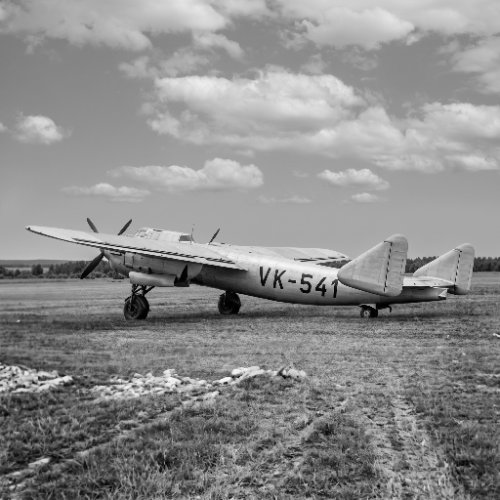
The Dornier Do 317 was a late‑war German medium bomber prototype developed as an advanced derivative of the Dornier Do 217.
Conceived to meet the Luftwaffe’s ambitious “Bomber B” requirement for a next‑generation high‑speed, high‑altitude medium bomber, the Do 317 incorporated a pressurized cabin, more powerful engines, and a heavier bombload than its predecessor.
Despite promising design features, only six prototypes were built, and the program was cancelled before entering production due to engine shortages, shifting strategic priorities, and disappointing performance gains.
Development
Origins in the Bomber B Program (1939–1941)
In 1939, the Reich Air Ministry (RLM) initiated the Bomber B program to produce a second‑generation medium bomber capable of outrunning enemy fighters through speed and altitude while carrying heavy payloads.
Dornier submitted the Do 317 as one of four competing designs.
The aircraft was intended to use advanced engines such as the Daimler‑Benz DB 604, BMW 802, or Jumo 222, all of which promised major performance improvements.
However, these engines never reached reliable mass production, forcing Dornier to redesign the aircraft around less powerful alternatives.
Early Design Work (1940–1942)
Planning began in spring 1940, with the goal of creating a substantially new airframe despite visual similarity to the Do 217.
Only a small number of Do 217 components were reused.
The redesigned fuselage was intended to accommodate 3,000–4,000 kg of internal bombload.
Two major versions were planned:
Do 317A — unpressurized, simpler, powered by two DB 603A/B engines.
Do 317B — pressurized, advanced, powered by DB 610A/B “power system” engines, remote‑controlled turrets, and extended wings.
A full‑scale mock‑up was completed in October 1940.
Initial plans called for six prototypes, split between DB 603 and Jumo 222 engines.
But delays in both engine programs forced the RLM to reduce the prototype order to two, and ultimately only one aircraft, the Do 317 V1, was completed.
Prototype Testing (1943)
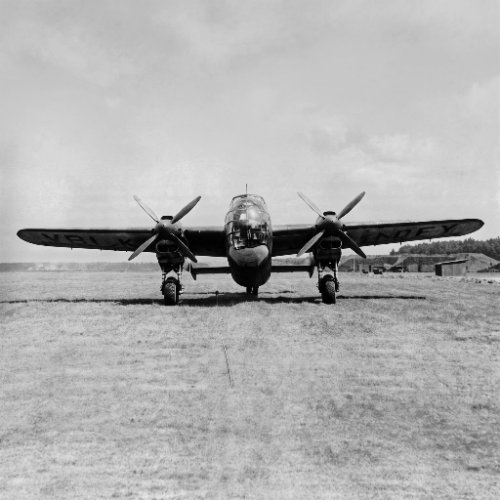
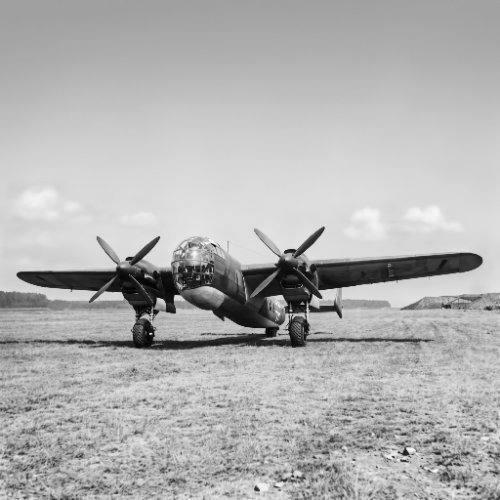
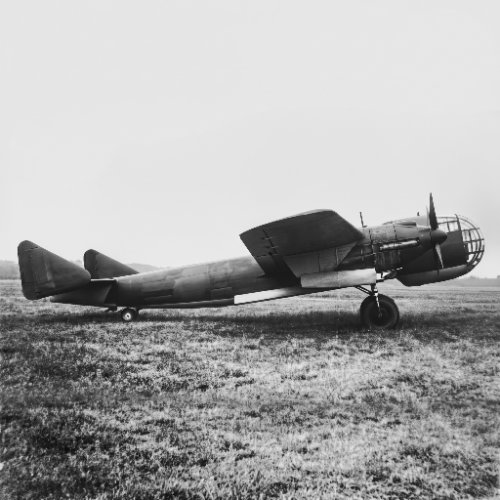
The Do 317 V1 (registration VK+IY) made its maiden flight on 8 September 1943.
It featured:
A pressurized cabin provision built into the glazed nose.
A “stepless cockpit” similar to late‑model Do 217K/M aircraft.
Triangular tailfins characteristic of Dornier’s late bomber designs.
Flight tests revealed no significant performance improvement over the Do 217, undermining the rationale for production.
As a result, the Do 317B was cancelled, and the remaining five incomplete prototypes were converted into Do 217R missile carriers.
Design and Engineering
Airframe and Layout
Although visually similar to the Do 217, the Do 317 was a new airframe optimized for:
Higher internal bombload (up to 4,000 kg in the A‑series; projected 5,600 kg in the B‑series).
High‑altitude operation, including a pressurized cabin in the B‑variant.
Improved aerodynamics, including a refined fuselage and extended wings on the B‑model.
Dimensions for the Do 317A:
Length: 16.8 m
Wingspan: 20.63–20.65 m
Height: 5.44–5.64 m
Wing area: 68 m²
Crew: 4
Powerplant
Do 317A
2 × Daimler‑Benz DB 603A/B inverted V‑12 engines
1,300 kW / 1,750 hp each
Do 317B (projected)
2 × Daimler‑Benz DB 610A/B “power system” engines
Each engine combined two DB 605s, producing ~2,870 hp
Required strengthened wing and fuselage structures due to weight (~1.5 tonnes per engine)
Internal bombload up to 5,600 kg plus external racks
Designed for high‑altitude strategic bombing
Performance
Do 317A (prototype data)
Maximum speed: 560 km/h at 6,000 m
Cruise speed: 420 km/h
Range: 3,980 km
Service ceiling: 9,800 m
Stall speed: 133 km/h
Do 317B (projected)
Maximum speed: ~670 km/h
Range: ~3,600 km without auxiliary tanks
Bombload: up to 5,600 kg internally
These figures were theoretical and never validated in flight.
Variants
Do 317A
Simplified version using DB 603 engines
Conventional defensive armament
Six prototypes ordered; only one completed
Five incomplete airframes converted into Do 217R missile carriers for Hs 293 trials
Do 317B
Advanced version with pressurized cabin
DB 610 engines
Remote‑controlled turrets
Extended wingspan (25.9 m)
Cancelled before construction due to engine shortages and shifting priorities
Operational History and WWII Context
The Do 317 program unfolded during a period of severe strain on German aircraft development:
Engine shortages crippled the Bomber B program.
The Luftwaffe increasingly prioritized fighters and fighter‑bombers over medium bombers.
Allied strategic bombing disrupted production capacity.
The Do 317’s performance gains over the Do 217 were minimal, making it an unattractive candidate for mass production.
The five converted Do 217R aircraft were issued to III./KG 100 in autumn 1944 for guided‑missile trials (Henschel Hs 293), but they saw little or no operational service.
No Do 317 ever entered combat, and the project was formally abandoned by late 1943.
The subsequent Dornier heavy bomber proposal, the Do 417, never progressed beyond the design stage.
Conclusion
The Dornier Do 317 represent one of the Luftwaffe’s many unrealized late‑war bomber projects—technically ambitious but ultimately undone by engine failures, strategic misalignment, and diminishing industrial capacity.
Although it promised improved altitude performance, heavier payloads, and advanced defensive systems, the aircraft offered no meaningful advantage over the existing Do 217 and was cancelled before production.
Today, the Do 317 stands as a historical footnote: the final link in Dornier’s 17‑series bomber lineage and a symbol of the Luftwaffe’s increasingly strained wartime aircraft development efforts.