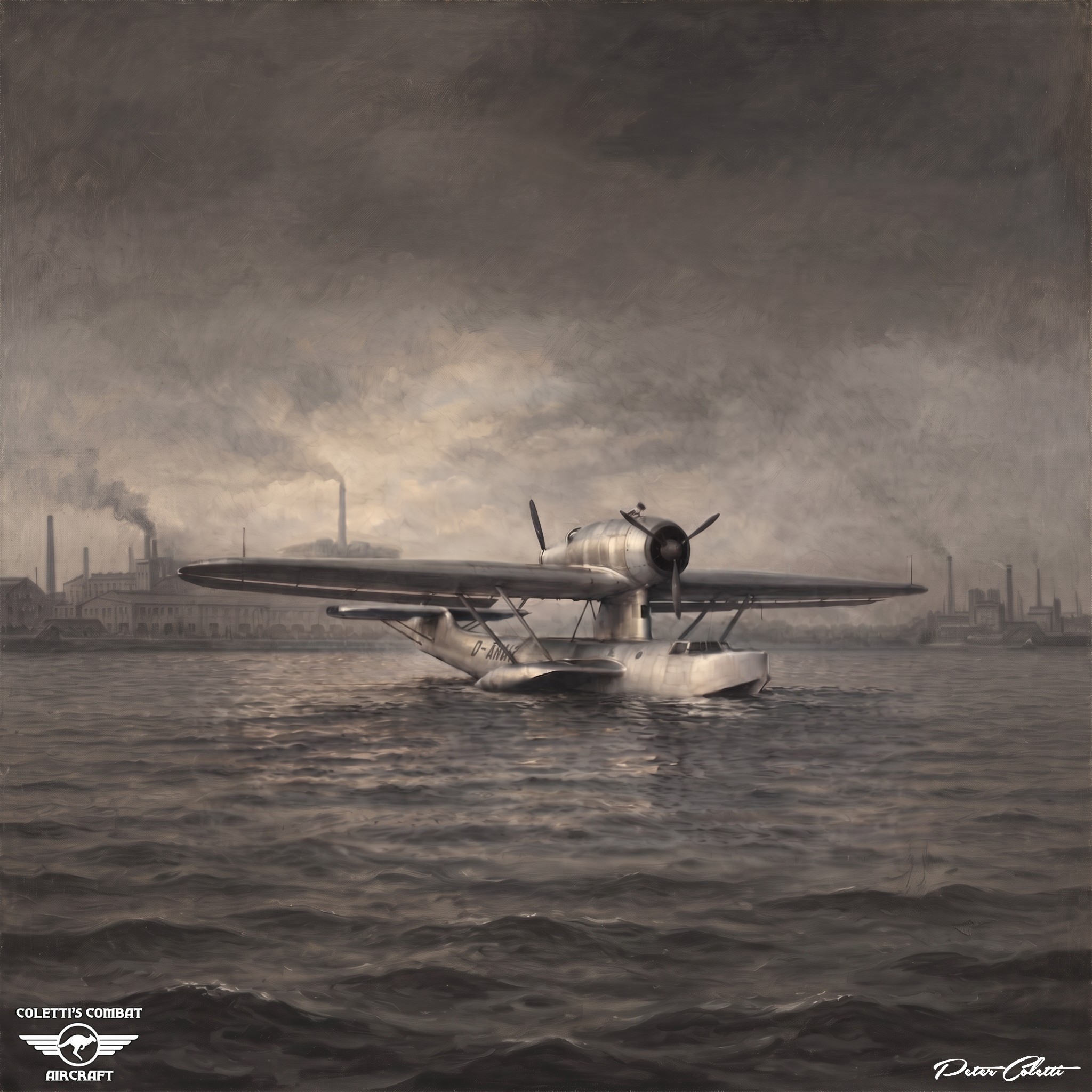
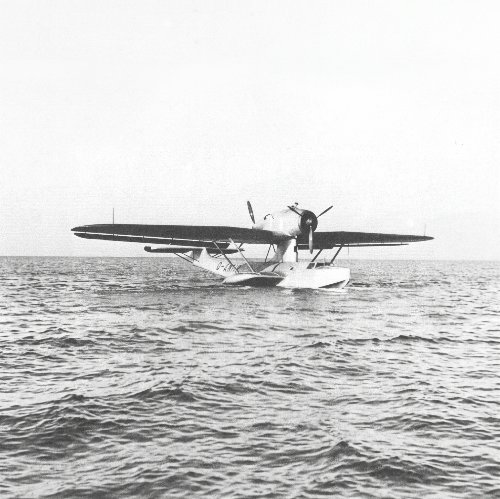
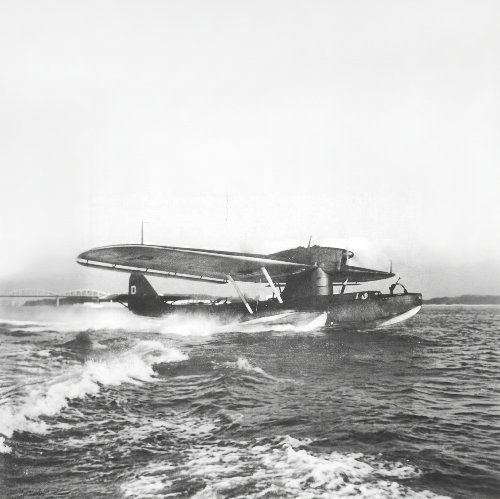
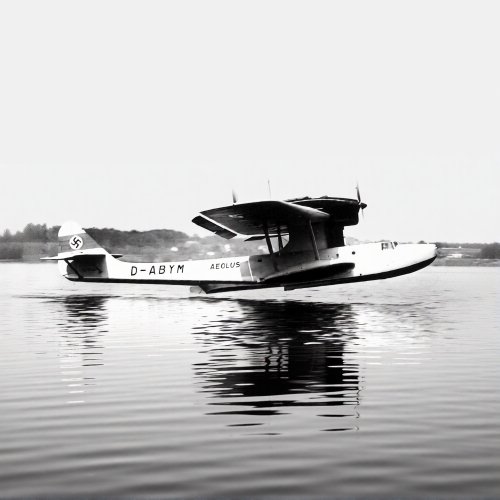
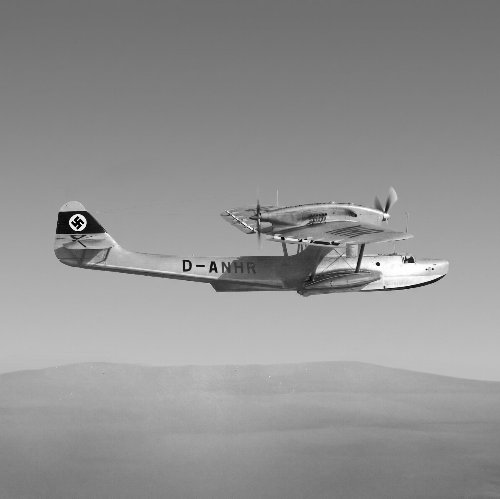
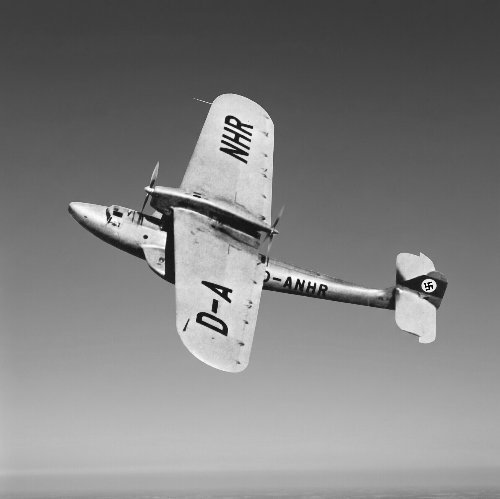
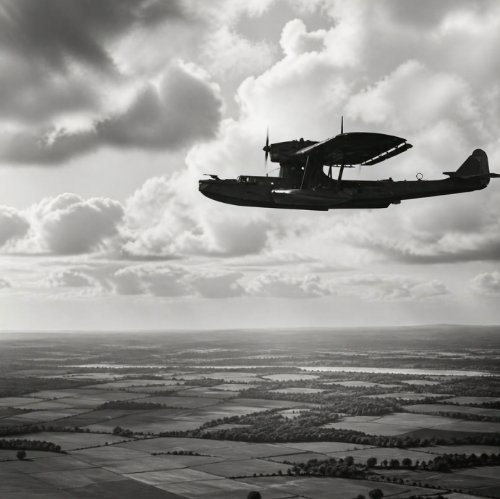
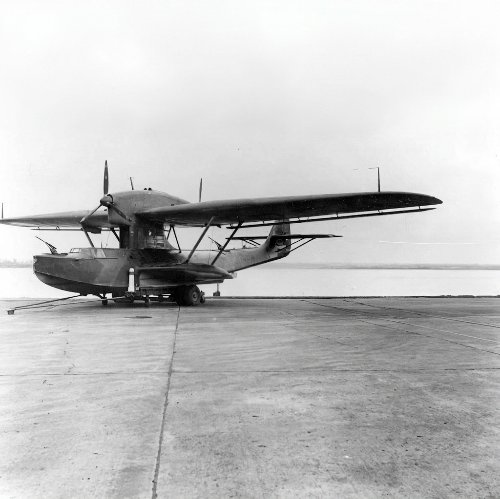
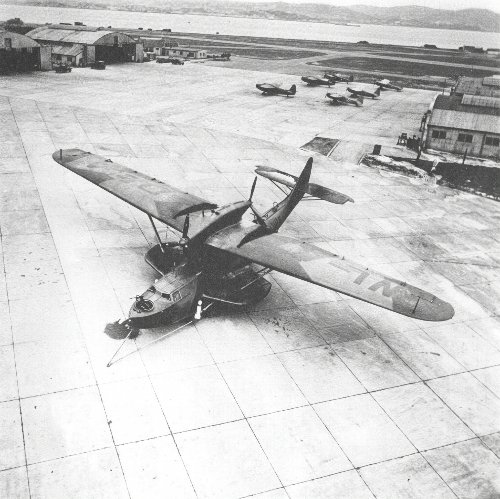
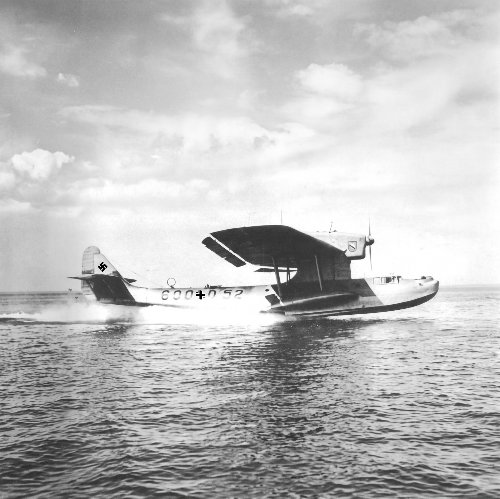
The Dornier Do 18 was a twin‑engined, long‑range flying boat developed in the mid‑1930s as both a civil transoceanic mail carrier and a Luftwaffe maritime reconnaissance aircraft.
First flown on 15 March 1935, it was produced from 1935 to 1940, with 170 aircraft built.
The Do 18 was a direct successor to the famous Dornier Wal, retaining its push‑pull engine configuration and stabilizing sponsons while introducing improved aerodynamics, hydrodynamics, and diesel‑engine efficiency.
It served in North Sea patrol, air‑sea rescue, and long‑range mail flights, including record‑setting transatlantic missions.
Development
Origins (1932–1934)
Dornier initiated the Do 18 project in 1932 as a private proposal to modernize the aging Do J Wal fleet used by both Deutsche Luft Hansa (DLH) and the German military.
DLH initially hesitated, but both DLH and the Luftwaffe eventually adopted the design as an interim flying boat while larger four‑engined transoceanic projects (Do 26, Ha 139) were still years away from completion.
In 1934, Dornier formally began development of a new twin‑engine flying boat intended to replace the Wal in both civil and military roles.
The design retained the Wal’s basic configuration—high‑mounted wing, push‑pull engines, and sponsons—but incorporated major aerodynamic and hydrodynamic refinements and adopted Junkers Jumo 205 diesel engines for superior fuel efficiency.
Prototype Phase (1935–1936) The first prototype, Do 18a “Monsun” (D‑AHIS), flew on 15 March 1935, powered by Jumo 5c diesels because the planned Jumo 205 engines were not yet available.
It crashed during high‑speed tests on 2 November 1935.
Three additional prototypes followed:
Do 18d – military prototype
Do 18b – military prototype
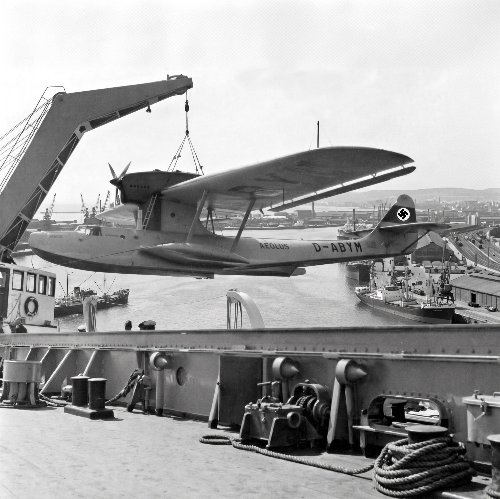
Do 18c / Do 18 V3 – civil prototype delivered to DLH as Do 18E “Aeolus”
Civil Production and Transatlantic Ambitions (1936–1939)
DLH received five Do 18E aircraft for long‑range mail trials between the Azores and North America in 1936, and later for South Atlantic mail service from 1937 to 1939.
A modified long‑range version, Do 18F, first flew on 11 June 1937.
It later became the Do 18L when fitted with BMW 132N radial engines, though cooling problems ended further radial‑engine development.
Military Production (1936–1940)
The Luftwaffe adopted the Do 18 for maritime reconnaissance.
Production totalled 170 aircraft, with 48 built by Dornier and the remainder by Weser‑Flugzeugbau under license.
Design and Engineering
Airframe and Hull
The Do 18 was an all‑metal flying boat with:
High‑mounted wing on a strut framework above the hull
Push‑pull twin‑engine nacelle above the wing
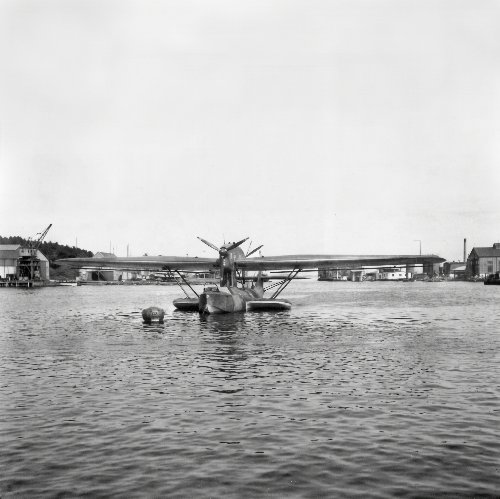
Stabilizing sponsons protruding from the hull sides (a Dornier hallmark)
Two‑step planing hull optimized for rough‑sea operations
The sponsons provided:
Lateral stability on water
Additional fuel storage capacity
Powerplant
The Do 18 was designed around two Junkers Jumo 205C diesel engines, each producing 600 hp.
Advantages of diesel propulsion:
Lower fuel consumption
Higher thermal efficiency
Longer range for transoceanic flights
Reduced fire risk compared to gasoline engines
Early prototypes used Jumo 5c diesels (550 hp) until the 205 became available.
Crew and Internal Layout
Typical crew: 4–5, including:
Pilot
Co‑pilot
Navigator/radio operator
Flight engineer
Gunner (military variants)
Armament (Military Variants)
Defensive machine guns (MG 15) in bow and dorsal positions
Light bombs or depth charges (Do 18D/G variants)
Later variants improved defensive armament and equipment for reconnaissance and rescue roles.
Performance
Representative performance (Do 18D/G series):
Top speed: ~250 km/h (155 mph)
Range: >1,500 nautical miles (per Luftwaffe reconnaissance requirements)
Service ceiling: ~3,000–4,000 m
Endurance: optimized for long‑range patrol and mail flights
Record flight:
27–29 March 1938: A Do 18W flew 8,391 km (5,214 mi) nonstop from Devon (UK) to Caravelas (Brazil), setting a seaplane distance record.
Variants
Civil Variants
Do 18E – DLH transport/mailplane (Aeolus, Zyklon, Zephir, Pampero)
Do 18F – long‑range version with extended wingspan
Do 18L – radial‑engine testbed (BMW 132N), abandoned due to cooling issues
Military Variants
Do 18D – main Luftwaffe reconnaissance version
Do 18G – improved military model with upgraded armament
Do 18D‑1 / G‑1 – subvariants with equipment refinements
Operational History and WWII Context
Civil Operations (1936–1939)
DLH used the Do 18 for:
Azores–North America endurance trials
South Atlantic mail service
Catapult‑launch operations from the seaplane tender Schwabenland
Long‑range experimental flights, including the 1938 record mission
These flights demonstrated the diesel engines’ exceptional range and reliability.
Luftwaffe Service (1938–1945)
The Do 18 entered Luftwaffe service in September 1938 and was used for:
North Sea patrols
Maritime reconnaissance
Air‑sea rescue (Seenotdienst)
Training
Limitations:
Modest top speed (~250 km/h)
Vulnerability to fighters
Obsolescence by 1940, replaced by the Blohm & Voss BV 138
Combat Losses
A notable early‑war incident:
26 September 1939: A Do 18 became the first German aircraft shot down by British forces, hit by gunfire from HMS Somali during a patrol; the crew was captured after ditching.
Post‑combat Use
After 1940, most Do 18s were relegated to:
Air‑sea rescue
Training
Transport
Production ended in August 1940.
Conclusion
The Dornier Do 18 was a transitional flying boat bridging the gap between the classic Do J Wal and more advanced German maritime aircraft.
Its diesel engines, push‑pull configuration, and stabilizing sponsons made it efficient and seaworthy, ideal for long‑range mail flights and early‑war reconnaissance.
Although quickly rendered obsolete in combat, it played a significant role in transatlantic aviation, North Sea patrol, and air‑sea rescue, and its 1938 record flight remains a landmark in flying‑boat history.