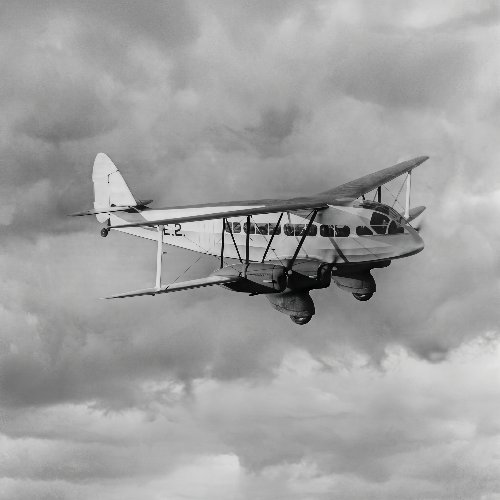
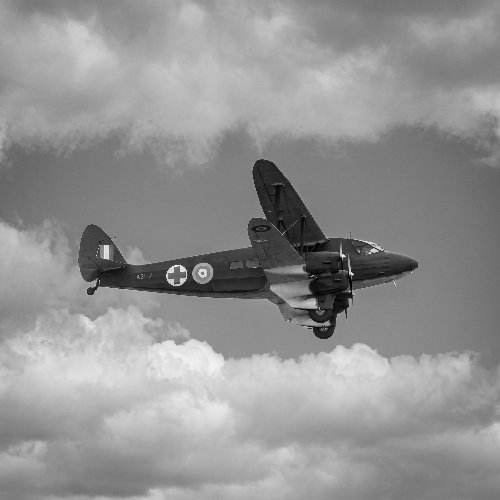
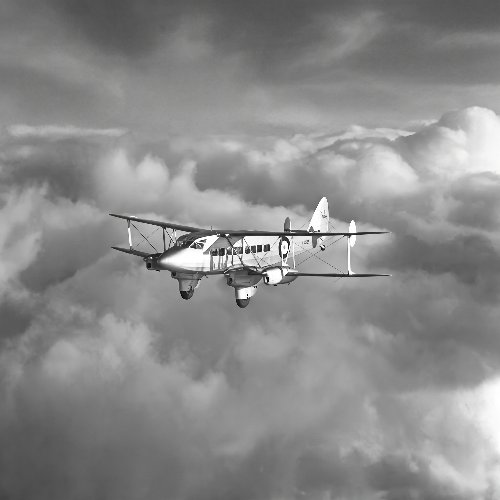
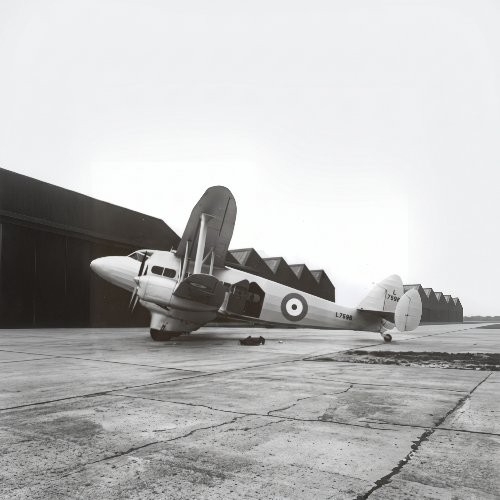
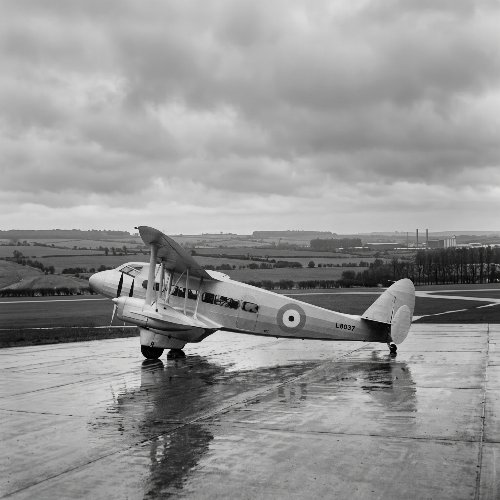
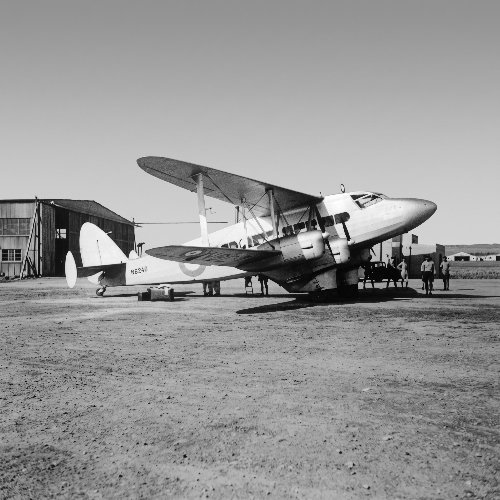
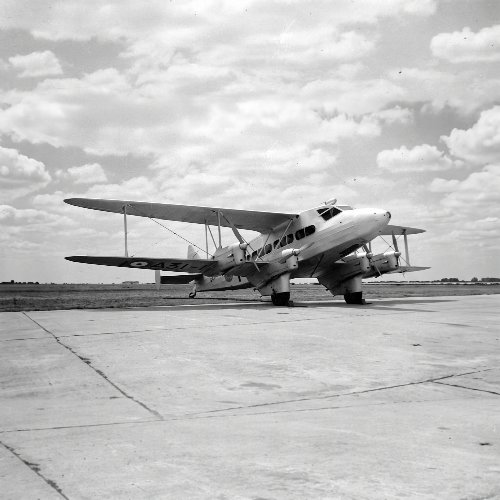
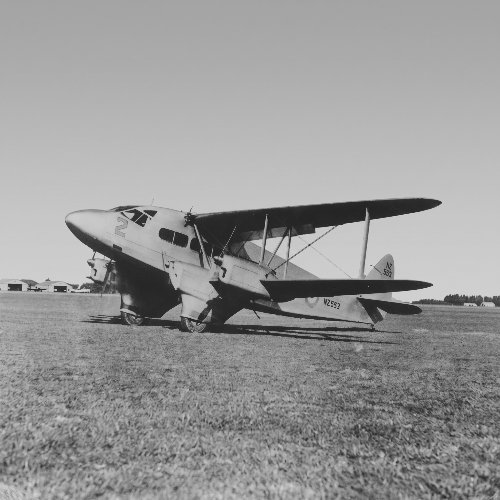
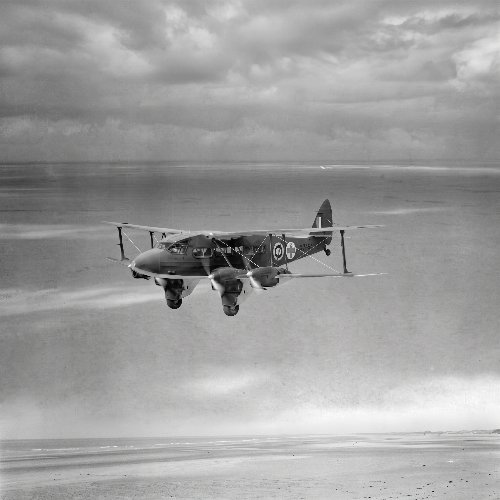
The de Havilland D.H.86 Express emerged in the early 1930s as Britain’s attempt to modernise short‑haul air transport.
At the time, de Havilland had already achieved commercial success with the D.H.84 Dragon and D.H.89 Dragon Rapide, but airlines—especially Imperial Airways—needed a faster, longer‑range aircraft capable of linking Britain with its far‑flung empire routes.
The Express was conceived as a four‑engined, high‑wing monoplane that would combine the reliability of multiple engines with the simplicity and low operating cost characteristic of de Havilland’s light transport philosophy.
The project moved quickly.
De Havilland’s design team reused structural concepts from earlier wooden aircraft, allowing rapid prototyping and production.
The first D.H.86 flew in January 1934, and deliveries to Imperial Airways began soon after.
De Havilland Express A
The aircraft was intended for routes across Europe, the Middle East, and Australia, where its combination of modest speed and dependable handling suited the needs of early commercial aviation.
However, early service revealed stability issues, particularly in pitch and yaw.
These problems were serious enough to prompt a redesign, resulting in the D.H.86A, which incorporated aerodynamic refinements and structural improvements.
This second iteration became the definitive version and saw widespread use across the British Empire.
PROTOTYPE
Design and Construction
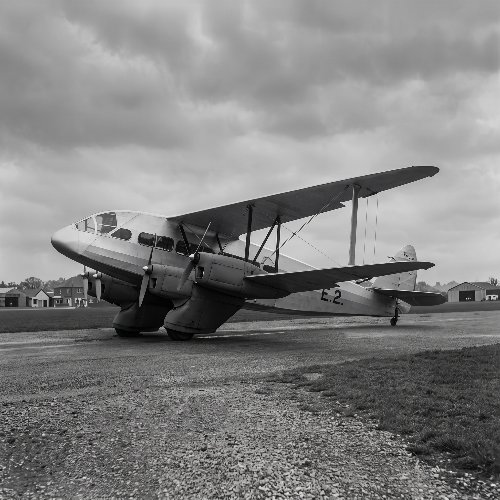
The Express was a conventional high‑wing monoplane, but its construction reflected de Havilland’s signature approach: lightweight, largely wooden airframes with fabric covering.
This kept manufacturing costs low and simplified repairs in remote locations.
PROTOTYPE
Airframe
Structure: Spruce and plywood box‑girder fuselage with fabric‑covered surfaces.
Wing: One‑piece wooden wing with two spars, braced by struts to the lower fuselage.
Tail: The original D.H.86 had a single fin and rudder; the D.H.86A introduced a larger fin and rudder and modified tailplane incidence to improve stability.
De Havilland Express A
Engines
The aircraft used four de Havilland Gipsy Six inverted inline engines, each producing around 200 hp.
These engines were:
Air‑cooled
Simple to maintain
Mounted on the wing’s leading edge in streamlined nacelles
The four‑engine configuration provided redundancy—an important factor for long overwater or desert routes.
Cockpit and Cabin
The Express featured:
A two‑pilot cockpit, though early versions were sometimes flown solo
Seating for 10 passengers in a narrow but comfortable cabin
Basic heating and ventilation
A small luggage compartment
The aircraft was designed for short‑haul comfort rather than luxury, reflecting its role as a regional airliner.
Performance Characteristics
The D.H.86 was not a fast aircraft by later standards, but it represented a step forward for British commercial aviation in the mid‑1930s.
De Havilland Express B
Typical Performance
Maximum speed: ~160 mph (257 km/h)
Cruise speed: ~140 mph (225 km/h)
Range: ~600 miles (965 km)
Service ceiling: ~17,000 ft (5,180 m)
Takeoff weight: ~7,000 lb (3,175 kg)
The aircraft’s performance was adequate for regional routes and capable of operating from relatively short, unimproved airfields—a major advantage in colonial territories.
De Havilland Express B
Handling
Pilots appreciated the aircraft’s reliability but noted:
Early models suffered from longitudinal instability, especially during landing approaches.
The D.H.86A’s enlarged tail surfaces significantly improved handling.
Four engines provided reassuring redundancy but increased pilot workload.
Overall, the Express was considered a competent, if not exceptional, airliner.
De Havilland Express B
Variants
D.H.86 (Original Model)
First production version
Single fin and rudder
Notable stability issues
Used primarily by Imperial Airways and several Australian operators
D.H.86A (Improved Model)
Enlarged fin and rudder
Modified tailplane incidence
Strengthened airframe
Became the standard production model
Widely used in Australia, New Zealand, and the Middle East
De Havilland Express B
Special Modifications
Some aircraft were adapted for:
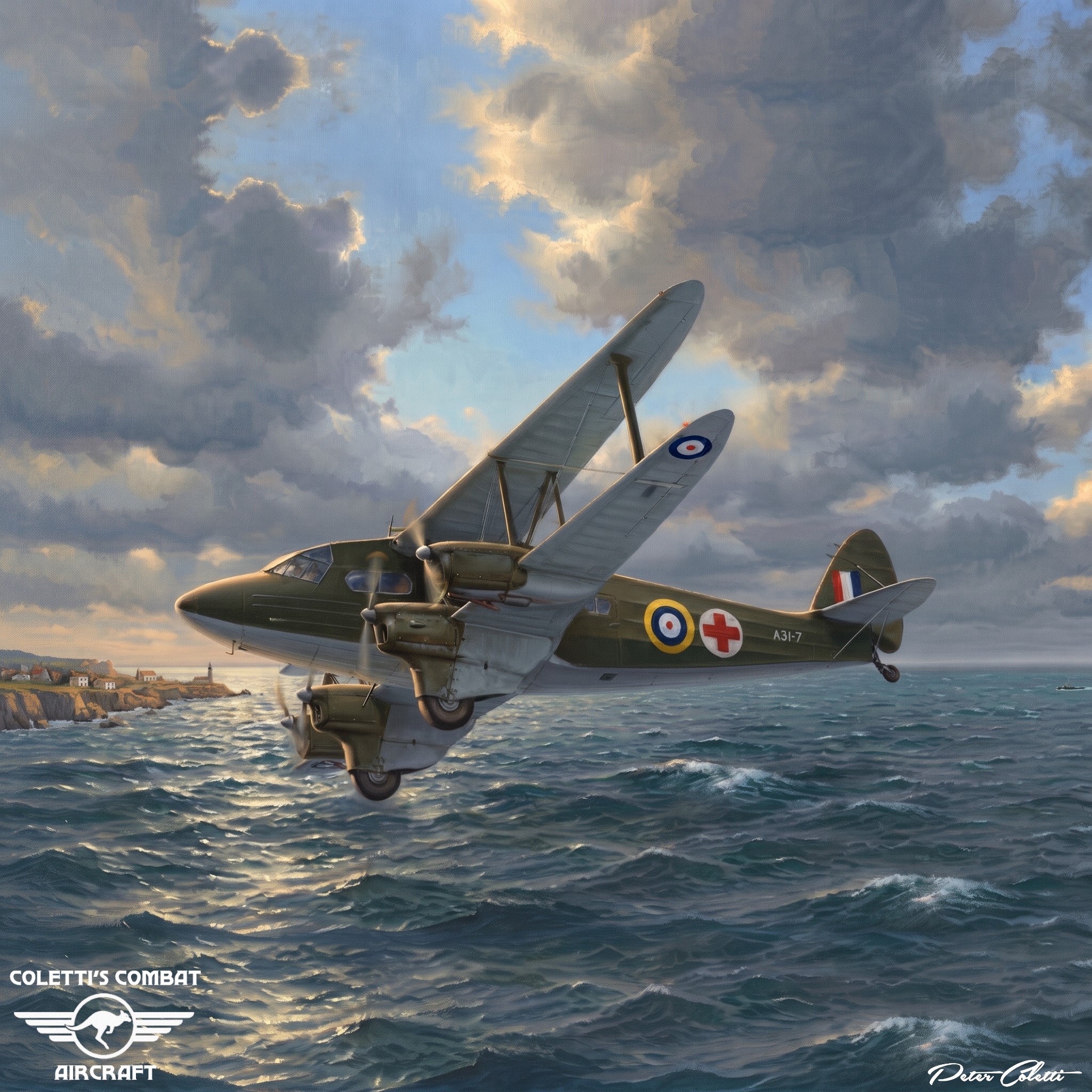
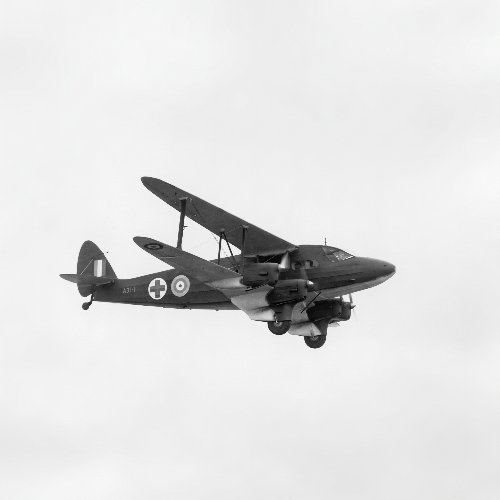
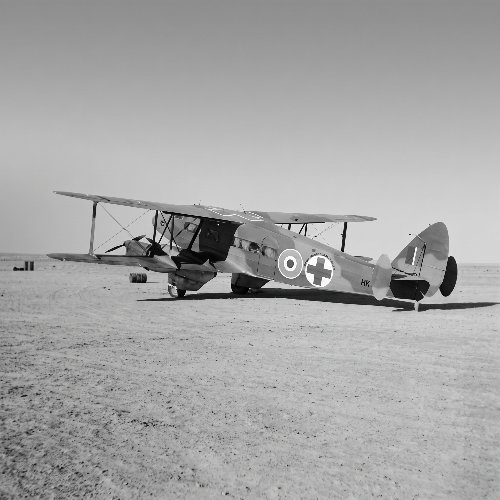
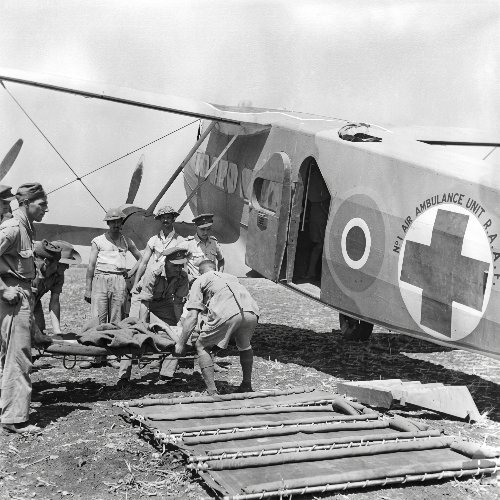
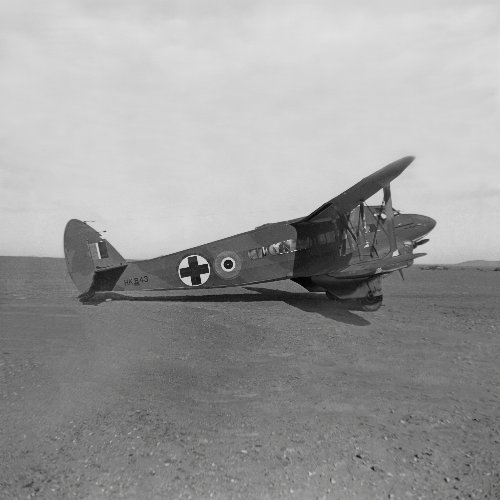
Air ambulance service
Mail transport
Survey and charter operations
These modifications were typically operator‑specific rather than factory‑standard variants.
De Havilland Express B
Operational History
Imperial Airways
Imperial Airways used the Express on:
European routes
Middle Eastern connections
The early stages of the Empire Air Mail Scheme
The aircraft filled a niche between smaller twin‑engine transports and larger long‑range flying boats.
De Havilland Express B
Australia and New Zealand
The Express found a particularly strong foothold in Australasia:
Qantas operated several aircraft on mail and passenger routes.
Union Airways of New Zealand used them for domestic services.
The type became a familiar sight on trans‑Tasman and regional flights.
Its ability to operate from rough airfields made it well suited to the region’s developing aviation infrastructure.
De Havilland Express A
World War II Context
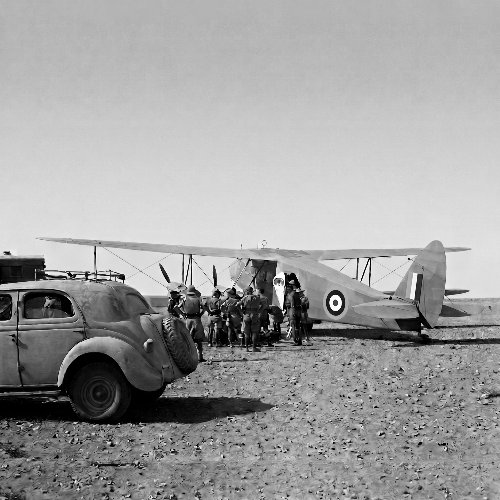
When WWII began, many D.H.86s were impressed into military service.
Although outdated by 1939, the aircraft’s reliability and multi‑engine configuration made it useful for non‑combat roles.
De Havilland Express A
Military Uses
Communications and liaison flights
Navigation and radio training
Medical evacuation
Light transport duties
Australia and New Zealand used the aircraft extensively in support roles, while Britain employed remaining examples for training and courier work.
De Havilland Express A
Limitations in Wartime
By WWII standards, the Express was:
Too slow for frontline transport
Vulnerable due to its wooden construction
Lacking modern navigation and radio equipment
Nevertheless, it provided valuable service in secondary roles, helping to fill gaps while more modern aircraft were produced.
De Havilland Express A
Legacy
The de Havilland Express occupies an interesting place in aviation history.
It was:
A transitional aircraft between early biplane transports and more advanced metal monoplanes
A workhorse of Empire aviation during a period of rapid expansion
A reminder of de Havilland’s mastery of wooden aircraft construction
De Havilland Express A
Although overshadowed by later designs such as the D.H.89 Dragon Rapide and the D.H.104 Dove, the Express played a meaningful role in shaping regional air transport in the 1930s and early wartime years.
Its combination of simplicity, reliability, and multi‑engine safety made it a trusted aircraft in remote regions, and its service across the British Empire helped lay the groundwork for more modern airliner operations.