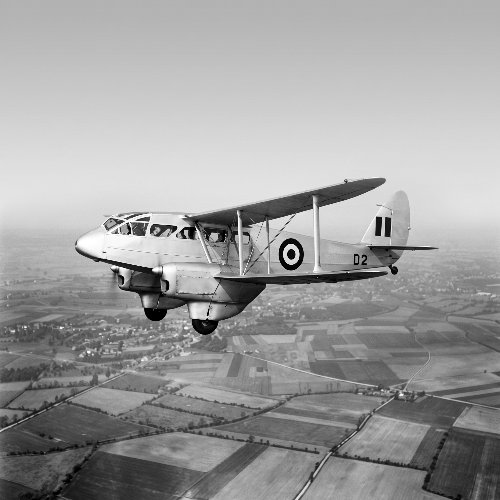
De Havilland Dominie

De Havilland Dominie

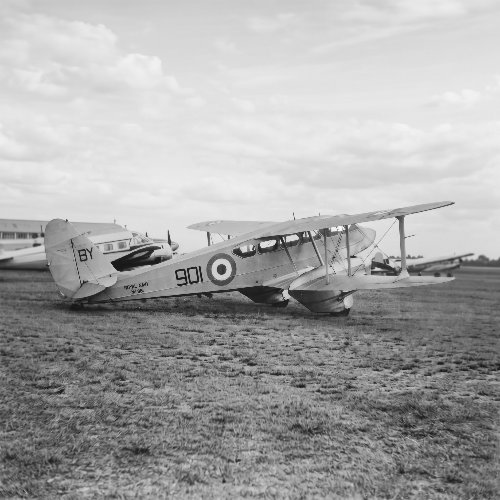
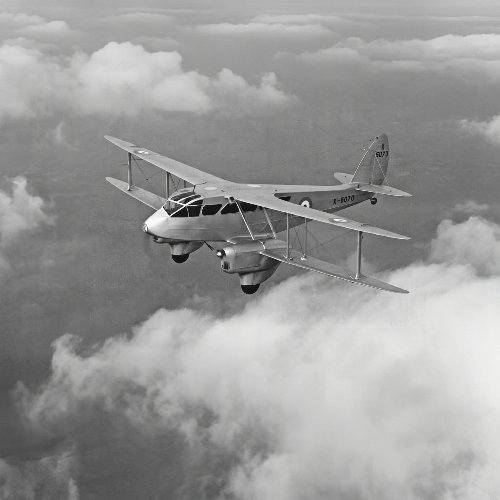
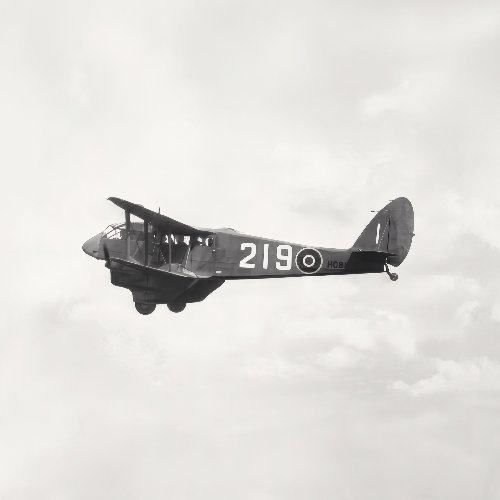
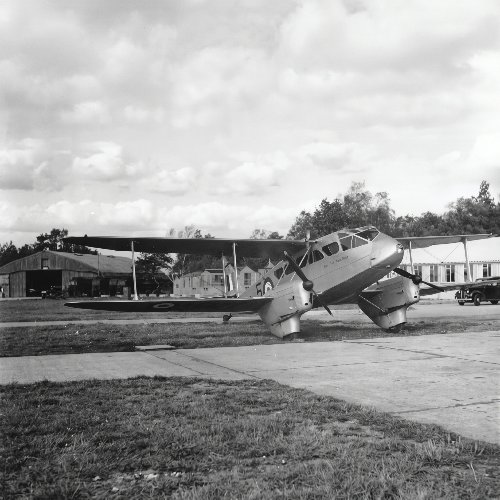
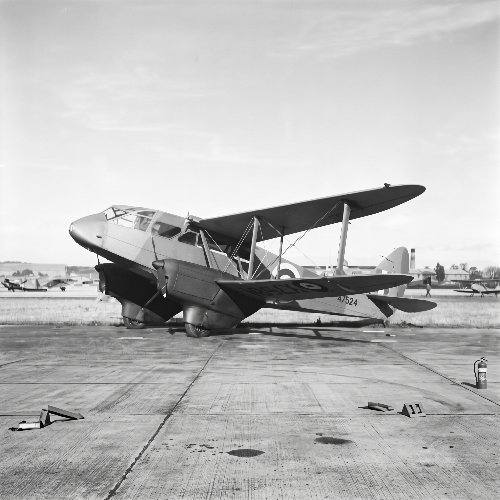
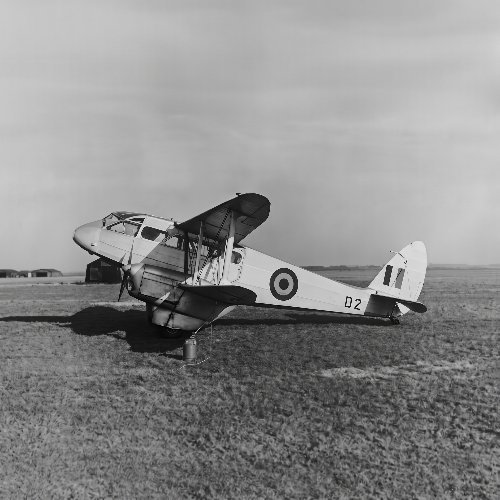
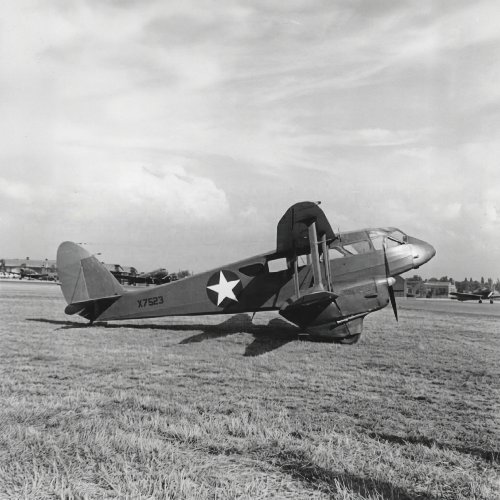
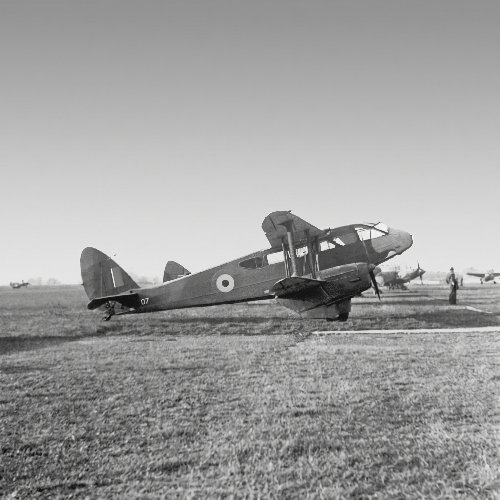
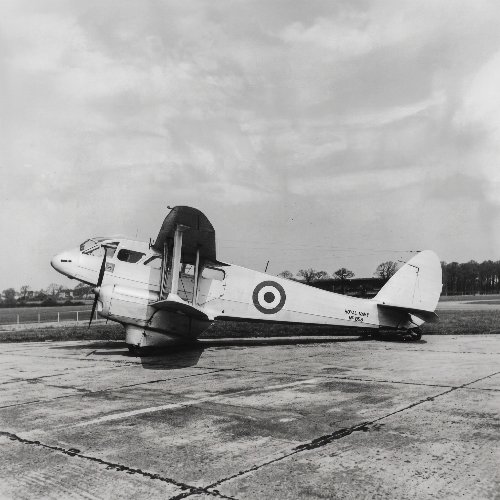
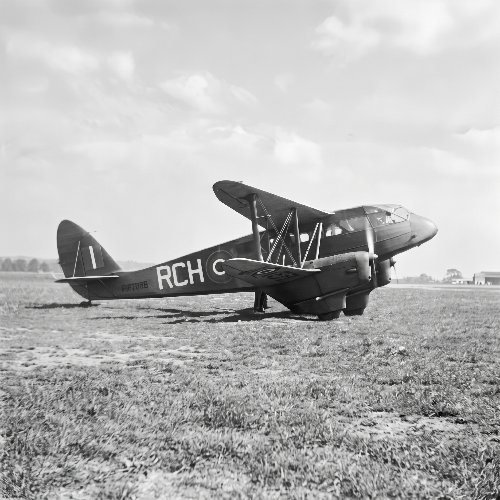
The de Havilland Dominie was the military adaptation of the DH.89 Dragon Rapide—an elegant, economical, twin‑engine biplane that became one of Britain’s most widely used light transports and training aircraft of WWII.

It combined simple wooden construction, forgiving handling, and multi‑role flexibility, making it indispensable for radio‑navigation training, liaison duties, and communications transport throughout the war.

Origins and Development (1933–1939)

The Dominie’s lineage begins with de Havilland’s successful family of light transports:

DH.84 Dragon (1932) – A simple, reliable twin‑engine airliner.

DH.86 Express (1933) – A larger, four‑engine development featuring tapered wings and streamlined fairings.

DH.89 Dragon Rapide (1934) – Designed by Arthur Ernest Hagg as a smaller, twin‑engine derivative of the DH.86, retaining its aerodynamic refinements and powered by two Gipsy Six engines.

It first flew on 17 April 1934 at Hatfield and quickly became popular with airlines for its economy and durability.

The British Air Ministry recognised its potential early.

In 1938, it ordered modified Rapides for radio‑navigation training, anticipating wartime needs.

These aircraft—still called Rapides—were precursors to the Dominie.

With the outbreak of WWII in September 1939, civil Rapides were impressed into service.

In 1941, the military version received its official name: Dominie, a Scots term for “schoolteacher”, reflecting its training role.

Design Characteristics

The Dominie retained the DH.89’s hallmark features:

Airframe & Construction

Biplane configuration, twin engines, fixed landing gear.

Wooden structure: box‑section fuselage with plywood interior and fabric exterior; spruce/fabric wings.

Tapered wings with ailerons on all four wings; split flaps on lower wings (DH.89A onward).

Streamlined fairings and clean aerodynamic lines inherited from the DH.86.

This construction made the aircraft:

Light and economical to operate

Easy to repair

Forgiving for inexperienced pilots—ideal for training roles

Powerplant

2 × de Havilland Gipsy Six (or Gipsy Queen in some military builds)

Approx. 200 hp each, giving modest but reliable performance.

Crew & Capacity

Crew: typically, 2

Passengers: up to 8–10, depending on configuration

Dimensions (Dominie Mk I)

Wingspan: 14.63 m

Length: 10.52 m

Height: 3.12 m

Performance

Although not fast, the Dominie excelled in reliability and short‑field capability:

Cruise speed: modest (typical for 1930s light transports)

Range: suitable for regional liaison and training flights

Short take-off/landing performance: enhanced in DH.89A models with landing flaps

Payload flexibility: fine‑pitch propellers could increase payload by ~200 lb (inferred from Rapide data)

Its performance was adequate for:

Cross‑country navigation training

Light transport between RAF stations

Medical evacuation (ambulance variants)

Wartime Roles and Operational Context (1939–1945)

The Dominie became one of the RAF’s most numerous light transports:

Primary Roles

Radio & Navigation Training

The Dominie Mk I (DH.89A) was equipped for wireless operator and navigator instruction.

Its stable handling and forgiving flight characteristics made it ideal for students.

Communications & Liaison Transport

The Dominie Mk II (DH.89B) handled passenger transport, despatch carrying, and light freight.

Used by RAF, Royal Navy (Fleet Air Arm), and Air Transport Auxiliary.

Medical Evacuation

Several impressed Rapides served as ambulance aircraft, such as Z7258 “Women of the Empire” and Z7261 “Women of Britain”.

Production and Deployment

Total DH.89 family built: approx. 728–738 (sources vary slightly).

Military Dominies: ~492, including 65 for the Fleet Air Arm.

Production was split between de Havilland and Brush Coachworks (from 1943).

Dominies served:

Throughout WWII

In training units, transport flights, and communications squadrons

Across the UK, the Middle East, and Africa

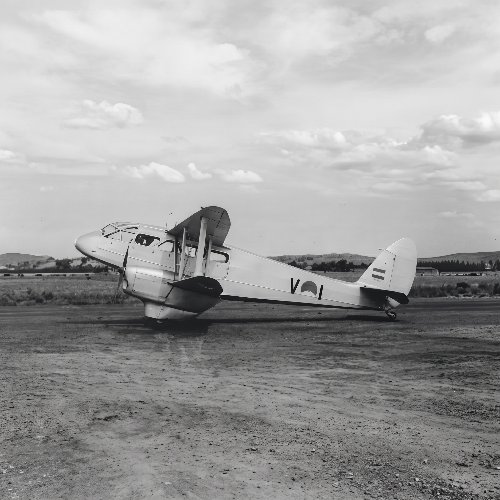
With foreign air forces postwar, sometimes for decades

Variants

DH.89 (Early Production)

Initial civil version; twin‑engine light transport.

DH.89A / Dominie Mk I

Improved version with:

Landing flaps

Landing light in nose

Cabin heating

Primary radio‑navigation trainer.

DH.89B / Dominie Mk II

Liaison and light transport variant

Used for personnel, cargo, and medical evacuation

DH.89M (Armed Export Variant)

Exported to Iraq and Spain

Armed with up to 3 machine guns and a 127 kg bombload

De Havilland Dominie – Southern Rhodesian Air Force – D Mangion

Postwar Service and Legacy

After WWII, many Dominies returned to civilian life:

Operated by BEA, KLM, Iraqi Airways, Jersey Airways, and others as interim transports.

Continued flying into the 1950s–1960s in some Commonwealth nations.

A number remained airworthy into the early 2000s, testament to their durability.

The Dominie stands today as:

One of the last successful British biplane transports

A symbol of practical wartime aviation

A beloved vintage aircraft still seen at airshows and in heritage fleets

Summary

The De Havilland Dominie emerged from a lineage of practical, wooden‑constructed British light transports.

Its military transformation from the DH.89 Dragon Rapide created an aircraft perfectly suited to the RAF’s wartime needs: economical, forgiving, and adaptable.

As a radio‑navigation trainer, it educated thousands of aircrew; as a communications aircraft, it kept command networks functioning; as an ambulance and liaison transport, it filled countless gaps left by more complex aircraft.

Produced in large numbers and operated worldwide, the Dominie became one of WWII’s quiet workhorses—never glamorous, but always essential.

Its longevity in postwar service underscores the success of de Havilland’s design philosophy: simplicity, reliability, and versatility.

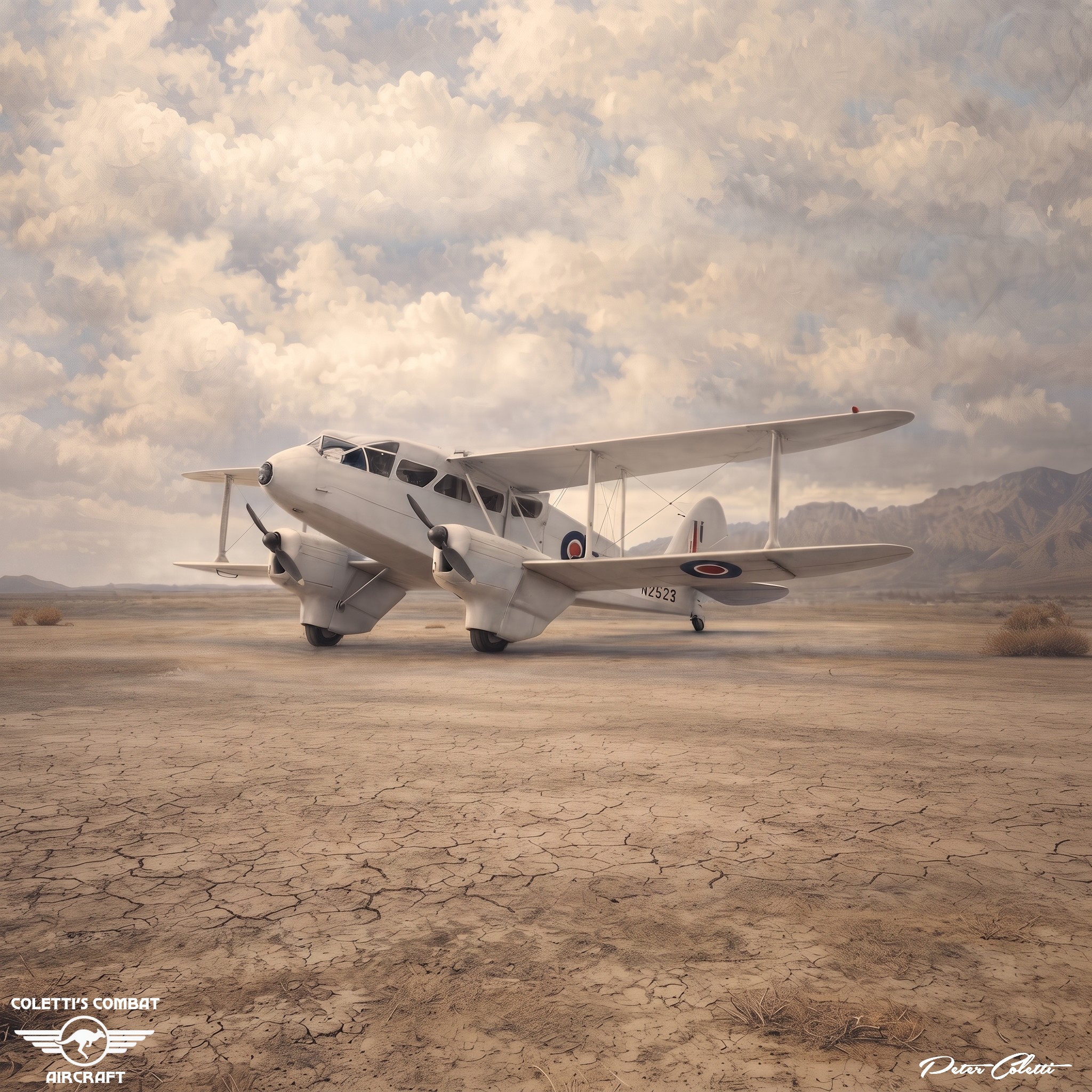
Digital Artworks by Peter Coletti.

Share on facebook