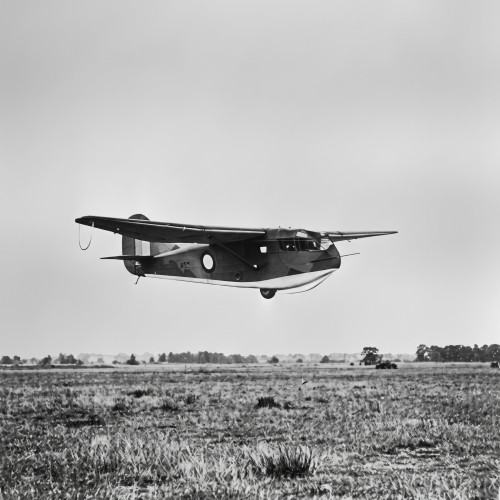
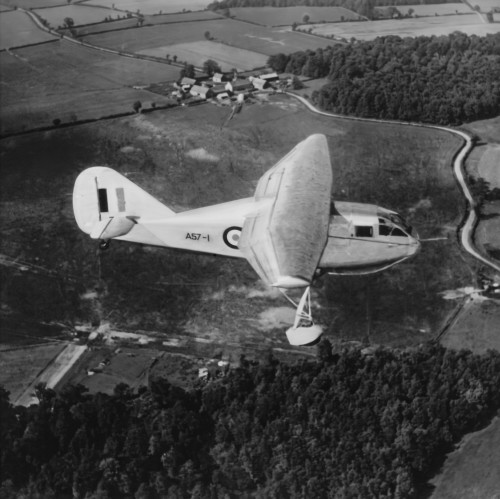
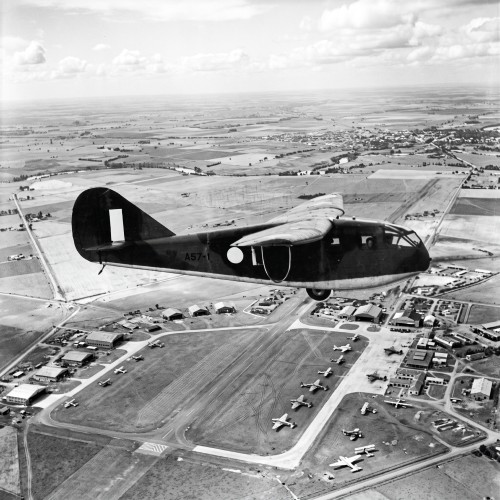
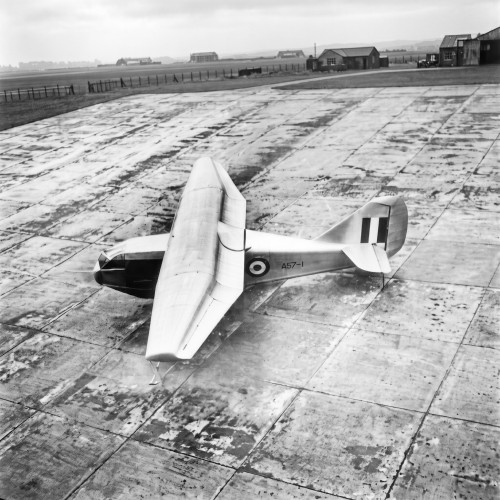
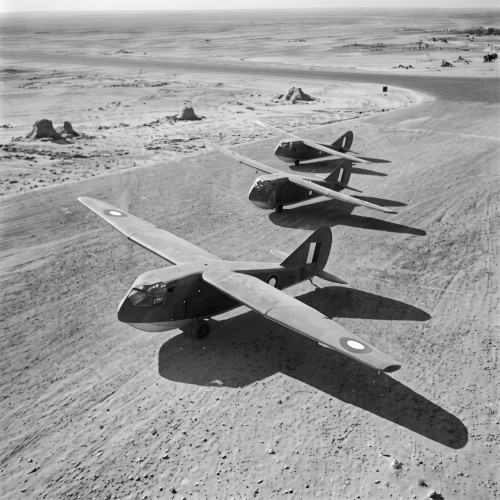
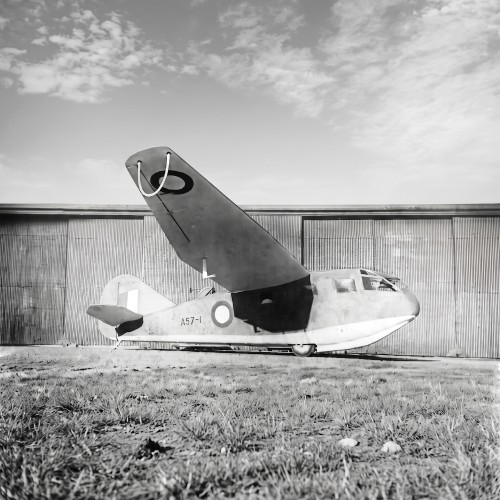
The DHA‑G series—comprising the DHA‑G1 prototypes and the DHA‑G2 production gliders—were Australian military transport gliders developed during the Second World War to meet the Royal Australian Air Force’s (RAAF) urgent requirement for a troop‑carrying aircraft.
Designed and built by de Havilland Australia (DHA), these gliders represented Australia’s attempt to create an indigenous airborne transport capability at a time when fears of Japanese invasion were at their peak.
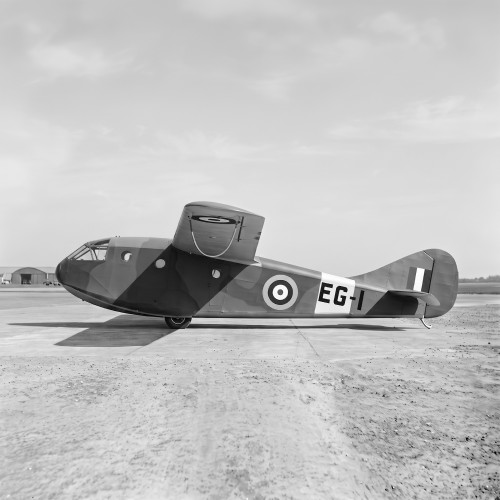
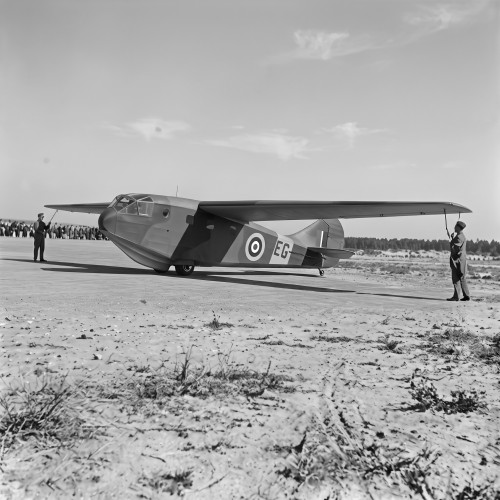
DHA EG-1
Development History
Origins and Requirement (1942)
In March 1942, the Australian Department of Air issued Specification 5/42, calling for 126 troop transport gliders.
The immediate goal was to produce a seven‑seat prototype for evaluation.
DHA, already heavily committed to producing Tiger Moth trainers and DH. 84 Dragon navigation aircraft relied on subcontractors and improvised facilities to meet the requirement.
Much of the construction occurred on the fifth floor of the Bradford Cotton Mills Building in Camperdown, Sydney.
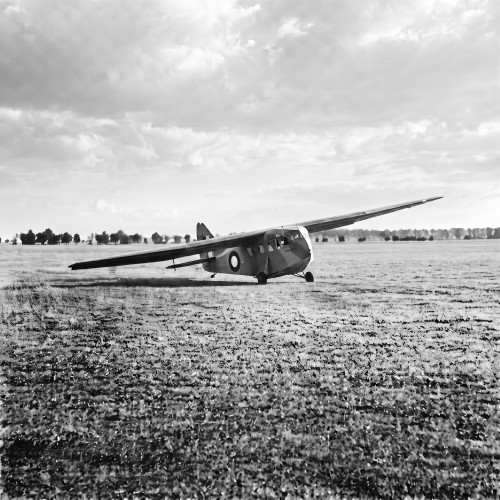
DHA-G2
Prototype Construction: EG.1 and EG.2
Two prototypes were ordered, initially designated EG.1 and EG.2.
They incorporated salvaged components—most notably the windscreen and window frames of the DH.84 Dragon—to accelerate development.
Both were high‑wing cantilever monoplanes of all‑wooden construction, with plywood skins and fabric‑covered control surfaces.
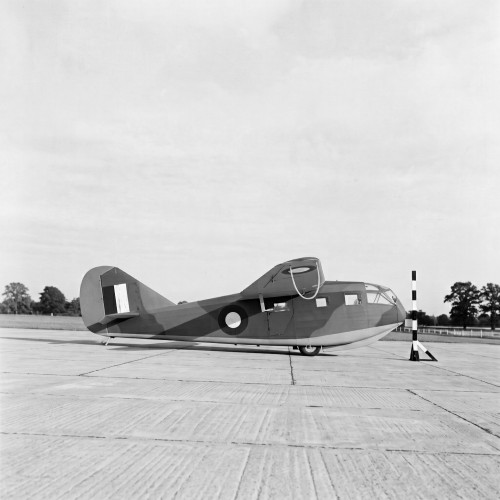
The undercarriage consisted of a single main wheel, supplemented by a nose skid and wooden tail skid.
DHA-G2
Flight Testing and Evaluation
The first prototype flew on 14 June 1942 at RAAF Richmond, towed by a Fairey Battle.
The second followed later that year.
After acceptance by the RAAF in October and November 1942, the prototypes were redesignated A57‑1001 and A57‑1002.
They were evaluated for towing behind Bristol Beaufort VIII and Lockheed Hudson III aircraft.
Testing continued at Richmond, Mascot, Laverton, and Cootamundra, with the gliders eventually placed in storage.
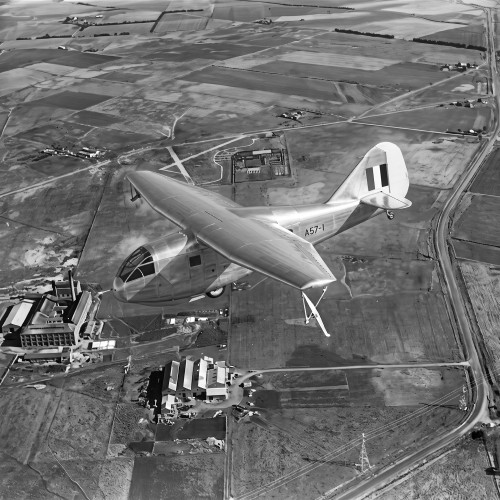
DHA Glas II Suction Glider
Shift in Strategic Priorities
By late 1942, the threat of invasion had diminished, and imported aircraft—especially the Douglas Dakota and the American Waco CG‑4A glider—became available.
These alternatives could carry more troops (up to 15), reducing the urgency for domestic glider production.
As a result, only six production gliders were ordered.
DHA-G2
Design and Technical Characteristics
Airframe and Structure
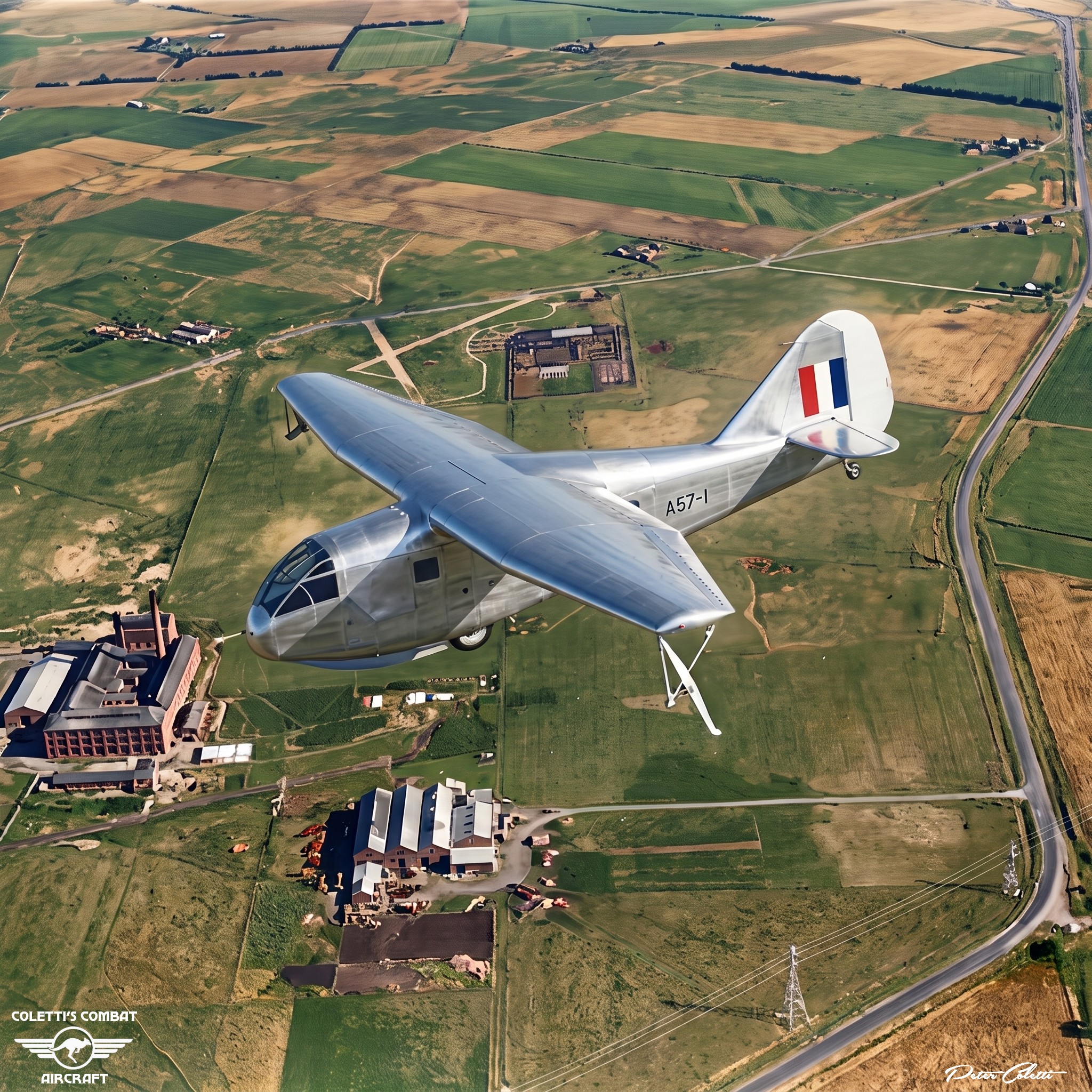
The DHA‑G gliders were high‑wing, cantilever monoplanes built almost entirely of wood, using plywood extensively for the wing and fuselage skins.
The cockpit canopy was adapted from the DH.84 Dragon, but the remainder of the aircraft was an original design.
The fuselage accommodated one pilot and six passengers or equivalent cargo.
Undercarriage
A single main wheel provided landing support, with a long nose skid and wooden tail skid to absorb landing loads on rough fields—typical of wartime glider operations.
Wing Configuration The G1 prototypes used a single‑piece wing with a span of 17.99 m (59 ft).
The G2 production gliders introduced a three‑piece wing with a reduced span of 15.39 m (50 ft 6 in), allowing easier disassembly and transport to operational areas.
DHA Glas II Suction Glider
Dimensions (DHA‑G2)
Length: 10.05 m (33 ft)
Wingspan: 15.39 m (50 ft 6 in)
Height: 2.39 m (7 ft 10 in)
Wing area: 30.84 m² (332 sq ft)
Weights
Empty weight: 658 kg (1,450 lb)
Loaded weight: 1,474 kg (3,250 lb)
Performance
Stall speed: 77 km/h (48 mph)
Maximum towing speed: 209 km/h (130 mph)
Maximum free‑flight speed: 298 km/h (185 mph)
Maximum diving speed: 322 km/h (200 mph)
These performance figures were adequate for short‑range troop insertion and training roles, though limited compared to larger Allied gliders.
DHA-G2
Variants
DHA‑G1 (Prototypes)
Two built: A57‑1001 and A57‑1002
Larger wingspan (17.99 m)
Single‑piece wing
Used primarily for evaluation and performance trials
DHA‑G2 (Production Model)
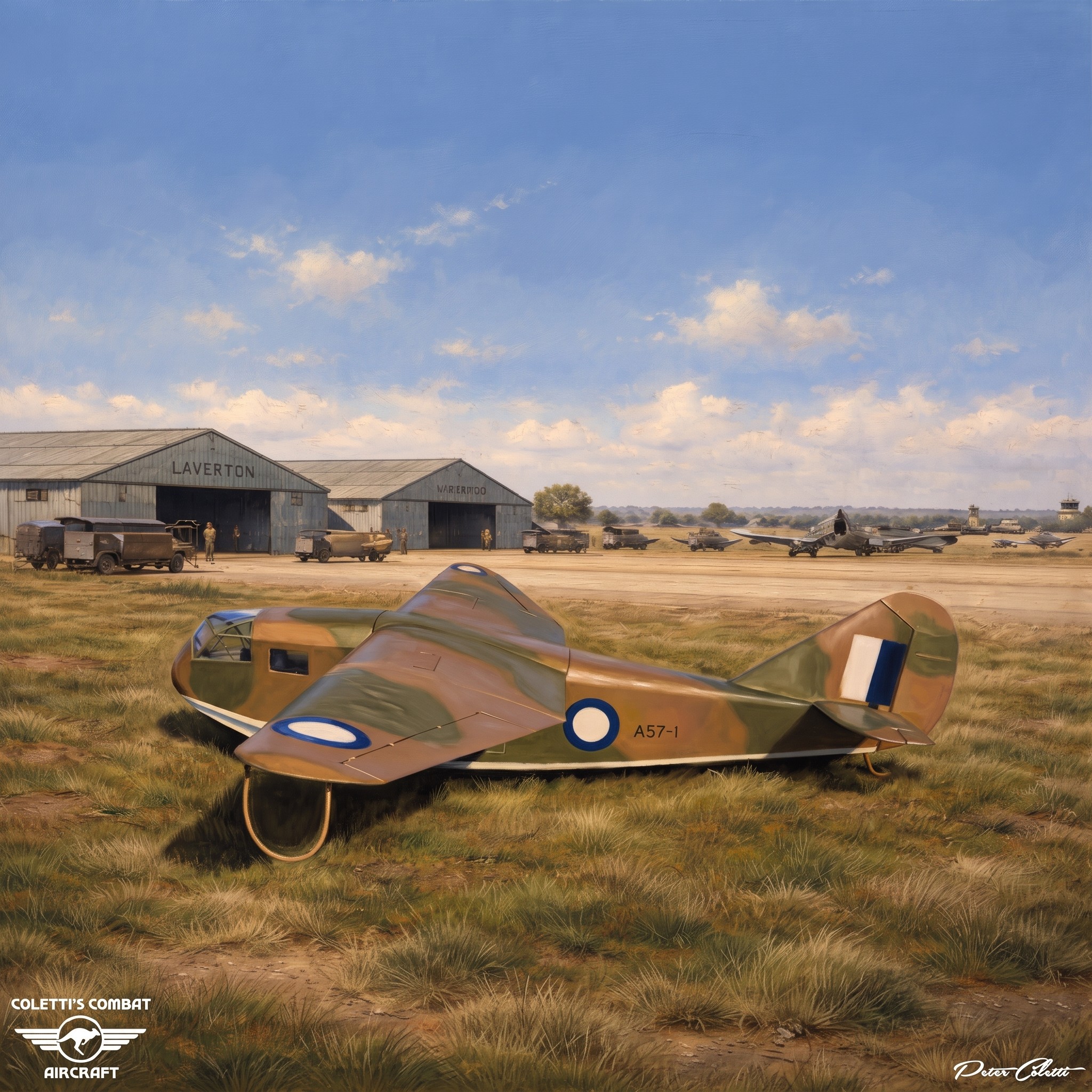
Six built: A57‑1 to A57‑6
Shorter, three‑piece wing
Slightly enlarged fuselage
Built at the Slingo & Williams factory (formerly a toy factory)
Assembled at Mascot Airfield
DHA Glas II Suction Glider
Operational History
Wartime Use
Although intended as troop transports, the DHA‑G gliders saw limited operational service.
They were delivered to RAAF units such as No. 2 Aircraft Depot and No. 3 Communications Flight but were used mainly for:
Training
Instructional airframe purposes
Storage
They did not participate in combat operations.
Their camouflage scheme consisted of Earth Brown, Foliage Green, and Sky Blue, with standard RAAF markings.
DHA-G2
Post‑War Activities
After the war, the gliders were transferred to the Department of Aircraft Production in 1947.
One aircraft, A57‑1, was modified in 1948 by the Government Aircraft Factory for suction airfoil trials, including installation of a 96 hp Mercury 59A engine.
These experiments continued until 1951.
All surviving gliders were reduced to components by 1952.
DHA-G2
Context Within WWII Glider Development
The DHA‑G programme emerged during a period when gliders were seen as essential for airborne assault operations.
German successes with the DFS 230 and Gotha Go 242 demonstrated the tactical value of silent, low‑cost troop carriers.
Allied nations—including Australia—attempted to emulate these capabilities.
However, Australia’s glider programme remained small due to:
Rapid availability of American aircraft
Reduced invasion threat
Limited industrial capacity
The DHA‑G gliders thus represent a localised, strategic response rather than a major operational asset.
DHA EG-1
Conclusion
The DHA‑G1 and DHA‑G2 gliders were modest but significant contributions to Australia’s wartime aviation industry.
Developed under urgent conditions, they showcased innovative use of materials, improvisation in manufacturing, and a determined effort to build indigenous airborne capability.
Although their operational impact was limited, they remain historically important as Australia’s only domestically designed and built military transport gliders of the Second World War.