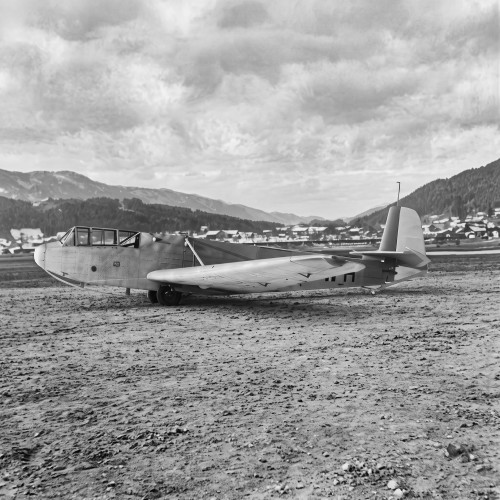
The DFS 230 emerged from Germany’s extensive interwar glider research tradition, which flourished partly because the Treaty of Versailles restricted powered military aviation and encouraged unpowered flight as both sport and covert training.
This environment enabled the Deutsche Forschungsanstalt für Segelflug (DFS) to become a world leader in sailplane design.
The DFS 230 project began in the early 1930s, with Hans Jacobs serving as chief designer.
Early development included prototypes designated DFS LS SV 1 through SV 3, completed by 1937.
A comparative exercise on 16 November 1937 demonstrated the glider’s tactical value: 70 soldiers delivered by ten DFS 230s achieved combat readiness in just three minutes, compared to 15 minutes for parachute troops dropped from 350 metres.
This dramatic difference led to the March 1938 order to establish the first glider training unit.
The initial design proved too complex for mass production, prompting the Gothaer Waggonfabrik to simplify it.
Their revised DFS 230 V5 became the basis for the first production model, the DFS 230 A‑1, tested at Rechlin and approved for series manufacture.
Production began in July 1939 at Robert Hartwig’s factory in Sonneberg.
Over 1,600 units were ultimately built.
Structural and Aerodynamic Design
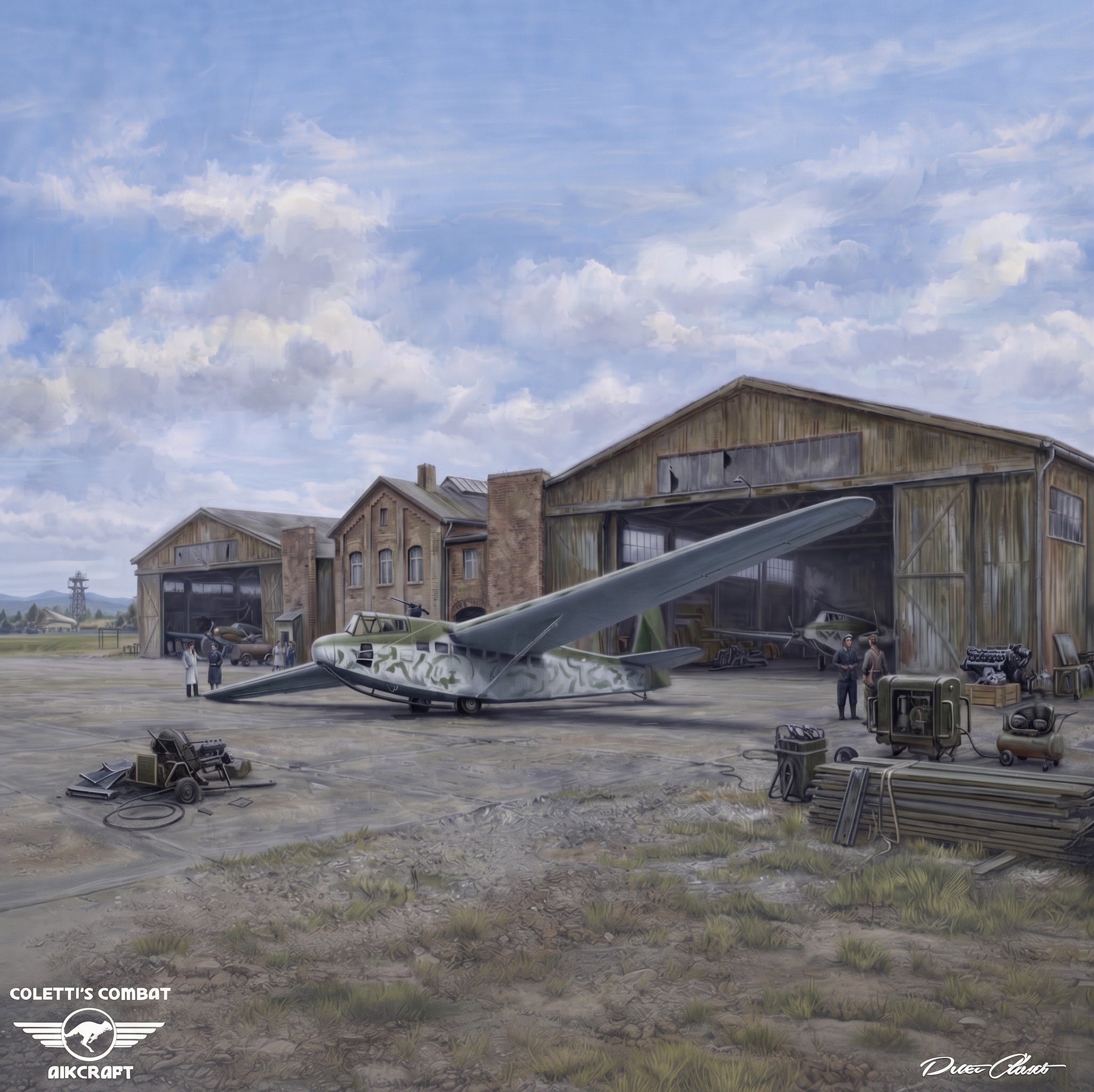
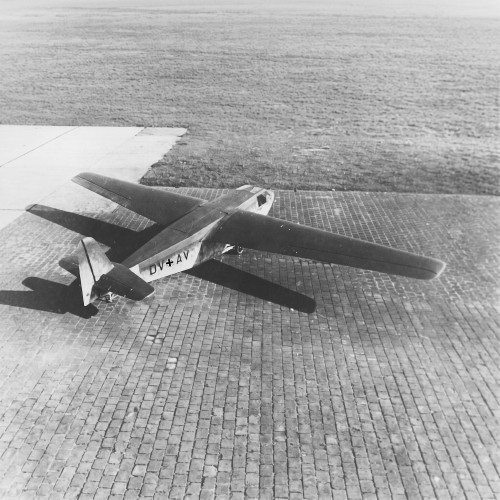
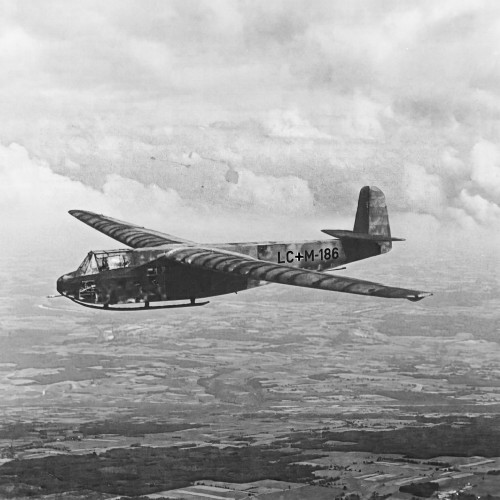
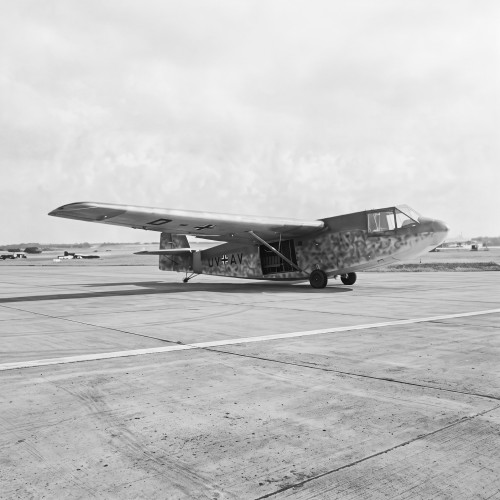
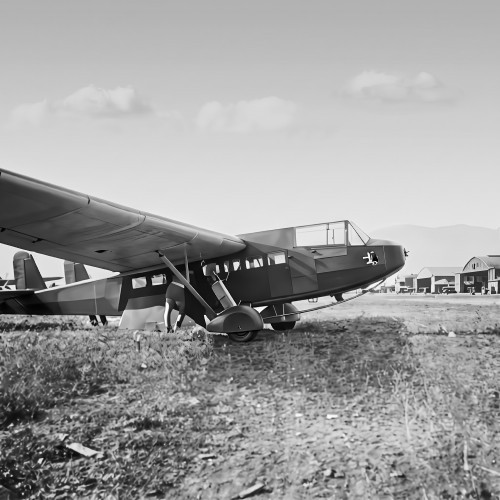
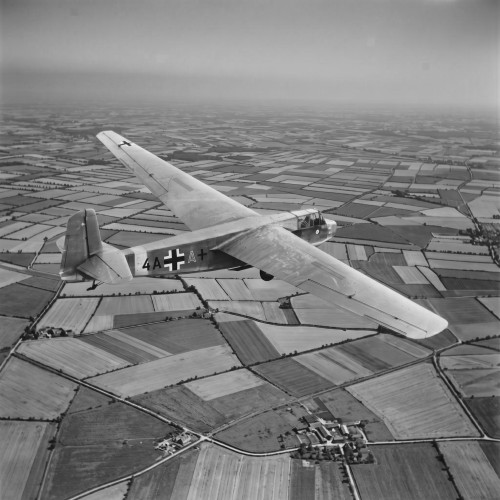
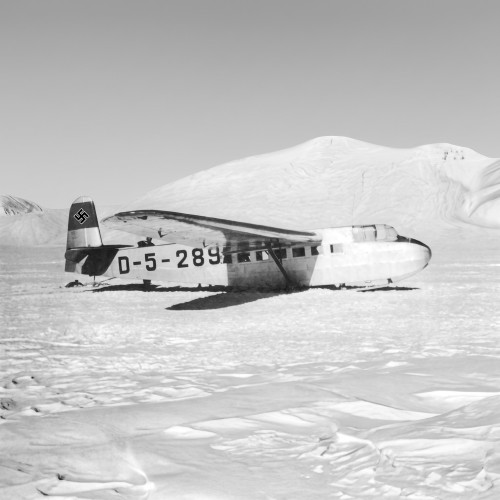
The DFS 230 was a braced high‑wing monoplane with a rectangular‑section fuselage constructed from welded tubular steel and covered with fabric.
Its trapezoidal wings used a single spar, with plywood skinning on the leading edge and fabric covering aft.
Key structural features included:
Pilot cockpit under a hinged canopy.
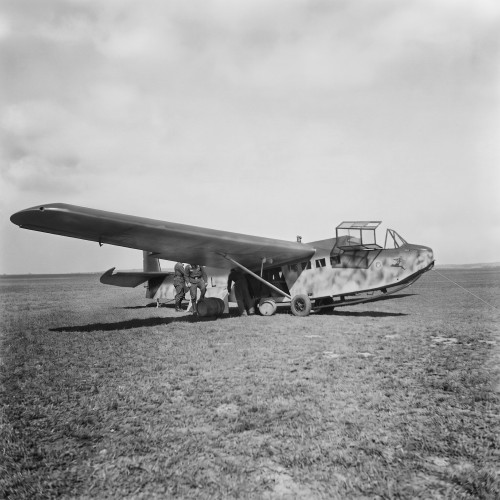
Nine soldiers seated on a long padded bench with handholds, arranged six forward‑facing and four rear‑facing.
Single side door for entry and exit.
Detachable wheeled landing gear for take-off; landing was performed on a sprung wooden skid.
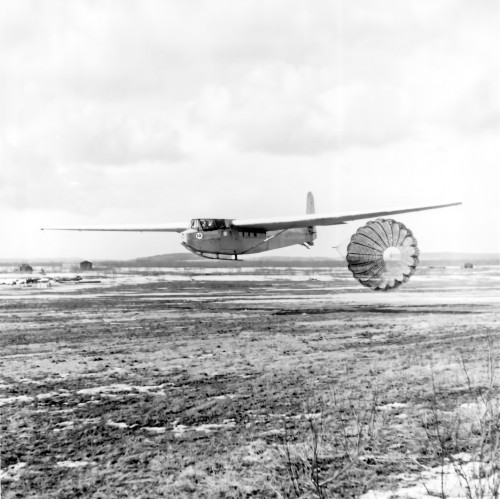
Optional braking parachute enabling steep, precise landings—up to an 80‑degree dive and touchdown within 20 metres of the target.
The glider’s aerodynamic efficiency was notable: it had one of the highest glide ratios (8:1) of any WWII military glider except the Soviet Antonov A‑7.
This allowed long, controlled approaches and flexible release points.
Performance and Towing
The DFS 230 was unpowered and relied entirely on tow aircraft.
It could be towed by:
Junkers Ju 52 (standard tug; could tow two gliders with difficulty),
Heinkel He 111,
Junkers Ju 87,
Henschel Hs 126,
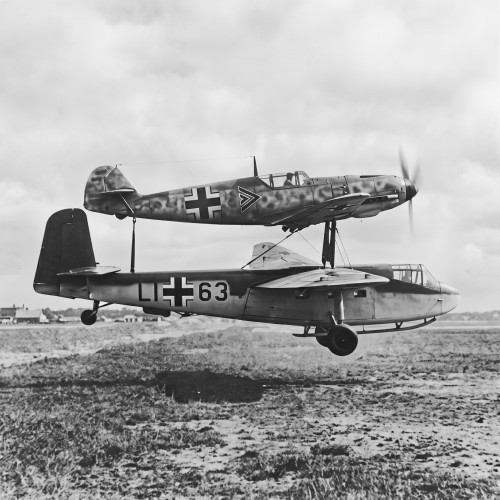
Messerschmitt Bf 110 or Bf 109.
Towing speed was approximately 190 km/h (116 mph).
Communication between tug and glider pilots was enabled by a cable running along the tow rope, allowing blind‑flying operations when necessary.
Once airborne, the glider jettisoned its landing gear and relied on its skid for touchdown.
A braking parachute, or, in some variants, rockets, allowed extremely short landing runs—critical for assault operations.
Capacity and Armament
The DFS 230 carried:
One pilot, plus
Nine fully equipped troops,
or
Up to 1,200 kg (2,600 lb) of cargo.
Armament was minimal.
The front passenger could operate a single machine gun for defensive fire.
Variants
Multiple variants were produced as operational needs evolved:
DFS 230 A‑Series
The initial production series (A‑1, A‑2, A‑3) featured the basic troop‑transport configuration.
Production ended in April 1941.
DFS 230 B‑Series
Introduced defensive improvements, including:
Machine gun armament,
Enhanced braking systems for more precise landings.
DFS 230 C and F Experimental Types
Later experimental variants explored:
Larger payloads,
Rocket‑assisted braking,
Structural refinements.
Production of all variants ceased in 1943 as the Luftwaffe shifted resources to powered transports.
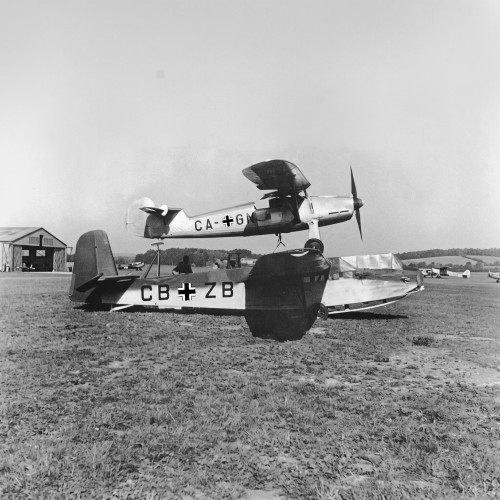
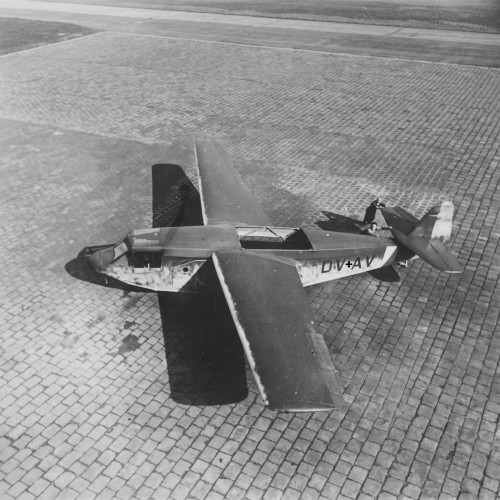
DFS 230 WITH EXPERIMENTAL LOW WING
World War II Operational Use
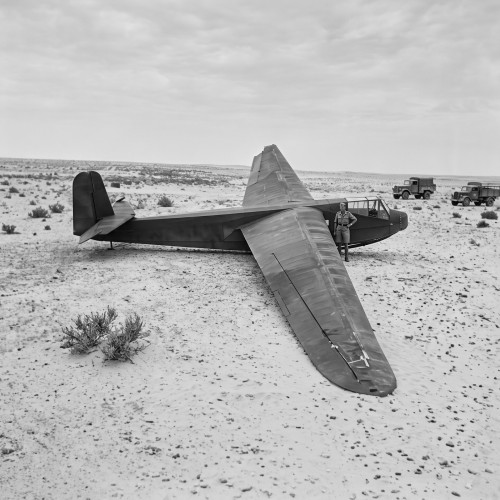
The DFS 230 was the primary German assault glider throughout WWII.
Over 1,500–1,600 units were built and used from 1939 to 1945.
Its operational history includes some of the most dramatic airborne actions of the war:
Fort Eben‑Emael (10 May 1940)
Nine DFS 230 gliders landed German commandos directly atop Belgium’s fortress Eben‑Emael, enabling its rapid capture.
This operation demonstrated the glider’s ability to deliver troops silently and precisely onto fortified positions.
Invasion of Crete (May 1941)
More than 70 DFS 230s supported Fallschirmjäger landings at Maleme airfield and other strategic points, contributing to the German victory in the first major airborne invasion in history.
Operation Eiche (September 1943)
Twelve DFS 230s were used to rescue Benito Mussolini from the Gran Sasso prison, landing commandos directly on the mountaintop.
Eastern Front Supply Missions
The glider was heavily used for resupply of encircled German forces, including:
Demyansk Pocket,
Kholm Pocket,
Stalingrad,
Festung Budapest (until February 12, 1945).
Even after production ended, the DFS 230 remained in service until the final months of the war, supplying Berlin and Breslau as late as May 1945.
Tactical Strengths and Limitations
Strengths:
A silent approach enabled surprise assaults.
Extremely precise landings, even on fortifications.
Ability to deliver concentrated infantry groups or heavy equipment.
A high glide ratio allowed flexible release distances.
Limitations:
Vulnerable during tow and landing in contested airspace.
No propulsion meant no ability to abort or manoeuvre after release.
Increasing Allied air superiority reduced survivability.
Legacy
The DFS 230 demonstrated the tactical potential of assault gliders and influenced Allied designs such as the British Hotspur.
Its early successes showcased the value of silent, precision airborne delivery, though attrition and changing airpower dynamics eventually curtailed its effectiveness.