The DFS SG 38 Schulgleiter emerged from a unique period in German aviation history shaped by the Treaty of Versailles, which severely restricted powered flight development after World War I.
As a result, Germany turned to gliding as a legal means to preserve aeronautical expertise and cultivate future pilots.
Throughout the 1920s and early 1930s, gliding clubs proliferated, and simple primary gliders such as the Stamer-Lippisch Zögling became foundational training aircraft.
By 1933, the formation of the Nationalsozialistisches Fliegerkorps (NSFK) formalised gliding as a national programme intended to build a reservoir of trained aviators.
This created demand for a standardised, robust, and inexpensive primary trainer that could be mass‑produced and used to train thousands of novice pilots.
The Deutsche Forschungsanstalt für Segelflug (DFS) partnered with glider manufacturer Edmund Schneider, along with Ludwig Hofmann and instructor Rehberg, to design such an aircraft.
Their answer was the SG 38 Schulgleiter, named for Schulgleiter (“school glider”) and the year of its first flight, 1938.
Development and Production
The SG 38 was developed at Schneider’s factory in Grunau and represented a clean-sheet design rather than a simple evolution of earlier trainers.
Although it retained the general configuration of the Zögling family, it incorporated numerous improvements in stability, durability, and ease of repair.
Production began in 1938, and the aircraft was built not only by DFS but also by multiple factories and workshops across Germany and other countries.
Estimates of total production range from 9,000 to 10,000 units, making it one of the most widely produced gliders in history.
Design and Construction
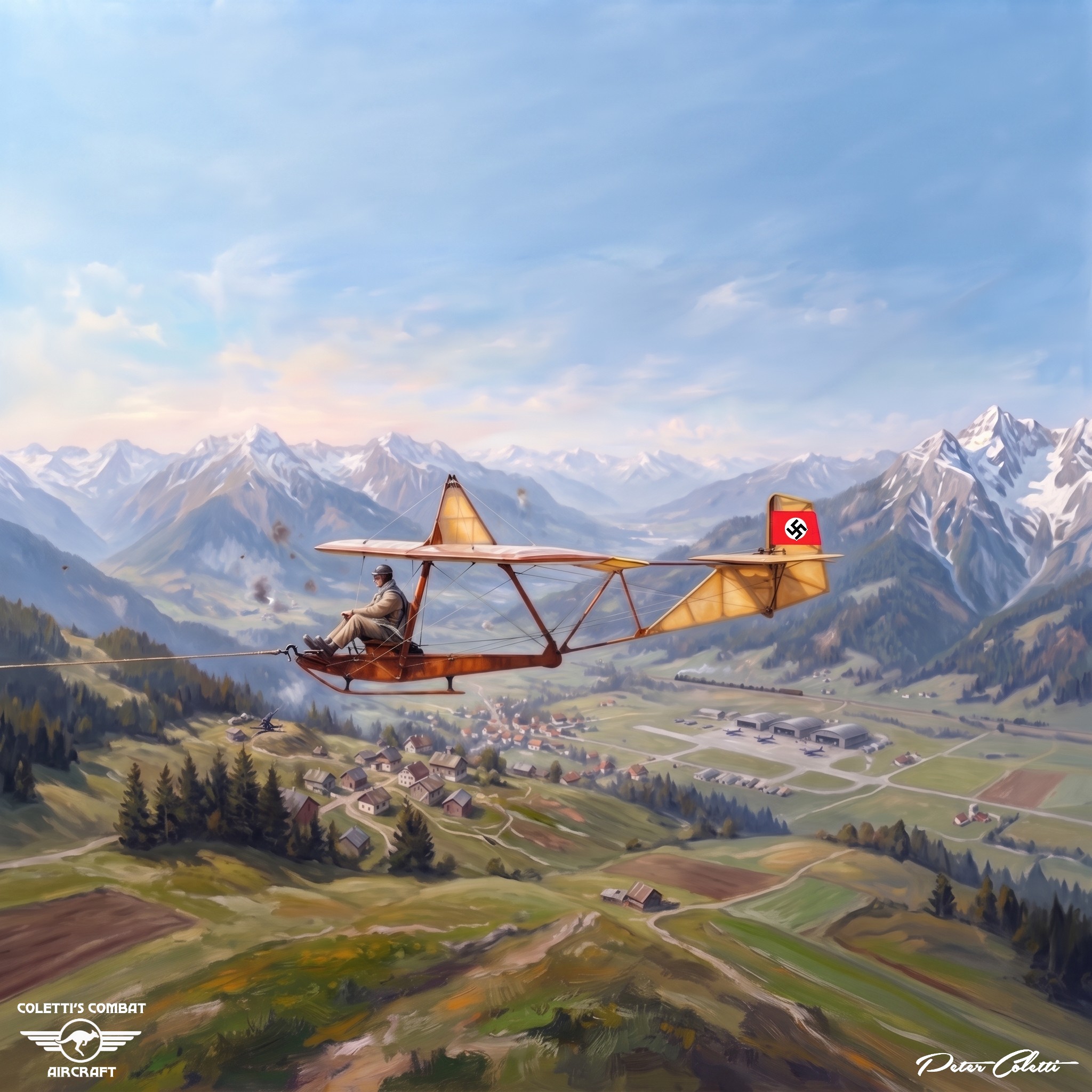
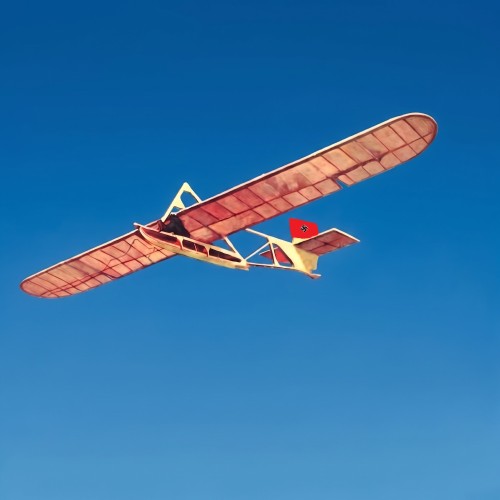
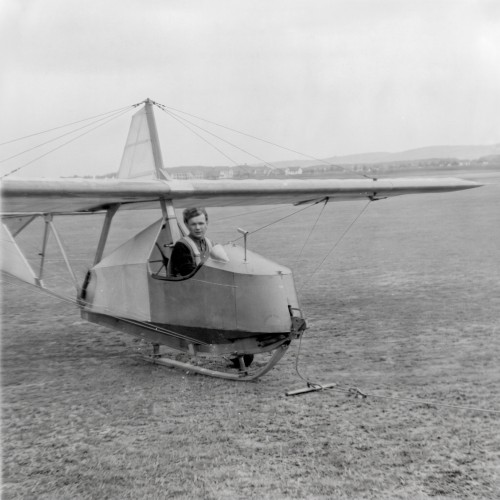
The SG 38 was a high‑wing, cable‑braced, single‑seat primary glider with a minimalist structure optimised for rugged training use.
Structure and Materials
Primary structure: wood throughout, including fuselage frame, wing spars, and ribs.
Covering: doped aircraft fabric on wings, tail surfaces, and the inverted V‑kingpost.
Pilot’s position: an open seat mounted on the fuselage with no windscreen; An optional enclosed wooden pod (“boat”) could be fitted for wind protection.
Landing gear: a simple wooden skid with shock‑absorbing springs.
Aerodynamics and Controls
Wing: braced by wires and supported by a kingpost, providing structural simplicity and low weight.
Tail: conventional cruciform tail with enlarged surfaces for improved stability.
Elevator travel: deliberately limited to prevent student pilots from stalling the aircraft—an important safety feature.
Instrumentation: minimal or absent, reflecting the glider’s role in basic handling instruction.
Launch Methods
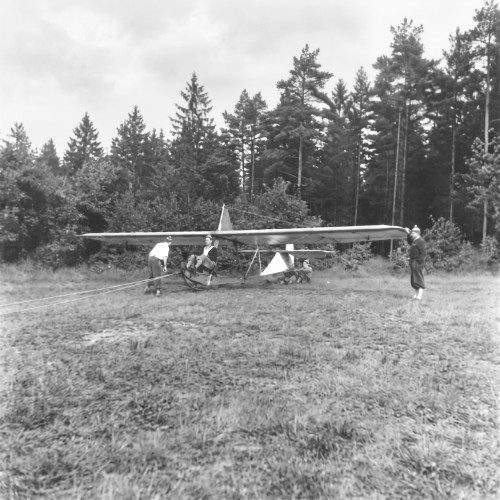
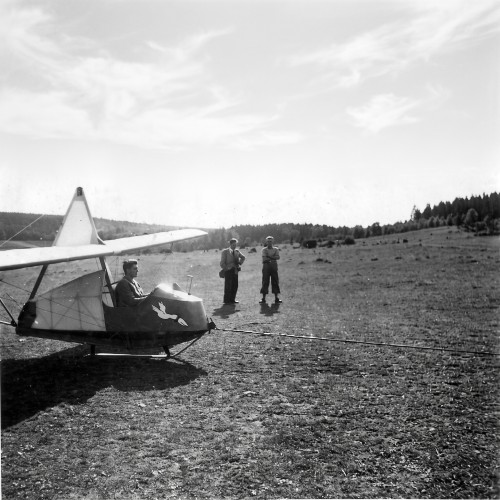
The SG 38 was designed primarily for bungee‑cord launches, the standard method for early gliding instruction:
A 200‑ft (≈60 m) rubber rope was attached to the glider and pulled by a team of 10–12 people to catapult it into the air.
Launch sites included the Wasserkuppe and Saarmund hills, major centres of German gliding.
Winch or automobile towing was also possible but less common.
Flights typically lasted only a few minutes, sufficient for practising take-off, straight flight, gentle turns, and landings.
Performance Characteristics
The SG 38’s performance was intentionally modest, emphasising safety and predictable behaviour:
Wingspan: 10.4 m (34 ft 2 in)
Length: 6.28–6.3 m (≈20 ft 7 in)
Empty weight: ~104–105 kg (228–231 lb)
Gross weight: ~210 kg (464 lb)
Wing area: 16 m²
Lowest sink rate: ~1.2 m/s at 48 km/h (typical values exceed 1 m/s)
Glide ratio: ~10:1 at 52 km/h
These figures reflect the SG 38’s role as a primary trainer, not a soaring glider.
Students would progress to more capable secondary gliders after mastering basic handling.
Operational Use Before and During WWII
Pre‑War Training
Before WWII, the SG 38 became the standard training glider for both NSFK and Hitler Youth aviation programmes.
Its simplicity, low cost, and forgiving handling made it ideal for mass instruction.
Thousands of German pilots began their flying careers in the SG 38.
Wartime Role
During WWII, the SG 38 played a critical role in Luftwaffe pilot training, serving as the first step in a structured progression toward powered aircraft.
Its widespread availability allowed Germany to rapidly expand its pilot corps during the rearmament period and early war years.
Training remained focused on:
Basic coordination
Launch and landing discipline
Control sensitivity
Spatial orientation
The SG 38’s limited elevator travel and stable handling characteristics were specifically intended to prevent accidents among inexperienced trainees.
Variants and International Copies
Although the SG 38 itself remained largely consistent, several notable derivatives and licensed copies appeared:
Schneider DFS 108‑14 SG 38: A designation used for certain production batches; often associated with postwar replicas.
AISA (Spain): Built 50 licensed SG 38s between 1949 and 1951.
Elliotts Primary EoN (UK): A British copy built by Elliotts of Newbury; first flown in 1948 and used by the RAF as the Eton TX.1.
Chinese Nationalist Air Force: Produced and used SG 38 copies for basic training between 1940 and 1944.
Post‑War Legacy and Preservation
After WWII, training philosophy shifted towards two‑seat gliders, reducing the SG 38’s relevance.
However, many examples survived, and the aircraft remains a symbol of early gliding instruction.
SG 38s are displayed in museums worldwide, including:
Deutsches Museum, Munich
National Museum of the United States Air Force, Dayton
Musée de l’Air et de l’Espace, Paris
Shuttleworth Collection, Old Warden, UK
Modern replicas continue to fly at historical aviation events, demonstrating the glider’s enduring simplicity and charm.