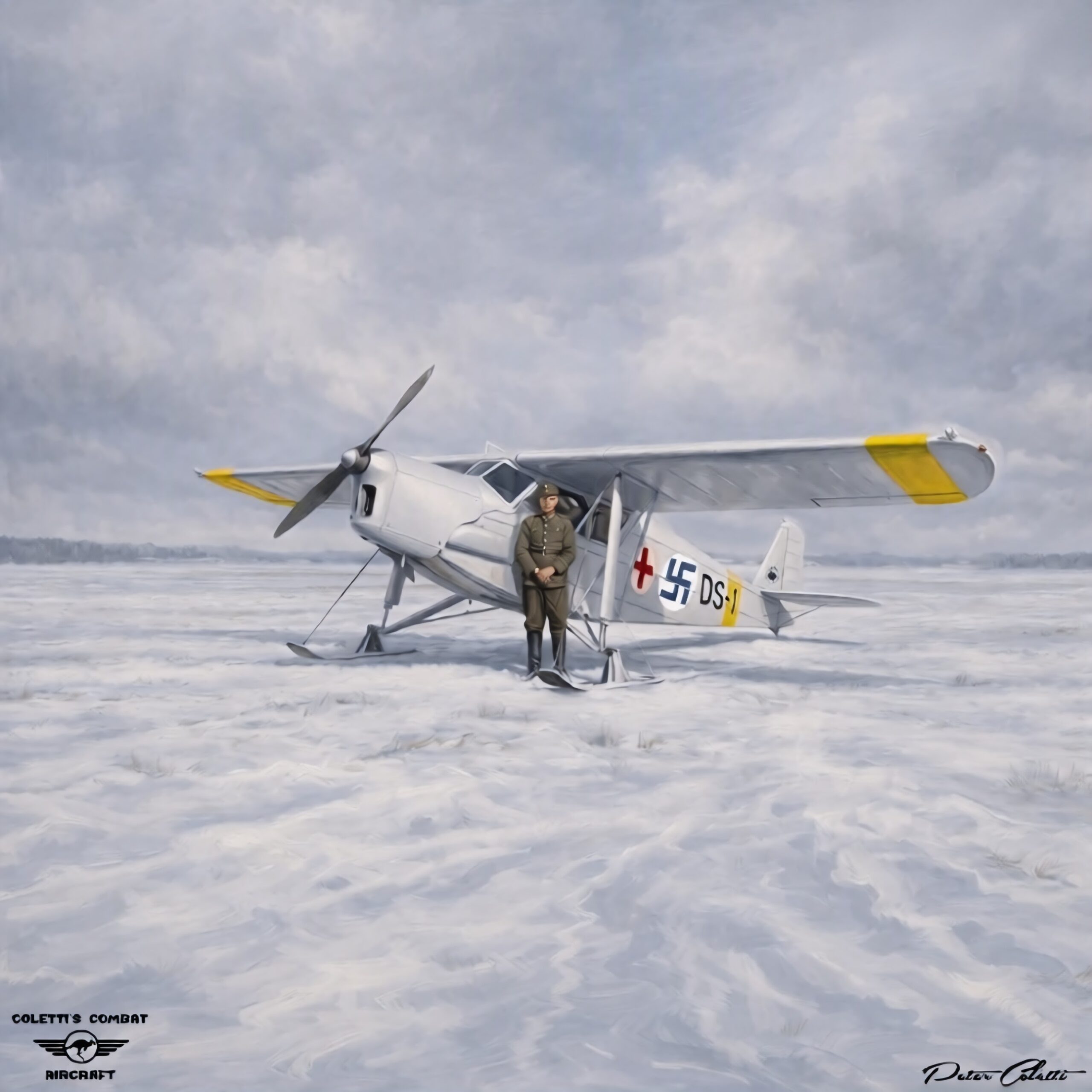
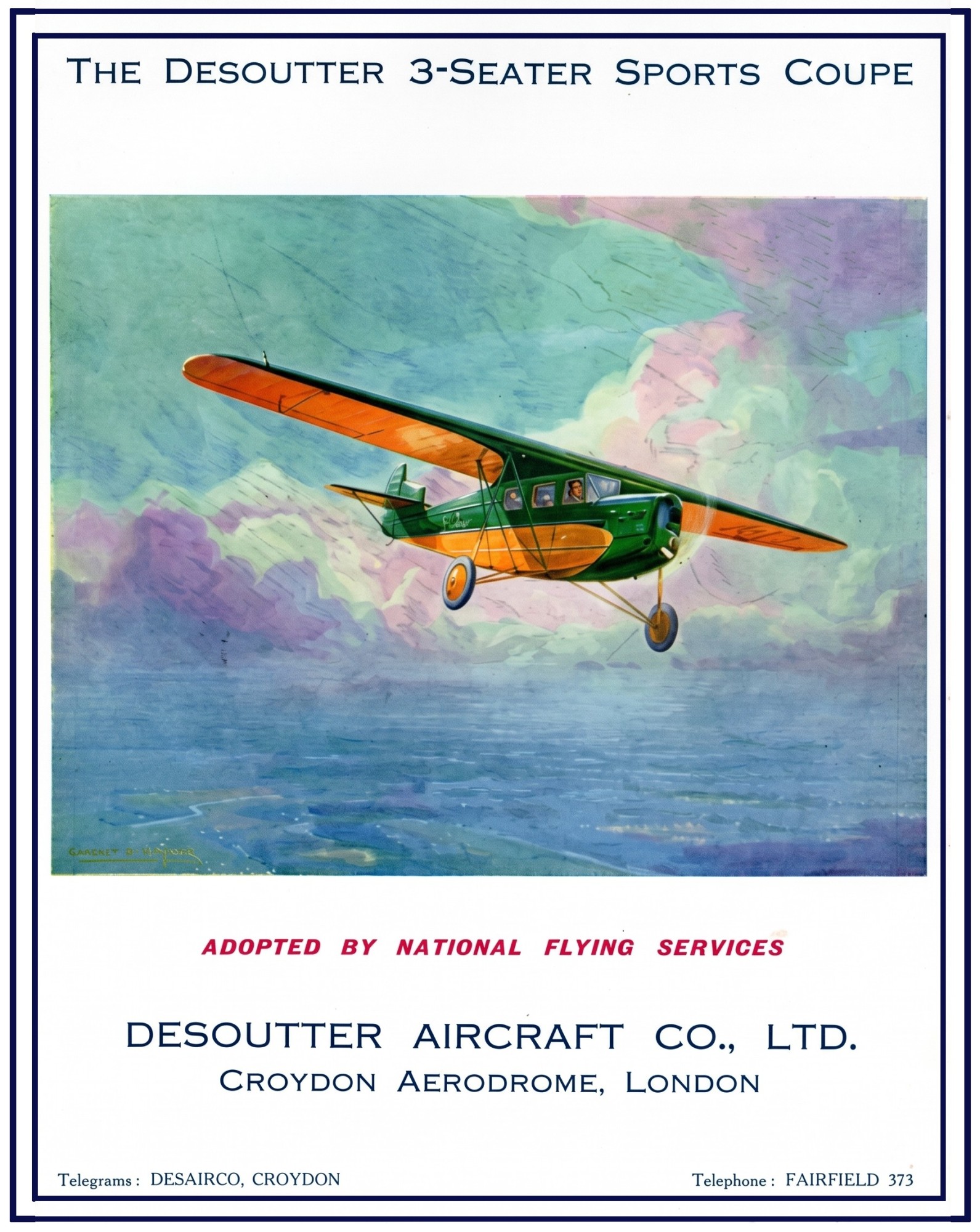
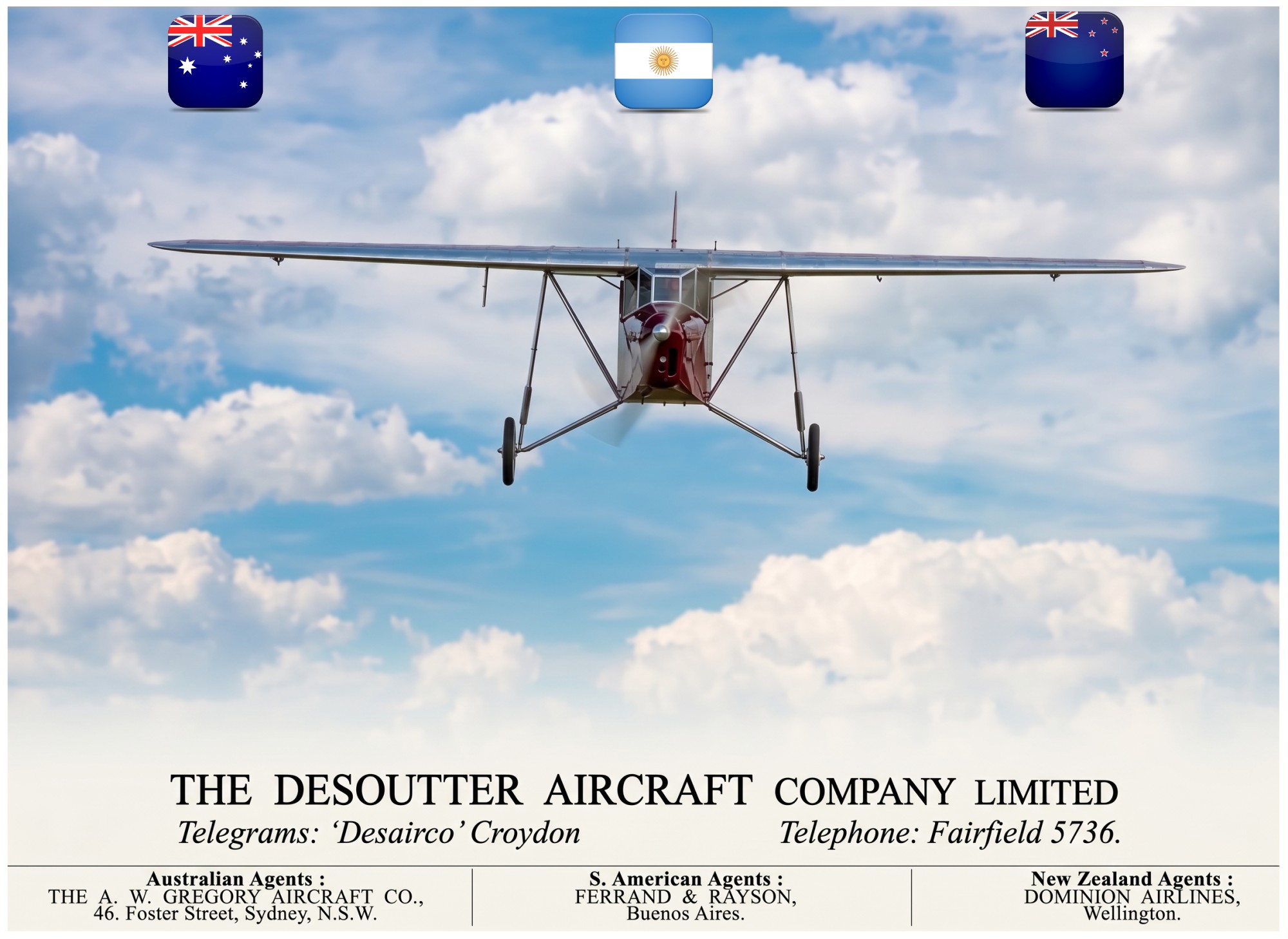
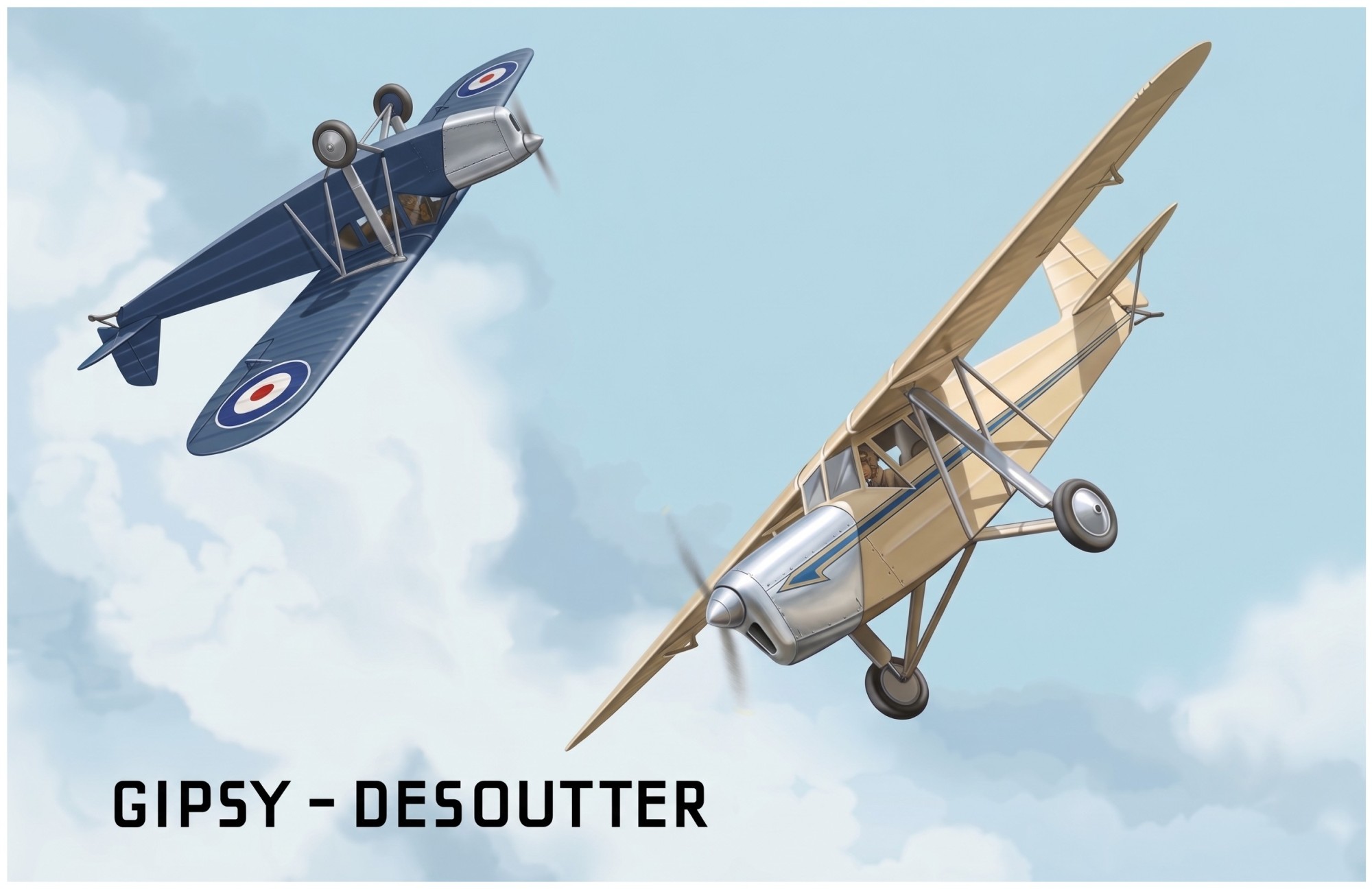
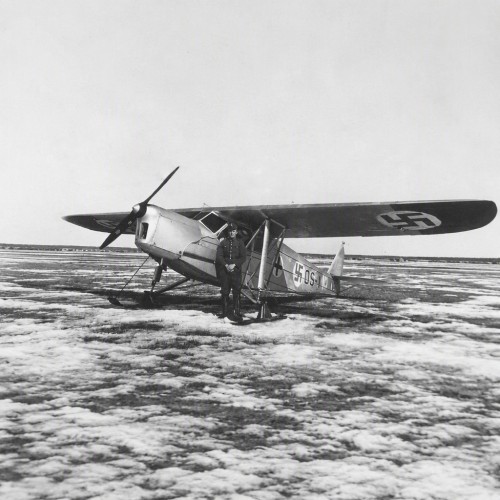
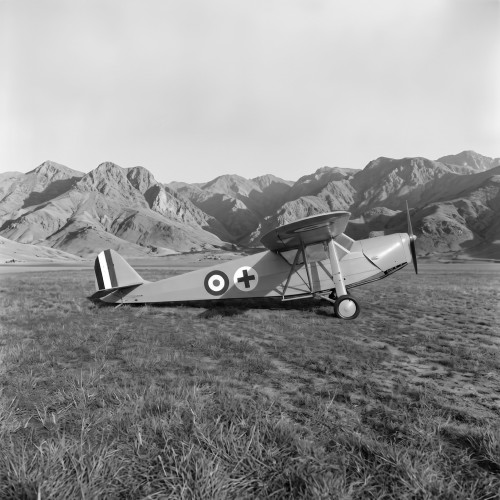
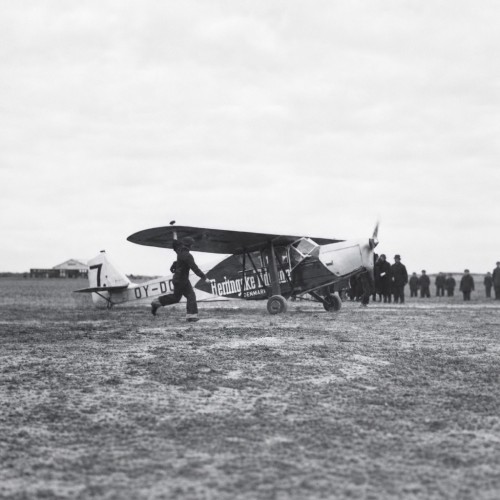
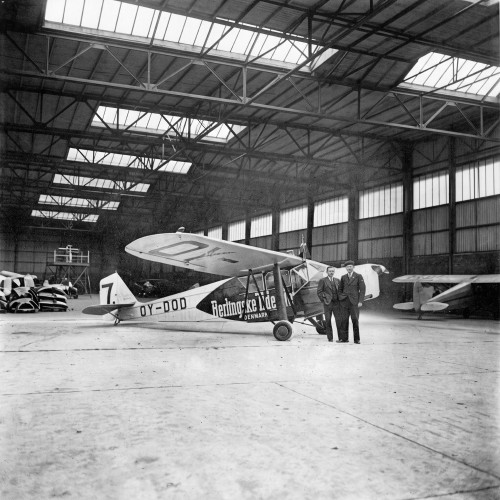
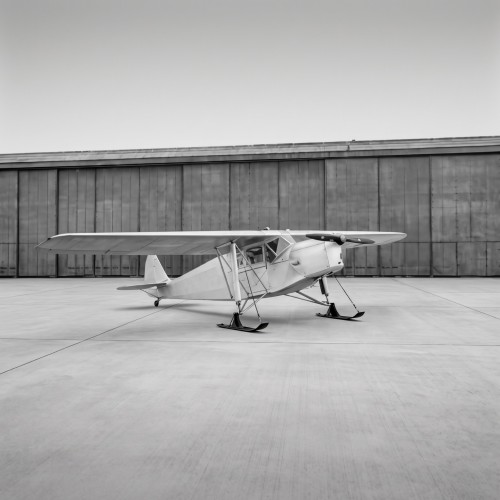
The Desoutter I (initially named the Desoutter Dolphin and catalogued early on as the Desoutter C.1) was a British three-seat, high-wing cabin monoplane developed in 1929 by the Desoutter Aircraft Company at Croydon Aerodrome, Surrey.
Designed as an enclosed, comfortable touring, training, and air-taxi aircraft, it offered an alternative to the open-cockpit biplanes that dominated British general aviation during the late 1920s.
Development and Origins
The aircraft originated directly from the Dutch Koolhoven F.K.41, designed by Frederick Koolhoven and built by N.V. Koolhoven at Waalhaven, Rotterdam.
Early aviator Marcel Desoutter recognised commercial promise in the enclosed cabin layout of the F.K.41 and acquired British manufacturing and sales rights in 1929.
Desoutter established the Desoutter Aircraft Company, operating out of a section of the former Aircraft Disposal Company (ADC) premises at Croydon Aerodrome.
He retained veteran aviation engineer George H. Handasyde (of Martinsyde fame) as chief engineer to refine the design for commercial viability and British airworthiness standards.
The original F.K.41 prototype featured an elevated tailplane mounted halfway up the fin; Handasyde lowered this tailplane directly to the fuselage thrust line to improve longitudinal trim and elevator authority.
The forward fuselage received redesigned engine cowlings and an improved multi-pane windscreen to provide superior forward and downward visibility.
The structure was rationalised for batch production.
The initial converted airframe was unveiled without civilian registration markings as the “Desoutter Dolphin” at the Olympia Aero Show in London in July 1929.
Production aircraft discarded the Dolphin name, entering standard marketing and certification simply as the Desoutter I (or Desoutter Mk. I).
The new type received an immediate boost from National Flying Services Ltd (NFS) at London Air Park (Hanworth), which placed a fleet order for 19 aircraft painted in their signature black-and-orange livery for charter work, club touring, and instrument instruction.
A total of 28 Desoutter Mk.Is were completed before production shifted to the updated Mk.II.
Design and Construction
Component & Engineering Characteristics
Fuselage
A plywood semi-monocoque structure built around spruce longerons and formers, fully plywood-skinned to deliver high torsional rigidity without external wire bracing.
Wing Structure
Full cantilever high-wing layout built in one continuous span without external lift struts.
Employs twin spruce box spars, wooden ribs, and a structural plywood leading edge, with fabric covering the remainder.
Cockpit / Cabin
Fully enclosed three-seat layout.
The pilot sat centrally forward with panoramic forward and side glazing, while two passenger seats were situated side-by-side behind the pilot.
Entry was via a starboard-side cabin door.
Empennage
Cantilever wooden structure with spruce spars and fabric-covered control surfaces.
The horizontal stabiliser was positioned directly on the upper fuselage deck.
Landing Gear
Fixed, wide-track divided undercarriage.
Each main leg comprised an oleo-pneumatic or rubber-in-compression shock absorber strut attached to the fuselage side and braced by a steel-tube V-strut attached to the lower fuselage centreline. Steerable/castoring tail skid at the rear (later models transitioned to a tailwheel).
Powerplant
One 105 hp (78 kW) Cirrus Hermes I 4-cylinder, upright, air-cooled inline engine driving a two-blade fixed-pitch wooden propeller.
Specifications and Performance (Desoutter Mk.I)
Crew: 1 (pilot)
Capacity: 2 passengers
Length: 27 ft 0 in (8.23 m)
Wingspan: 35 ft 9 in (10.90 m)
Height: 7 ft 0 in (2.13 m)
Wing Area: 191 sq ft (17.74 m²)
Empty Weight: 1,180 lb (535 kg)
Maximum Takeoff Weight (MTOW): 1,900 lb (862 kg)
Maximum Speed: 115 mph (185 km/h / 100 kn)
Cruising Speed: 95–100 mph (153–161 km/h / 83–87 kn)
Stalling Speed: ~45 mph (72 km/h / 39 kn)
Range: ~400–450 miles (640–725 km)
Service Ceiling: ~13,500 ft (4,115 m)
Variants and Evolutions
Koolhoven F.K.41: Original Dutch-designed and built progenitor (6 built in the Netherlands).
Powered by various low-power inlines (such as the 90 hp Cirrus III or Walter NZ 60).
Desoutter Dolphin / C.1: The initial 1929 demonstrator modified by Handasyde at Croydon from an imported F.K.41 airframe (G-AAGC) with a lowered tailplane and refined cowl.
Desoutter Mk.I: Standard production model.
Powered by the 105 hp ADC Cirrus Hermes I upright engine.
28 built.
Desoutter Mk.II (Sports Coupé): Major 1930 upgrade designed to address vibration, visibility, and control response.
Fitted with an inverted 120 hp de Havilland Gipsy III engine (lowering the thrust line and uncluttering forward sightlines), redesigned square-cut tail surfaces, altered ailerons, and Bendix wheel brakes.
13 built.
Special Conversions: Individual airframes were retrofitted with powerplants such as the Menasco Buccaneer/Pirate inverted inline engine (notably G-AAPZ in the Shuttleworth Collection before its postwar restoration back to Mk.I Cirrus standard).
Operational History and Second World War Context
Interwar Commercial Operations
During the early 1930s, the Desoutter I saw extensive service across Britain and the Commonwealth:
National Flying Services:
Employed Desoutters across regional branches (Hanworth, Desford, and Sherburn-in-Elmet) for air taxi work, coastal sightseeing, and twin-passenger business charters.
Pioneering Flights:
In February 1930, Flying Officers Harold L. Piper and Cyril E. Kay departed Croydon in a Desoutter I named Oarangi (G-AATI), completing a 10,000-mile long-distance journey to Sydney, Australia, before shipping the aircraft across the Tasman Sea to New Zealand.
Export Markets: Airframes served commercially in New Zealand, Australia, Belgium, the Netherlands, and South Africa.
World War II Service and Impressment.
By the outbreak of the Second World War in September 1939, the Desoutter was already considered obsolete due to light-alloy advances and higher-powered communication types (such as the de Havilland Dominie, Percival Proctor, and Fairchild Argus):
RAF Impressment:
The British Air Ministry impressed a small handful of surviving civil Desoutters under wartime emergency requisition powers (primarily Mk.II airframes and modified Mk.Is).
These operated under RAF serial numbers in non-combat secondary roles:
Station hack and liaison duties
Unarmed communication courier flights across internal UK sectors
Radar calibration and local transit within Maintenance and Training Command clusters
Attrition and Scrapping:
Due to non-standard engine spares, timber rot risks, and structural maintenance loads, military-impressed Desoutters saw limited frontline logistical life; most were struck off charge and scrapped at maintenance units (such as RAF Twinwood Farm or RAF Kemble) between 1942 and 1944.
Civilian Evaders:
A small number of airframes escaped impressment by being disassembled and hidden in private hangars or barns (including the famous Mk.I airframe G-AAPZ at Old Warden), preserving the type into the postwar vintage aviation movement.