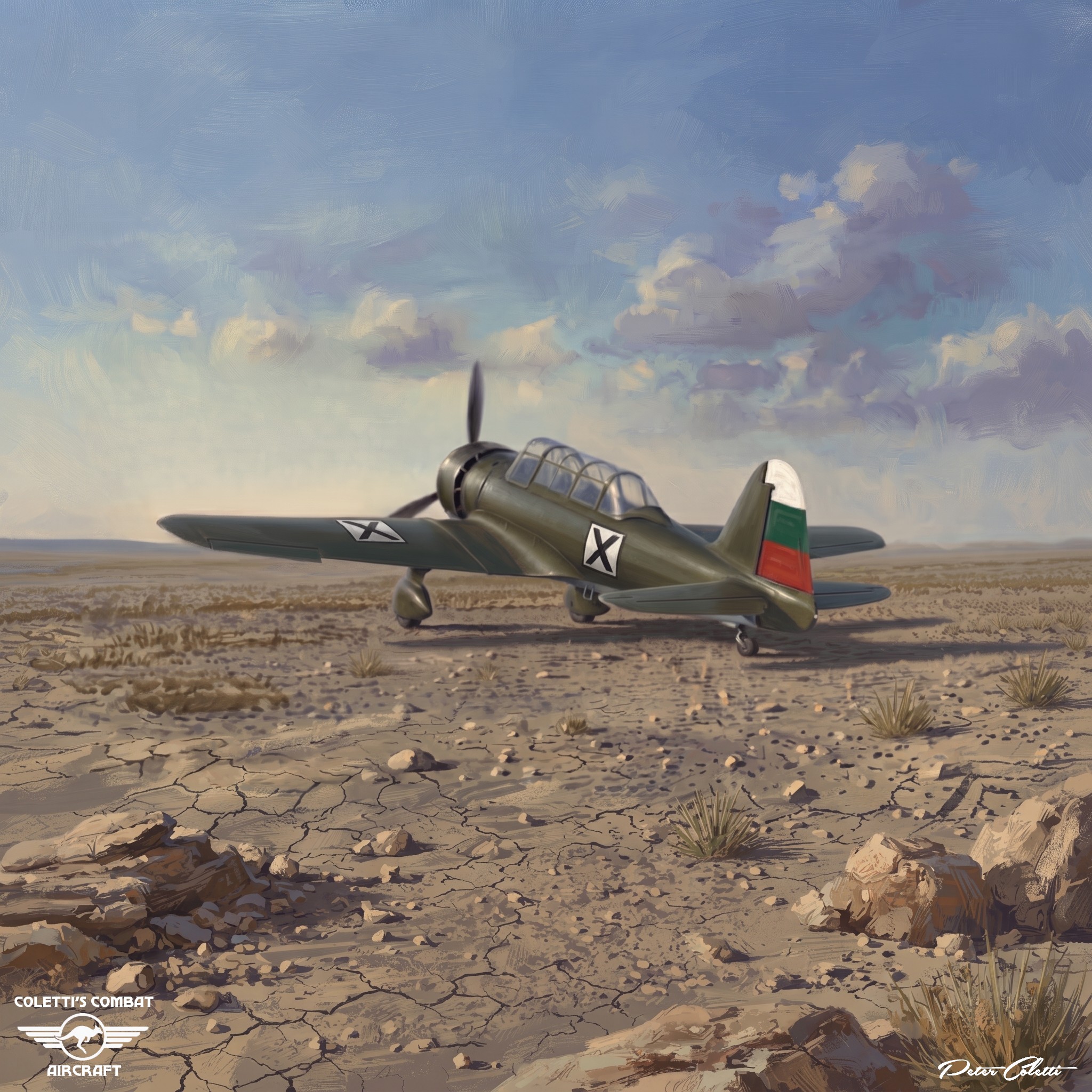
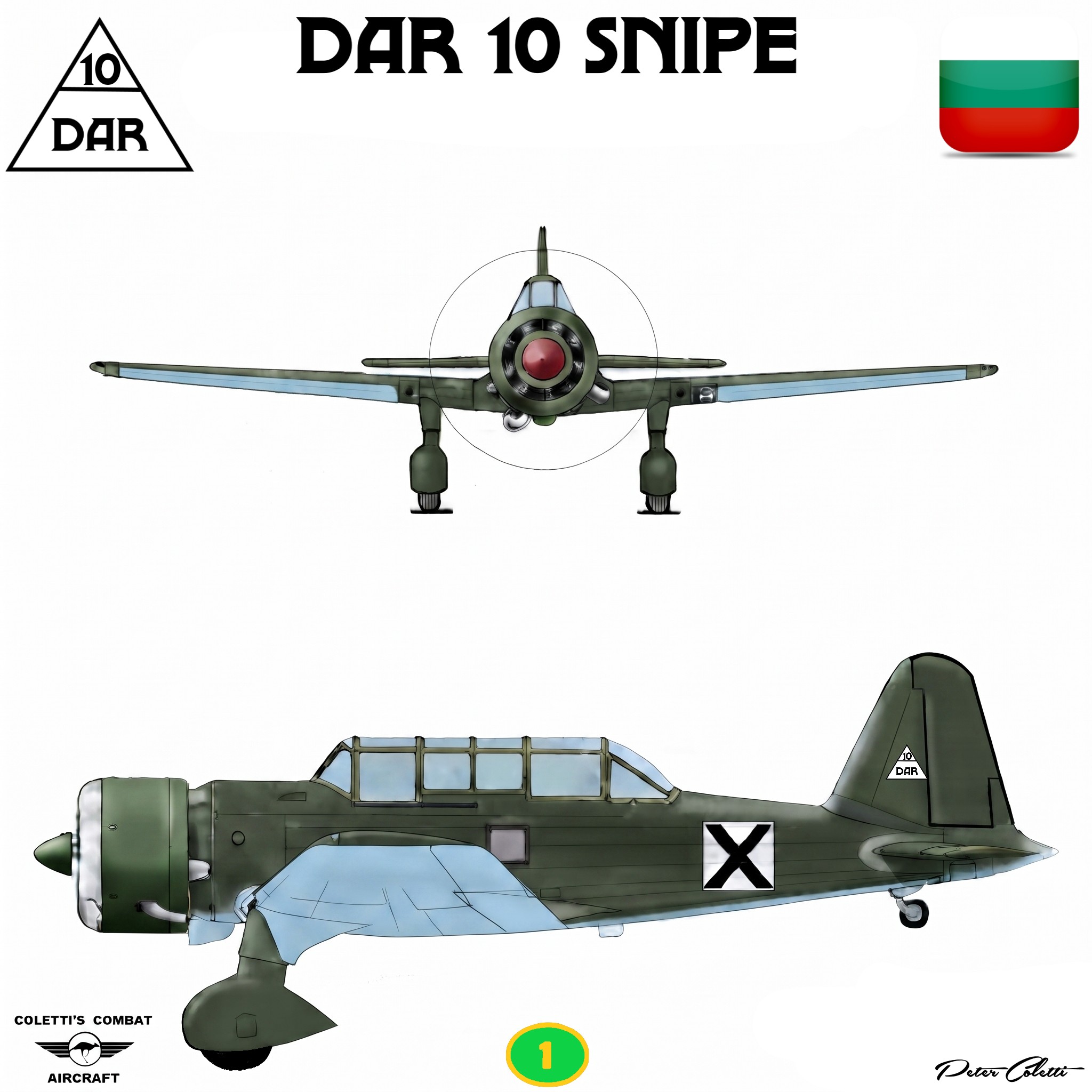
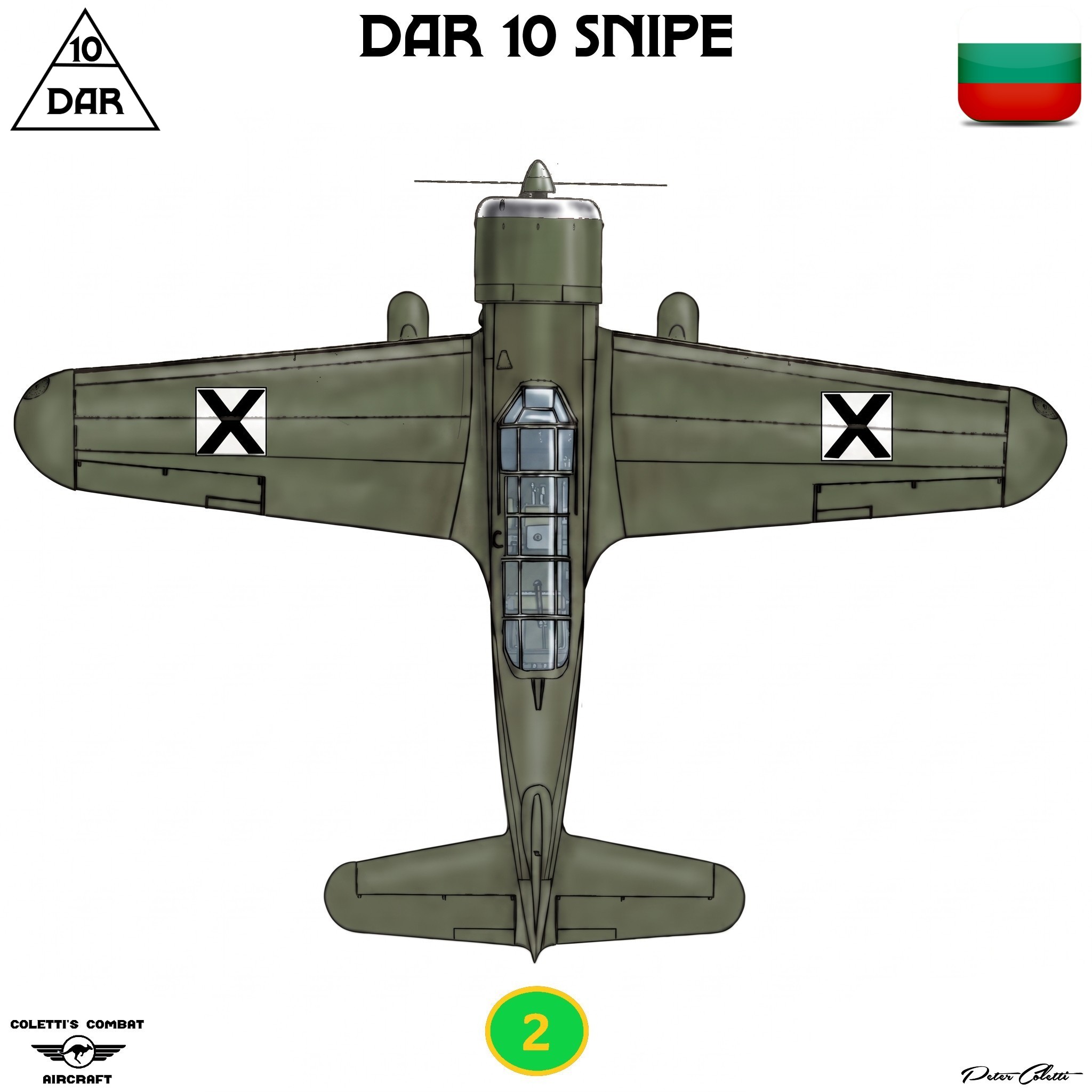
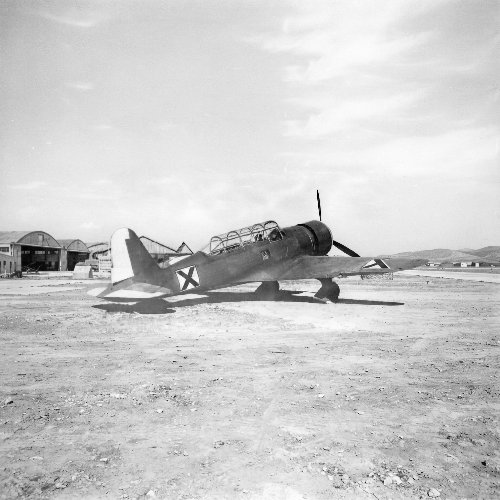
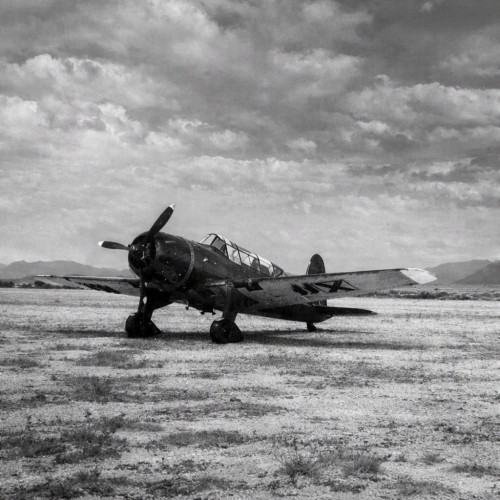
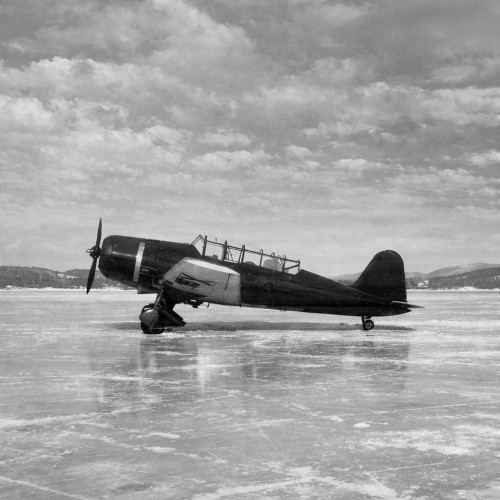
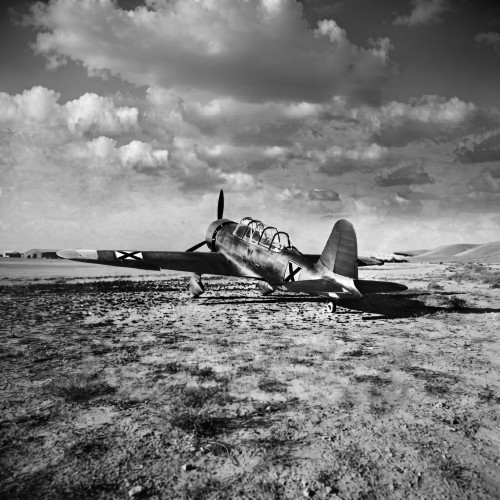
The DAR 10 was a Bulgarian attempt to create a modern, domestically produced combat aircraft during the late 1930s and early 1940s.
Bulgaria’s aviation industry was small but ambitious, centred around the State Aircraft Workshops known as DAR (Darzhavna Aeroplanna Rabotilnitsa).
Designer Zvetan Lazarov sought to give Bulgaria an indigenous light bomber and reconnaissance aircraft that could reduce reliance on foreign suppliers.
By 1938, Bulgaria’s air force was modernising and increasingly aligned with Germany.
German aircraft such as the Junkers Ju 87 and various fighters were readily available, but Bulgaria still wanted its own designs for national prestige and industrial development.
The DAR 10 was conceived in this environment: a versatile, multi‑role aircraft capable of light bombing, dive‑bombing, ground attack, and reconnaissance.
Development History
Early Design Work (1938–1940)
Lazarov designed the DAR 10 as a conventional low‑wing monoplane with mixed construction.
The wings were wooden with plywood covering, while the fuselage used a steel‑tube frame with fabric covering.
The aircraft had tandem seating for a pilot and rear gunner, a fixed tailwheel undercarriage, and a wide fuselage to accommodate large radial engines.
The design emphasised simplicity, ruggedness, and ease of production.
Bulgaria’s industrial capacity was limited, so the aircraft had to be built using available materials and manufacturing techniques.
First Prototype: DAR 10A “Bekas”
The DAR 10A was powered by a 950‑horsepower Alfa Romeo 128 R.C.21 radial engine.
It first flew on 2 July 1941.
Flight tests showed good handling, respectable speed, and stable behaviour in dive‑bombing profiles.
The aircraft was evaluated as a potential light bomber and reconnaissance platform.
Despite promising results, the DAR 10A was not selected for production.
Bulgaria instead chose the KB‑11 Fazan, a high‑wing aircraft that was judged easier to manufacture.
The DAR 10A continued testing until it crashed in October 1942, ending its development.
Second Prototype: DAR 10F
A second, improved prototype was built with a Fiat A.74 R.C.38 radial engine producing 870 horsepower.
This version incorporated structural reinforcement, dive brakes, and a slightly lengthened fuselage. It first flew in March 1945.
The DAR 10F demonstrated improved performance, including a top speed of 454 km/h.
It was evaluated as a dive bomber and ground‑attack aircraft.
However, by 1945 the war was ending, and Bulgaria’s air force was transitioning to Soviet equipment.
The DAR 10F was never produced, and the programme was discontinued.
Airframe and Structural Design
The DAR 10 was a low‑wing monoplane with a fixed tailwheel undercarriage.
The main wheels were enclosed in streamlined fairings.
The aircraft had two seats arranged in tandem under an enclosed canopy.
The wings were built from wood with plywood covering.
They did not incorporate flaps, which simplified construction but limited low‑speed handling.
The fuselage used a steel‑tube frame with wooden formers and fabric covering.
This mixed construction was typical of Bulgarian aircraft of the era.
The aircraft used a three‑bladed steel propeller.
The fuselage was relatively wide and deep to accommodate large radial engines and internal equipment.
Bomb load of up to five 100‑kg bombs carried under the wings
DAR 10F Armament
Two fixed 20 mm cannons mounted in the fuselage
Two fixed wing‑mounted machine guns
Two rear gunner machine guns
Bomb load options:
One 500‑kg bomb
One 250‑kg bomb plus four 100‑kg bombs
The DAR 10F’s armament made it a more capable strike aircraft than the DAR 10A, suitable for dive‑bombing and ground attack.
Operational Evaluation and WWII Context
Neither version of the DAR 10 entered operational service.
Several factors contributed to this outcome:
German aircraft were readily available and proven in combat.
The DAR 10A competed with the KB‑11 Fazan and lost the production contract.
The DAR 10F flew too late to be relevant; Bulgaria was shifting to Soviet aircraft such as the Il‑2 and Il‑10.
Industrial limitations made mass production difficult.
The DAR 10 prototypes were used only for testing and evaluation.
The DAR 10F remained in limited use until 1949 before being retired.
Variants
DAR 10A “Bekas”: First prototype, Alfa Romeo engine, light bomber and reconnaissance aircraft.
DAR 10F: Improved second prototype, Fiat engine, dive bomber with heavier armament.
Significance
The DAR 10 represents Bulgaria’s most advanced attempt to produce a modern combat aircraft during WWII.
Although it never entered production, it demonstrated the technical capabilities of the Bulgarian aviation industry and the design skill of Zvetan Lazarov.
The aircraft’s failure to reach service was due more to geopolitical and industrial constraints than to shortcomings in the design itself.
The DAR 10 remains an important historical example of Bulgaria’s wartime aviation ambitions.