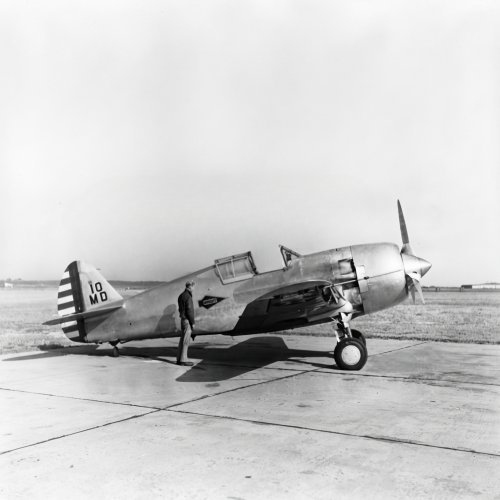
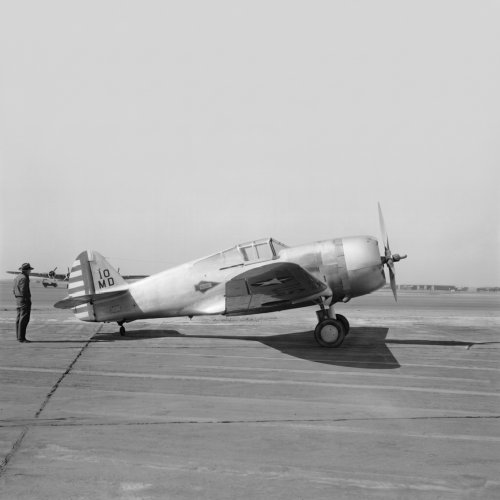
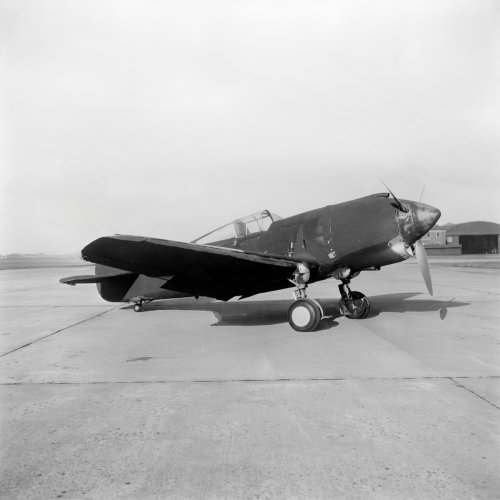
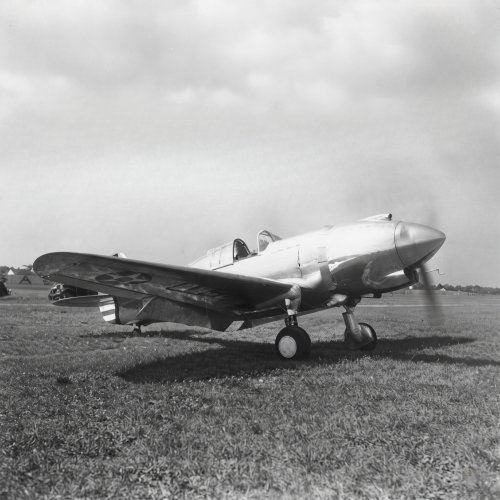
The Curtiss XP‑42 emerged in the late 1930s as an experimental attempt to solve a fundamental aerodynamic problem: how to streamline an air‑cooled radial engine so that it could compete with the increasingly dominant liquid‑cooled inline engines.
The project began with the U.S. Army Air Corps’ interest in improving the Curtiss P‑36 Hawk, a fighter whose radial engine produced more drag than contemporary inline‑powered designs such as the Messerschmitt Bf 109 and the emerging Curtiss XP‑40.
Curtiss engineers modified the fourth production P‑36A airframe (serial 38‑004) into a dedicated research aircraft.
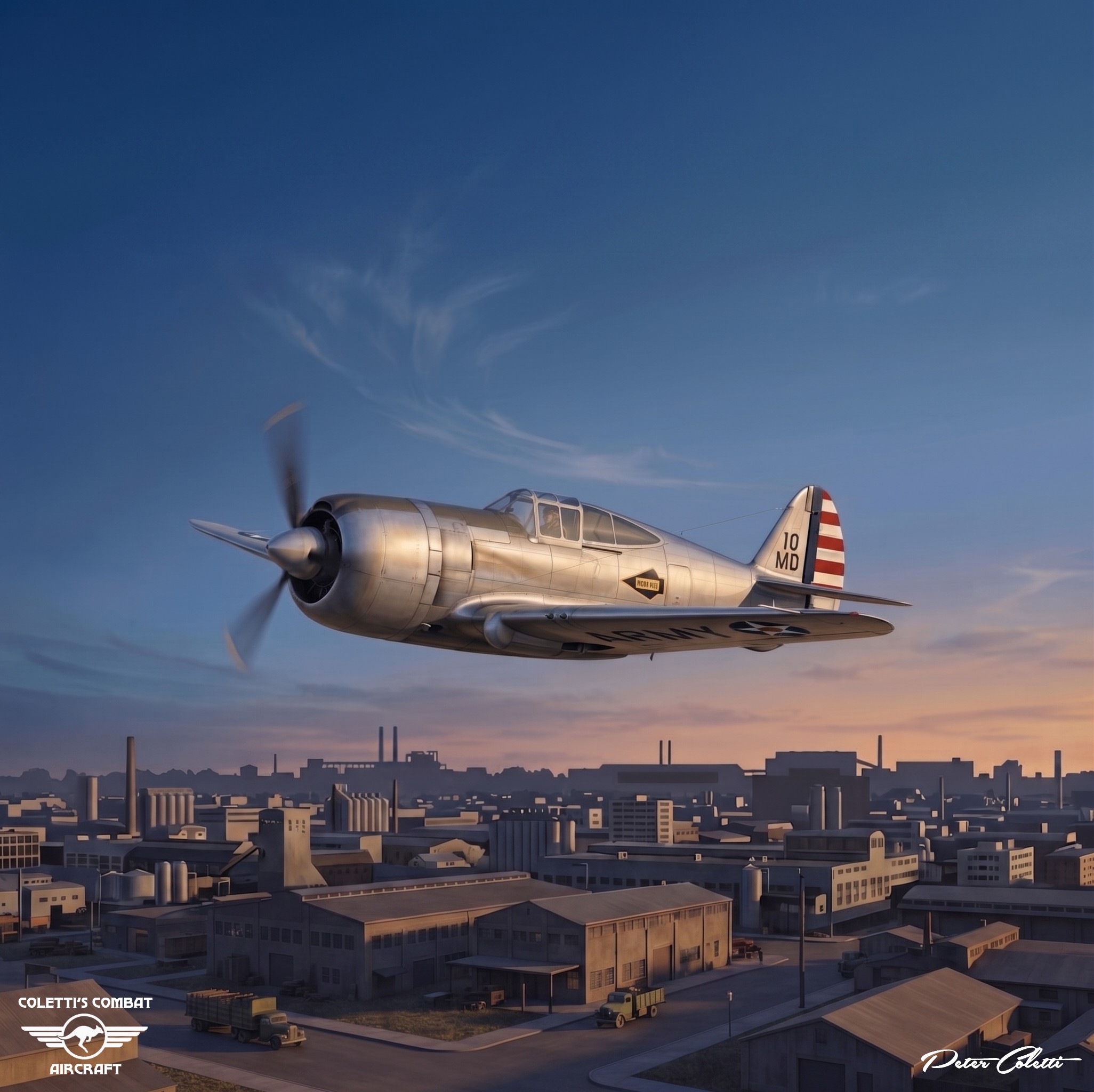
Curtiss XP-42 Final with Brewster Spinner
Delivered to the Army in March 1939, the aircraft was officially designated XP‑42, even though it was structurally a conversion of the P‑36A.
The XP‑42’s purpose was not to become a frontline fighter but to investigate drag‑reduction techniques for radial engines, hoping to achieve performance comparable to liquid‑cooled fighters.
This research was part of a broader pre‑WWII effort to determine whether radial engines—valued for reliability and ruggedness—could be made competitive in high‑speed fighter applications.
Curtiss Model 75S (XP-42)
Design Philosophy and Engineering Features
Streamlined Radial Engine Cowling
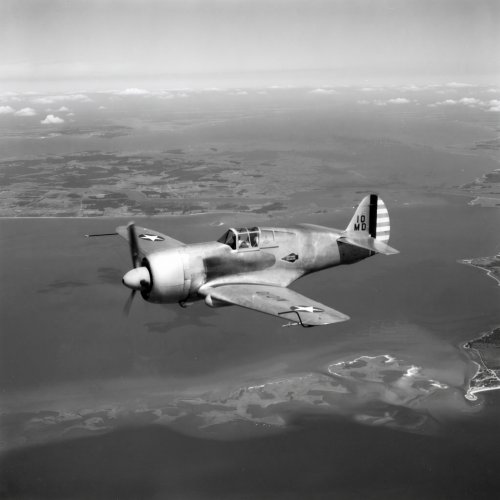
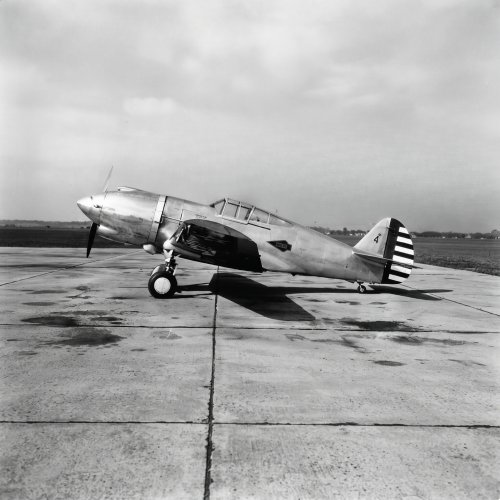
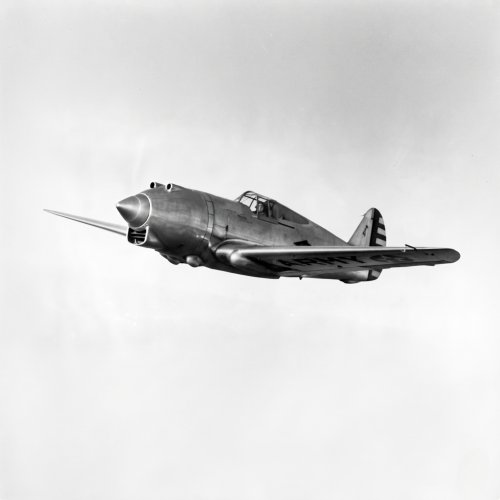
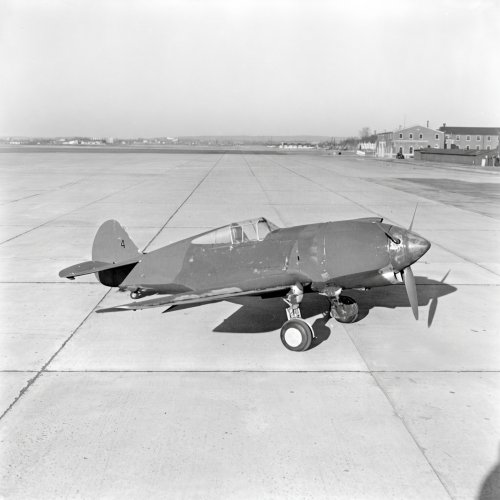
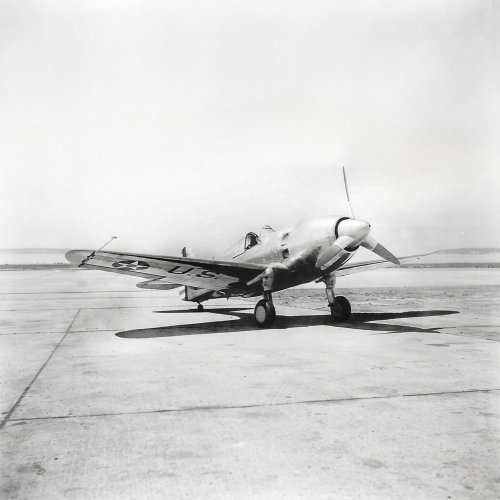
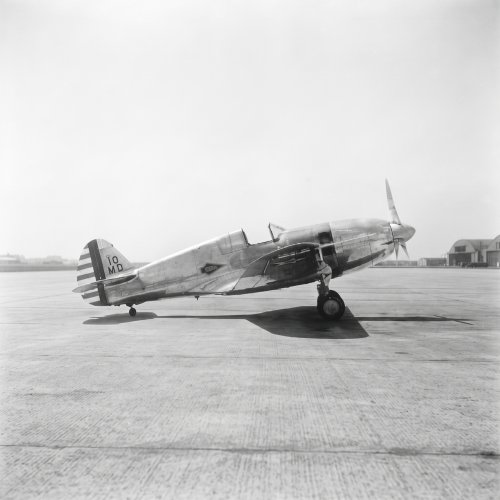
The XP‑42’s most distinctive feature was its elongated, bullet‑shaped nose, enclosing a Pratt & Whitney R‑1830‑31 Twin Wasp radial engine rated at 1,050 hp.
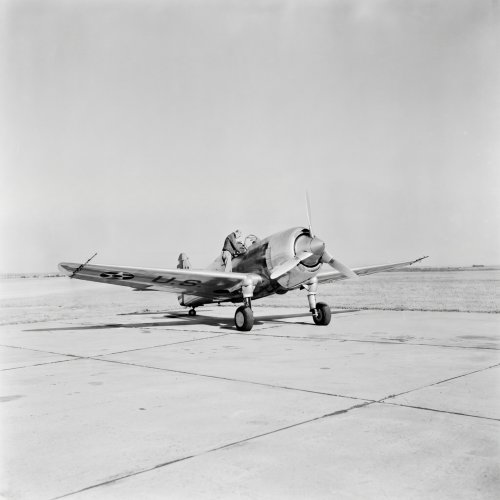
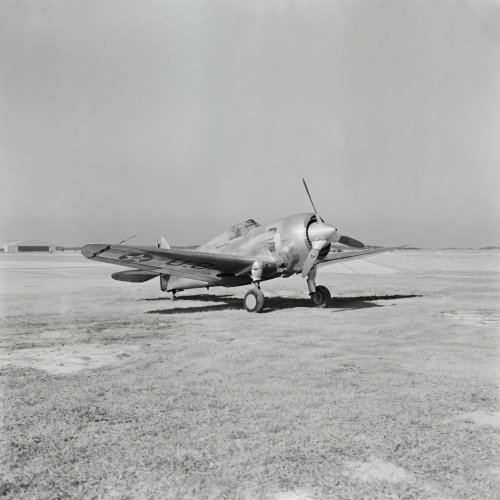
The cowling extended forward to a large pointed spinner, giving the aircraft a profile more reminiscent of an inline‑engine fighter.
To accommodate this long cowling, engineers installed a two‑foot extended propeller shaft, which introduced severe vibration issues.
Cooling air entered through an air scoop below the spinner, while smaller intakes above the engine fed the carburettor.
Curtiss Model 75S (XP-42)
Aerodynamic Experiments
The XP‑42 underwent at least twelve nose‑cowling configurations, each altering fuselage length and airflow patterns.
Despite these efforts, the streamlined radial cowling produced almost no meaningful drag reduction, and cooling problems remained “almost insurmountable”.
Curtiss Model 75S (XP-42)
Airframe and Control Surface Modifications
Although based on the P‑36A, the XP‑42’s airframe was repeatedly rebuilt.
During WWII, it was fitted with an all‑moving horizontal tail (stabilator)—a forward‑looking research feature later seen on jet aircraft.
The aircraft initially flew in a natural metal finish, later receiving camouflage during one of its rebuilds.
Curtiss XP-42 with large spinner
Performance and Flight Characteristics
Speed and Handling
Early tests showed the XP‑42 was faster than the P‑36A, validating the concept of streamlining.
However, it was not faster than the XP‑40 or production P‑40 Warhawk, which used a liquid‑cooled Allison V‑1710 engine and represented the future of U.S. fighter development.
Cooling inefficiency meant the XP‑42 could not sustain full power for long periods and even overheated during cruise flight.
Curtiss XP-42 with large spinner
Technical Specifications
Because the XP‑42 changed repeatedly, performance figures vary by source and configuration.
Representative values include:
Maximum speed: 250–315 mph depending on configuration
Service ceiling: ~37,200 ft
Range: 730–830 miles
Crew: 1
Engine: Pratt & Whitney R‑1830‑31, 1,050 hp
Curtiss XP-42 with large spinner
Dimensions
Length: ~28.2 ft
Wingspan: ~37.1 ft
Height: ~8.2–11 ft (varied with cowling changes)
Curtiss XP-42 with Hamilton Propeller
Armament
Although provisions existed for one .30‑cal and one .50‑cal machine gun, the XP‑42 was never armed, as it served exclusively as a research aircraft.
Curtiss XP-42 Long Nose
Operational History and WWII Context
The XP‑42 first flew in March 1939, just months before the outbreak of WWII in Europe.
By the time the U.S. entered the war in 1941, the XP‑42 had already been deemed unsuitable for production.
Its performance lagged behind newer fighters, and its cooling problems remained unresolved.
Curtiss XP-42 Long Nose
However, the aircraft continued to serve as a testbed at Wright Field, contributing valuable data on:
Radial‑engine streamlining
Cooling airflow management
Propeller‑shaft vibration behaviour
Advanced control surfaces (all‑moving tail)
This research informed later U.S. aircraft designs, even though the XP‑42 itself never entered combat.
Curtiss Model 75S (XP-42)
Why It Was Not Adopted
The XP‑42 lost out to the XP‑40, which evolved into the Curtiss P‑40 Warhawk, one of America’s most important early‑war fighters.
The P‑40’s liquid‑cooled engine offered superior speed potential, and the Army Air Corps prioritised fighters that could be fielded quickly and effectively.
The XP‑42’s inability to solve its cooling issues—and its failure to outperform the P‑40—made further development unjustifiable during wartime.
The sole prototype was eventually scrapped on July 15, 1947, after nearly a decade of experimental use.
Curtiss Model 75S (XP-42)
Significance and Legacy
Although the Curtiss XP‑42 never entered production, its experimental role was important.
It demonstrated the limits of radial‑engine streamlining and helped confirm that liquid‑cooled inline engines were the superior choice for high‑performance fighters at the dawn of WWII.
Its research contributions—especially in cooling airflow and stabilator testing—fed into later U.S. aircraft development programmes.
The XP‑42 stands today as a unique transitional aircraft, bridging the gap between 1930s radial‑powered fighters and the more advanced designs that would dominate WWII.