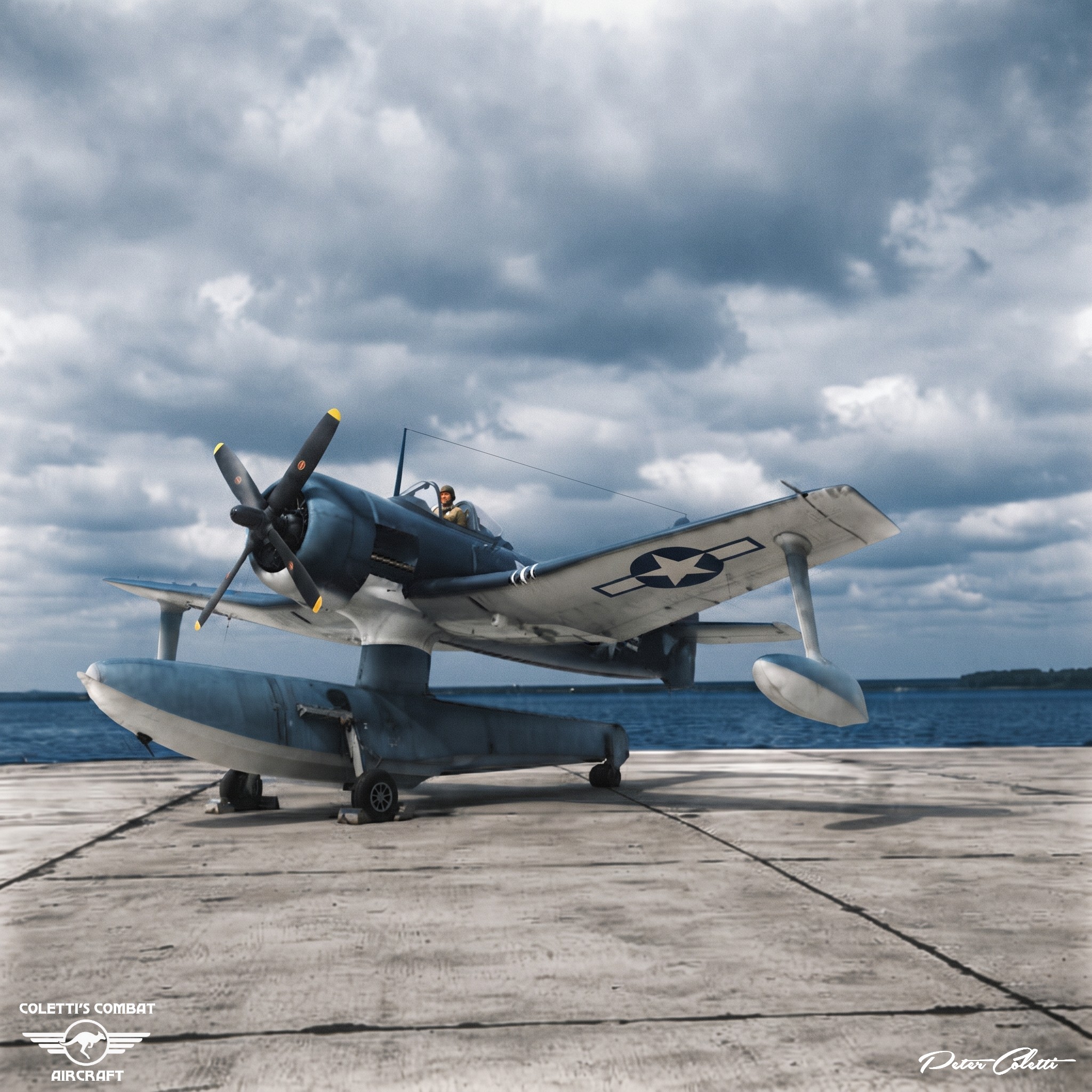
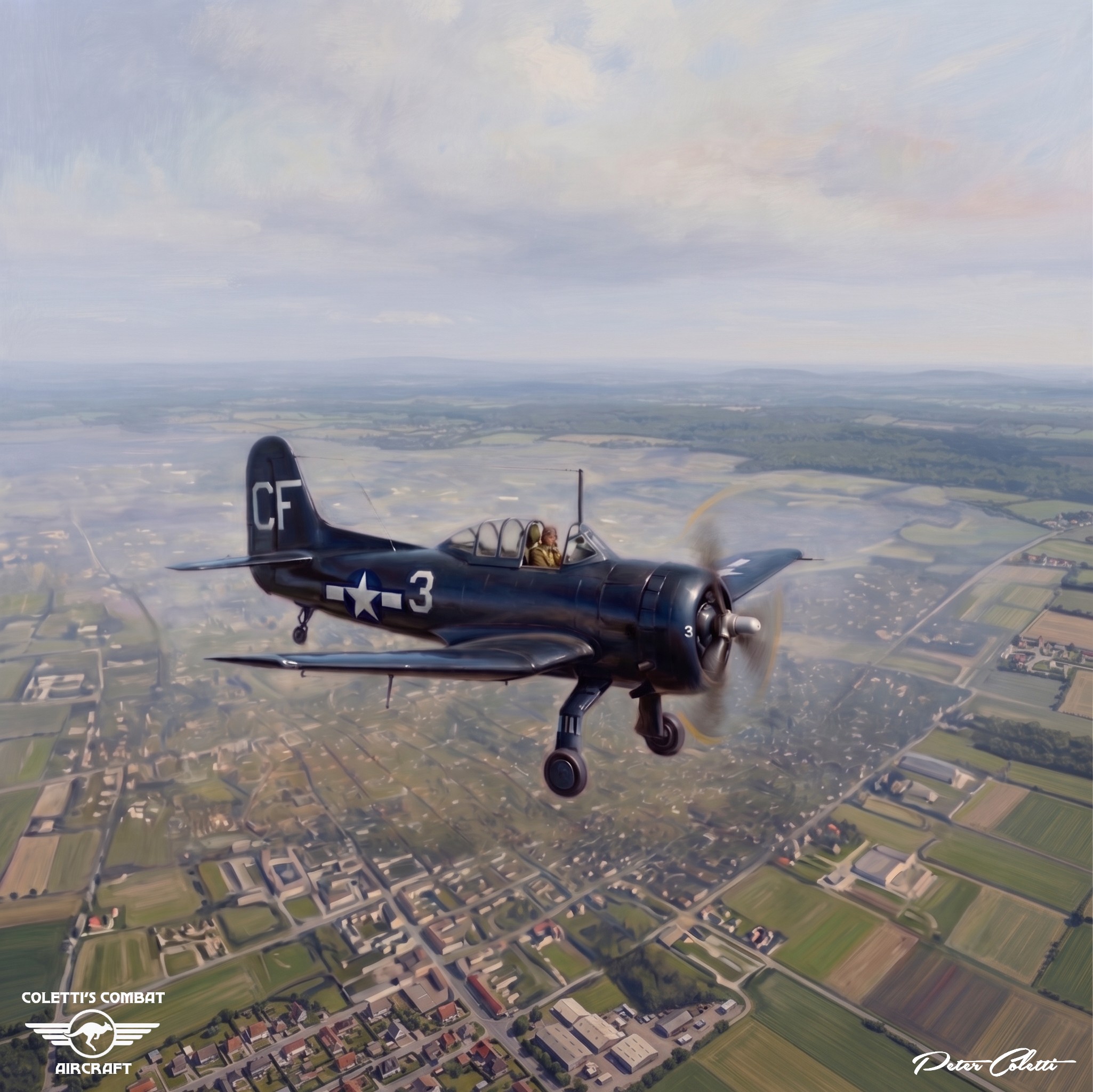
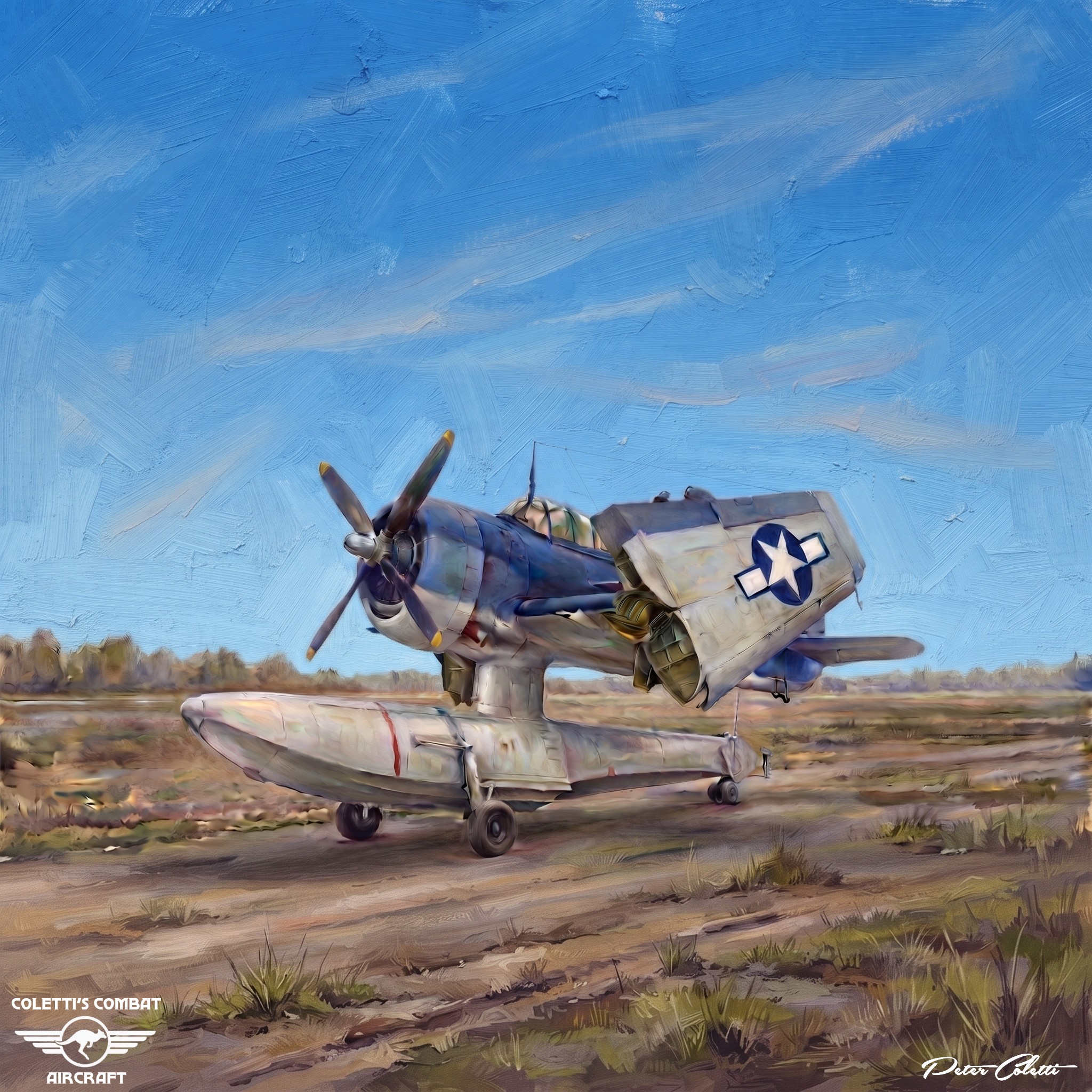
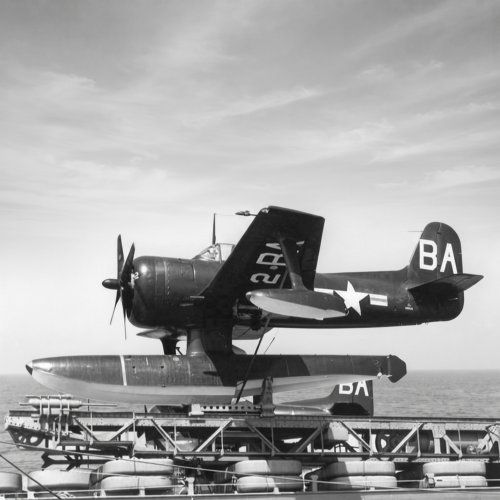
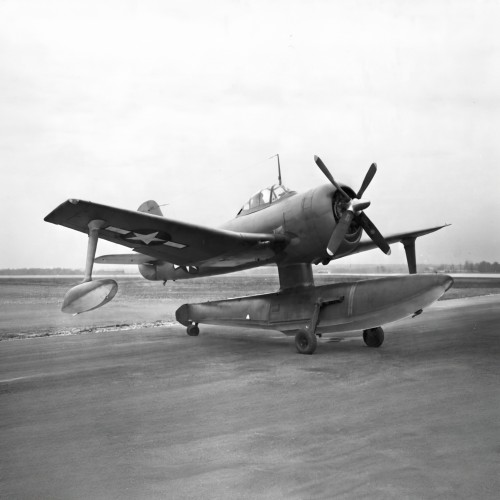
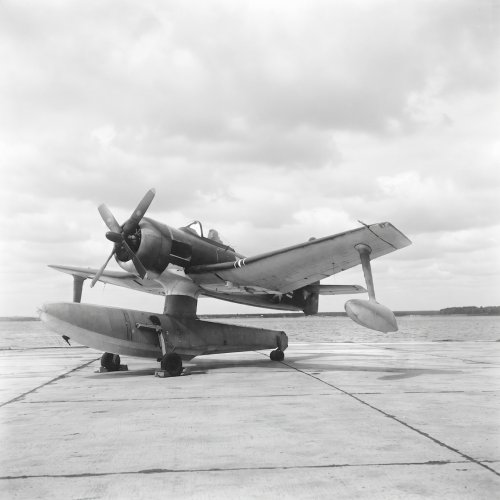
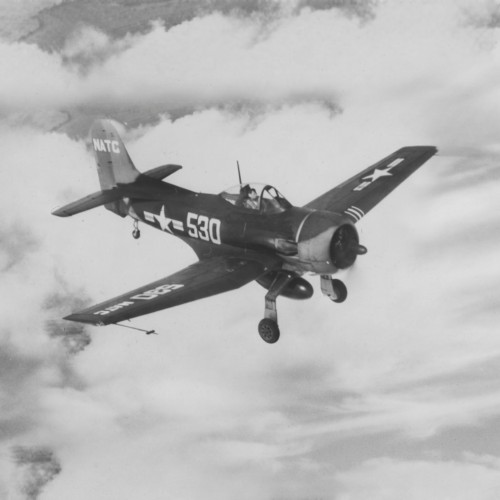
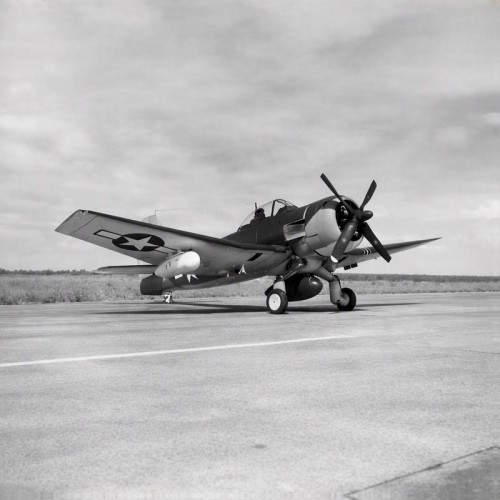
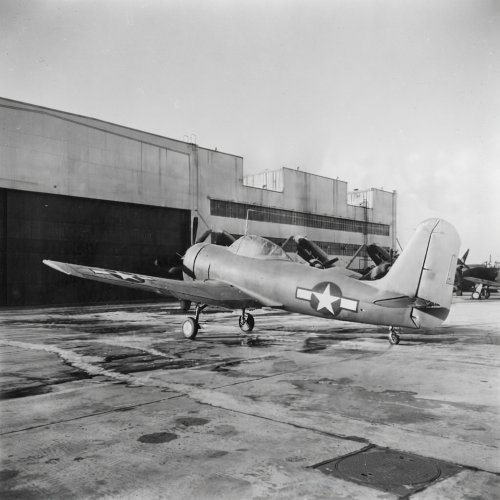
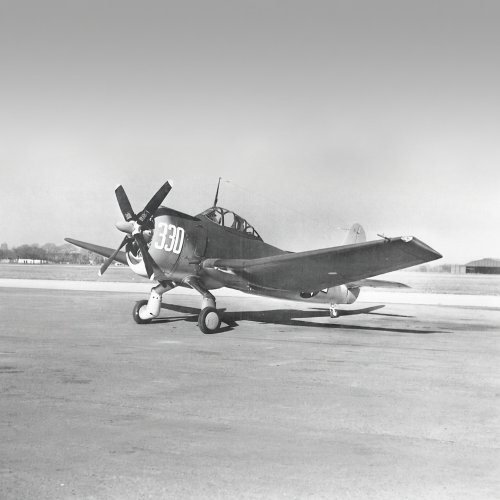
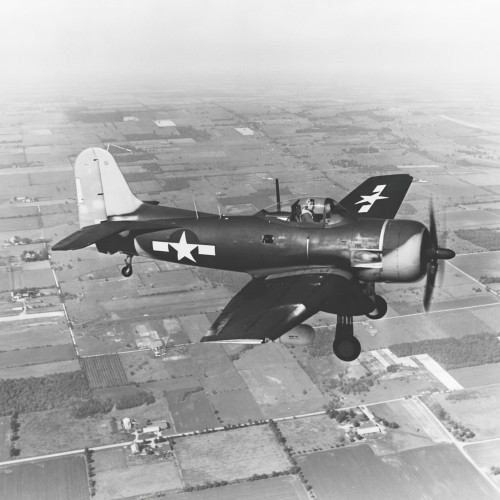
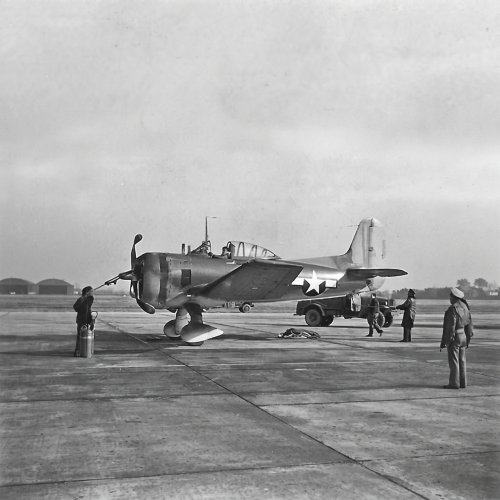
The Curtiss SC Seahawk was the final purpose‑built U.S. Navy scout seaplane of the Second World War, conceived to replace ageing prewar floatplanes and to deliver substantially improved performance, versatility, and survivability.
Although it ultimately proved to be the most capable American floatplane scout of the conflict, its late arrival meant that it saw only limited wartime action.
Origins and Development (1942–1944)
The Seahawk originated from a June 1942 U.S. Navy Bureau of Aeronautics requirement for a modern observation and scout seaplane to supersede the Curtiss SO3C Seamew and Vought OS2U Kingfisher, both dating to 1937 and increasingly inadequate by mid‑war.
Curtiss submitted its proposal on 1 August 1942, designated Model 97, and received a contract on 25 August 1942 for two prototypes and five service‑test aircraft.
Production urgency was high: the Navy ordered 500 SC‑1s in June 1943, even before the first prototype flew.
The first prototype, designated XSC‑1, flew on 16 February 1944 from Curtiss’s Columbus, Ohio, plant.
Flight testing continued through 28 April 1944, culminating in seven pre‑production aircraft.
By October 1944, the first production aircraft were delivered to USS Guam, marking the type’s operational debut.
Design Characteristics
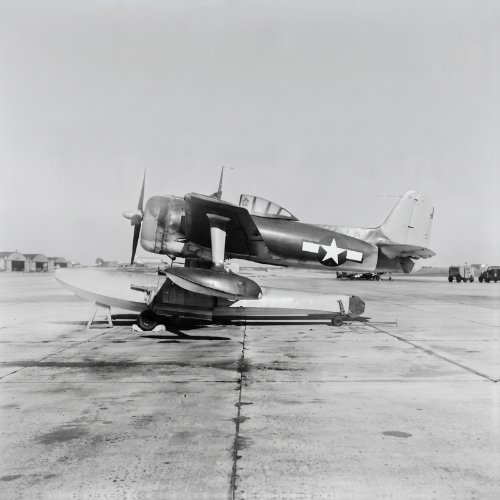
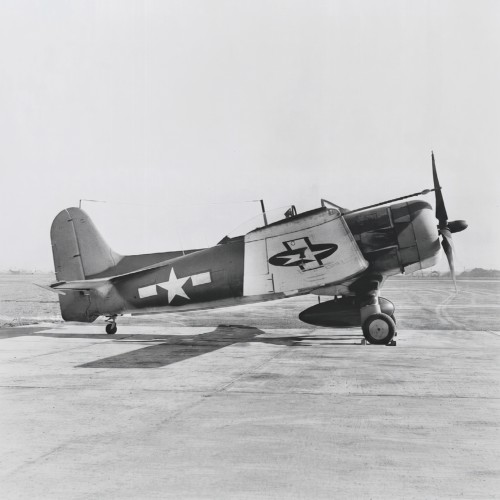
The Seahawk was a single‑seat, all‑metal, low‑wing monoplane designed for rapid conversion between floatplane and wheeled landplane configurations.
This dual‑mode capability allowed operation from battleship and cruiser catapults, aircraft carriers, and shore bases.
Key design features included:
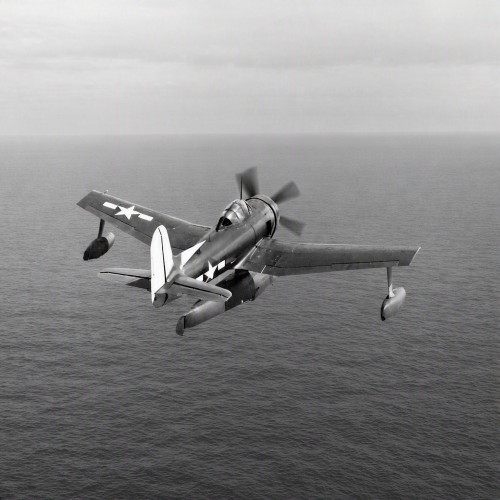
Foldable wings with pronounced dihedral on the outer panels, enabling compact stowage aboard warships.
A large central Edo float shared attachment points with the main landing gear; the float originally incorporated a bomb bay, but persistent leakage forced a redesign to carry auxiliary fuel instead.
The wingtip stabiliser floats for water operations.
A Wright R‑1820‑62 Cyclone 9‑cylinder radial engine producing 1,350 hp, driving a three‑blade propeller.
A small bunk in the aft fuselage for personnel transfer or rescue—unusual for a single‑seat scout aircraft.
Armament: two 0.5‑inch (12.7 mm) M2 Browning machine guns in the wings, plus two underwing hardpoints capable of carrying 250‑lb bombs or a surface‑scan radar pod on the starboard wing.
The aircraft’s structure emphasised durability and ease of maintenance, reflecting lessons learned from earlier floatplanes that suffered from corrosion, structural fatigue, and insufficient power.
Performance
The Seahawk delivered fighter‑like performance for a floatplane, a major improvement over its predecessors.
Key performance figures (SC‑1):
Maximum speed: 313 mph (504 km/h)
Cruise speed: 125 mph (201 km/h)
Range: ~620 miles (543 nm / 1,010 km)
Service ceiling: 37,300 ft (11,400 m)
Rate of climb: 2,500 ft/min (13 m/s)
Take-off weight: ~9,000 lb (4,082 kg)
These capabilities made the SC‑1 the most advanced U.S. Navy floatplane ever fielded, combining high-altitude performance, a strong climb rate, and a respectable range.
Operational Service and WWII Context
Although designed during the critical middle years of WWII, the Seahawk entered service too late to participate in most major naval campaigns.
Its first combat involvement occurred only in June 1945, during the pre‑invasion bombardment of Borneo, where it performed reconnaissance and spotting duties.
By the time the Seahawk reached frontline units, the strategic environment had shifted:
Helicopters were beginning to replace seaplanes for rescue and observation roles.
Battleship and cruiser catapult operations were declining as carrier aviation dominated naval air power.
The war ended before the aircraft could demonstrate its full potential.
Nevertheless, the Seahawk served into the late 1940s, operating from ships such as USS Alaska, USS Duluth, USS Manchester, and USS Birmingham.
It remained in service until retirement in 1949, with 577 aircraft built.
Variants
XSC‑1 (Prototype)
The initial prototype series, used for aerodynamic refinement and systems testing.
First flight: 16 February 1944.
SC‑1 (Production Model)
The main production version, with 500 ordered and 577 ultimately built.
Delivered initially as landplanes, with floats installed at naval air stations as required.
XSC‑2 / SC‑2 (Improved Variant)
An improved design featuring:
More powerful R‑1820‑76 engine (1,063 kW)
Clear blown canopy
Jump seat behind the pilot
Although a production contract was issued, only 10 SC‑2s were delivered before the war ended, and the type did not enter full service.
Assessment and Legacy
The Curtiss SC Seahawk represented the culmination of U.S. Navy floatplane development, combining high performance, rugged construction, and operational flexibility unmatched by earlier designs.
Its ability to operate as either a floatplane or landplane, its foldable wings, and its powerful Cyclone engine made it ideally suited for late‑war naval reconnaissance.
However, its late introduction meant that it played only a minor role in WWII.
By the postwar period, the Navy rapidly transitioned to helicopters and carrier‑based aircraft, rendering catapult‑launched floatplanes obsolete.
The Seahawk thus stands as both the best and last of its kind in U.S. service.