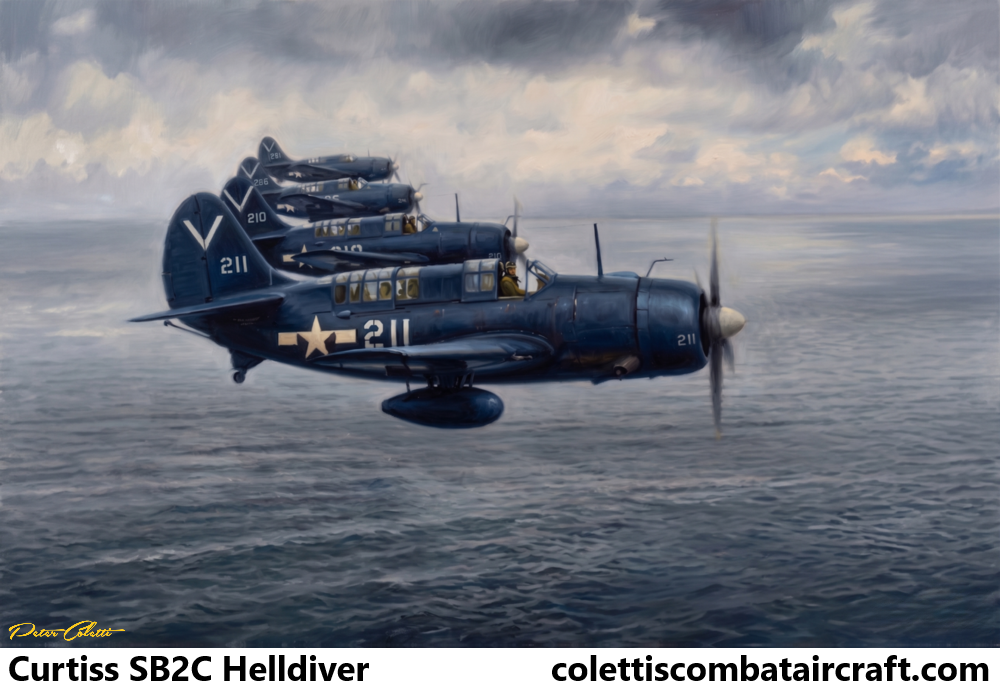
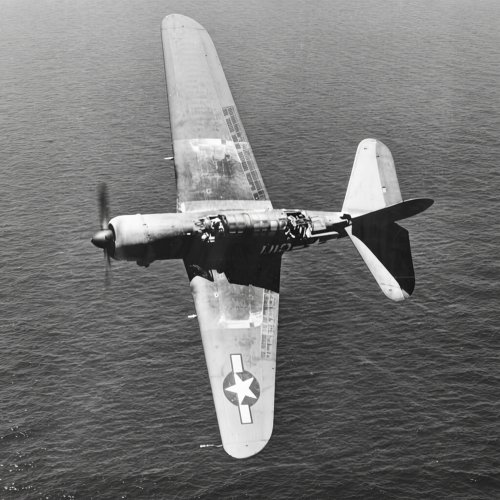
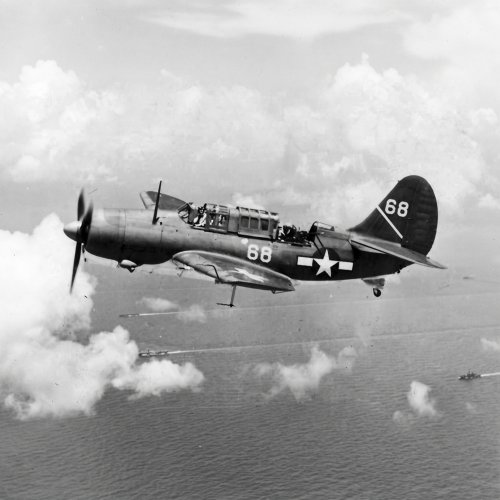
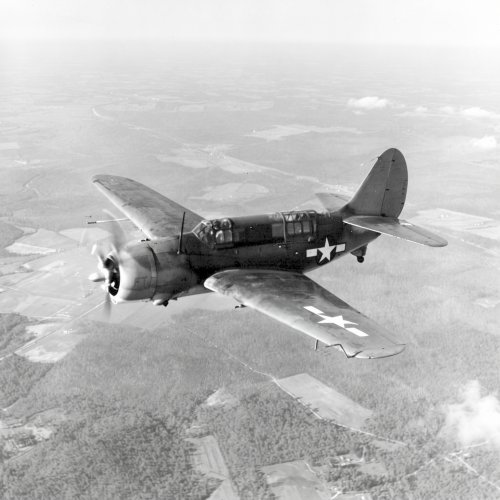
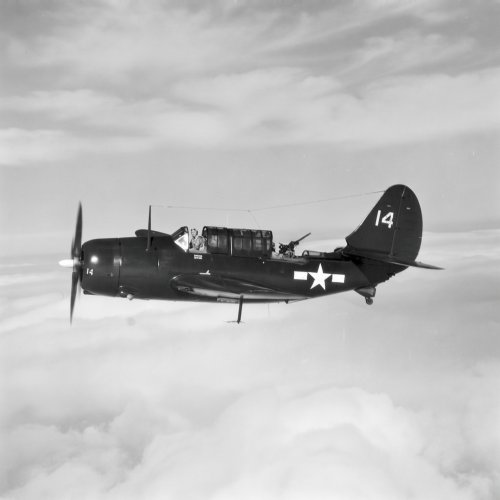
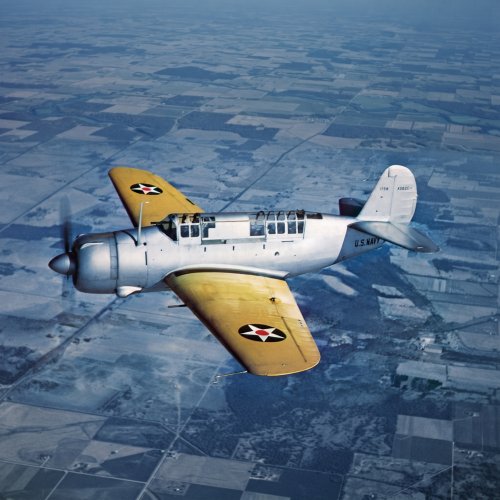
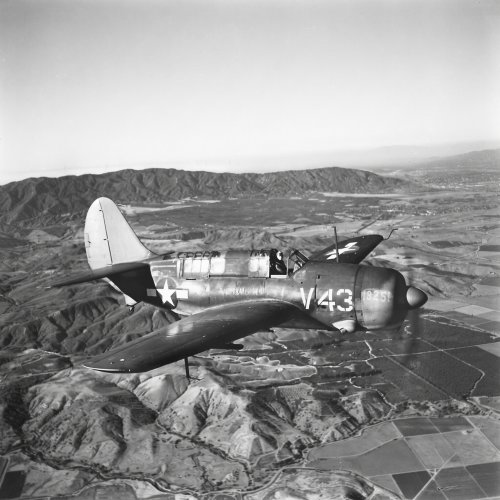
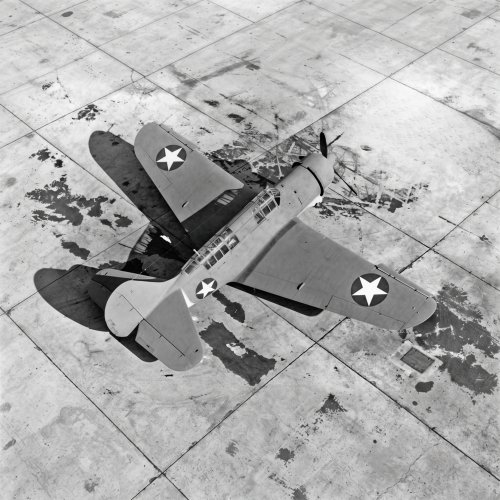
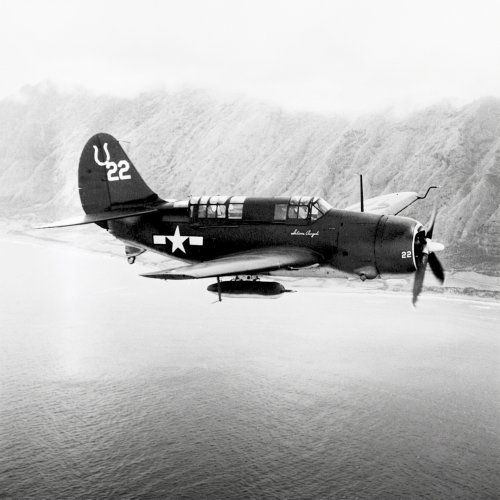
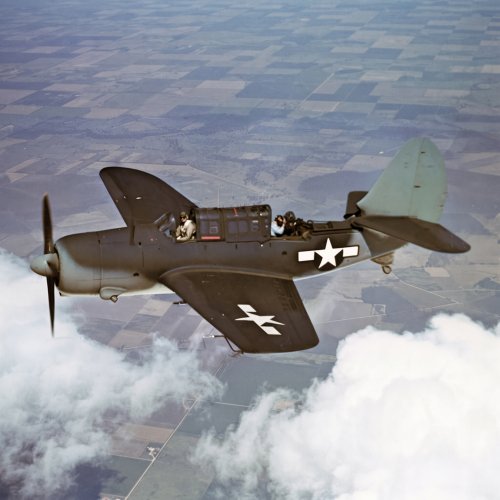
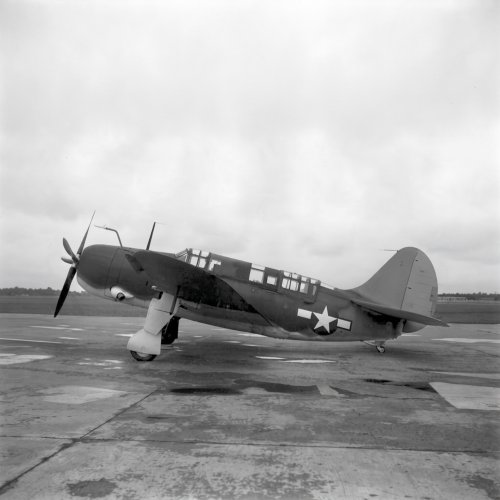
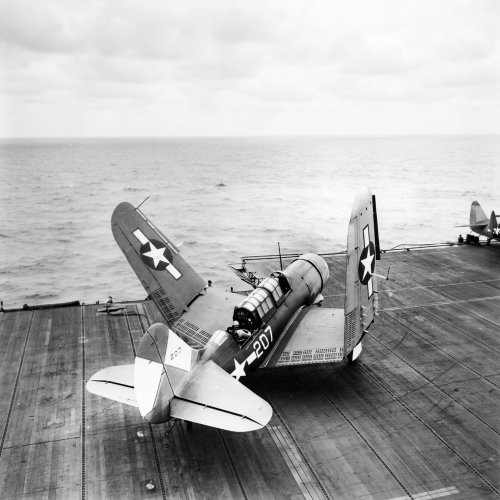
The Curtiss SB2C Helldiver was the United States Navy’s final purpose‑built dive bomber of the Second World War, intended as the modern successor to the Douglas SBD Dauntless.
Although it ultimately became the Navy’s primary carrier‑based attack aircraft by the end of the Pacific War, its path to service was marked by severe developmental problems, structural failures, production delays, and widespread dislike among pilots and carrier commanders.
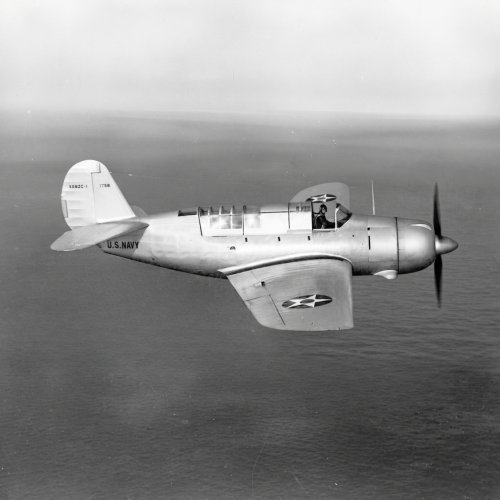
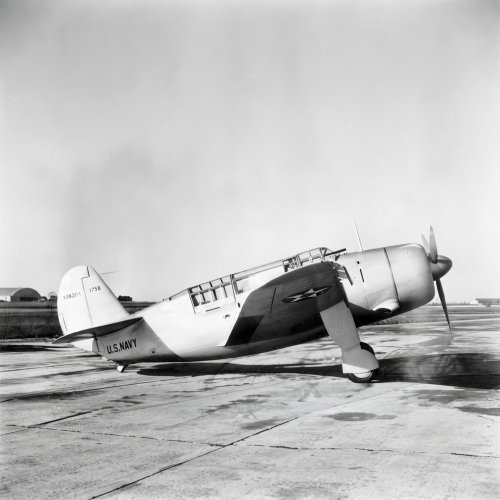
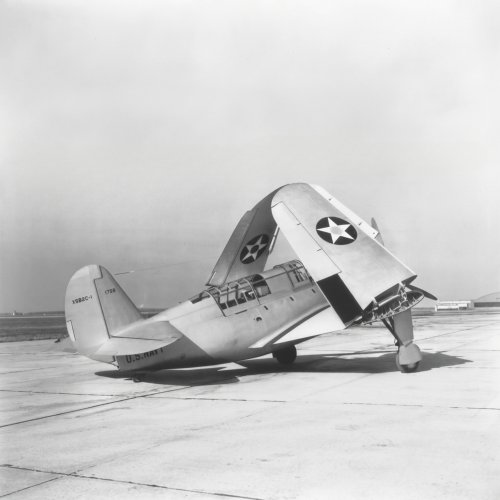
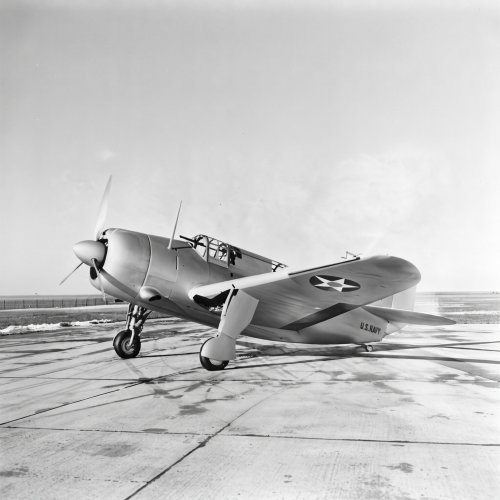
Curtiss XSB2C-1
Origins and Development
The Helldiver originated from a 1938 U.S. Navy specification calling for a more powerful, modern dive bomber with folding wings, greater internal capacity, and compatibility with the new Essex‑class carriers, which required two aircraft to fit on a single elevator—forcing strict dimensional limits.
Curtiss designed the aircraft as the XSB2C‑1, a large, all‑metal monoplane with an internal bomb bay, tandem crew, and a Wright R‑2600 radial engine.
The prototype first flew on 18 December 1940 but immediately revealed serious flaws: poor handling, directional instability, structural weaknesses, and dangerous stall characteristics.
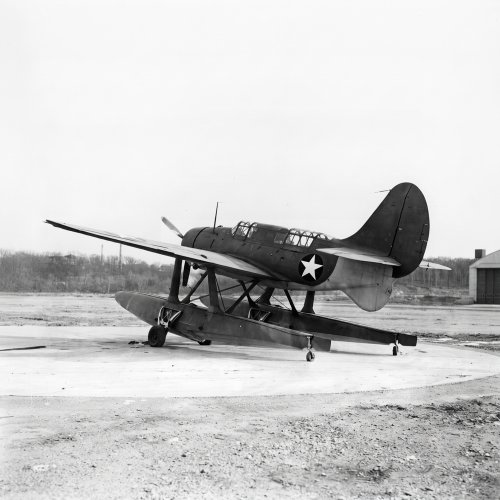
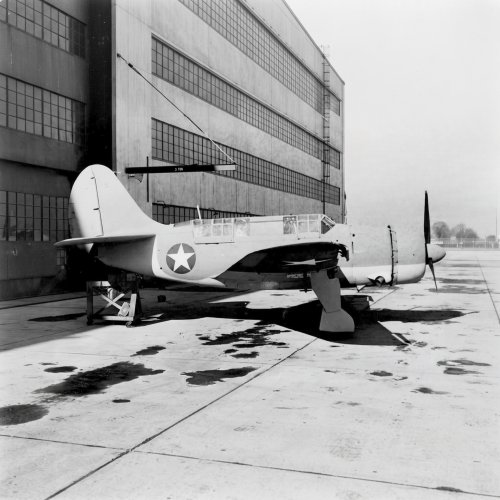
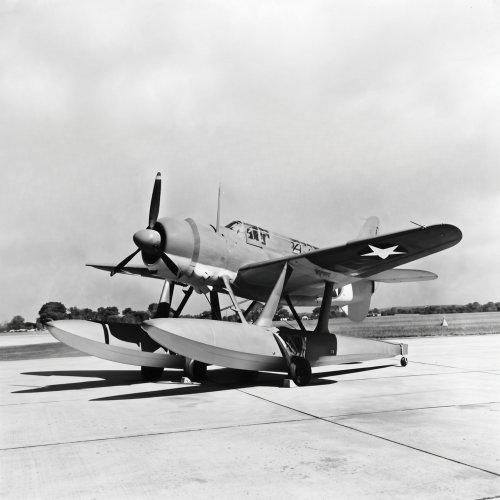
Curtiss XSB2C-2
The first prototype crashed on 8 February 1941 after an engine failure on approach.
Curtiss rebuilt it with a lengthened fuselage, enlarged tail surfaces, and an autopilot to compensate for instability.
The revised prototype flew again on 20 October 1941, only to suffer a catastrophic wing failure during diving tests on 21 December 1941.
Curtiss SB2C-4
Despite these failures, the Navy had already ordered large‑scale production on 29 November 1940, forcing Curtiss to incorporate dozens of modifications while manufacturing was underway.
This contributed to major delays—so much so that the TBF Avenger entered service before the Helldiver, even though the Avenger’s development began two years later.
The aircraft’s troubled development became notorious enough to draw scrutiny from the Truman Committee, which issued a scathing report criticising Curtiss and the Navy’s management of the programme.
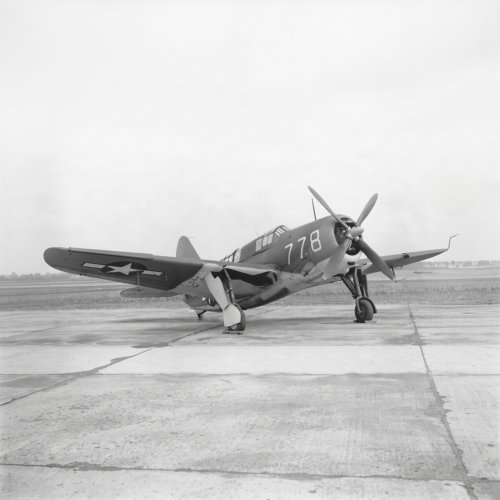
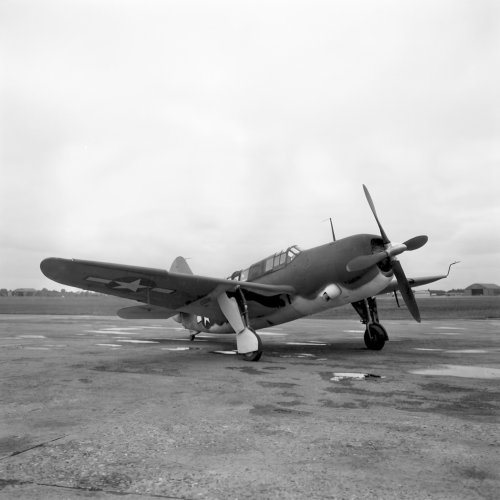
Curtiss SB2C-1
Design Characteristics
The SB2C was conceived as a large, powerful, multi‑role carrier aircraft with features demanded by both the Navy and Marine Corps.
These included:
Airframe and Layout
All‑metal monoplane with mid‑mounted folding wings for carrier storage.
Curtiss SBF-3
A long, two‑seat cockpit under a split greenhouse canopy.
Internal bomb bay to reduce drag and allow carriage of heavy ordnance.
Reinforced retractable landing gear and arrestor hook for carrier operations.
Enlarged tail surfaces added after prototype failures to improve stability.
Curtiss XSB2C-1
Powerplant
One Wright R‑2600 Cyclone radial engine (various sub‑models), initially 1,700 hp, later upgraded to 1,900 hp in later variants.
Curtiss XSB2C-1
Armament
Early models:
Four fixed 0.50-in. machine guns in the wings.
Two flexible 0.30-in. machine guns in the rear cockpit.
Curtiss SB2C-1
Later models:
Two fixed 20 mm Hispano cannons in the wings.
Ordnance options included:
Up to 1,600 lb armour‑piercing bomb or 1,000 lb demolition bomb internally.
Torpedo capability in the bomb bay.
Underwing racks for bombs, depth charges, rockets, or drop tanks.
Curtiss SBF-3
Dimensions (SB2C‑1C example)
Length: 49 ft 9 in
Wingspan: 36 ft 8 in
Height: 16 ft 11 in
Wing area: 422 sq ft
Curtiss XSB2C-2
Performance
Performance varied across variants, but representative figures include:
Maximum speed: 295 mph at 16,700 ft; 270 mph at sea level.
Cruise speed: 158 mph.
Service ceiling: 29,100 ft.
Range: 1,165 miles with a bomb load; 1,895 miles as a scout.
Climb rate: 30 ft/sec.
The Helldiver was faster than the SBD Dauntless, but its handling—especially at low speeds—was widely criticised.
Pilots nicknamed it the “Beast”, “Big‑Tailed Beast”, and “Son‑of‑a‑Bitch 2nd Class”.
SB2C‑3
Production
Total production reached 7,140 aircraft across all variants and manufacturers.
U.S. Army Air Forces: 900 A‑25/SB2C‑1A (most transferred to USMC).
Canadian production: 1,194 SBF/SBW aircraft by Fairchild and Canadian Car & Foundry.
Variants
XSB2C-1
SB2C‑1
Early production model.
Four wing‑mounted 0.50-in. machine guns.
Numerous handling and structural issues.
SB2C-1
SB2C‑1C
Introduced 20 mm cannon armament.
Improved reliability.
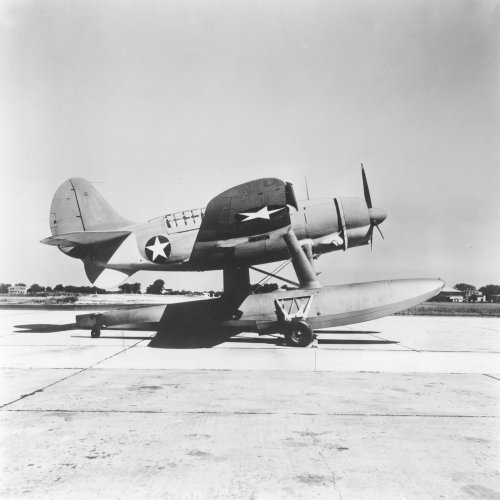
SB2C‑2
SB2C‑2
Experimental floatplane version; never produced.
SB2C‑3
SB2C‑3
Upgraded R‑2600‑20 engine (1,900 hp).
Four‑bladed propeller.
Perforated dive brakes were added later to reduce buffeting.
SB2C‑4
SB2C‑4
Increased ordnance capacity.
Could carry eight 5‑inch rockets under the wings.
Curtiss XSB2C-5
SB2C‑5
Final major production variant.
Increased fuel capacity to 355 gallons.
Improved range and reliability.
Curtiss SB2C-3
Radar‑equipped variants
SB2C‑3E and SB2C‑4E carried APS‑4 airborne radar for scouting and night operations.
Curtiss XSB2C-1
Operational History and WWII Context
The Helldiver entered combat on 11 November 1943, flying from USS Bunker Hill in strikes against Japanese positions at Rabaul.
Although disliked, the aircraft gradually improved through successive modifications.
By late 1944 and 1945, the SB2C had become the primary dive bomber and attack aircraft aboard U.S. Navy carriers, replacing the SBD Dauntless.
Curtiss XSB2C-2
Combat Effectiveness
Despite its reputation, the Helldiver:
Sank more ship tonnage than any other U.S. aircraft in WWII, according to operational tallies.
Delivered heavy ordnance with greater speed and range than the Dauntless.
Supported major operations, including the Philippines, Iwo Jima, Okinawa, and strikes against the Japanese home islands.
Canadian Car & Foundry SBW-1
Foreign and Postwar Service
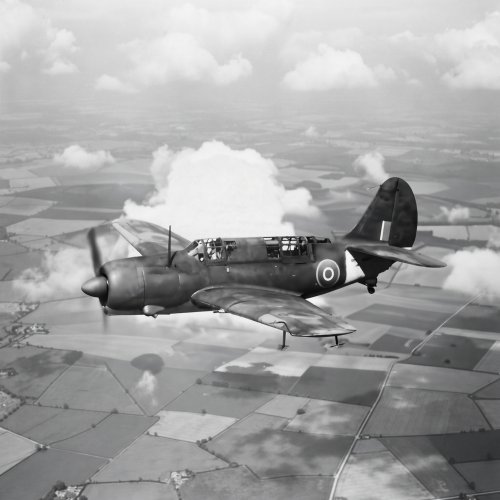
Large orders from the Royal Navy and Royal Australian Air Force were cancelled; only small numbers were evaluated.
Postwar operators included the French Navy and the Greek Air Force.
The type remained in service with Italy until 1959.
Curtiss XSB2C-5
Legacy
The Curtiss SB2C Helldiver is remembered as a paradox: a troubled, often‑criticised aircraft that nonetheless became a major contributor to Allied victory in the Pacific.
Its difficult development damaged Curtiss’s reputation, but its combat record—especially in ship‑sinking operations—was formidable.
By the end of WWII, the Helldiver had fully replaced the Dauntless and stood as the U.S. Navy’s principal dive bomber, marking the end of the dedicated dive‑bomber era as postwar doctrine shifted towards multi‑role attack aircraft.