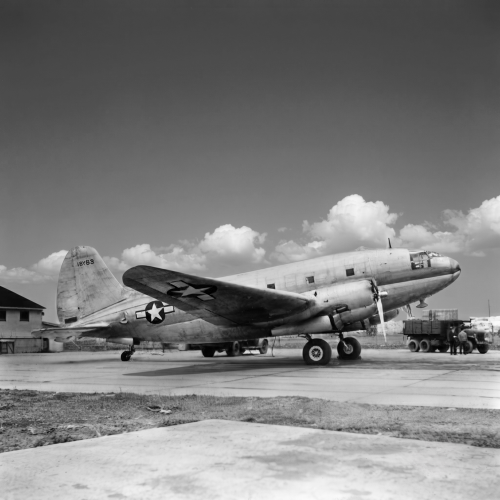
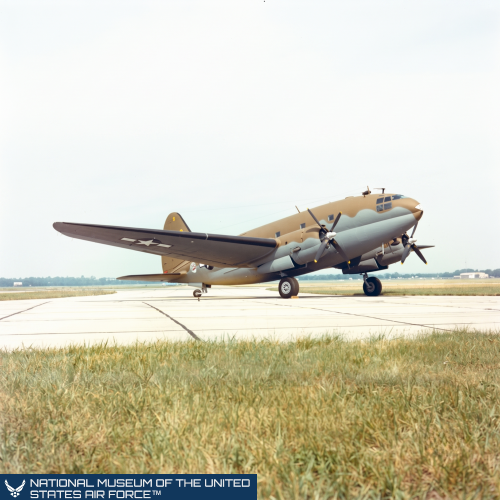
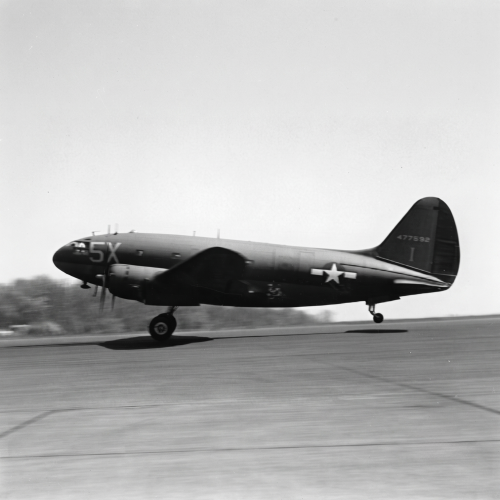
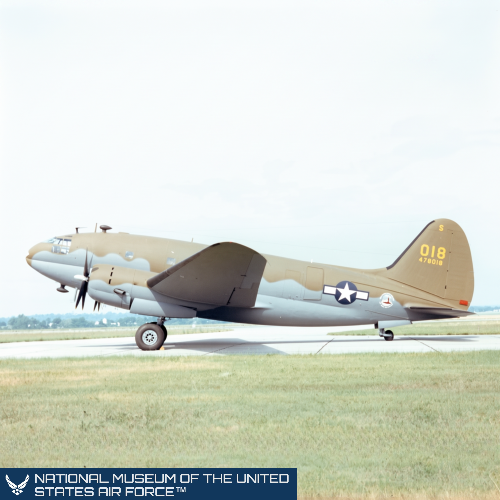
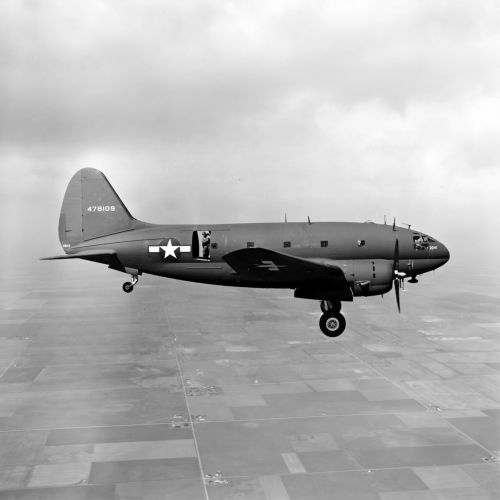
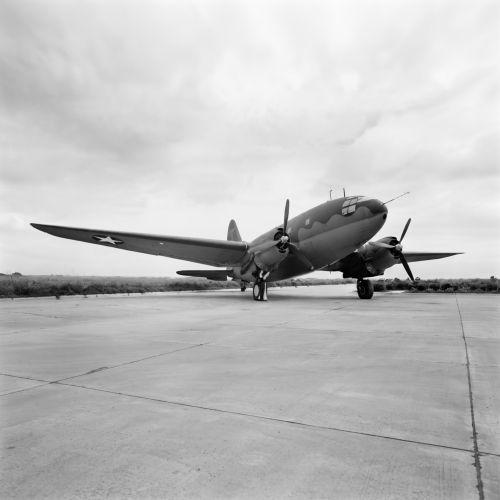
The Curtiss C‑46 Commando was one of the most significant American military transports of World War II, notable for its large capacity, high‑altitude performance, and its central role in the airlift over the Himalayan “Hump”.
Although overshadowed in fame by the Douglas C‑47 Skytrain, the C‑46 was larger, more powerful, and capable of carrying heavier loads, making it indispensable in demanding theatres such as the China‑Burma‑India (CBI) region.
Origins and Early Development
The C‑46 originated from a civilian airliner project, the Curtiss CW‑20, conceived in 1937 by Curtiss‑Wright’s chief designer George A. Page Jr.
The CW‑20 was intended to compete with advanced pressurized airliners like the Boeing 307 and Douglas DC‑4.
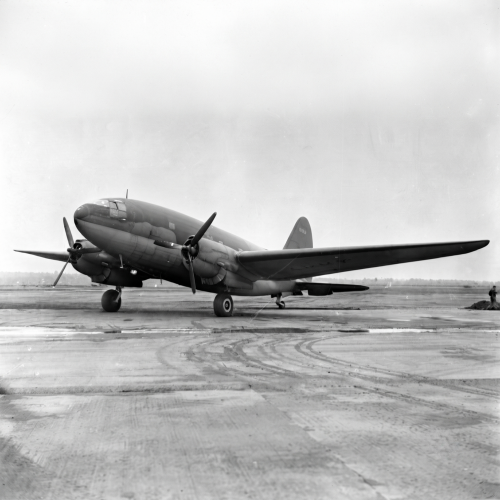
Its most distinctive feature was a patented “figure‑eight” or “double‑bubble” fuselage, designed to withstand pressure differentials at high altitude while maximising internal volume.
The lower bubble housed cargo and structural elements, while the upper bubble formed the passenger cabin.
The prototype CW‑20 first flew on 26 March 1940, initially with a twin‑tail and powered by Wright R‑2600 Cyclone engines.
It was later modified to a single‑tail configuration.
As war approached, the U.S. Army Air Corps recognised the potential of the design and placed early orders in 1940–41, transforming the CW‑20 into a military transport designated C‑46 Commando.
Design Characteristics
Airframe and Fuselage
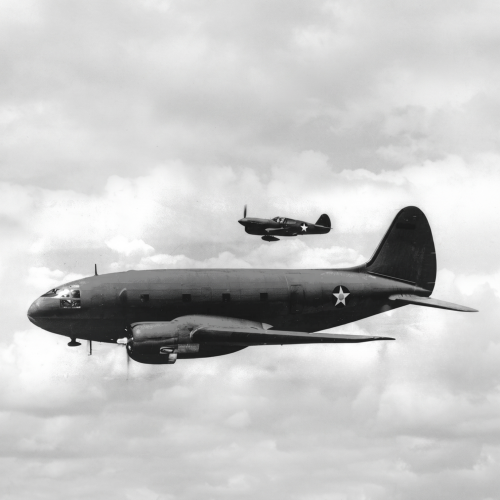
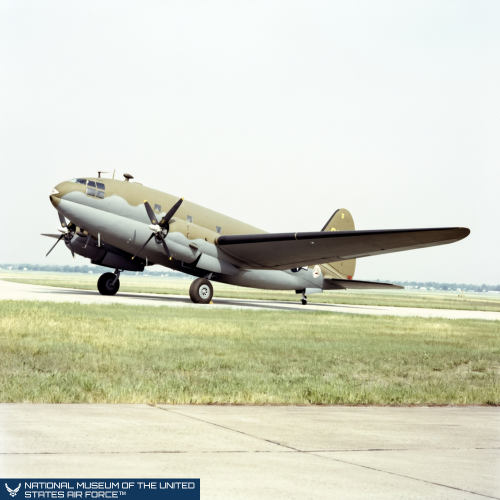
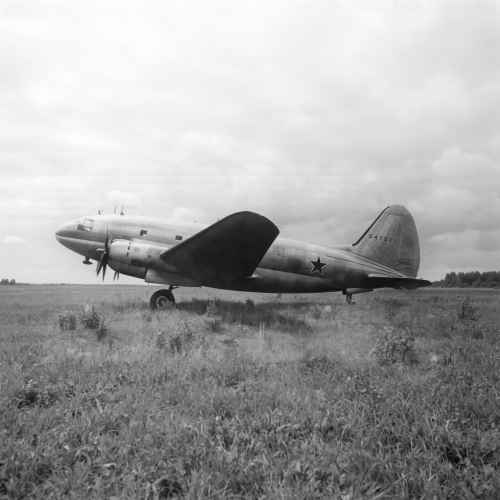
The C‑46 was a large, low‑wing, twin‑engine monoplane with retractable landing gear.
Its double‑bubble fuselage provided exceptional cargo volume, enabling it to carry bulky loads, vehicles, or large troop contingents.
The cabin floor was strengthened for heavy cargo, and large cargo doors were added for military use.
Powerplant
Production aircraft used two Pratt & Whitney R‑2800 Double Wasp 18‑cylinder radial engines producing 2,000 hp each, giving the C‑46 significantly more power than the C‑47.
Crew and Capacity
Typical crew consisted of pilot, copilot, and crew chief, with additional personnel as needed.
The aircraft could carry:
40–50 troops,
30+ stretcher patients,
or
up to 15,000 lb of cargo.
Performance
Key performance figures include:
Max speed: ~260–270 mph at 15,000 ft
Cruise speed: ~173–183 mph
Range: up to ~3,000 miles depending on load
Service ceiling: ~24,500 ft
Rate of climb: ~1,175 ft/min
These capabilities made it the largest and heaviest twin‑engine aircraft to serve in WWII.
Operational History and WWII Context
Entry into Service
Deliveries to the U.S. Army Air Forces began in July 1942, with the aircraft quickly adopted by the Air Transport Command and Troop Carrier Command.
The U.S. Navy and Marine Corps operated it as the R5C.
Global Deployment
The C‑46 served in every major theatre of WWII:
South Atlantic ferry routes supplying North Africa
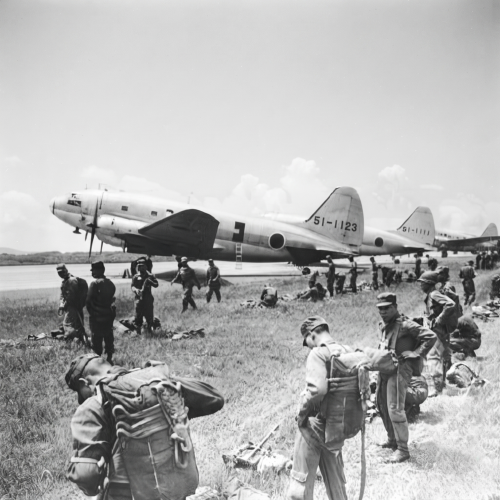
European theatre, including paratrooper drops during the Rhine crossing in 1945
Pacific and CBI theatres, where it achieved its greatest fame
The Hump Airlift
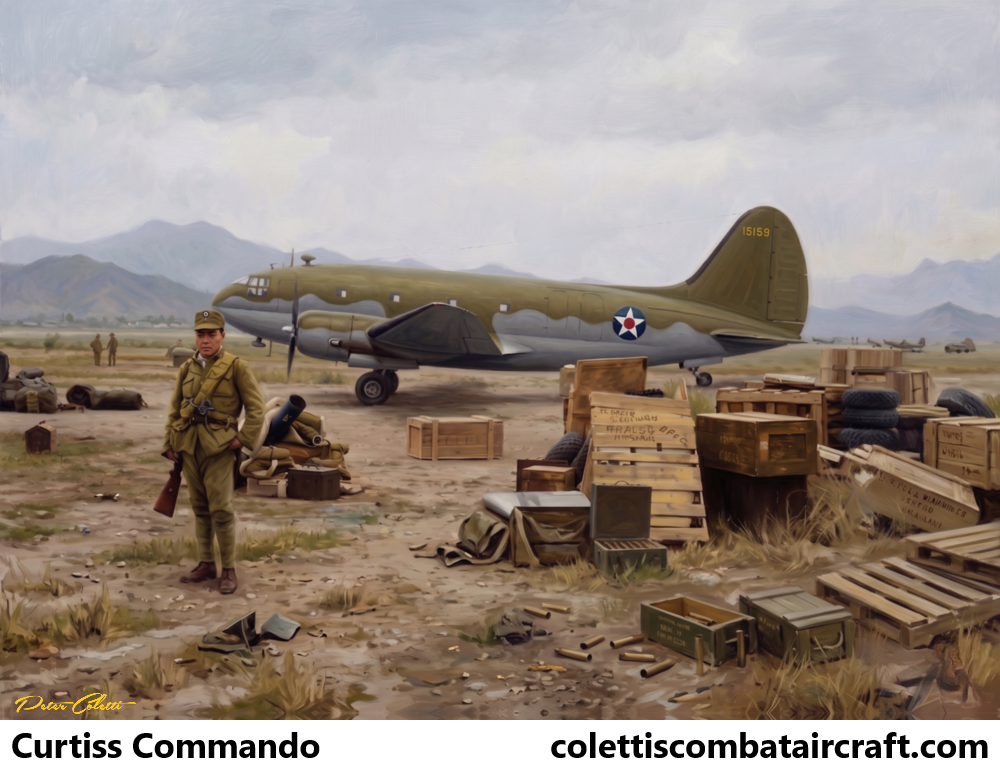
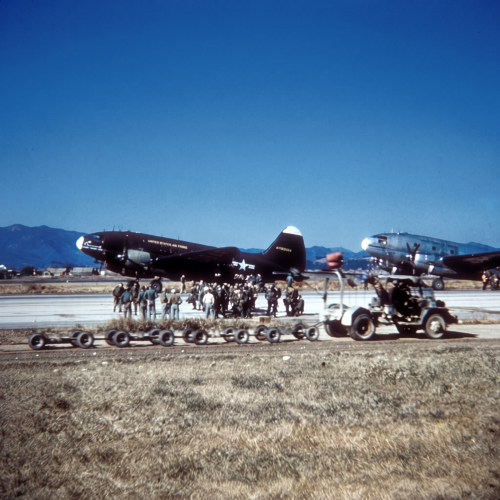
The aircraft’s defining role was flying supplies from India to China over the Himalayas, known as “the Hump.”
Beginning in May 1943, C‑46s carried fuel, ammunition, and critical materiel at altitudes where their powerful engines and large cargo capacity were essential.
However, the route was extremely hazardous, and the C‑46 suffered high loss rates due to weather, terrain, and maintenance challenges.
Despite this, its ability to carry more cargo than the C‑47 made it indispensable.
Operational Challenges
Early C‑46s were plagued by:
Hydraulic system failures, earning the nickname “plumber’s nightmare”
Instability at low speeds, making low‑altitude airdrops risky
High maintenance demands, especially in harsh environments
Over time, design improvements and field experience mitigated many issues, and crews came to appreciate its excellent visibility, roomy fuselage, and powerful controls.
Variants and Production
The C‑46 family eventually included 17 variants, though most production centred on the C‑46A and C‑46F.
Total production reached over 3,180–3,341 aircraft, depending on the source.
Major Variants
C‑46A: Strengthened floor, large cargo doors; most produced (~1,492 units).
C‑46D: Troop carrier variant; ~1,410 accepted by AAF.
C‑46F: Later production model with structural improvements.
XC‑46L: Experimental version with Wright R‑3350 engines (2,500 hp).
R5C‑1: U.S. Navy/Marine Corps designation.
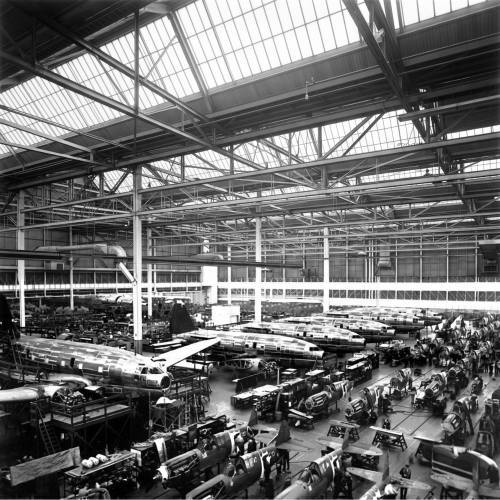
Production occurred at Curtiss facilities in Buffalo (NY), St. Louis (MO), and Louisville (KY), with a small cancelled order built by Higgins Industries.
Postwar Service and Legacy
After WWII, the C‑46 continued in U.S. service until 1968, though it struggled to gain widespread civilian adoption due to certification issues.
Many were used by cargo carriers, irregular airlines, and operators in remote regions.
By 1960, nearly 400 C‑46s remained in global airline service.
Today, a small number continue operating in rugged environments such as the Arctic.
The C‑46’s legacy rests on its role as a high‑capacity, high‑altitude workhorse, particularly in the CBI theatre.
Though less celebrated than the C‑47, it was crucial in missions where power, payload, and altitude performance mattered most.