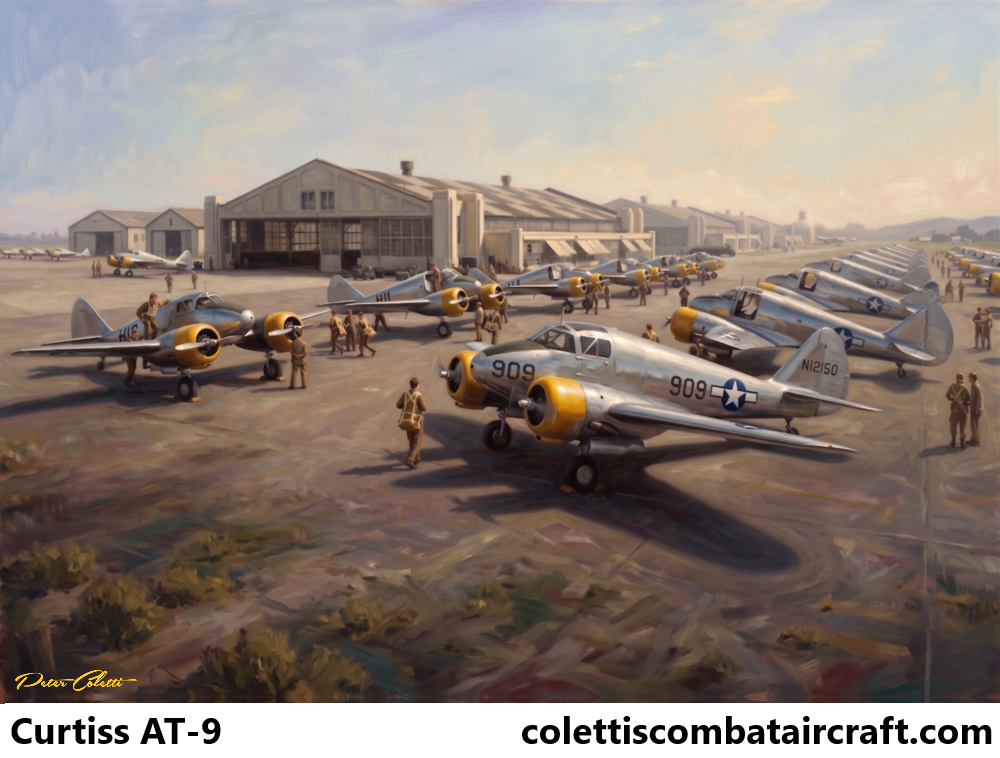
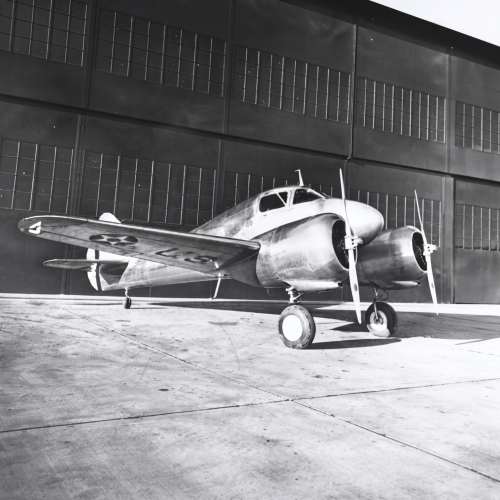
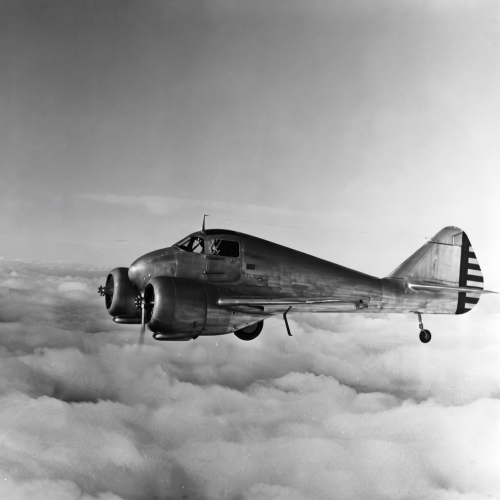
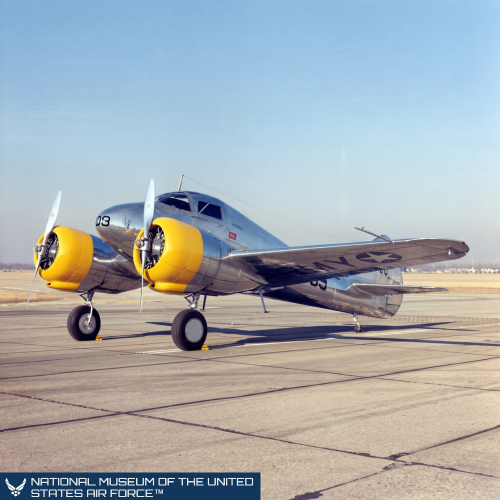
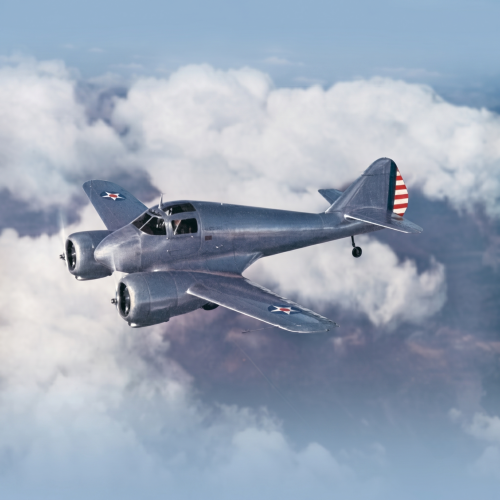
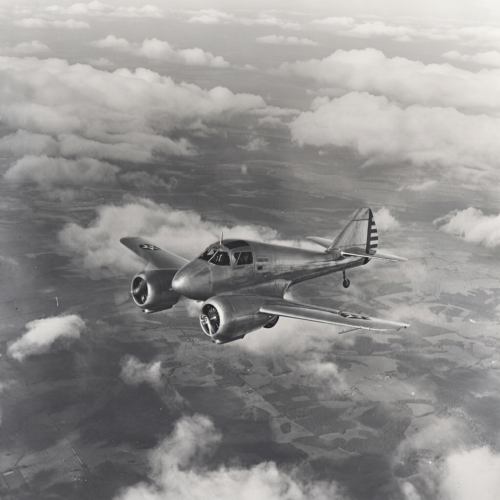
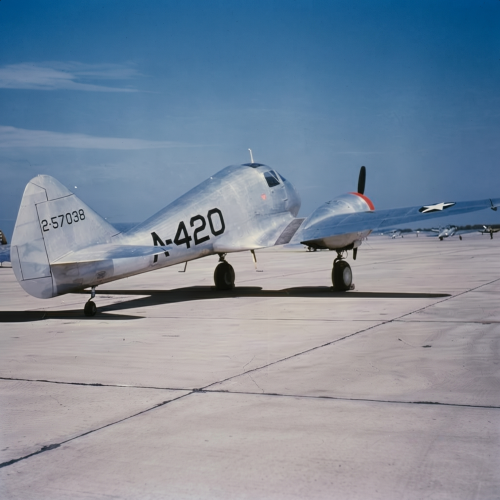
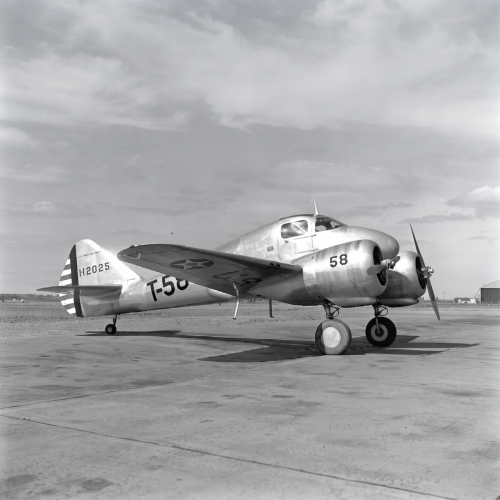
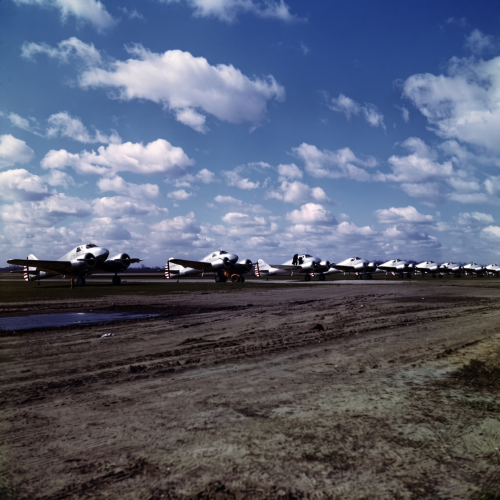
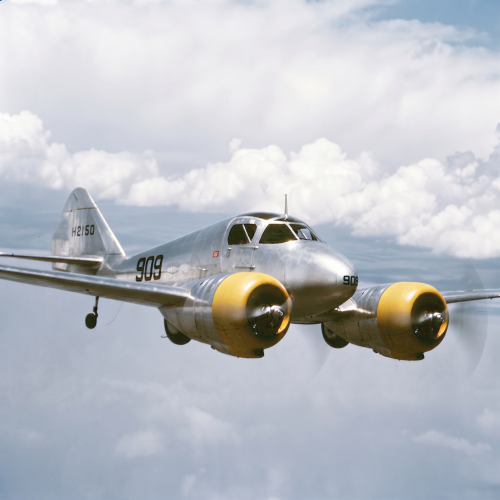
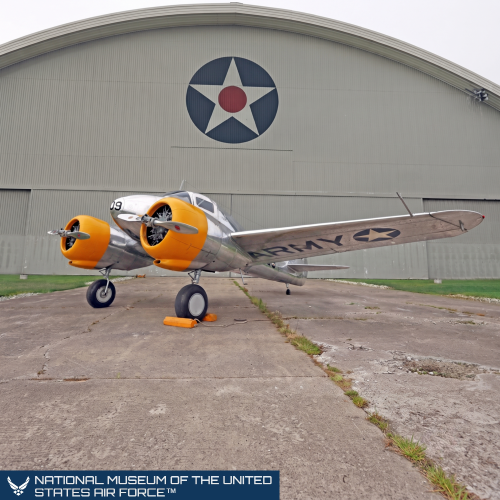
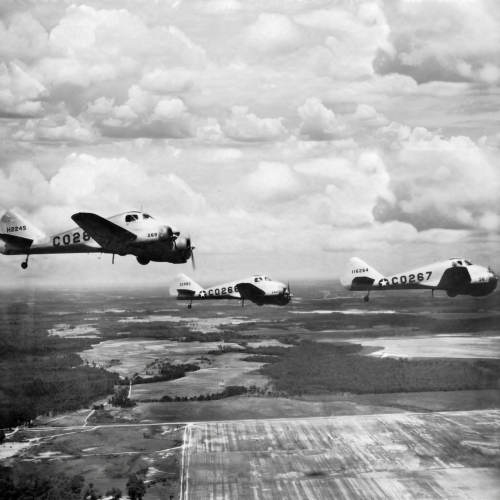
The Curtiss AT‑9, known officially as the Fledgeling but almost universally as the Jeep, emerged from a critical U.S. Army Air Corps requirement at the dawn of World War II.
By 1940–41, the rapid introduction of high‑performance twin‑engine aircraft—bombers such as the Martin B‑26 Marauder and fighters like the Lockheed P‑38 Lightning—created a dangerous training gap.
Pilots transitioning from forgiving single‑engine trainers (e.g., the T‑6 Texan) needed an intermediate aircraft that replicated the demanding handling of these new combat types.
Existing twin‑engine trainers such as the Cessna AT‑17 Bobcat and Beech AT‑11 Kansas were adequate for crew training but too stable for pilot‑transition work.
Curtiss‑Wright anticipated this need and developed the CW‑25, a compact, twin‑engine advanced trainer with the take‑off and landing characteristics of a light bomber.
The CW‑25 prototype flew in 1941, proving the concept and leading to production orders under the military designation AT‑9.
The aircraft entered service in 1942, just months after the U.S. entered WWII.
Design Characteristics
Airframe and Construction
The prototype CW‑25 used a welded steel‑tube fuselage with fabric‑covered wings and tail surfaces, but production AT‑9s adopted all‑metal stressed‑skin construction, reflecting the shift towards more modern monocoque techniques.
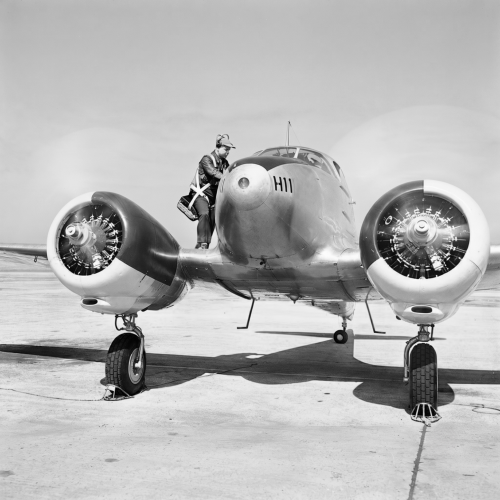
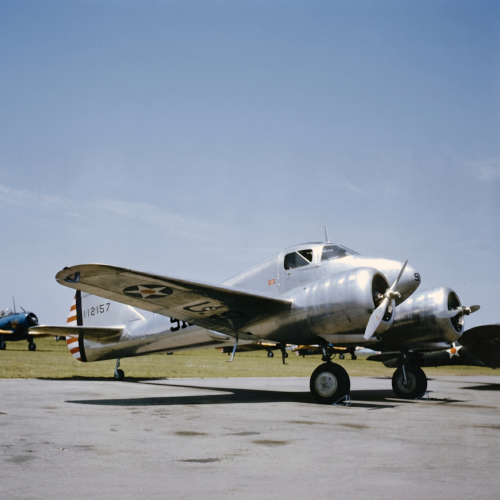
The aircraft was a low‑wing cantilever monoplane with a compact layout and seating for two—student and instructor.
Entry was via car‑type side doors, an unusual feature for a military trainer.
The main landing gear retracted rearward into the engine nacelles, while the tailwheel remained fixed.
Engines and Systems
The AT‑9 was powered by two Lycoming R‑680‑9 radial engines, each producing roughly 220 kW (300 hp).
The later AT‑9A variant used Lycoming R‑680‑11 engines and incorporated a revised hydraulic system.
Handling Philosophy
The AT‑9 was deliberately designed to be less stable than typical trainers.
Its flight characteristics were demanding, even unforgiving, making it difficult to fly and land.
This was intentional: the aircraft served as a “bridge” to high‑performance twins whose own reputations for tricky handling—especially the B‑26—were well known.
Pilots who mastered the AT‑9 were better prepared for frontline aircraft.
Performance
The following performance figures come from technical data in the search results:
Engines: 2 × Lycoming R‑680‑9 radial engines
Maximum speed: 317 km/h (197 mph)
Cruise speed: 282 km/h (175 mph)
Range: 1,207 km (750 miles)
Wingspan: 12.29 m (40 ft 4 in)
Length: 9.65 m (32 ft 8 in)
Height: 3.00 m (10 ft 10 in)
Wing area: 21.65 m² (233 sq ft)
Empty weight: 2,087 kg (4,601 lb)
Take-off weight: 2,722 kg (6,001 lb)
These numbers reflect a compact, relatively fast trainer with performance intentionally close to light bombers.
Operational History
The first prototype flew in 1941, and production aircraft entered service in 1942.
Curtiss built 491 AT‑9s, followed by 300 AT‑9As, for a total of 792 aircraft, including prototypes.
The AT‑9 served primarily with the United States Army Air Forces, training pilots destined for twin‑engine fighters and bombers.
Its short service life—roughly 1942 to 1943—reflected the rapid wartime development of more effective trainers and the urgent pace of pilot production.
Despite its brief career, the AT‑9 played a crucial role in preparing pilots for some of the war’s most demanding aircraft.
Because of its difficult handling, the AT‑9 was not sold to civilians after WWII.
Many non‑airworthy examples were transferred to ground schools for maintenance training.
Variants
CW‑25 — Prototype; fabric‑covered fuselage, wings, and tail.
AT‑9 — Initial production model; all‑metal stressed‑skin construction; powered by Lycoming R‑680‑9 engines; 491 built.
AT‑9A — Improved variant with Lycoming R‑680‑11 engines and updated hydraulics; 300 built.
WWII Context and Legacy
The Curtiss AT‑9 filled a narrow but vital niche in the U.S. wartime training pipeline.
As America expanded its air forces, the need for pilots capable of handling fast, heavy, and often unforgiving twin‑engine aircraft became urgent.
The AT‑9’s intentionally unstable characteristics made it an ideal stepping‑stone to frontline types whose reputations—especially the B‑26’s early accident rate—demanded rigorous preparation.
Although overshadowed by more numerous trainers, the AT‑9’s contribution was significant: it helped produce pilots who could safely operate the complex, high‑performance aircraft that defined U.S. airpower in WWII.