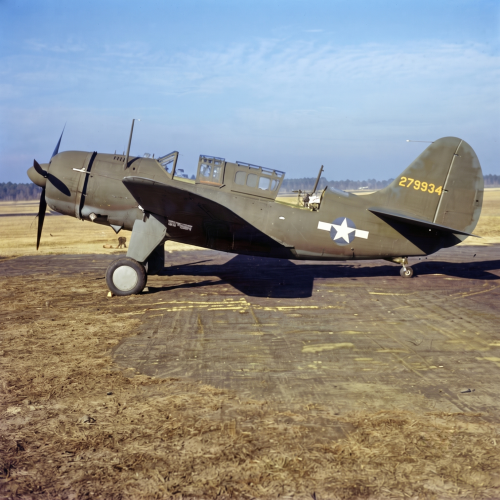
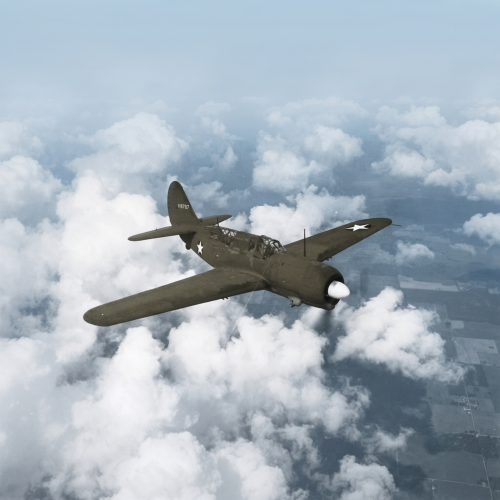
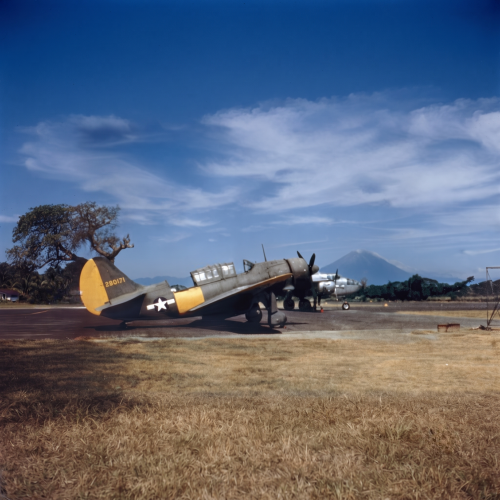
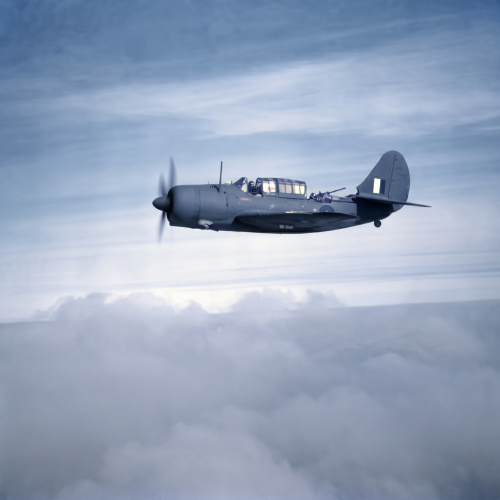
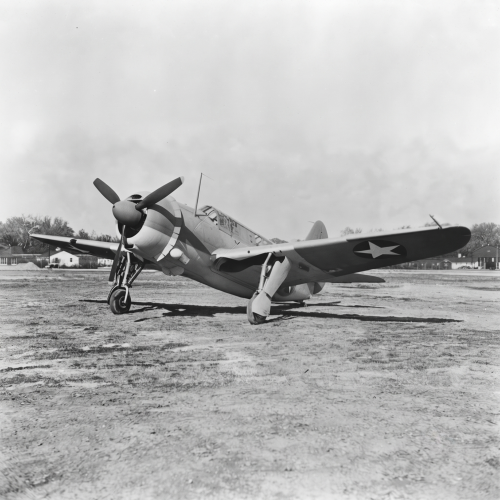
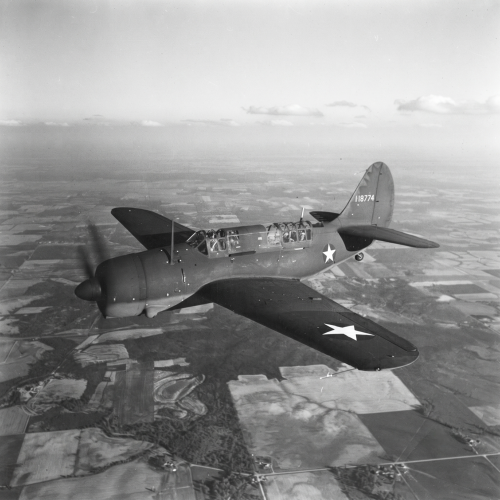
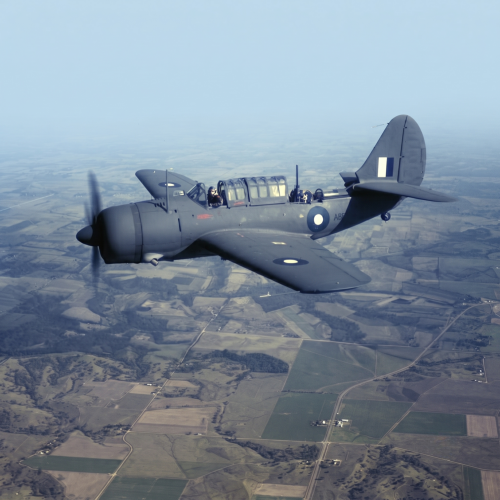
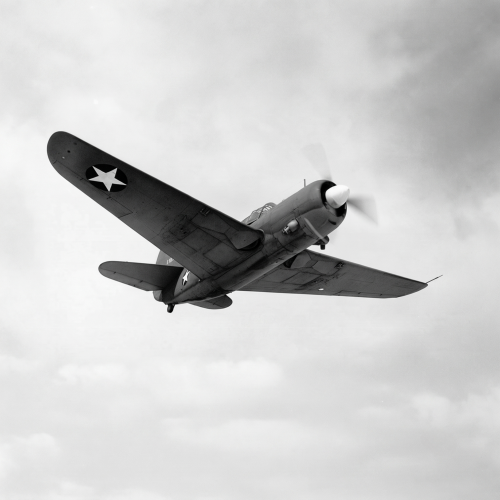
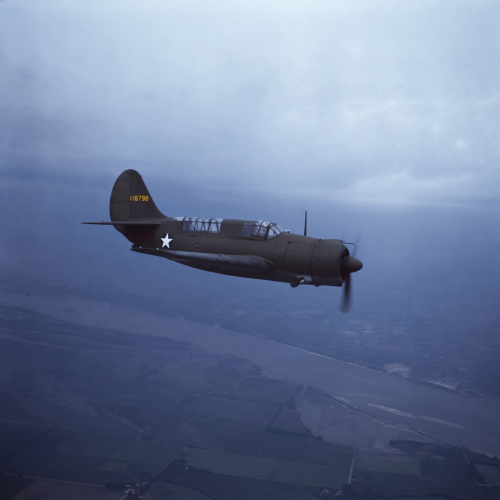
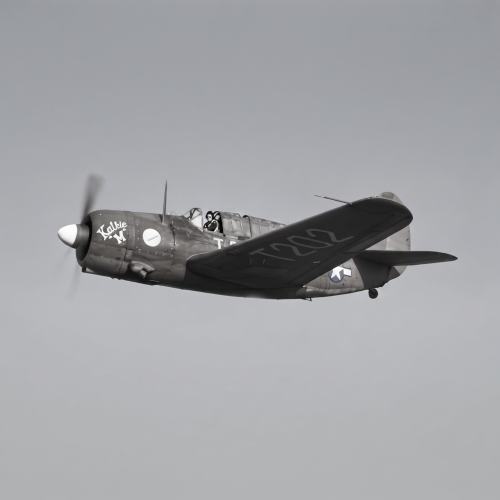
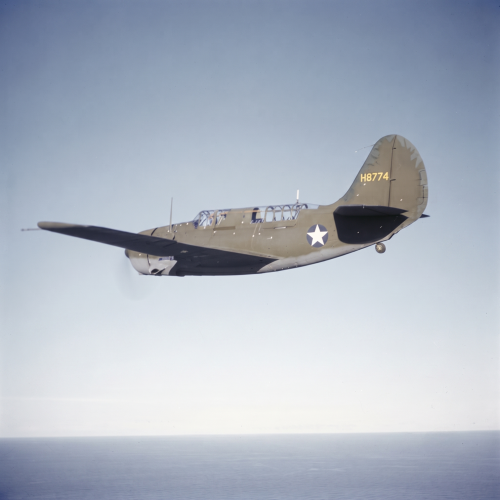
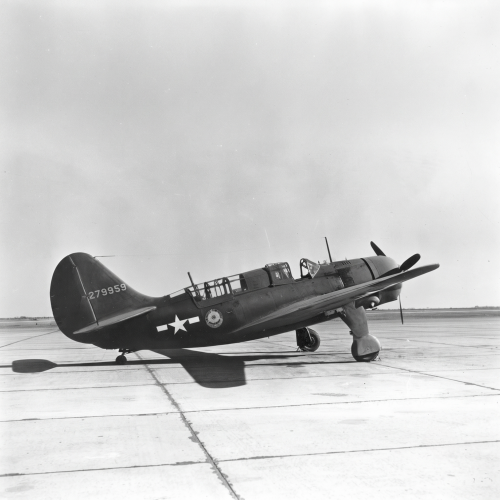
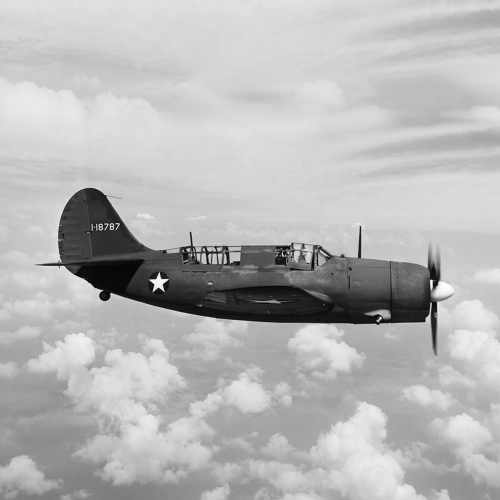
The A‑25’s story begins with the U.S. Navy’s 1938 requirement for a new carrier‑based scout/dive bomber to replace the Douglas SBD Dauntless.
Curtiss‑Wright responded with the XSB2C‑1, a stressed‑skin monoplane with an internal bomb bay, folding wings, and a powerful Wright R‑2600 engine.
The prototype first flew on 18 December 1940.
The Navy ordered the aircraft in large numbers even before the prototype flew, but development was plagued by structural failures, poor handling, and repeated redesigns.
One prototype disintegrated during a terminal‑velocity dive on 21 December 1941, and the first production aircraft crashed in January 1943.
Despite these issues, the Navy pressed ahead, ultimately procuring more than 7,000 Helldivers across Curtiss and Canadian licence‑production lines.
The Army Air Forces’ Requirement
Parallel to the Navy’s orders, the U.S. Army Air Forces (USAAF) sought a land‑based dive bomber for close support and interdiction.
In late 1940–41, the Army ordered 3,000 aircraft based on the SB2C design, designated A‑25 Shrike.
The Army’s version eliminated carrier‑specific features such as arresting gear and folding wings but retained the basic airframe, engine, and dive‑bombing capability.
Cancellation and Reallocation
By the time the A‑25 entered production in late 1943, Allied air doctrine had shifted decisively away from dedicated dive bombers in favour of fighter‑bombers such as the P‑47 Thunderbolt.
As a result:
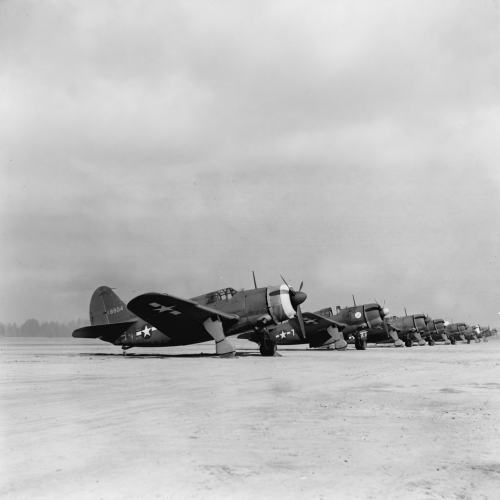
Only 900 A‑25s were completed before the Army cancelled the remainder of its order.
Most completed aircraft were transferred to the U.S. Marine Corps, which used them mainly as trainers and target tugs.
The type saw no combat service with the USAAF.
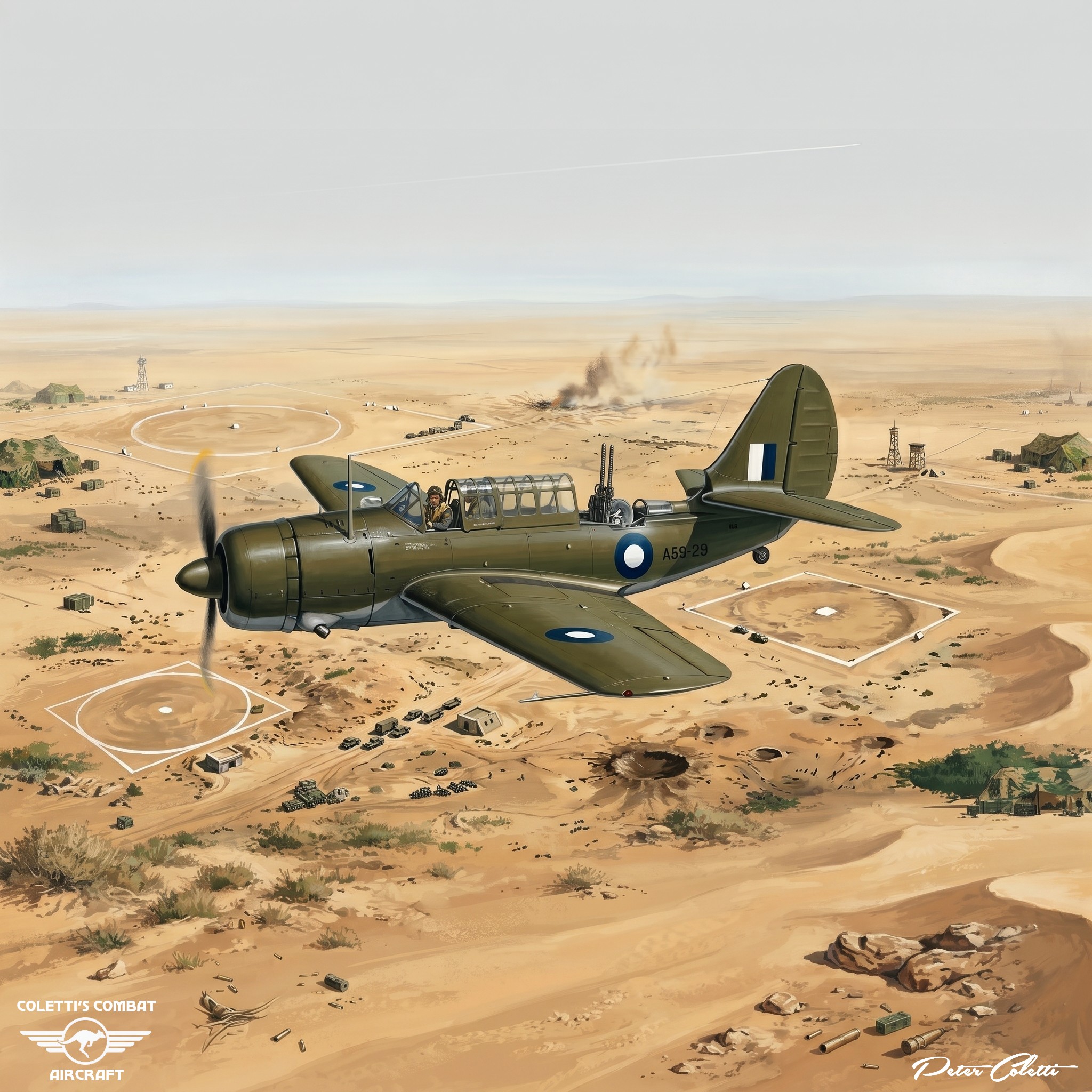
A small number were delivered to the Royal Australian Air Force, but these too were relegated to non‑combat roles.
Design and Technical Characteristics
Airframe and Structure
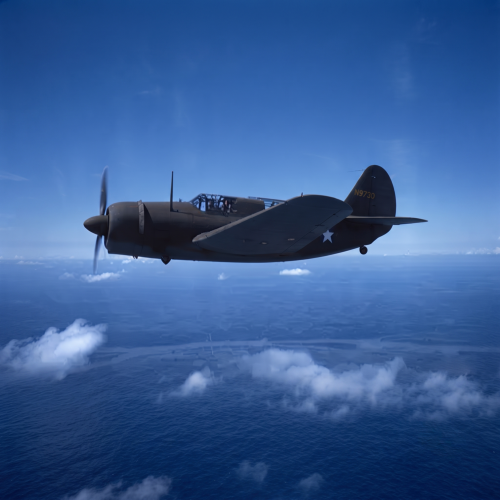
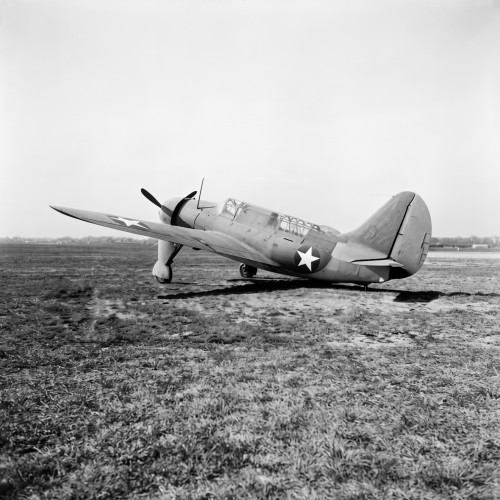
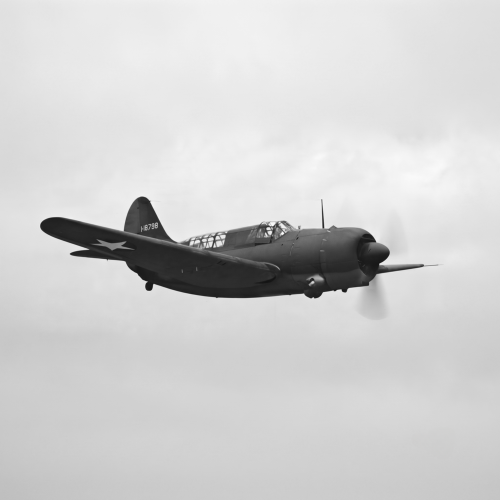
The A‑25 was a large, robust, all‑metal monoplane designed to survive steep dive‑bombing attacks. Key structural features included:
Cantilever low wing with stressed‑skin construction.
Two‑seat cockpit (pilot and rear gunner).
Internal bomb bay, unusual for a dive bomber, reducing drag and improving range.
Non‑folding wings (unlike the SB2C), simplifying the structure for land‑based use.
Dimensions (A‑25):
Length: 36 ft 7.7 in (11.17 m)
Wingspan: 49 ft 9.6 in (15.18 m)
Height: 14 ft 5.6 in (4.41 m)
Wing area: 128.7 ft² (39.20 m²)
Powerplant
The aircraft used the Wright R‑2600‑8 Twin Cyclone, a 14‑cylinder air‑cooled radial engine producing 1,700 hp.
This engine was shared with the SB2C and several other U.S. medium aircraft of the era.
Performance
Performance figures for the A‑25 Shrike:
Maximum speed: 275 mph (443 km/h)
Cruise speed: 240 mph (386 km/h)
Range: 1,193 miles (1,920 km)
Service ceiling: 26,804 ft (8,170 m)
Normal take-off weight: 15,999 lb (7,257 kg)
Empty weight: 9,832 lb (4,460 kg)
These numbers placed the A‑25 roughly on par with the Navy’s SB2C‑1C variant, though the Helldiver’s later versions were faster and had greater range.
Armament
The A‑25 carried a substantial weapons load:
Four fixed .50‑cal machine guns in the wings.
One .50‑cal flexible rear gun for defence.
Internal bomb loads up to 2,000 lb.
Two 500‑lb bombs on wing racks.
This made it one of the heaviest‑armed dive bombers ever fielded by the United States.
Operational Use and WWII Context
USAAF Non‑Employment
By the time the A‑25 was ready for service, the USAAF had concluded that dive bombers were obsolete.
Fighter‑bombers offered:
Higher survivability
Greater speed
More flexible mission profiles
Thus, no A‑25s were used in combat by the Army.
U.S. Marine Corps Service
Transferred A‑25s were used by the Marines primarily for:
Training
Target towing
Limited utility roles
They did not participate in major campaigns.
Variants
A‑25 Shrike (USAAF)
Land‑based dive bomber.
No carrier equipment.
900 built; remainder cancelled.
Used only for training and support roles.
A‑25A Shrike
Some sources refer to the production batch as A‑25A, though the Army did not operate it in combat.
The designation is often used interchangeably with A‑25 in historical literature.
Assessment and Legacy
The Curtiss A‑25 Shrike represents a transitional moment in U.S. airpower doctrine:
It was technically capable, with strong armament and respectable performance.
It was doctrinally obsolete by the time it arrived.
It served mainly as a training and support aircraft, overshadowed by the SB2C’s combat record.
Its cancellation reflected the broader shift towards fighter‑bombers and multirole aircraft.
The A‑25 remains historically significant as the Army’s last attempt to field a dedicated dive bomber and as a land‑based counterpart to one of the Pacific War’s most important naval attack aircraft.