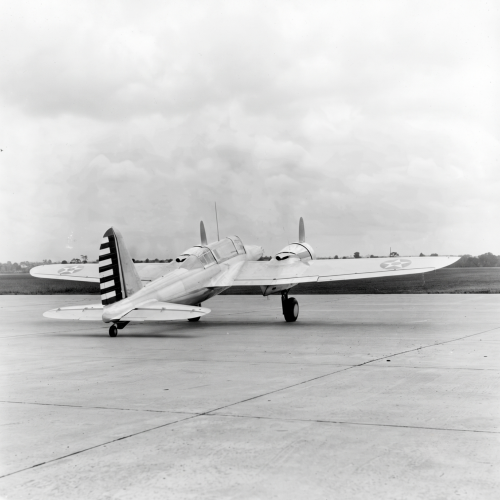
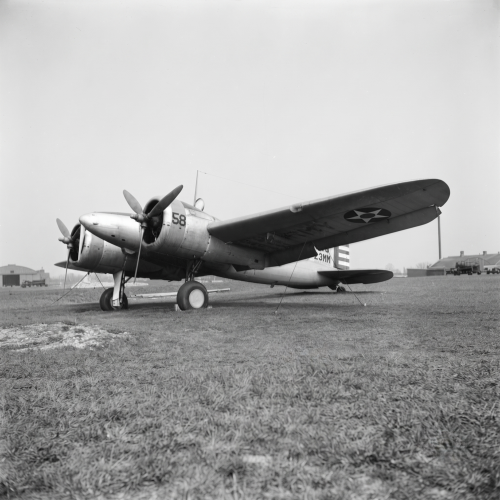
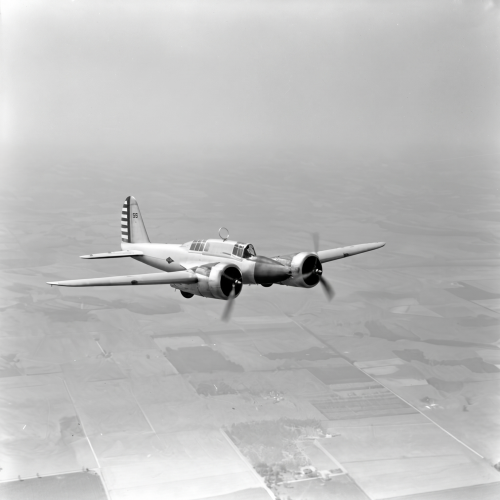
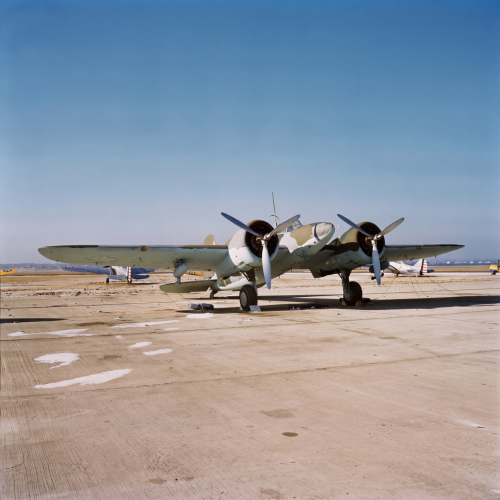
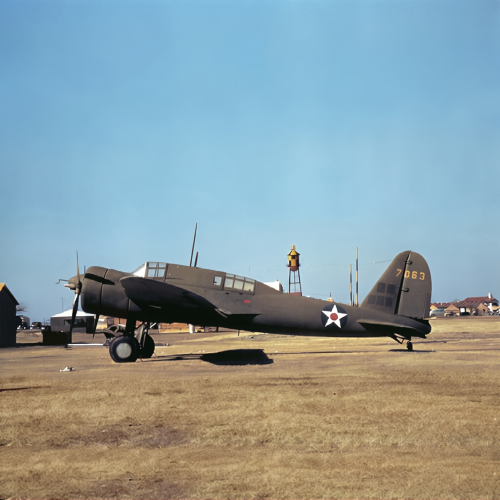
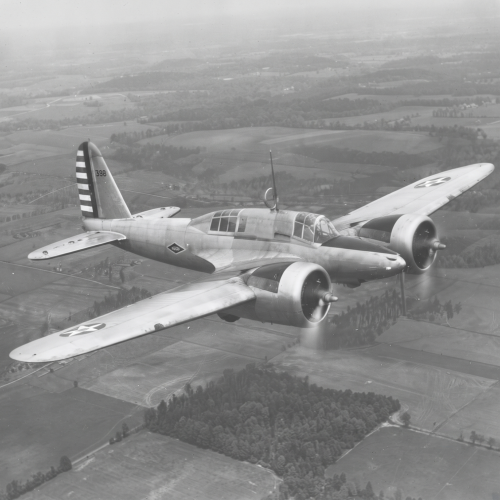
The Curtiss A‑18 Shrike—formally the Curtiss Model 76A Shrike II—was a transitional American twin‑engine attack aircraft developed in the mid‑1930s, representing the United States Army Air Corps’ (USAAC) evolving doctrine for fast, heavily armed ground‑attack platforms.
Only 13 aircraft were built, yet the A‑18 occupies an important place in the lineage of U.S. attack aviation, bridging the gap between early single‑engine attack monoplanes and the more capable twin‑engine designs that would enter service during World War II.
Origins and Development
The A‑18’s story begins with the Curtiss XA‑14 programme, initiated as the USAAC sought aircraft capable of carrying larger bomb loads and heavier armament than earlier attack types.
The attack aircraft standard was shifting towards what was essentially a light bomber with substantial forward‑firing armament, reflecting the growing tactical importance of low‑level strike missions.
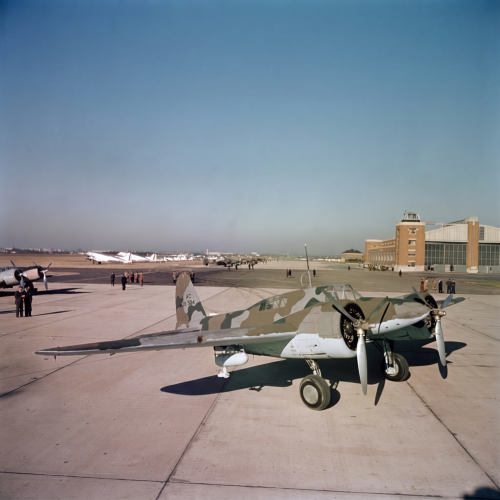
Curtiss developed the Model 76 prototype privately, flying it in September 1935 under civil registration X15314.
It was powered by experimental Wright XR‑1510 radial engines of 600 hp each.
The prototype featured a fully metal, mid‑wing monoplane layout with retractable landing gear and careful aerodynamic refinement.
After evaluation at Wright Field, the aircraft was returned to Curtiss and re‑engined with Wright R‑1670‑5 Cyclone radials of 775 hp, becoming the Curtiss XA‑14.
The Army was impressed enough to order a small batch of service‑test aircraft designated YA‑18 Shrike.
The YA‑18 incorporated further refinements, most notably Wright R‑1820‑47 Cyclone engines of 850 hp driving three‑bladed constant‑speed propellers.
These changes produced the definitive Model 76A Shrike II, which would enter limited service as the Curtiss A‑18.
The first YA‑18 flew on 3 July 1935, and production of the 13 aircraft (serials 37‑52 through 37‑64) began before October 1937.
Design Characteristics
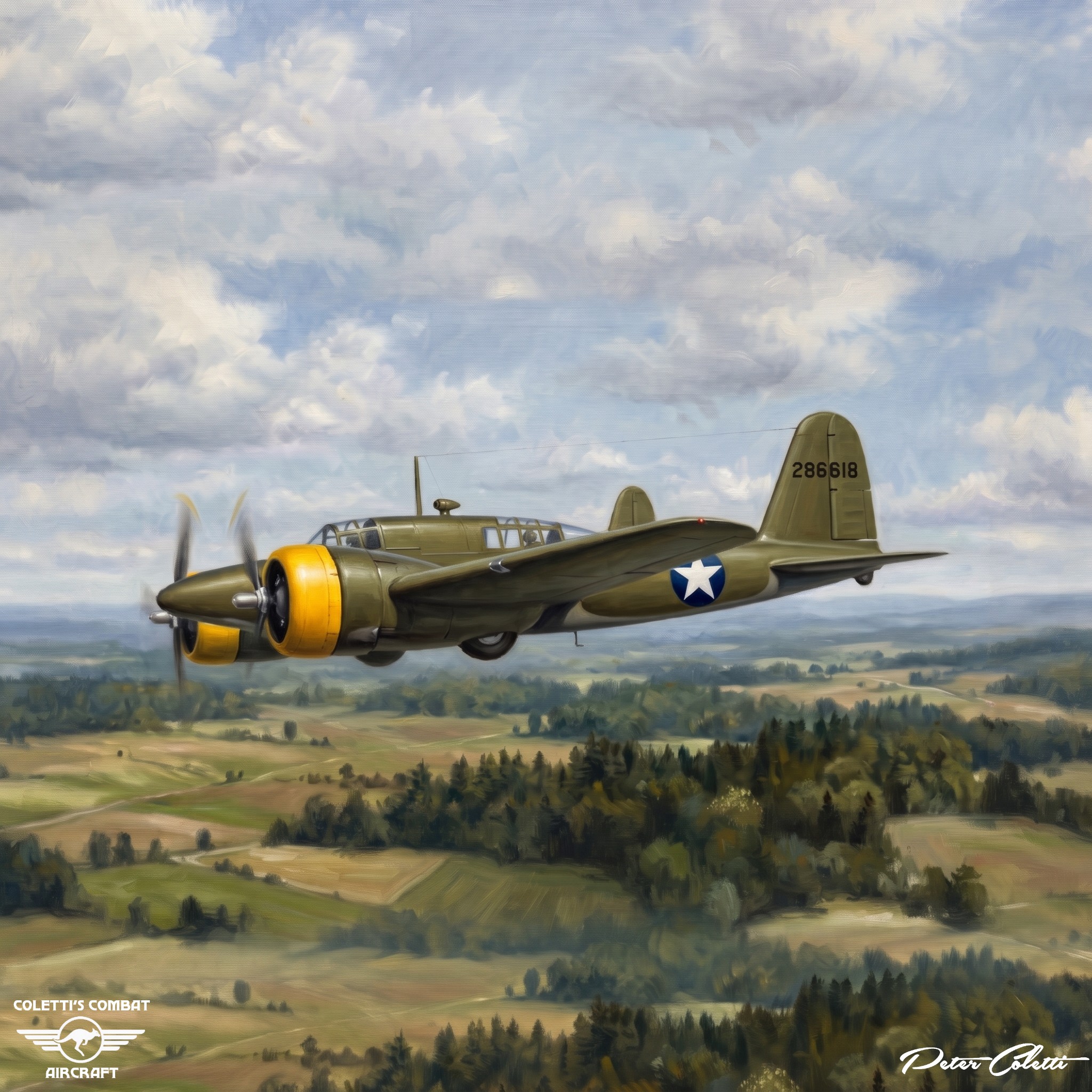
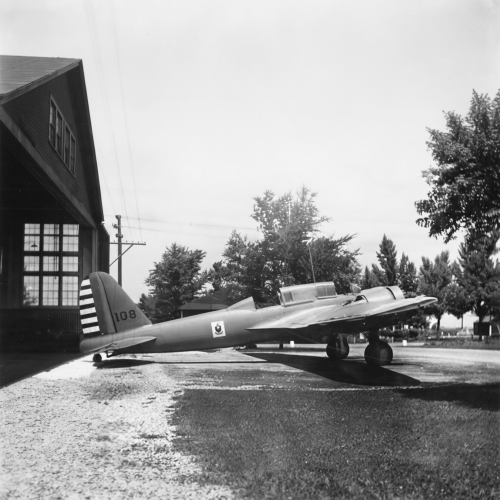
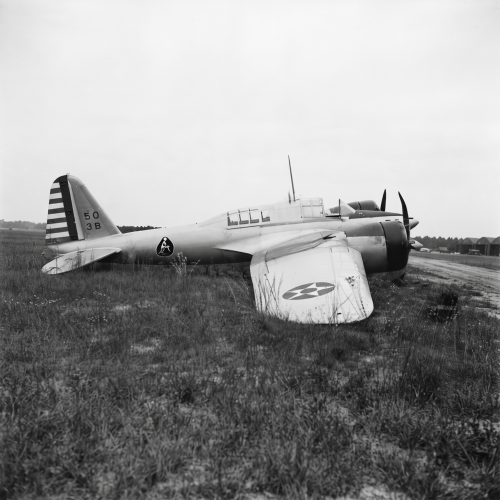
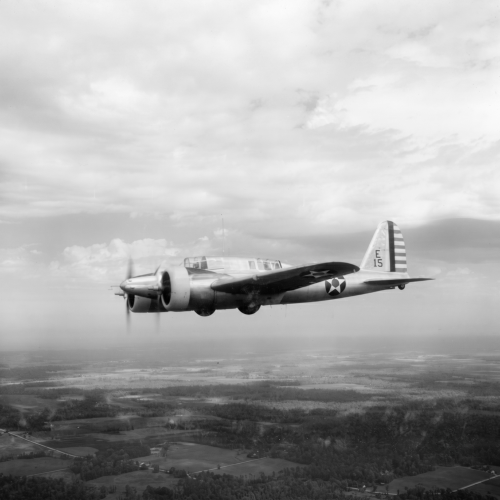
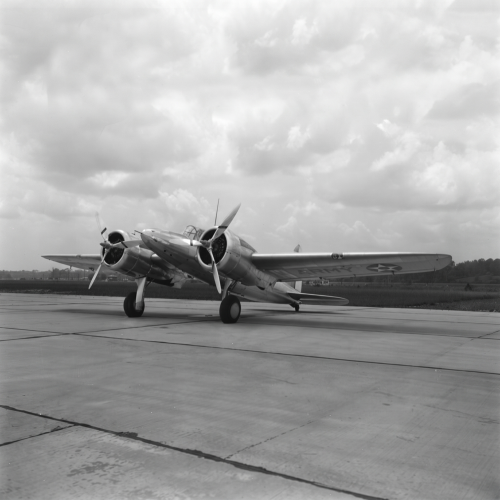
The Curtiss A‑18 was a twin‑engine, two‑seat, mid‑wing monoplane built largely of metal, with fabric‑covered control surfaces.
Its design emphasised aerodynamic cleanliness and modernity for the era:
Fuselage: A slender, streamlined structure housing pilot and observer under a long-framed canopy.
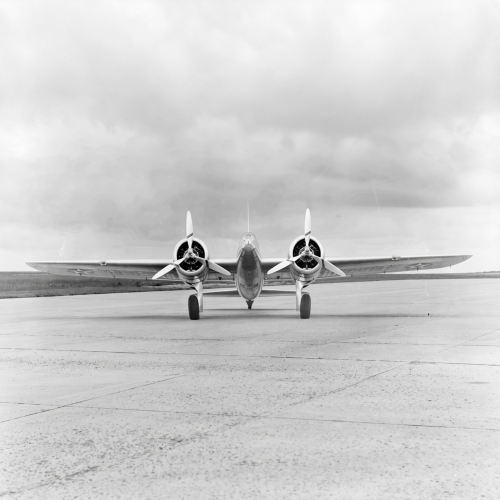
Wing and Engines: The wings carried streamlined nacelles housing the Wright Cyclone engines, positioned along the leading edge to minimise drag.
Landing Gear: A retractable tail‑dragger arrangement, though the main wheels remained partially exposed when retracted—a compromise typical of mid‑1930s designs.
Tail Unit: Conventional single vertical fin with low‑set horizontal stabilizers.
Armament and Bomb Load
The A‑18’s offensive capability reflected USAAC doctrine for heavy forward‑firing armament:
Four fixed 7.62 mm Browning M1919 machine guns in the nose.
One flexible 7.62 mm Browning M1919 in the rear cockpit for defence.
Bomb load: Approximately 280 kg carried in wing‑mounted bomb bays.
This combination made the A‑18 a formidable low‑level attack aircraft for its time, capable of strafing and precision bombing.
Performance
The A‑18’s performance was considered excellent during testing, even surpassing contemporary fighters such as the Boeing P‑26 by about 20 mph.
Key performance figures (from the YA‑18/A‑18 service‑test configuration):
Maximum speed: ~400 km/h (≈254 mph) depending on altitude.
Cruise speed: ~350 km/h.
Range: ~1050 km.
Service ceiling: 6700–8370 m.
Empty weight: 4270 kg; maximum weight: 5975 kg.
These figures placed the A‑18 among the fastest and most capable attack aircraft of the mid‑1930s, though its performance would soon be eclipsed by rapidly advancing designs.
Operational History
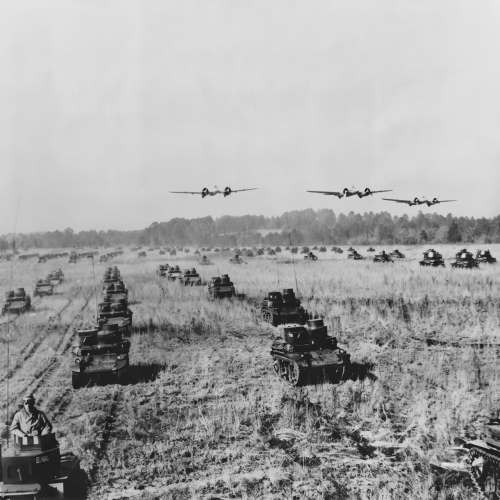
The 13 A‑18s were assigned to the 8th Attack Squadron, 3rd Attack Group at Barksdale Field, Louisiana, beginning in 1937.
The squadron quickly demonstrated the aircraft’s effectiveness, winning the Harmon Trophy for gunnery and bombing accuracy during its first year of service.
However, operational use revealed a serious flaw: the retractable landing gear was prone to collapse, with eight of the 13 aircraft suffering gear failures during landing or rollout.
This reliability issue, combined with the arrival of more advanced aircraft, limited the A‑18’s service life.
By 1941, the A‑18s in frontline service were replaced by early Douglas A‑20 Havoc attack bombers.
The remaining A‑18s were relegated to training roles until their retirement in 1943.
Variants
Curtiss Model 76 (Prototype)
Initial private‑venture aircraft with XR‑1510 engines.
Served as the basis for the XA‑14.
Curtiss XA‑14
Re‑engined Model 76 with R‑1670‑5 engines.
Demonstrated promising performance but lacked power.
Curtiss YA‑18
Service‑test aircraft with R‑1820‑47 engines and three‑blade propellers.
13 built; later redesignated A‑18.
Curtiss A‑18 Shrike II (Model 76A)
Final service‑test configuration.
Incorporated aerodynamic refinements and improved armament.
World War II Context and Legacy
Although the A‑18 never saw combat in World War II, it played a significant role in shaping USAAC attack doctrine.
In the late 1930s, military planners increasingly valued twin‑engine attack aircraft for their ability to combine:
Medium‑bomber‑level firepower
Heavy forward‑firing armament
High‑speed and low‑level strike capability
The A‑18 fit this emerging concept but was quickly overtaken by more advanced designs such as the Douglas A‑20 Havoc, Douglas A‑24, and later the A‑26 Invader.
Its limited production reflected both budget constraints and the rapid pace of aviation development.
Nevertheless, the A‑18 served as an important transitional aircraft, demonstrating the viability of twin‑engine attack platforms and contributing to the USAAC’s tactical evolution on the eve of World War II.
Summary
The Curtiss A‑18 Shrike was a modern, fast, and heavily armed attack aircraft for its time, but its small production run and mechanical issues prevented widespread adoption.
Its significance lies not in combat achievements but in its role as a bridge between early attack aircraft and the more capable WWII‑era designs that followed.