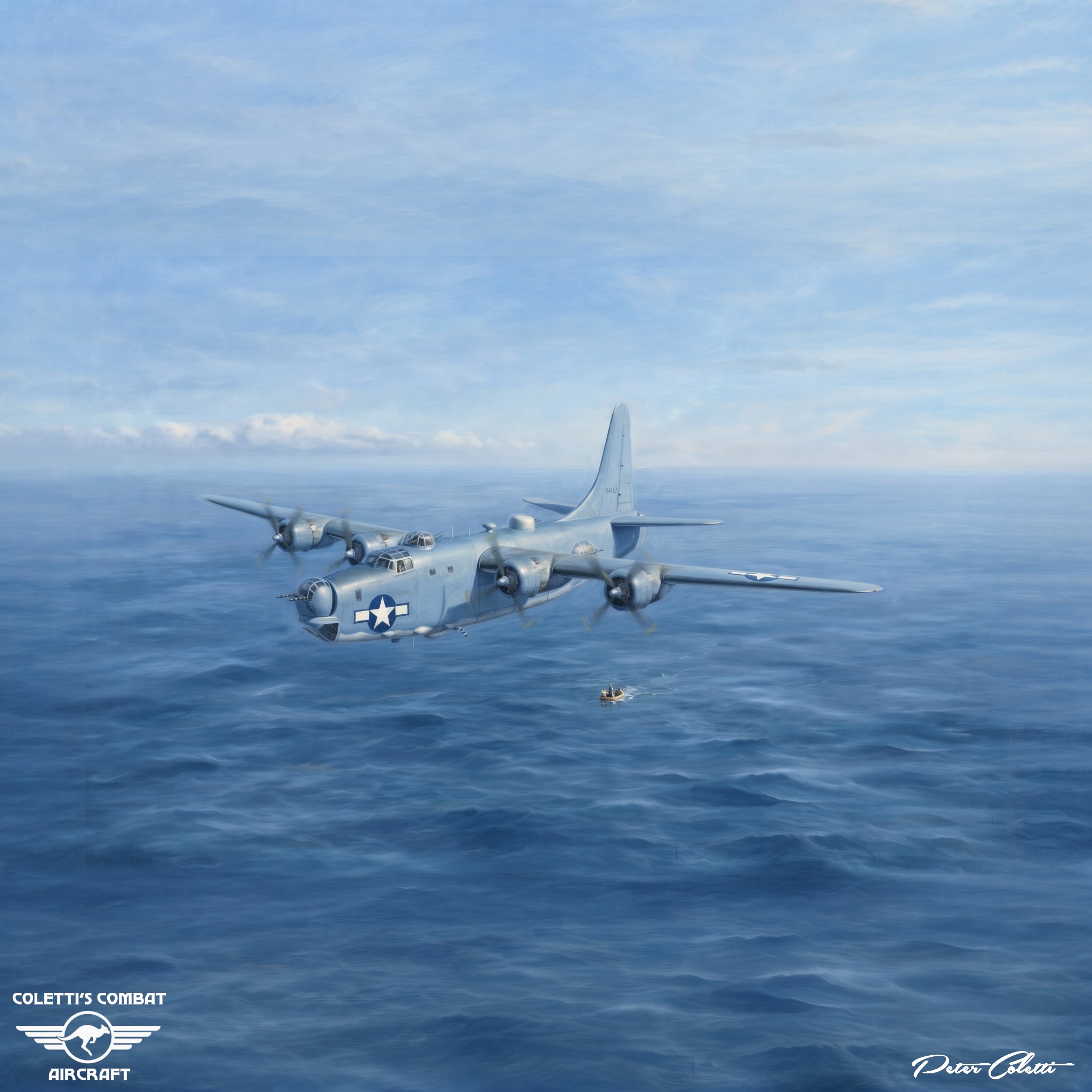
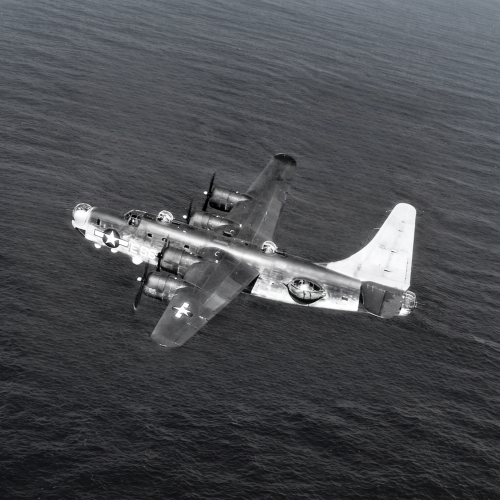
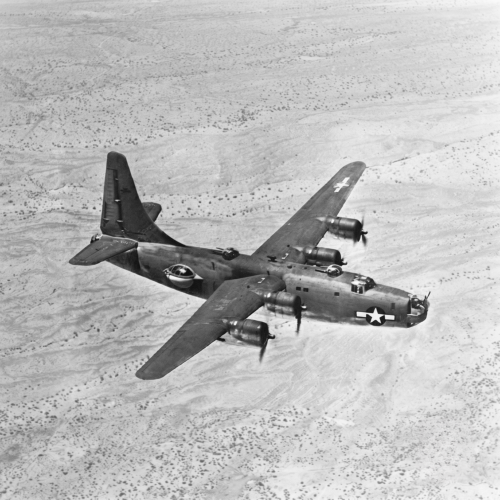
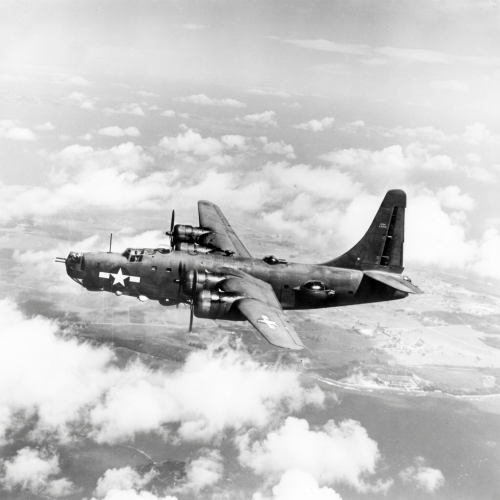
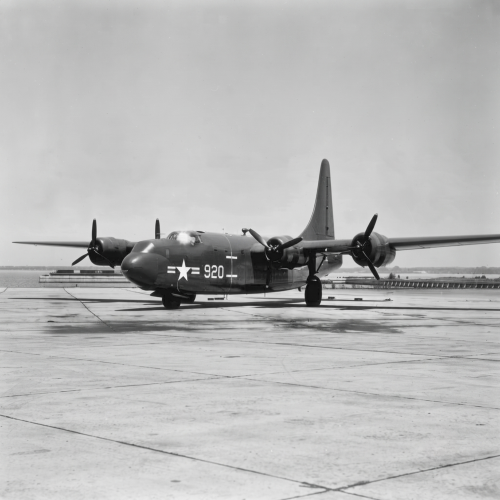
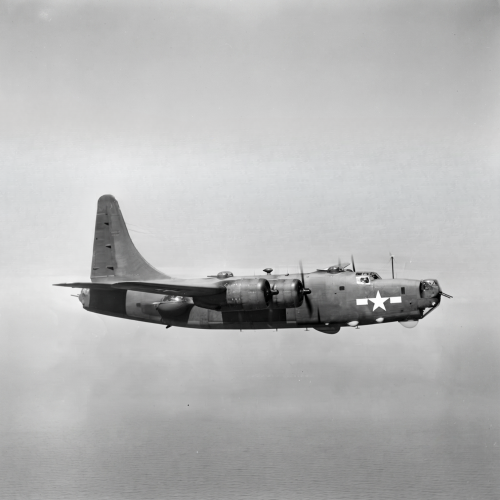
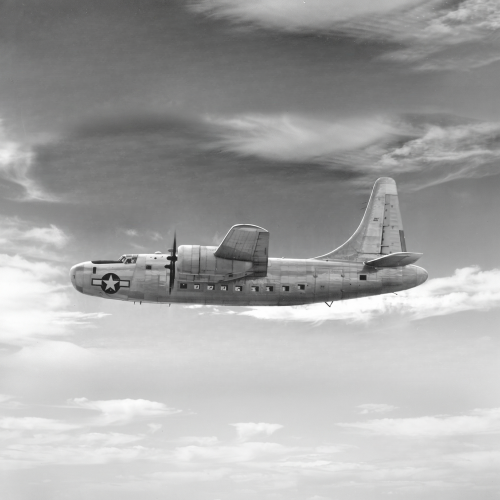
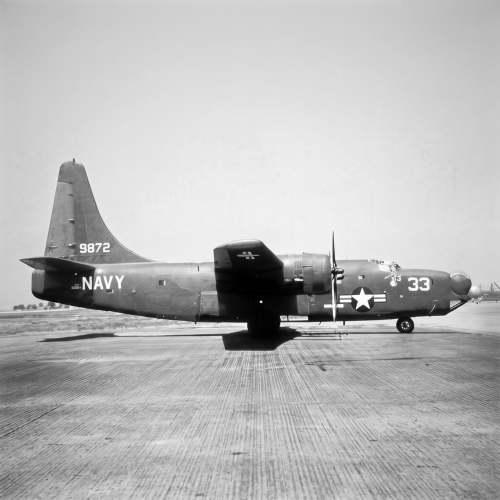
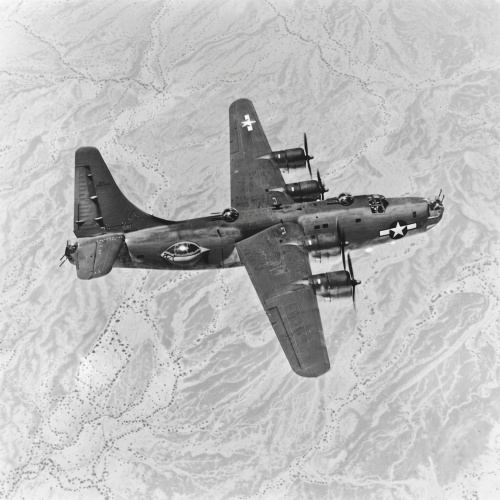
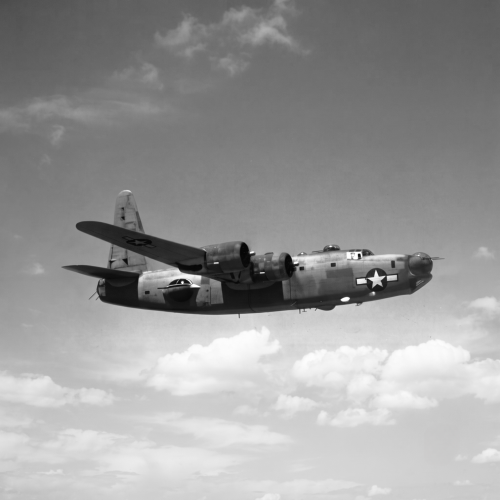
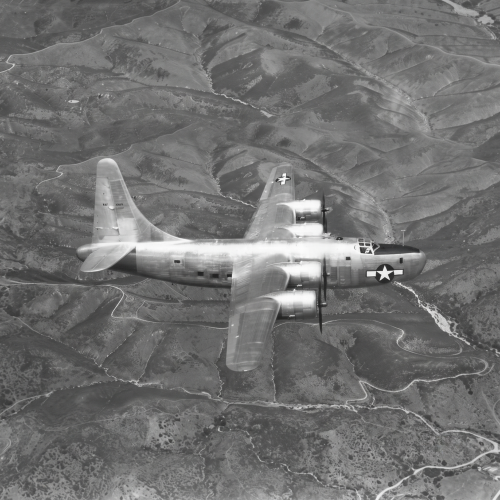
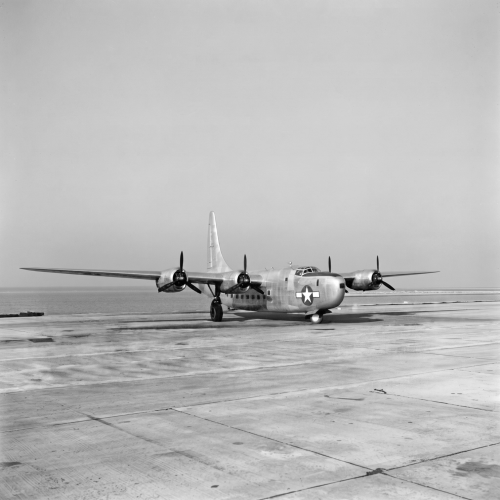
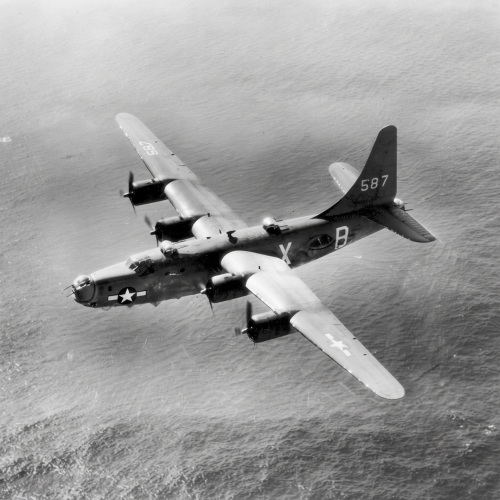
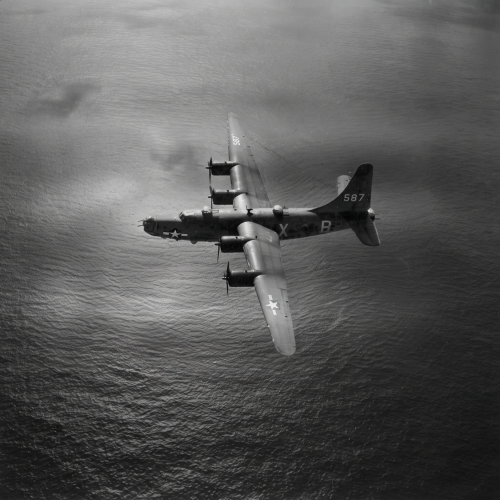
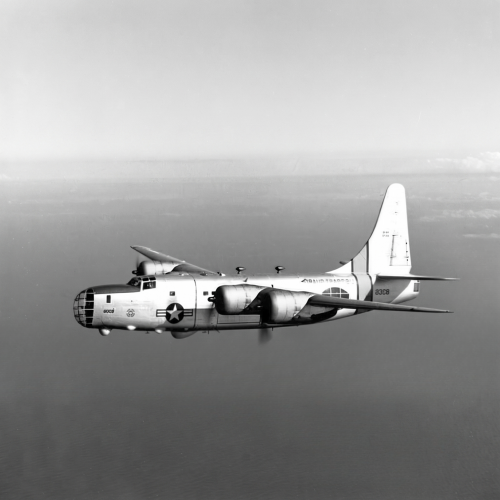
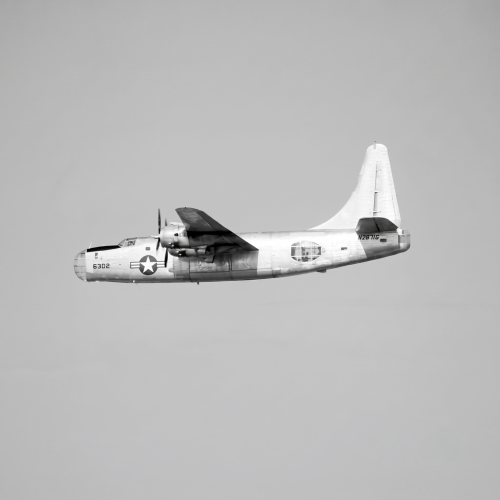
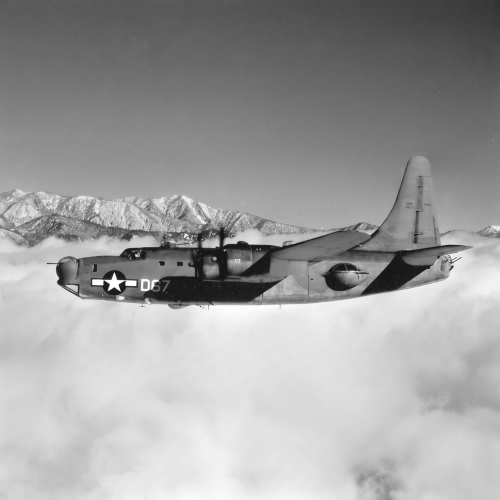
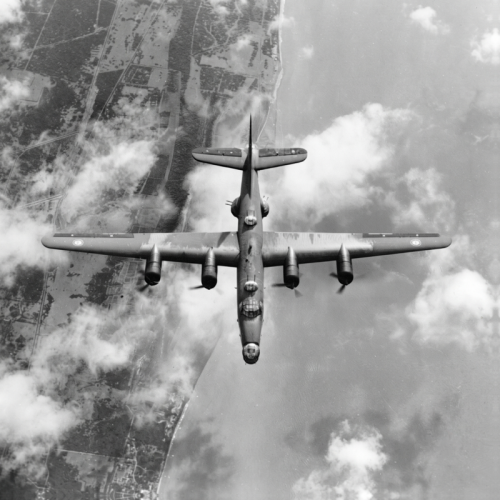
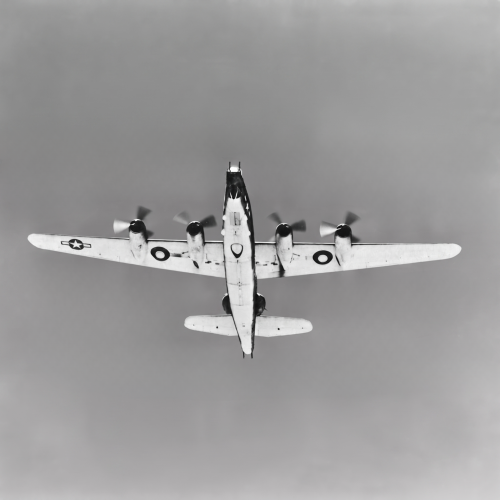
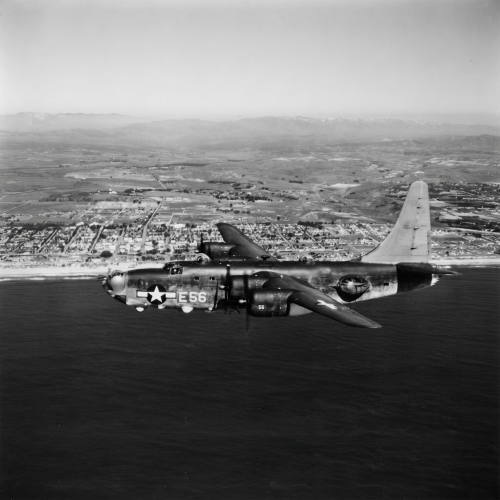
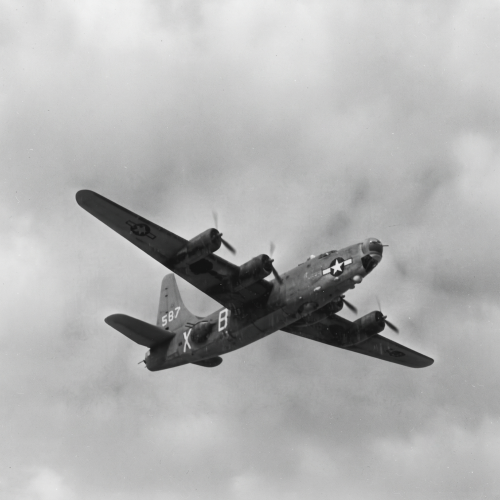
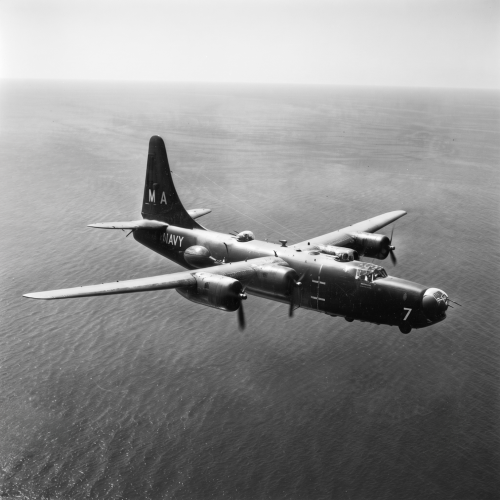
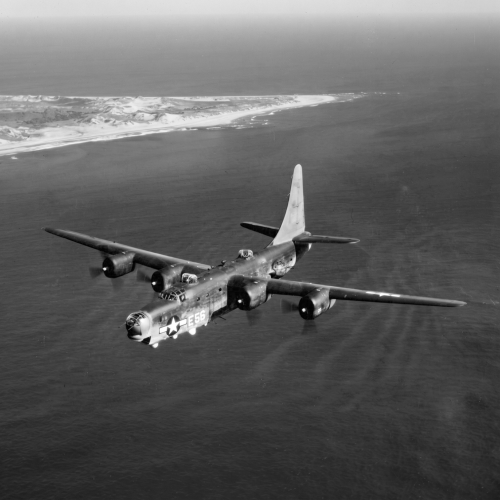
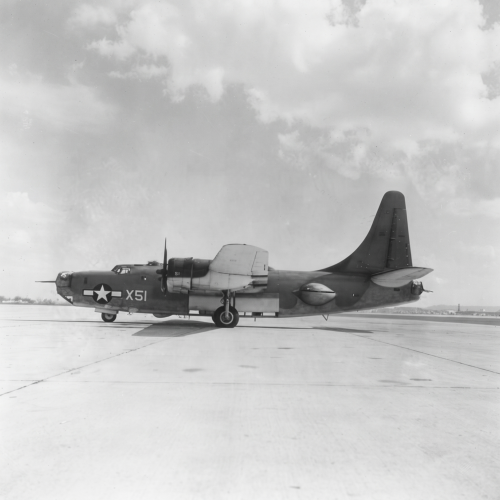
The Consolidated PB4Y‑2 Privateer emerged from the U.S. Navy’s wartime need for a fully navalised, long‑range patrol bomber.
Early in World War II, the Navy operated the PB4Y‑1 Liberator—essentially a B‑24 modified only lightly for maritime use.
These aircraft proved effective in patrol, reconnaissance, and anti‑shipping roles, but they were still fundamentally Army bombers adapted for naval missions.
The Navy wanted something more specialised: a machine optimised for long over‑water patrols, stable at low and medium altitudes, and equipped with heavy defensive armament and advanced maritime electronics.
Consolidated responded by designing a dedicated patrol aircraft derived from the B‑24 but significantly reworked.
Testing began in 1943, and the first PB4Y‑2 flew in September of that year.
Production aircraft began reaching squadrons in March 1944.
In 1951, the type was redesignated P4Y-2 Privateer.
Although 739 were eventually delivered, most arrived after the war’s end.
The aircraft was redesignated P4Y‑2 in 1951 when the Navy dropped the patrol‑bomber designation system, and surviving drone‑configured aircraft were redesignated QP‑4B in 1962 under the Tri‑Service system.
Design Characteristics
The Privateer retained the B‑24’s high wing, four‑engine layout, and general fuselage form, but it incorporated major structural and operational changes to suit naval requirements.
Single Vertical Tail
The most visible change was the adoption of a tall single vertical stabiliser, replacing the B‑24’s twin‑fin arrangement.
This tail was derived from the cancelled B‑24N programme and was slightly taller on the Privateer.
It improved stability at low and medium altitudes—ideal for maritime patrol operations.
Lengthened Fuselage
The fuselage was extended to accommodate a flight engineer’s station, reducing pilot fatigue on long missions over open ocean.
Armament Enhancements
The PB4Y‑2 carried twelve .50‑calibre Browning machine guns in six power‑operated turrets—two dorsal, two waist, plus nose and tail positions.
The B‑24’s retractable Sperry ball turret was removed, simplifying maintenance and reducing drag.
Engine and Systems Changes
The Privateer’s Pratt & Whitney R‑1830‑94 engines lacked turbosuperchargers, since high‑altitude performance was unnecessary for patrol missions.
This saved weight and improved reliability at the altitudes where the aircraft typically operated.
Electronic and Radar Equipment
The aircraft carried an array of ECM, communication, and radar antennas, including a manually retractable AN/APS‑2 radome behind the nose wheel well.
These systems supported reconnaissance, anti‑shipping, and electronic warfare missions.
Operational Use in World War II
The Privateer entered service in early 1944, with VPB‑118 and VPB‑119 becoming the first operational squadrons.
Its wartime roles included the following:
Long‑range reconnaissance
Search and rescue
Electronic countermeasures
Communication relay
Anti‑shipping strikes, including use of the ASM‑N‑2 Bat, one of the world’s first operational radar‑guided bombs.
Privateers flew extensive patrols across the Pacific, including operations from the Marianas beginning in January 1945 and offensive search missions from Clark Field in the Philippines starting in March 1945.
Although the aircraft arrived late in the war, it contributed meaningfully to the final maritime campaigns against Japan.
Postwar Service and Cold War Operations
After WWII, the Privateer found new roles:
Weather Reconnaissance
PB4Y‑2s served as hurricane hunters from 1945 into the mid‑1950s.
Several aircraft were lost during these dangerous missions, including BuNo 59415 and BuNo 59716.
Korean War
Privateers flew “Firefly” night illumination missions, dropping flares to expose North Korean and Chinese infiltrators along coastal routes.
Signals Intelligence
The aircraft also conducted SIGINT flights along Soviet and Chinese borders.
One Privateer (BuNo 59645) was shot down by Soviet La-11 fighters over the Baltic Sea in 1950, killing the crew and becoming a notable Cold War incident.
Foreign Operators
France received privateers under the Mutual Defence Assistance Act and used them in the Indochina War and later in North Africa.
The Republic of China Air Force operated the type for clandestine missions over mainland China, losing aircraft to ground fire in 1954 and Burmese fighters in 1961.
Civilian Use and Aerial Firefighting
A number of Privateers were converted into air tankers for forest-fire suppression.
They served into the early 2000s, but the catastrophic breakup of P4Y‑2 Tanker 123 (BuNo 66260) in 2002 led to the grounding and eventual retirement of all remaining Privateer tankers.
Technical Specifications (PB4Y‑2)
Crew: 11 (two pilots, navigator, bombardier, five gunners, two radio operators)
Length: 74 ft 7 in
Wingspan: 110 ft
Height: 30 ft 1 in
Wing Area: 1,048 sq ft
Empty Weight: 27,485 lb
Maximum Take-off Weight: 65,000 lb
Fuel Capacity: 3,964 US gal
Powerplant: 4 × Pratt & Whitney R‑1830‑94 radial engines, 1,350 hp each
Performance
Max Speed: 247 mph at 14,000 ft
Cruise Speed: 175 mph
Combat Range: 2,630 miles with 2,000 lb bomb load
Service Ceiling: 21,000 ft
Wing Loading: 62 lb/sq ft
Armament
Guns: 12 × .50‑cal M2 Browning machine guns
Ordnance: Up to 8,000 lb of bombs, mines, or torpedoes
Variants
YPB4Y‑2: Prototypes (three built)
PB4Y‑2: Main production version (736 built)
PB4Y‑2B: Equipped for ASM‑N‑2 Bat missile operations; redesignated P4Y‑2B in 1951
PB4Y‑2M: Weather reconnaissance; redesignated P4Y‑2M in 1951
PB4Y‑2S: Anti‑submarine radar variant; redesignated P4Y‑2S in 1951
PB4Y‑2G: Coast Guard rescue/weather variant; redesignated P4Y‑2G in 1951
PB4Y‑2K / QP‑4B: Target drone conversions; redesignated QP‑4B in 1962
Legacy
The PB4Y‑2 Privateer stands as one of the last major piston‑engine patrol bombers of the U.S. Navy.
Though it arrived late in WWII, it served extensively in the Pacific, contributed to early guided-weapon operations, and became a versatile platform in the early Cold War—performing reconnaissance, weather research, SIGINT, and flare-illumination missions.
Its long postwar career, including hazardous hurricane‑hunter flights and decades of civilian firefighting service, underscores the ruggedness and adaptability of its design.
Today, a handful survive in museums and private collections, preserving the legacy of a unique naval patrol aircraft that bridged the transition from WWII heavy bombers to the jet‑age maritime patrol fleet.