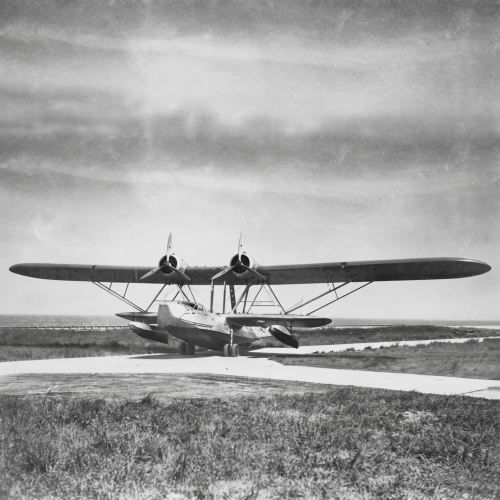
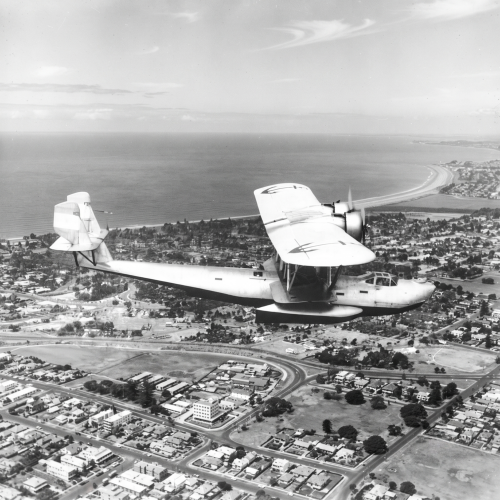
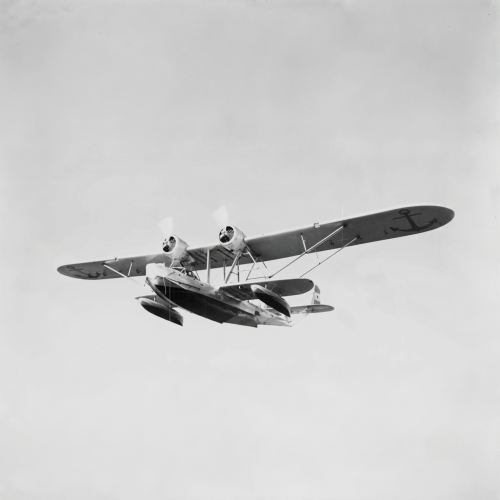
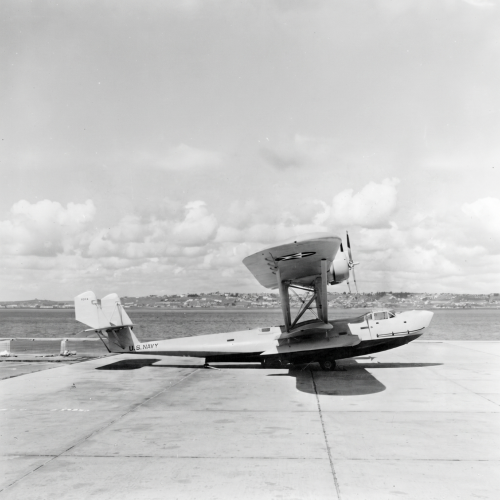
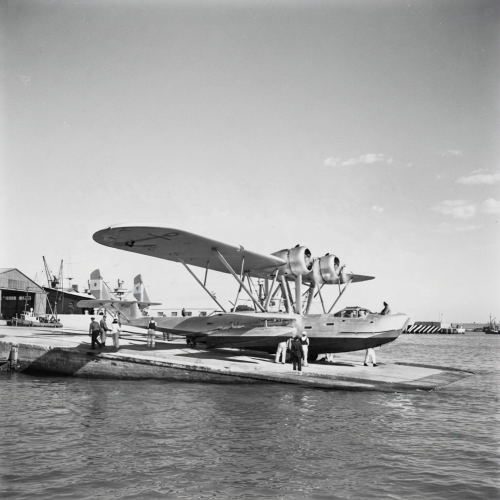
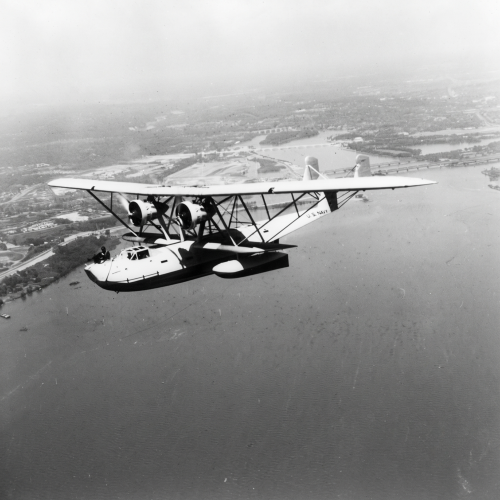
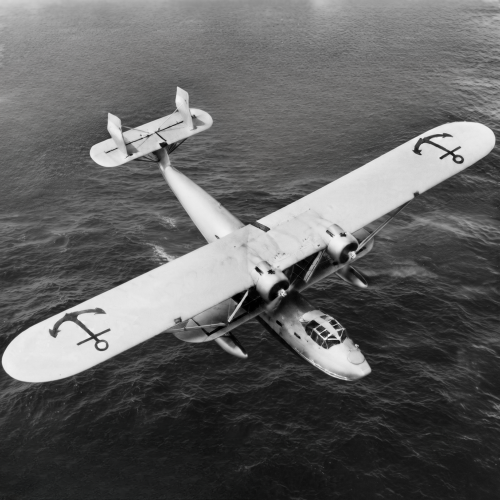
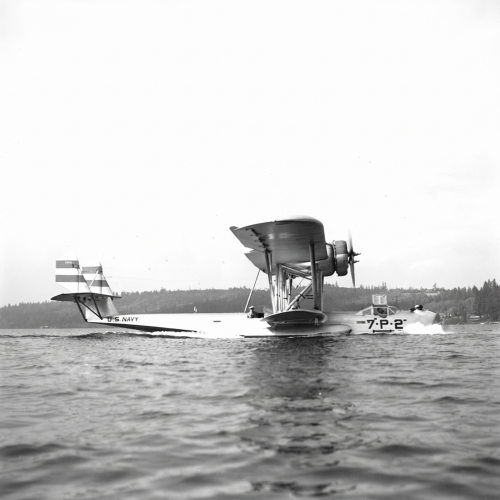
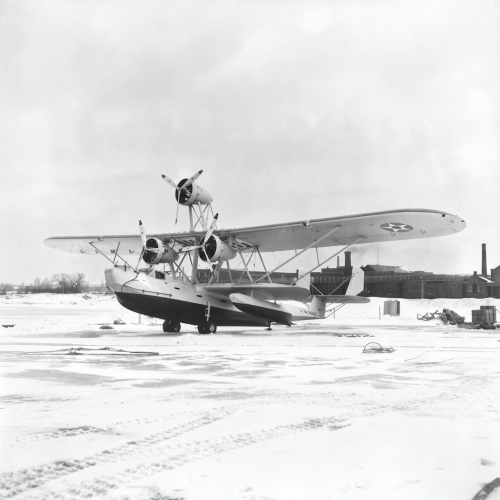
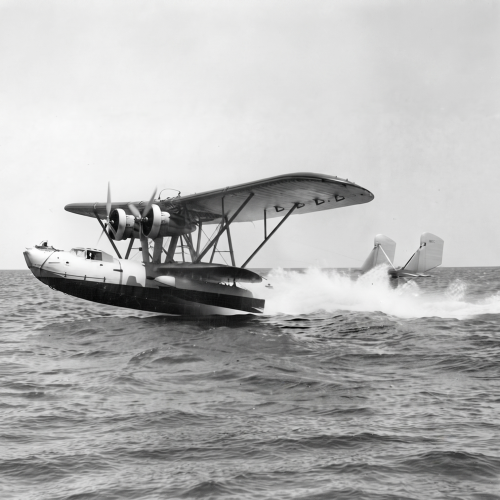
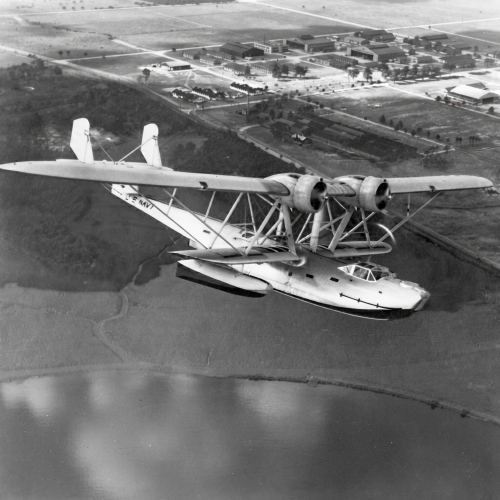
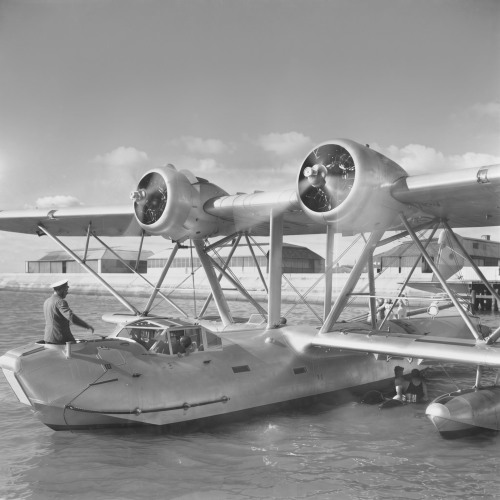
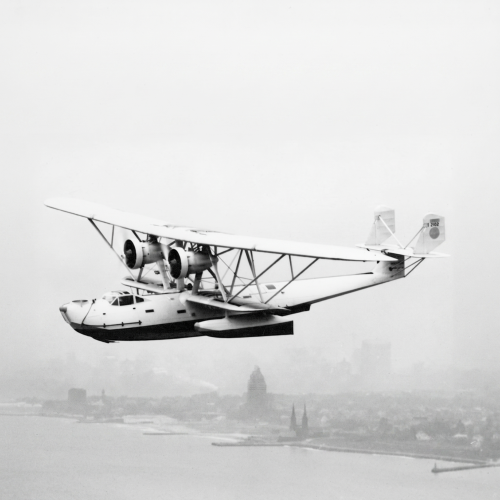
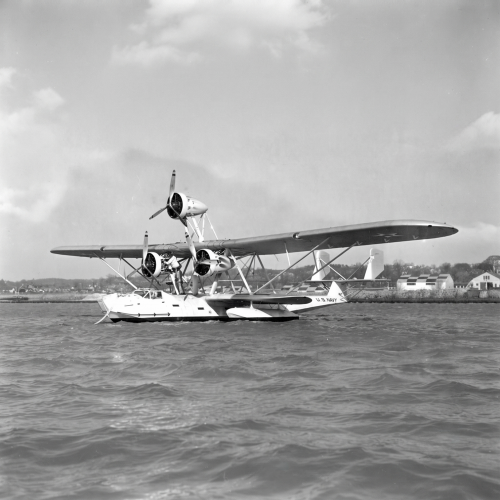
The Consolidated P2Y Ranger was a pivotal American flying boat of the interwar period, representing the U.S. Navy’s transition from mixed‑construction patrol aircraft to modern, all‑metal maritime reconnaissance platforms.
Its lineage began with the XPY‑1, designed under a 1928 Navy contract as a parasol‑wing monoplane intended for long‑range patrol duties.
Although Consolidated built the prototype, the Navy awarded production to the Glenn L. Martin Company, which manufactured the aircraft as the P3M series.
Consolidated continued refining the design independently, incorporating lessons from its civilian Model 16 Commodore flying boat.
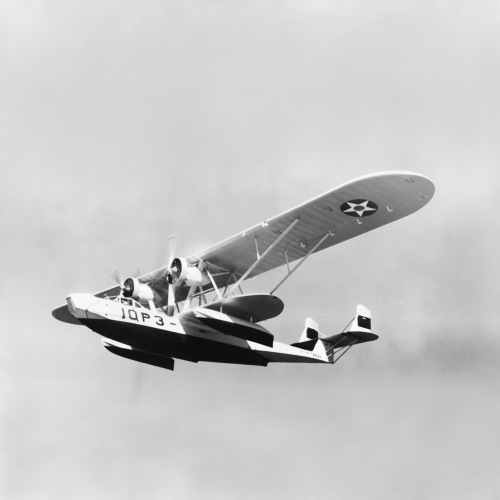
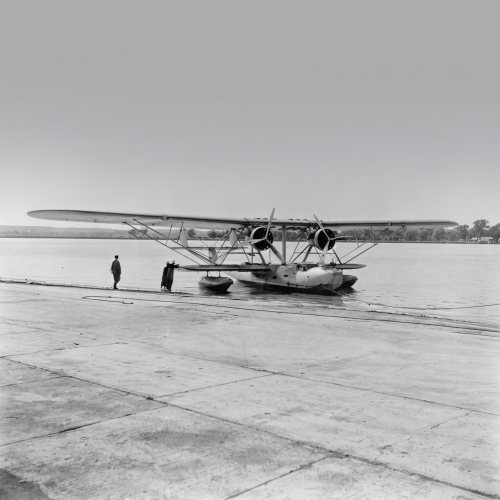
These improvements culminated in the Model 22, designated XP2Y‑1 by the Navy, featuring a strengthened hull, an enclosed cockpit, and a sesquiplane wing arrangement with a smaller lower wing replacing earlier float support struts.
The XP2Y‑1 initially carried three Wright Cyclone engines, but the upper engine was removed after early testing in 1932, establishing the twin‑engine configuration that defined the production P2Y series.
The Navy ordered the first production batch of P2Y‑1 aircraft in 1931, followed by improved P2Y‑2 and P2Y‑3 variants with more powerful engines and aerodynamic refinements.
These aircraft formed the backbone of U.S. Navy patrol aviation until the arrival of the more advanced Consolidated PBY Catalina.
Design Characteristics
Airframe and Hull
The P2Y was an all‑metal flying boat with a deep, seaworthy hull and a parasol wing mounted above the fuselage.
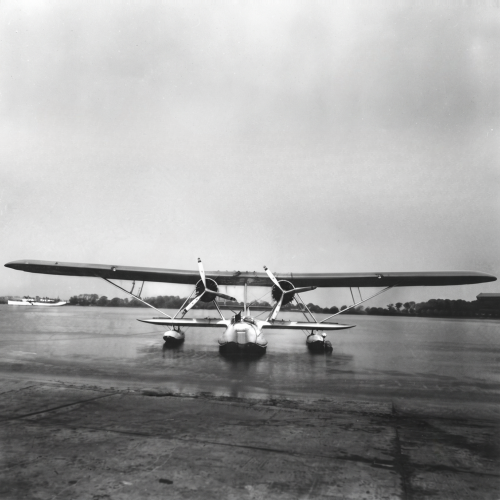
Its sesquiplane configuration—a large upper wing and a smaller lower wing—enhanced structural rigidity and replaced earlier float‑support struts.
The hull incorporated multiple watertight compartments for buoyancy and safety during open‑ocean operations.
Powerplant and Propulsion
Production P2Ys used two Wright R‑1820 Cyclone radial engines mounted beneath the upper wing.
Engine power increased across variants, culminating in the P2Y‑3’s 750‑hp R‑1820‑90 engines.
The over-wing placement minimised spray ingestion and simplified maintenance.
Crew and Armament
The typical crew complement was five to seven, including pilots, a navigator, a radio operator, and gunners.
Armament consisted of three flexible. 30‑calibre Browning machine guns—one bow‑mounted and two dorsal positions—and a bombload of up to 2,000 lb for maritime patrol and light attack duties.
Performance (P2Y‑3)
Maximum speed: 149 mph
Cruise speed: 118 mph
Range: 1,180 miles
Service ceiling: 16,100 ft
Rate of climb: 650 ft/min
These figures reflect a design optimised for endurance and stability rather than speed, suitable for long‑range reconnaissance and fleet scouting.
Operational Service in the United States
The P2Y entered U.S. Navy service in 1933 with Patrol Squadrons VP‑10F and VP‑5F, which conducted notable long-range formation flights demonstrating the aircraft’s endurance and reliability.
Modified P2Y‑2s and new‑build P2Y‑3s served across multiple patrol squadrons through the late 1930s, including units at Pearl Harbour and along both U.S. coasts.
By late 1941, all remaining P2Y‑2 and P2Y‑3 aircraft had been withdrawn from frontline service and relegated to training duties at NAS Pensacola.
Their retirement coincided with the rapid expansion of the PBY Catalina fleet, which inherited and expanded upon the P2Y’s design philosophy.
International Operators
Although primarily a U.S. Navy aircraft, the P2Y saw limited but historically significant service with three foreign operators.
These international uses highlight the aircraft’s adaptability and the global interest in American flying boat technology during the interwar period.
Argentina (1936–1949)
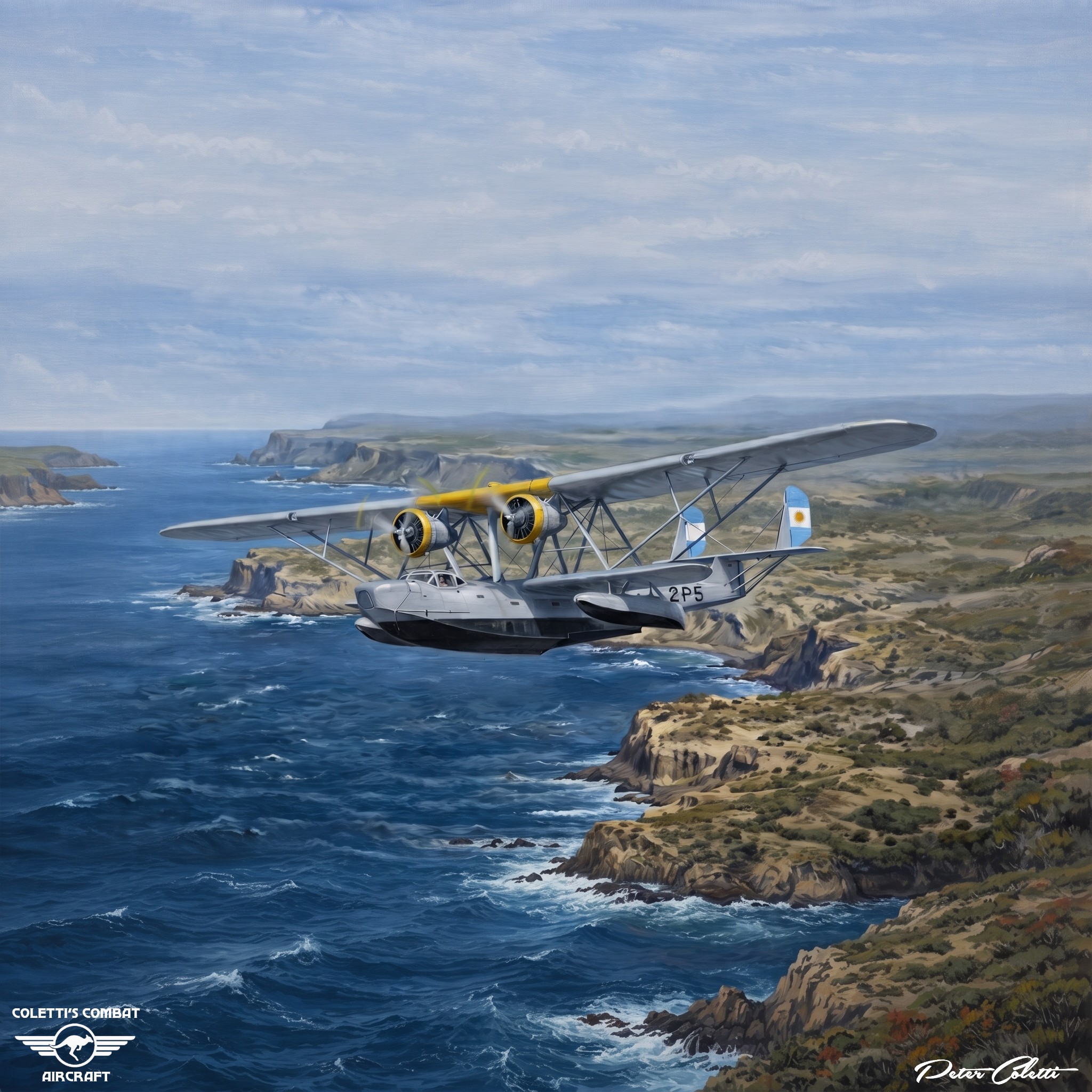
Argentina was the largest foreign operator of the P2Y, acquiring six P2Y‑3A flying boats for the Argentine Naval Aviation.
Delivered in 1936, these aircraft served for more than a decade, performing maritime patrol, navigation training, sovereignty flights, and search‑and‑rescue duties along the nation’s extensive Atlantic coastline.
Argentina retired its P2Y‑3As in 1949, making it the final operator of the type worldwide.
Colombia (1932–1933)
Colombia received one P2Y‑1C in December 1932.
This aircraft saw combat service during the Colombia–Peru War, where it was employed as a bomber—an unusual role for the type and one of the earliest combat uses of a Consolidated flying boat.
P2Y-1J One aircraft was delivered to Japan in January 1935.
Japan (1935)
Japan evaluated a single P2Y‑1J, designated the HXC Consolidated Navy Experimental Type C Flying Boat.
Delivered in January 1935, it was used for technical assessment and comparison with domestic flying boat designs, reflecting Japan’s interest in foreign maritime aviation technology during the pre-war period
XP2Y-2 One prototype, P2Y-2 More powerful R-1820-88 engines were faired into the leading edges of the wing.
Variants
XP2Y‑1: Prototype incorporating Commodore features and a sesquiplane wing.
P2Y‑1: First production model; 23 ordered in 1931.
P2Y‑2: Upgraded engines and aerodynamic refinements; many P2Y‑1s converted.
P2Y‑3: Final production version with improved powerplants; 23 ordered in 1933.
P2Y‑1C / P2Y‑1J: Export versions for Colombia and Japan, respectively.
Martin P3M Series: Parallel development built by Martin under Navy production contract.
XP2Y‑1
World War II Context and Legacy
By the outbreak of World War II, the P2Y was already obsolete, overshadowed by the far more capable PBY Catalina.
Although withdrawn from U.S. frontline service, the P2Y’s design innovations—metal hull construction, long‑range patrol capability, and reliable twin‑engine configuration—directly influenced the Catalina’s development.
Internationally, Argentina’s long service life with the P2Y‑3A demonstrated the aircraft’s durability and suitability for nations with large maritime patrol requirements but limited procurement budgets.
The P2Y remains an important evolutionary step in American flying boat design, bridging early interwar concepts with the highly successful patrol aircraft of World War II.