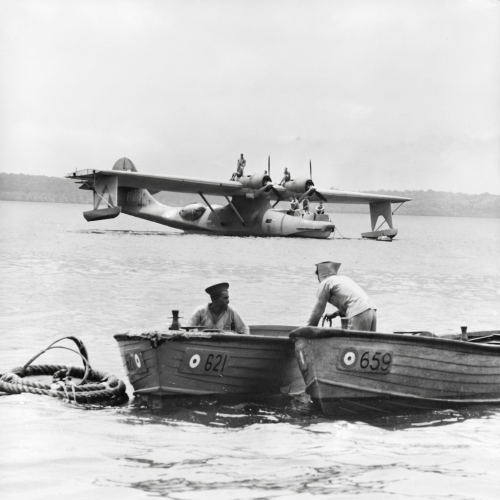
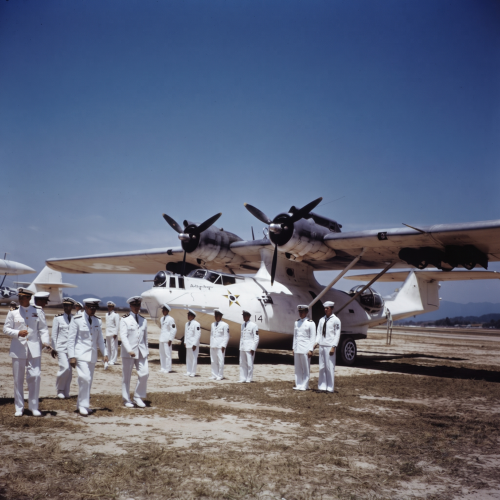
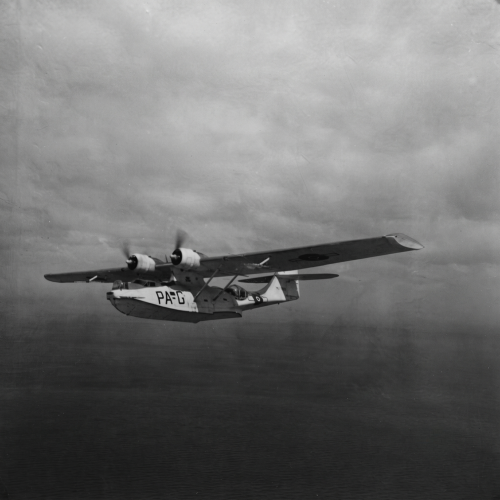
The Consolidated PBY Catalina was created in response to a 1933 U.S. Navy requirement for a long-range patrol flying boat capable of ocean reconnaissance, anti-submarine warfare, and search-and-rescue.
The Navy needed an aircraft with greater range, improved seaworthiness, and better defensive capability than earlier flying boats such as the Consolidated P2Y.
Consolidated Aircraft, led by Isaac M. Laddon, designed the XP3Y‑1 prototype as a high‑wing monoplane flying boat with a cantilever wing, retractable wingtip floats, and a hydrodynamically refined hull.
The prototype first flew on 28 March 1935 and demonstrated exceptional endurance and stability.
After further refinement, the aircraft was redesignated XPBY‑1, and the Navy ordered it into production as the PBY‑1 in 1936.
Three design priorities shaped the Catalina’s development: long‑range endurance for Pacific operations, multi‑role adaptability, and rugged simplicity for operation from remote bases.
These principles made the Catalina one of the most widely used flying boats in aviation history.
Airframe and Structural Design
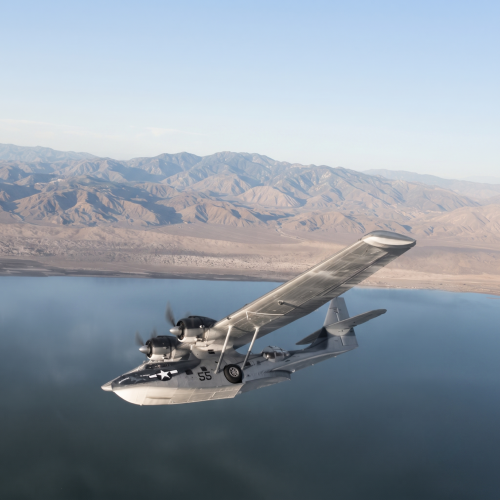
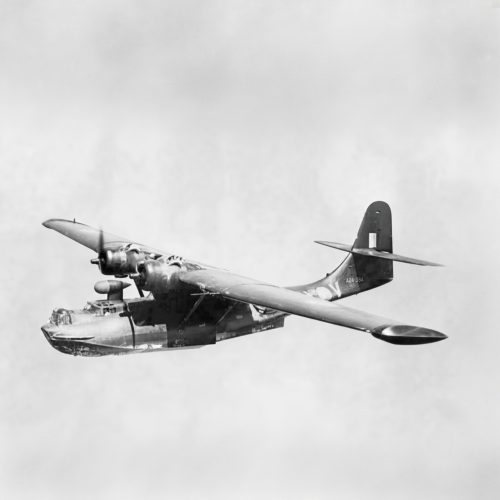
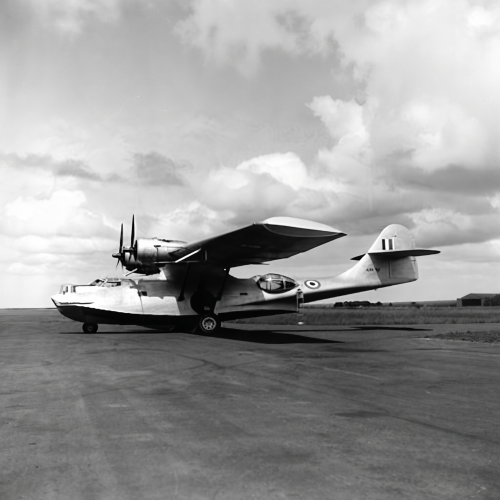
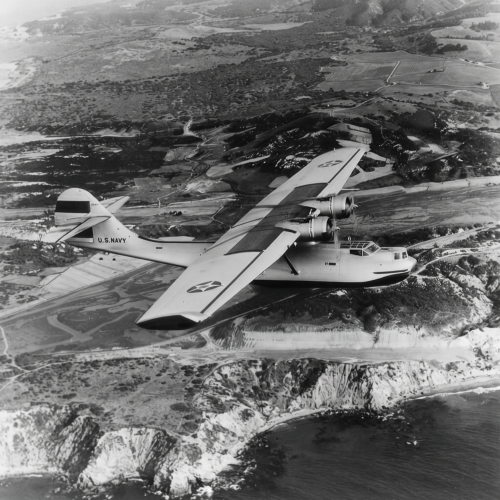
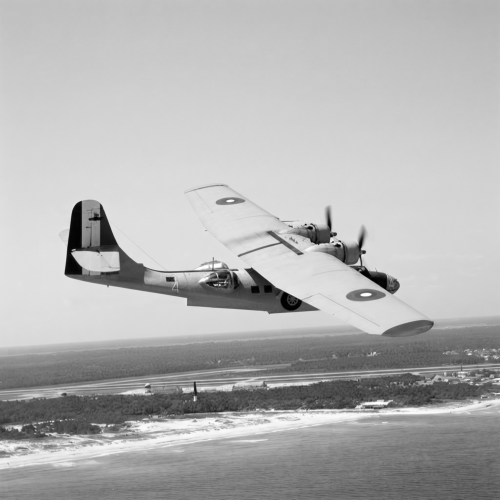
The Catalina’s design was defined by its parasol wing, boat‑shaped hull, and twin‑engine layout.
Its high‑mounted cantilever wing provided excellent visibility, stability, and clearance from ocean spray.
The retractable wingtip floats rotated upward to form streamlined wingtips in flight, reducing drag.
The hull featured a two-step design that improved water take-off performance by reducing hydrodynamic suction.
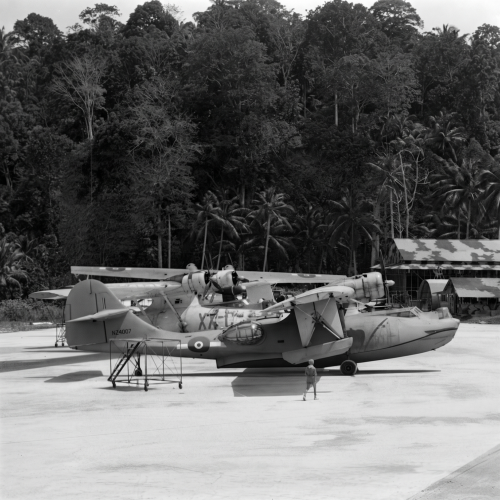
Later variants introduced large blister gun positions on the fuselage sides, giving wide arcs of fire for defensive machine guns.
The aircraft used a metal hull and wing centre section, with fabric‑covered outer wing panels on early models.
The hull’s deep keel, watertight compartments, and reinforced chines allowed the Catalina to operate in rough seas.
Its straightforward construction made it easy to repair at remote island bases throughout the Pacific.
Powerplant and Performance
The Catalina was powered by two Pratt & Whitney R‑1830 Twin Wasp radial engines, typically producing around 1,200 horsepower each depending on the variant.
These engines were reliable, widely used, and easy to maintain.
Typical performance characteristics included a maximum speed of about 180 mph, a cruise speed near 125 mph, and a range of up to 2,520 miles on later variants.
The service ceiling was roughly 15,000 feet, and endurance could reach 24 hours with auxiliary fuel tanks.
The Catalina was not fast, but speed was not its purpose.
Its long endurance made it ideal for ocean patrols, submarine hunting, and extended search‑and‑rescue missions.
Armament and Mission Equipment
Catalinas carried a mix of defensive and offensive weapons.
Defensive armament typically included .30 or .50 calibre machine guns in the nose turret, waist blisters, and sometimes dorsal positions.
Offensive armament included bombs, depth charges, and, on later variants, torpedoes.
Mission equipment evolved throughout the war.
Later Catalinas carried ASV radar, sonobuoys, and long‑range radio and navigation gear.
British Catalinas often carried the Leigh Light searchlight for night anti‑submarine operations.
This equipment allowed the Catalina to perform reconnaissance, anti‑submarine warfare, night patrols, convoy escort, and search‑and‑rescue.
Amphibious Development
Early Catalinas were pure flying boats requiring water bases.
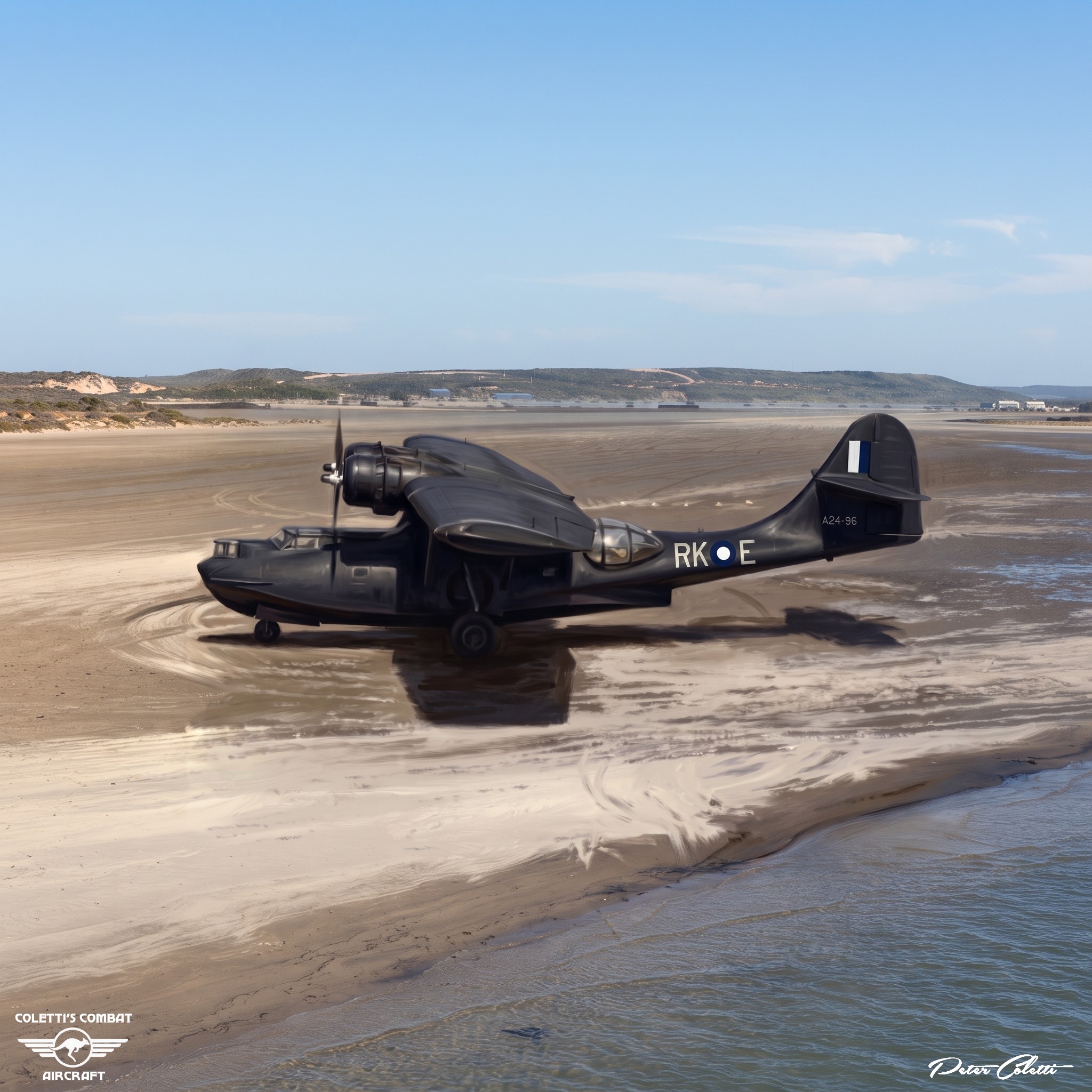
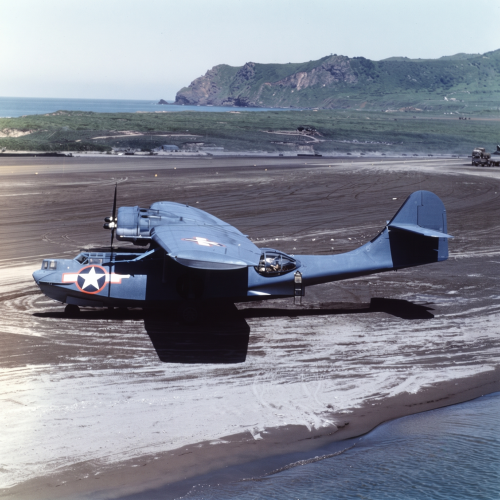
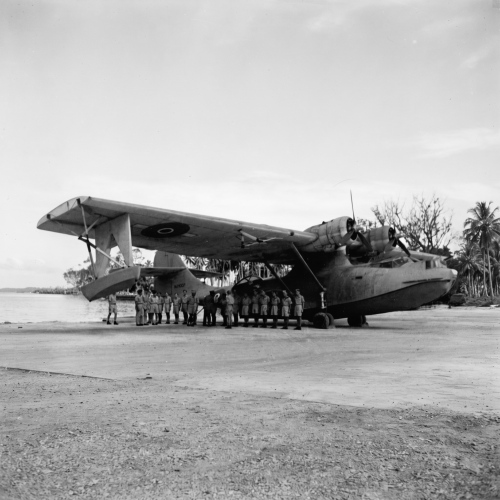
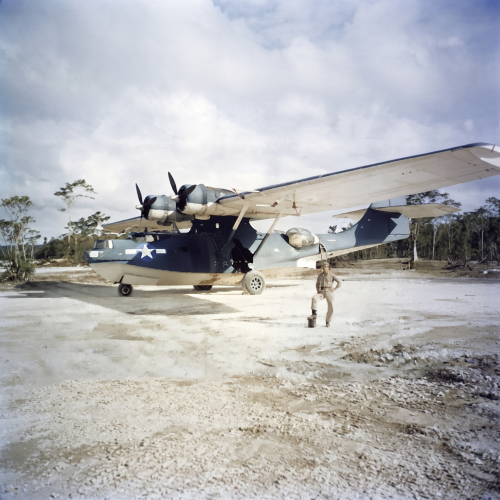
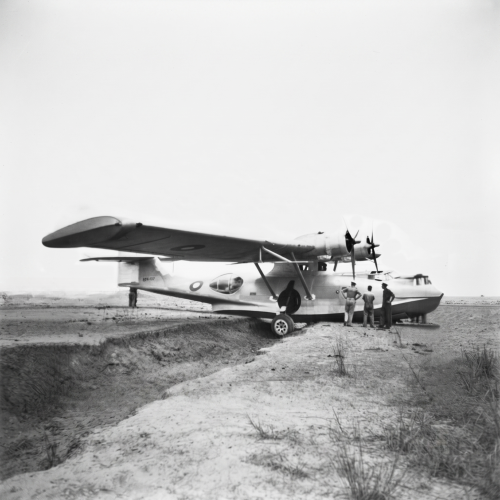
The introduction of the PBY‑5A added retractable landing gear, transforming the aircraft into an amphibian.
This greatly expanded operational flexibility by allowing land‑based patrols, easier maintenance, and access to inland airfields.
The amphibious Catalina became the most widely produced and used variant.
Major Variants
PBY‑1 — First production model with early hull design and basic defensive armament.
PBY‑2 — Minor structural and equipment improvements.
PBY‑3 — Upgraded engines for better performance.
PBY‑4 — Further engine and structural refinements.
PBY‑5 — Definitive flying-boat version with increased fuel capacity and improved systems.
PBY‑5A — Amphibious version with retractable landing gear; the most iconic Catalina.
PBY‑6A — Final wartime variant with improved radar, taller tail, and enhanced defensive armament.
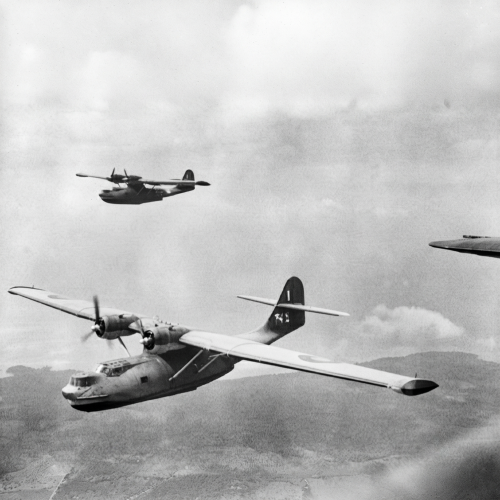
International variants included the Canadian Canso and British Catalina Mk I–VI, often equipped with British radar and ASW gear.
World War II Operational Context
The Catalina became one of the most important maritime aircraft of the Second World War, serving in every major oceanic theatre.
Pacific Theatre
Catalinas conducted long-range reconnaissance before and after Pearl Harbour, tracked Japanese fleet movements, performed anti-submarine patrols, and carried out search-and-rescue missions.
“Black Cat” squadrons used black‑painted Catalinas for night bombing and harassment of Japanese shipping.
A Catalina famously spotted the Japanese fleet approaching Midway, enabling U.S. forces to prepare for the decisive battle.
Atlantic Theatre
Catalinas escorted convoys, hunted U-boats, and used radar to close the mid-Atlantic “air gap”.
Their endurance made them ideal for long patrols over the open ocean.
Mediterranean and Indian Ocean
Catalinas performed anti‑shipping patrols, reconnaissance for amphibious landings, and rescue operations.
Across all theatres, Catalinas rescued thousands of downed airmen and shipwrecked sailors.
Their slow speed and ability to loiter for hours made them uniquely suited to maritime patrol.
Postwar Service and Legacy
After the war, Catalinas continued in military and civilian roles, including maritime patrol, firefighting, survey and mapping, passenger transport, and adventure tourism.
Their rugged construction and forgiving handling contributed to their longevity.
Several Catalinas remain airworthy today, preserved as icons of maritime aviation.
Summary
The Consolidated PBY Catalina was a practical, durable, and versatile aircraft whose endurance and reliability made it indispensable during World War II.
It shaped the outcome of maritime operations in both the Pacific and Atlantic, saved countless lives, and served for decades after the war.