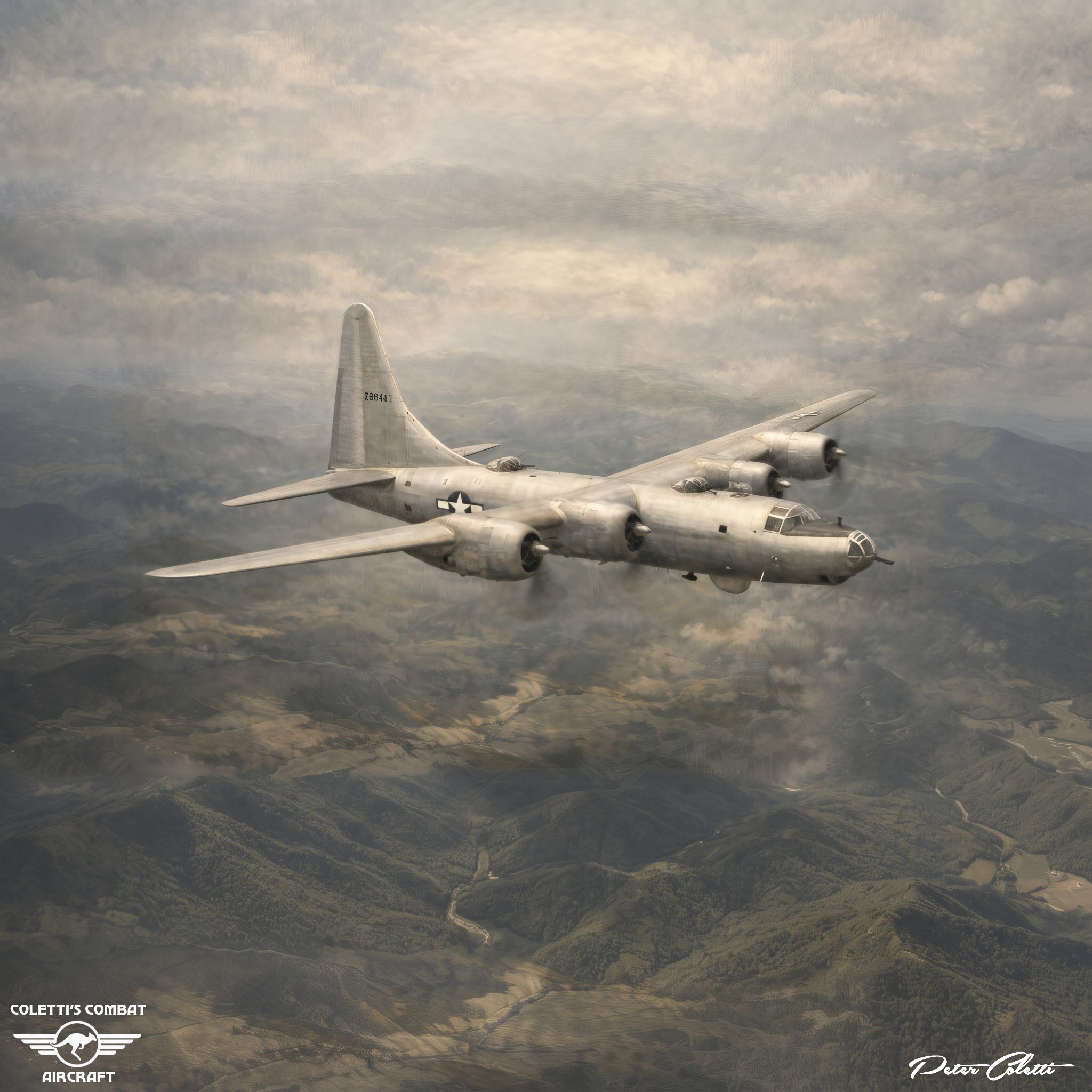
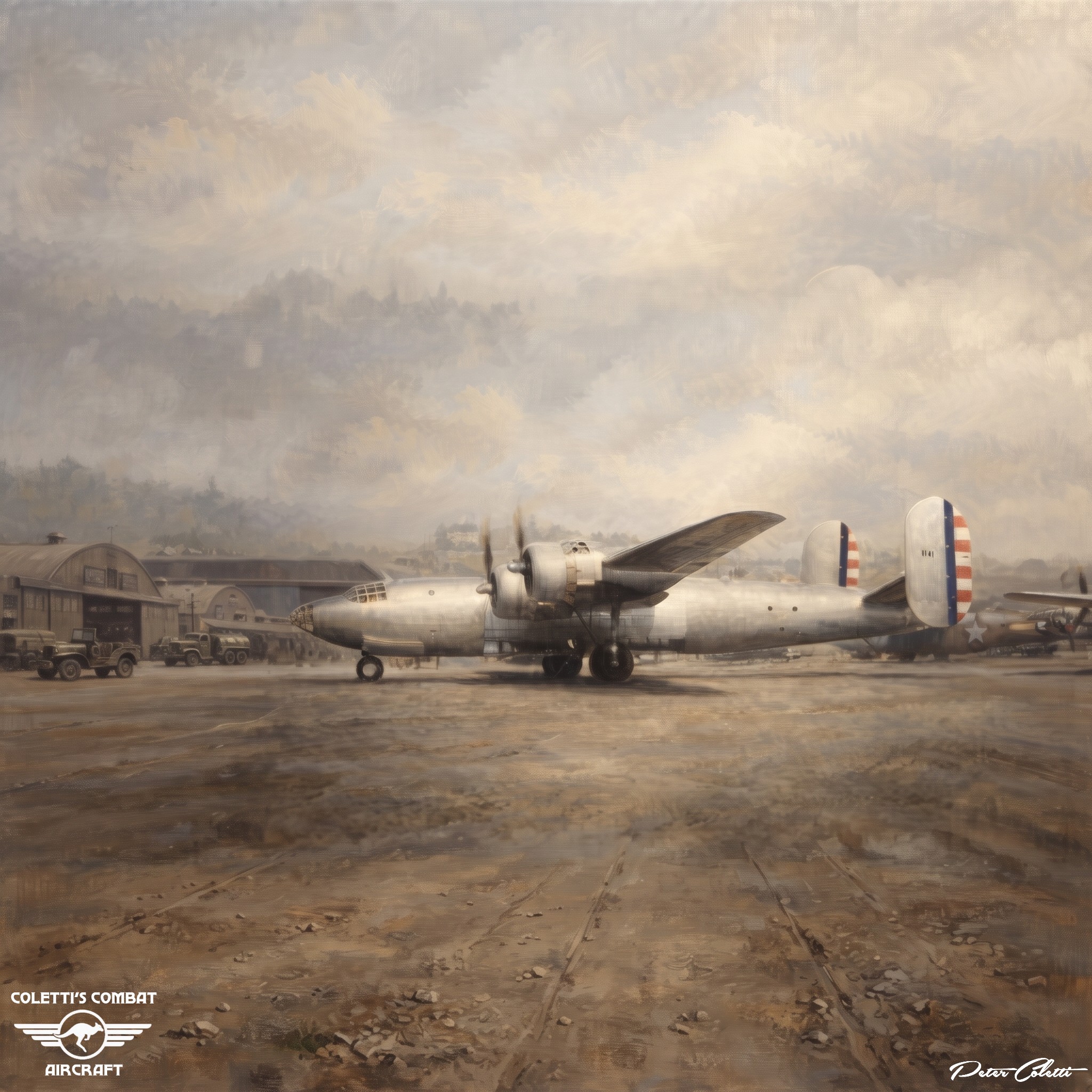
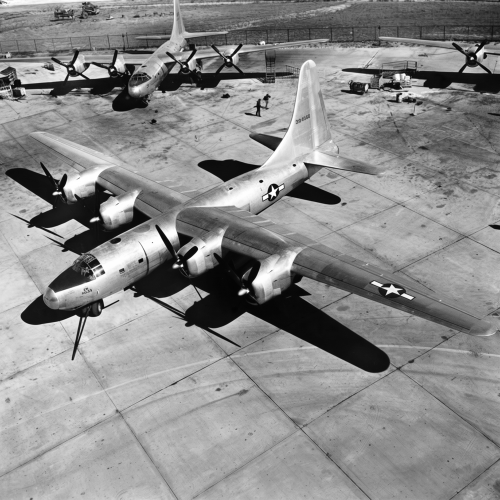
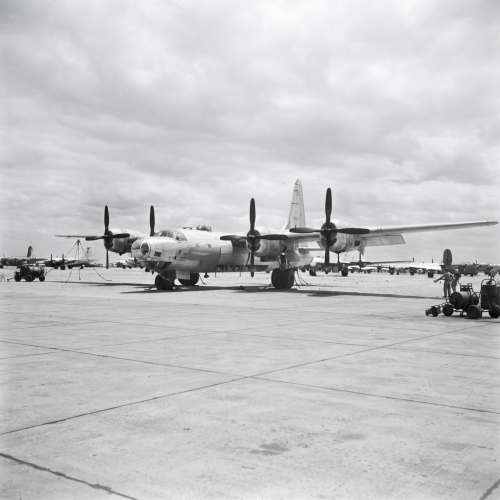
The Consolidated B‑32 Dominator originated from a 1940 U.S. Army Air Corps requirement for a new generation of very long‑range heavy bombers.
The programme ran parallel to Boeing’s development of the B‑29 Superfortress.
The Army wanted redundancy: if the B‑29 failed, Consolidated’s design would serve as a fallback.
Early requirements called for pressurised crew compartments, remote-controlled defensive turrets, and long-range capability suitable for operations across the Pacific.
Consolidated struggled with the complexity of these systems, especially pressurisation and turret reliability.
As delays accumulated, the Army relaxed the specifications, allowing the B‑32 to evolve into a more conventional heavy bomber.
This shift defined the aircraft’s final character: structurally strong, straightforward to maintain, and less technologically ambitious than its Boeing counterpart.
Airframe Design
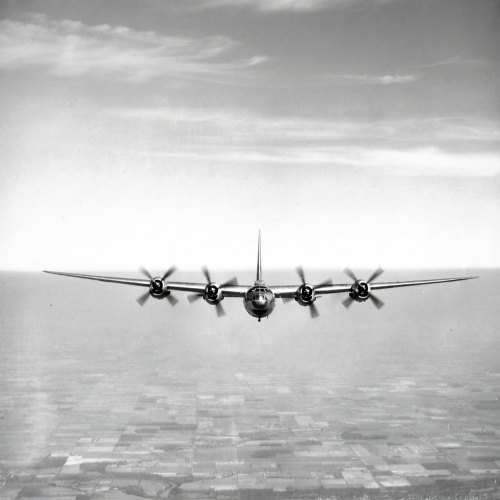
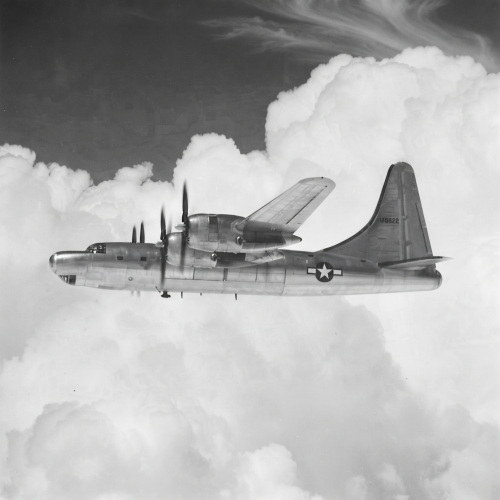
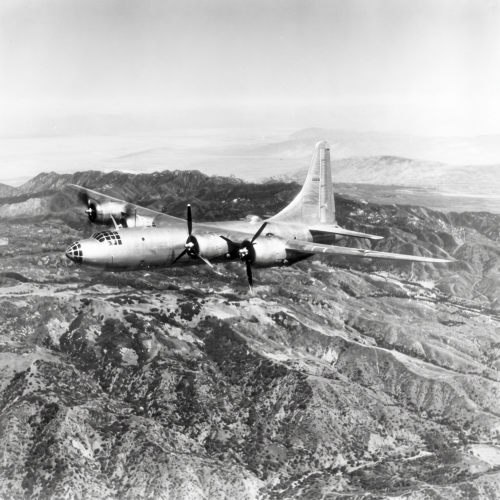
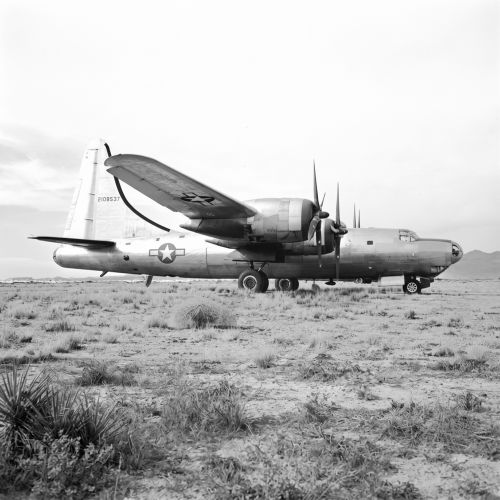
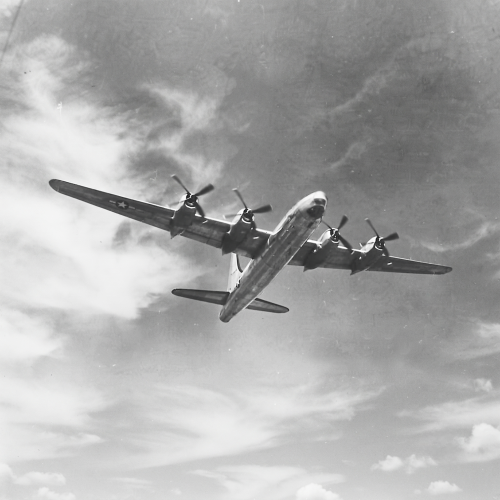
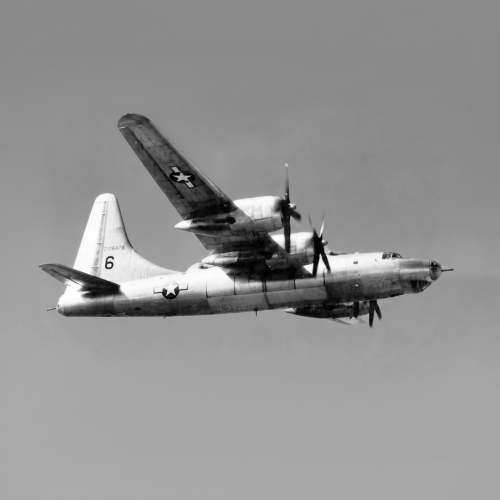
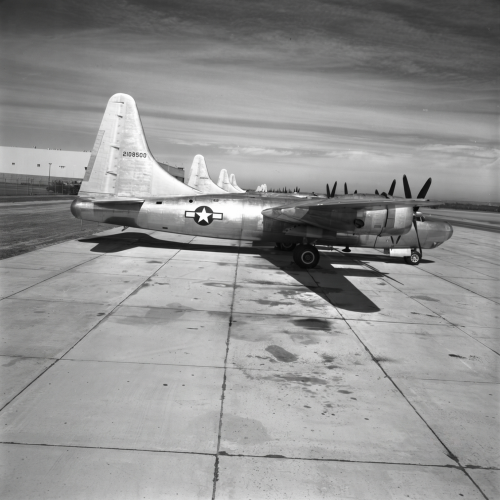
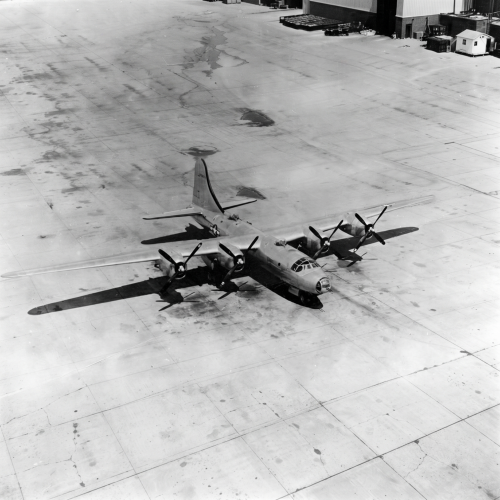
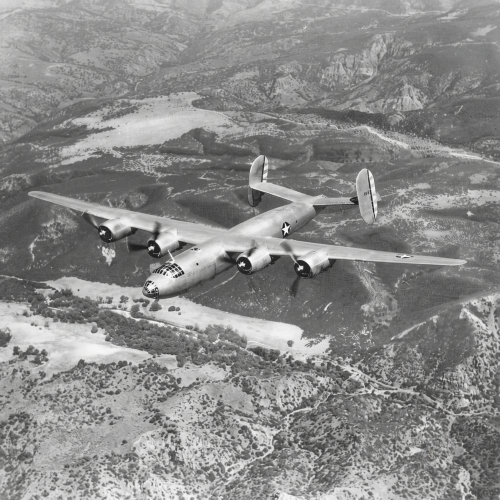
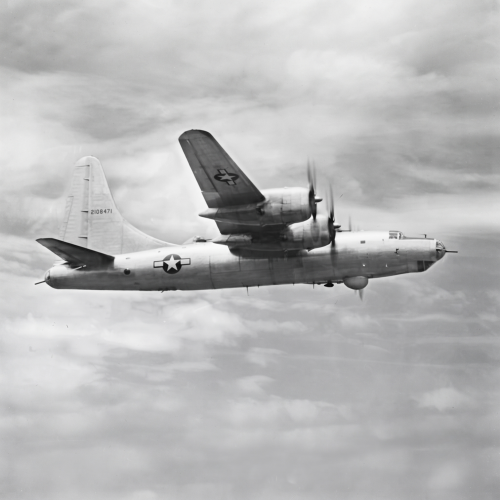
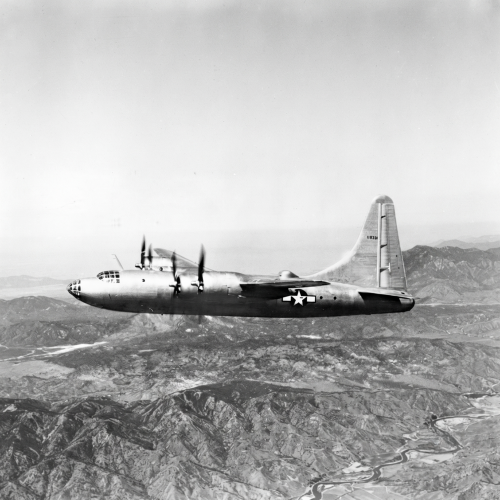
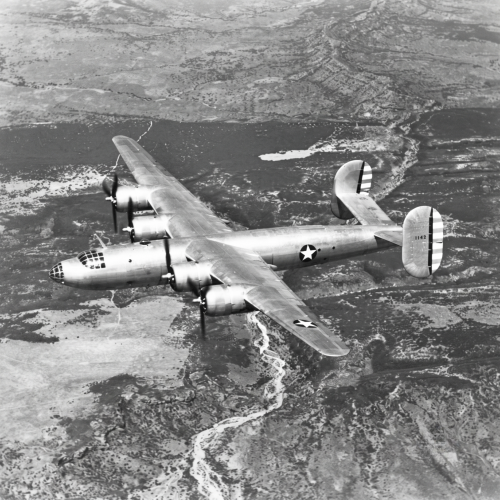
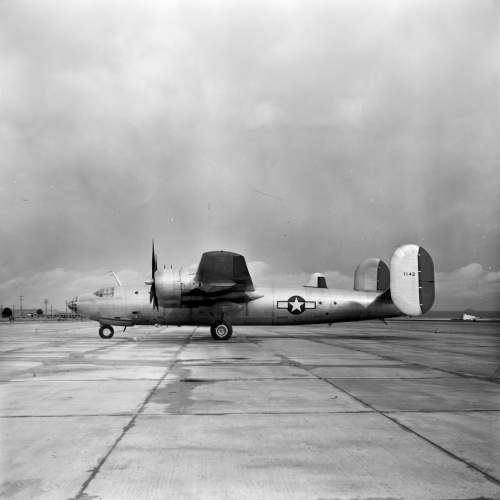
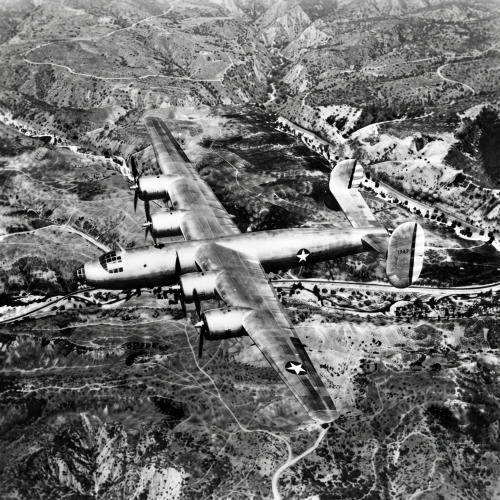
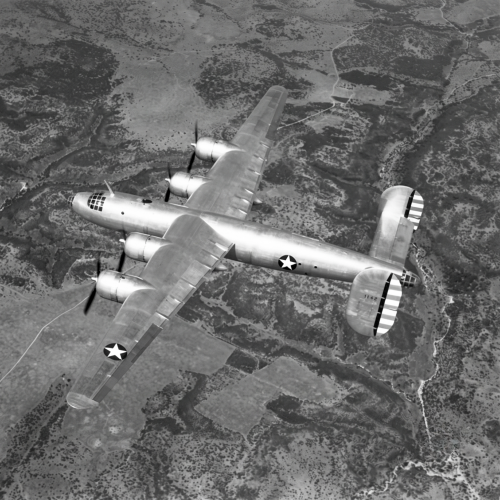
The B-32 was a large, mid-wing, four-engine heavy bomber with a conventional layout.
Structural Characteristics
Semi‑monocoque fuselage, unpressurised, with two large bomb bays capable of carrying up to 20,000 lb of ordnance.
High‑aspect‑ratio wing designed for long‑range efficiency.
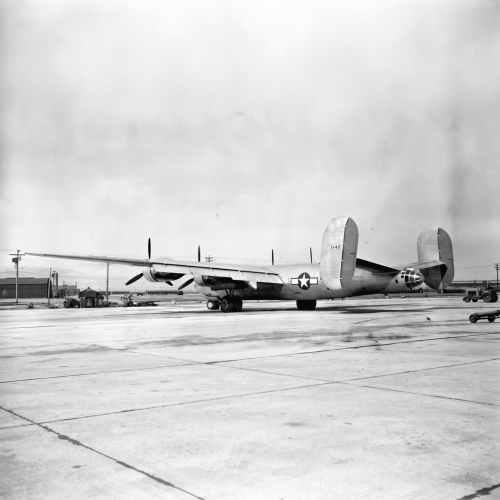
Early prototypes used a twin‑tail configuration, but stability problems led to adoption of a single large vertical fin.
Tricycle landing gear designed for heavy loads and rough island airstrips.
Crew Arrangement
The aircraft typically carried 10–13 crew members, including a pilot, co‑pilot, bombardier, navigator, radio operator, flight engineer, and multiple gunners.
Crew stations were spacious compared to the B‑29, but the lack of pressurisation required oxygen systems at altitude.
Powerplant and Systems
The B‑32 used four Wright R‑3350 Duplex‑Cyclone radial engines, similar to those used in the B‑29 but installed with different cooling arrangements.
Propulsion
Approximately 2,200 horsepower per engine.
Four‑blade constant‑speed propellers.
Consolidated redesigned airflow ducts and used large cowl flaps to mitigate overheating, a persistent issue with early R‑3350 engines.
Defensive Armament
Initial prototypes attempted remote‑controlled turrets, but reliability issues forced their removal.
Production aircraft used manually operated turrets with .50‑caliber machine guns in nose, dorsal, ventral, waist, and tail positions.
Fully armed aircraft carried 10–12 heavy machine guns, giving the Dominator strong defensive capability.
Avionics
Norden bombsight for precision bombing.
AN/APQ‑5 radar on later aircraft for navigation and targeting.
Standard late‑war U.S. bomber radio and navigation equipment.
Performance
The B‑32’s performance placed it between the B‑24 and B‑29 in capability.
Maximum speed: approximately 357 mph.
Cruise speed: approximately 290 mph.
Range: approximately 3,300 miles.
Service ceiling: approximately 30,000 ft.
Maximum bomb load: 20,000 lb.
Pilots praised the aircraft for stable handling, strong structural integrity, and excellent low‑altitude performance, making it suitable for tactical bombing and strafing missions.
Variants Only a few variants were produced, and only one reached operational service.
XB‑32: Prototype with twin tails and experimental pressurisation.
YB‑32: Pre‑production aircraft with single tail and revised defensive systems.
B-32: Final production model, unpressurised and manually armed.
A total of 118 aircraft were built before production ended.
Operational History
The B‑32 entered combat extremely late in World War II.
Its first operational missions occurred in May 1945 with the 386th Bomb Squadron in the Pacific.
Combat Missions
The Dominator flew missions over Luzon, Formosa, and the Japanese home islands.
Roles included high‑altitude bombing, low‑level strafing, photographic reconnaissance, and post‑surrender observation flights.
Final Combat Engagement
On 18 August 1945, during a photographic mission over Tokyo, Japanese fighters attacked two B‑32s.
This incident is often cited as one of the final hostile engagements of the war.
Postwar Fate
With the war over and the B‑29 firmly established, the B‑32 was quickly declared surplus.
By 1947, all Dominators had been scrapped.
No examples survive today.
Legacy
The Consolidated B‑32 Dominator represents a unique case of parallel development and strategic redundancy.
It was structurally strong, capable, and reliable but overshadowed by the more advanced B‑29.
Its brief combat career and rapid disposal have made it one of the least‑known American heavy bombers, yet its development story illustrates the scale and urgency of wartime aviation engineering.