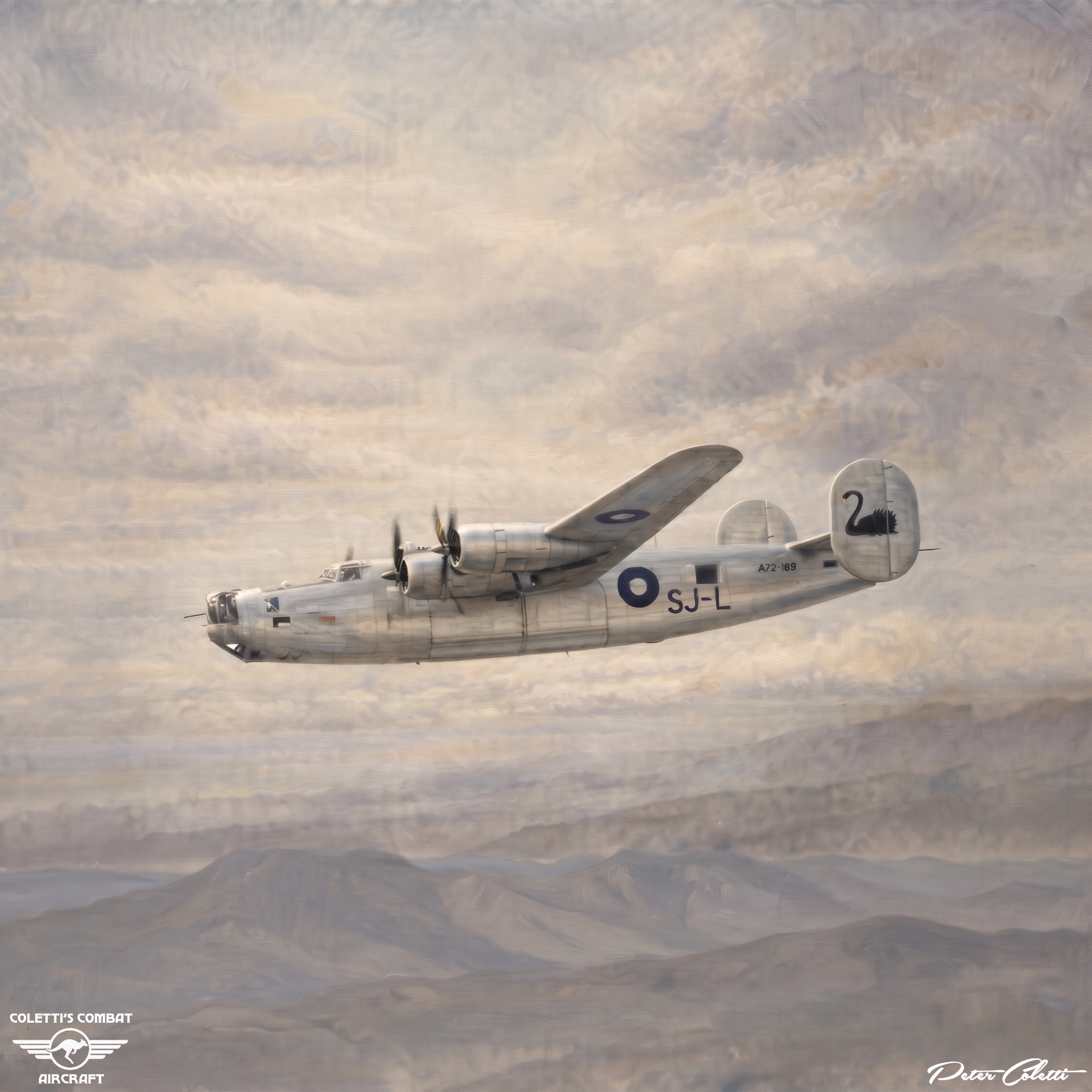
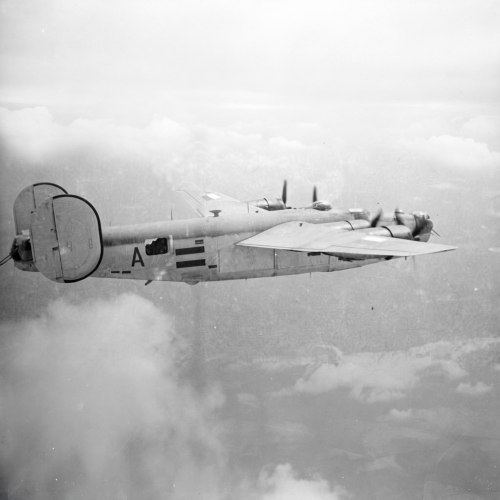
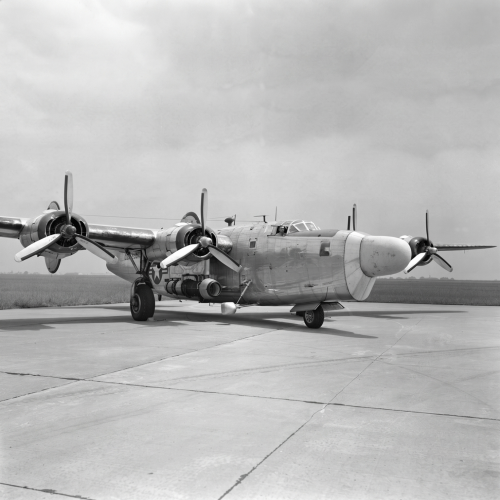
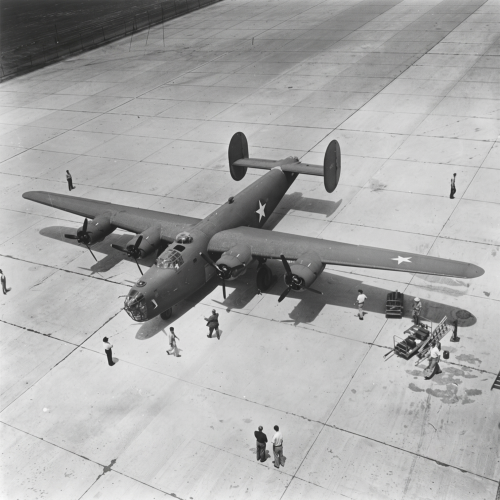
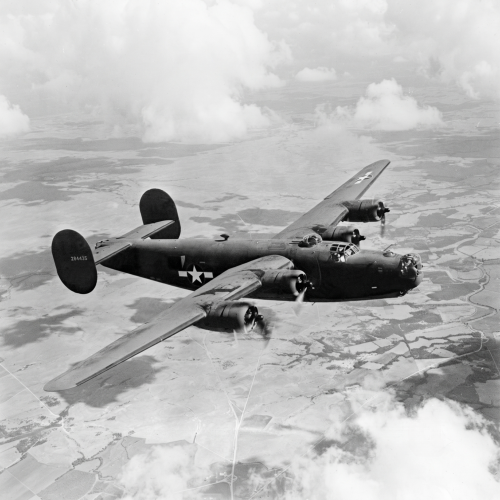
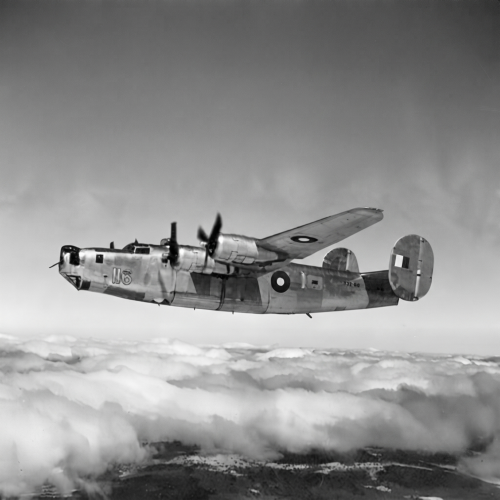
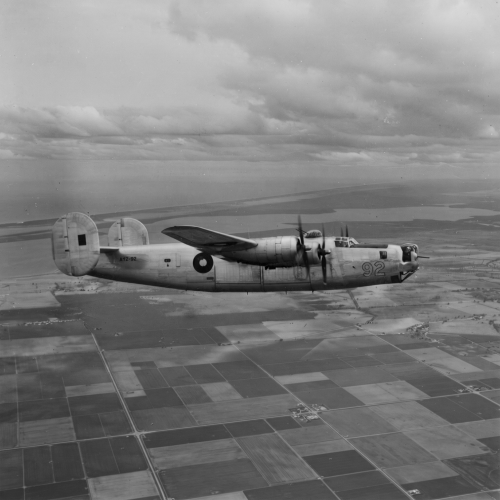
The B‑24 originated in 1938 when the U.S. Army Air Corps asked Consolidated Aircraft to design a bomber superior to the Boeing B‑17.
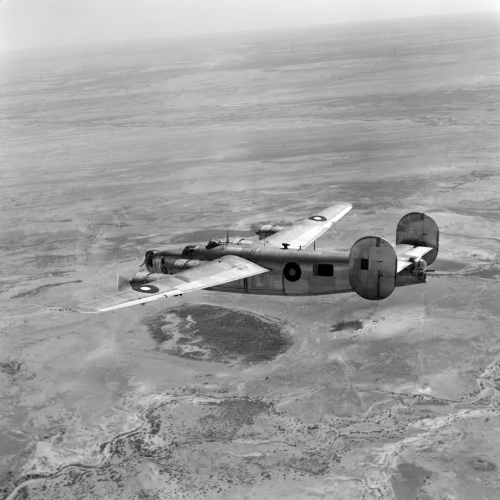
Isaac M. Laddon and his team adopted the Davis wing, a high‑aspect‑ratio airfoil that promised exceptional aerodynamic efficiency.
This wing allowed the aircraft to fly faster and farther while carrying substantial loads.
Key developmental milestones:
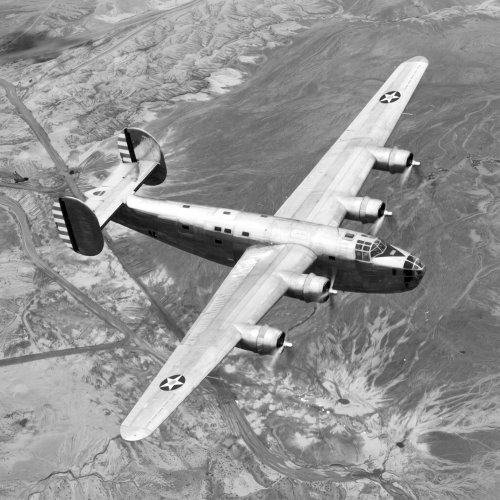
1939: The XB‑24 prototype flew on 29 December.
Performance was promising but required refinement.
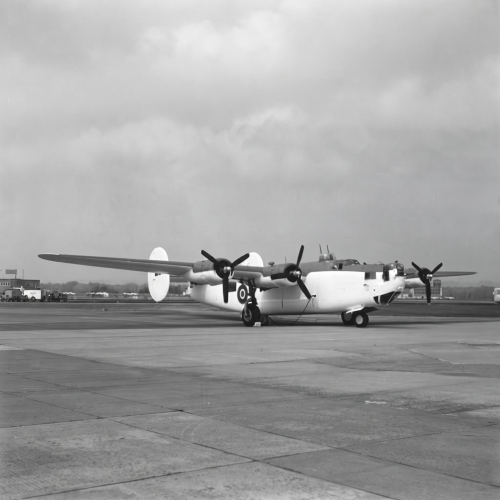
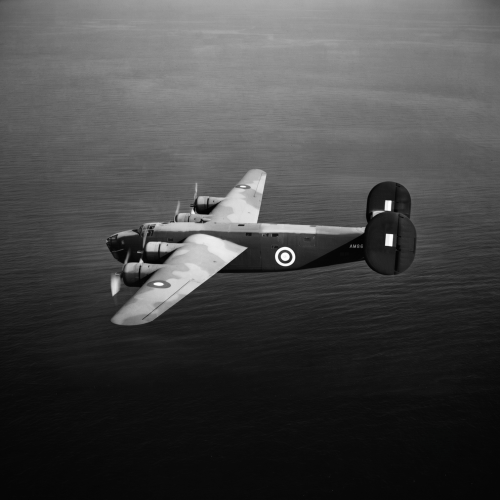
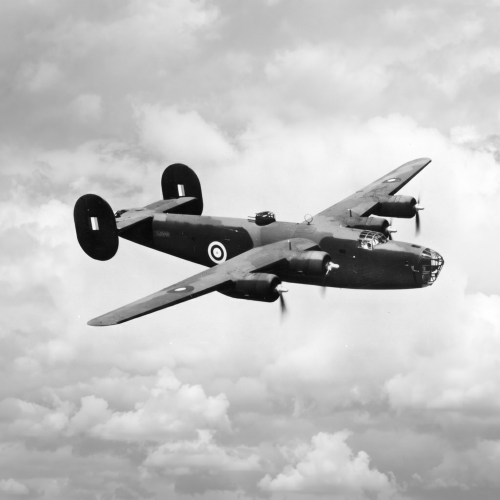
1940: Early production B‑24A and LB‑30 models were delivered, primarily to Britain.
1941–42: Major improvements produced the B‑24D, the first fully combat‑ready Liberator with armour, self‑sealing tanks, and powered turrets.
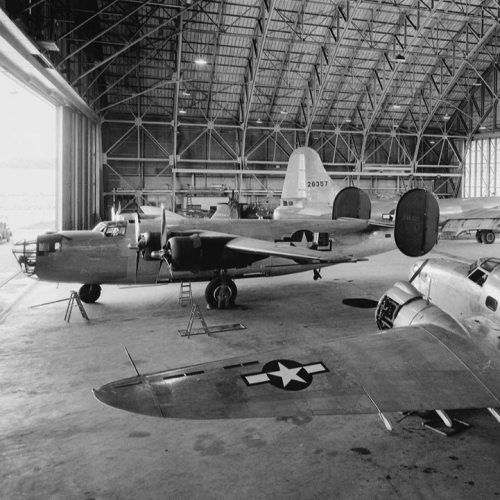
1942–45: Production expanded to Ford’s Willow Run plant and multiple other factories.
Willow Run became the world’s largest bomber plant, producing a B‑24 roughly every hour at peak output.
More than 18,400 Liberators were built, making it the most‑produced American military aircraft in history.
Design Characteristics
Airframe
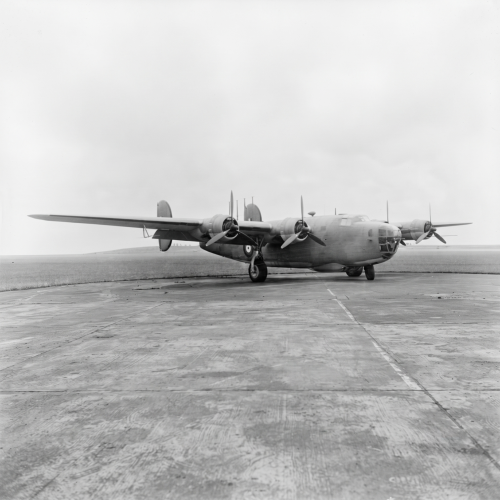
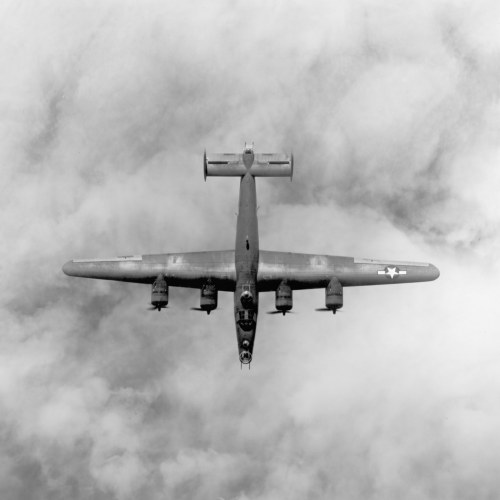
The Davis wing was long and narrow, giving excellent range but making the aircraft less stable and more demanding to fly than the B‑17.
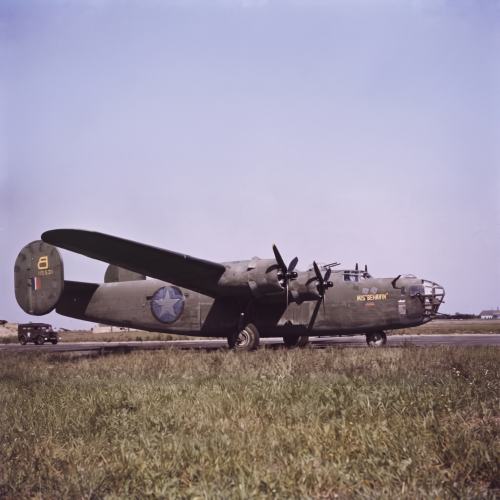
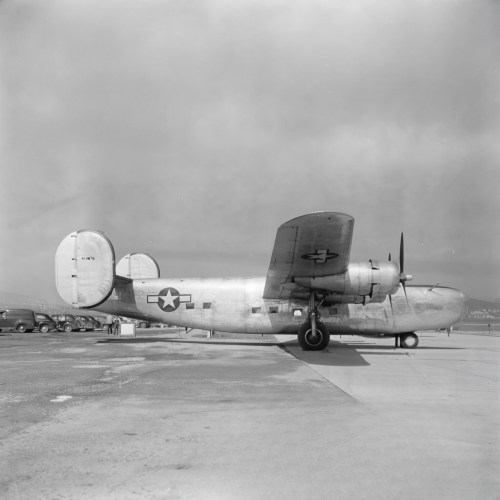
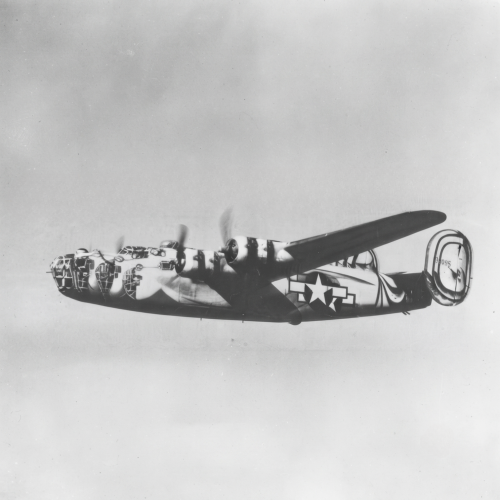
The fuselage was deep and slab-sided to maximise internal volume.
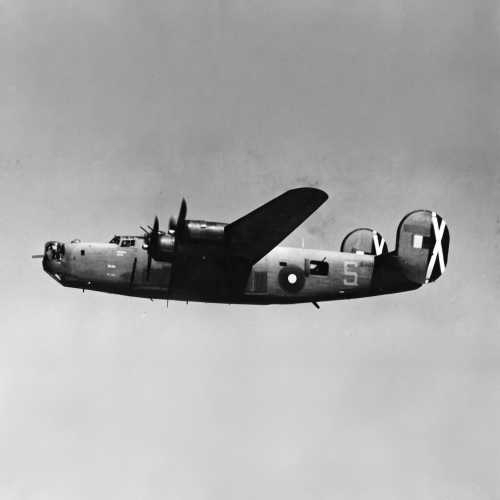
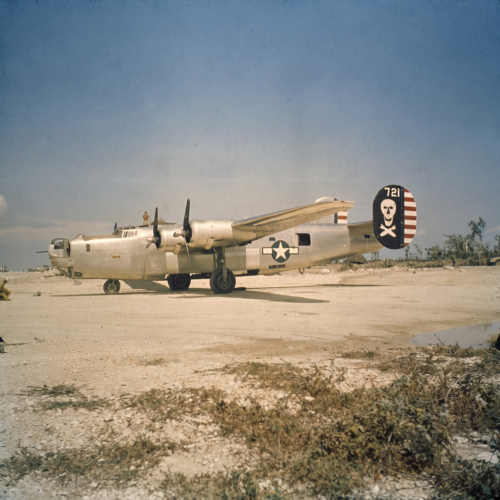
Twin vertical fins provided directional stability, and tricycle landing gear improved ground handling.
Crew Layout
A typical crew of ten consisted of a pilot, co‑pilot, navigator, bombardier, radio operator, engineer/top turret gunner, two waist gunners, a tail gunner, and either a nose or belly gunner depending on the variant.
Powerplant
The aircraft used four Pratt & Whitney R‑1830 Twin Wasp radial engines, each producing about 1,200 horsepower.
These engines were reliable and widely available.
Armament
The Liberator carried up to ten .50‑calibre Browning machine guns in powered turrets and flexible mounts.
Its internal bomb load reached 8,000 pounds, reduced for long‑range missions.
Performance
Maximum speed was roughly 290 mph, with a cruise speed around 215 mph.
The range varied between 2,100 and 2,700 miles depending on the load.
The service ceiling was about 28,000 feet.
The B‑24 was faster and had longer range than the B‑17 but was less rugged and more difficult to fly.
Operational Use and WWII Context
Strategic Bombing
The B‑24 served with the U.S. Eighth and Fifteenth Air Forces in Europe, striking oil refineries, industrial centres, transportation hubs, and aircraft factories.
Operation Tidal Wave, the low‑level attack on Ploiești on 1 August 1943, was its most famous mission.
The raid inflicted heavy damage but suffered severe losses.
Pacific Theatre
The Liberator’s long range made it ideal for Pacific operations.
It conducted strategic bombing, anti‑shipping strikes, reconnaissance, and support for island‑hopping campaigns.
Its ability to reach distant targets made it the dominant heavy bomber in the Pacific by 1944.
Maritime Patrol and Anti‑Submarine Warfare
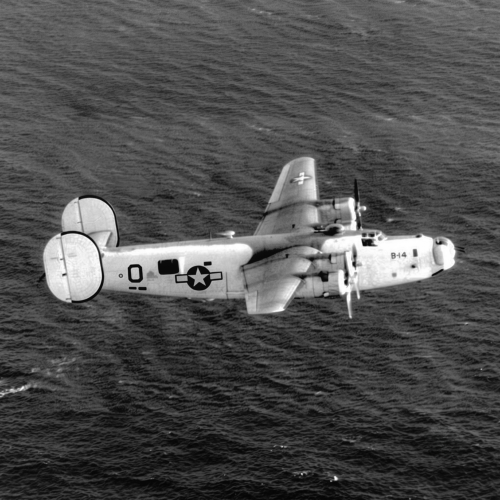
The U.S. Navy and the RAF Coastal Command used Liberators to close the mid‑Atlantic air gap.
Equipped with radar, Leigh lights, and depth charges, the B‑24 became one of the most effective anti‑submarine aircraft of the war.
Transport and Special Missions
Transport variants such as the C‑87 Liberator Express carried cargo, personnel, and wounded.
Other Liberators performed electronic warfare, weather reconnaissance, and special operations missions.
Major Variants
XB‑24
Prototype with early Davis wing and initial systems.
B‑24A / LB‑30
Initial production models, mostly for Britain, lacking armour and self‑sealing tanks.
B‑24D
First fully combat‑ready version with powered turrets and improved defensive armament.
B‑24J
The most produced variant, featuring a standardised nose turret and improved bombing equipment.
B‑24L / B‑24M
Weight‑reduced versions with lighter turrets.
PB4Y‑1
U.S. Navy Liberator for long‑range patrol and anti‑submarine warfare.
PB4Y‑2 Privateer
Major redesign with a single vertical tail, optimised for maritime patrol.
C‑87 Liberator Express
Transport variant with modified fuselage and cargo doors.
Significance
The Liberator’s importance stemmed from its production numbers, versatility, long range, and major role in anti‑submarine warfare.
It was central to Allied strategic bombing and maritime patrol, and its mass production symbolised American industrial capability.
Legacy
After the war, most B‑24s were scrapped due to surplus and maintenance complexity.
A few continued in service into the early 1950s.
Today, only two airworthy Liberators remain, making it one of the rarest major Allied bombers still flying.
Its legacy endures as a symbol of aerodynamic innovation, industrial scale, and global reach.