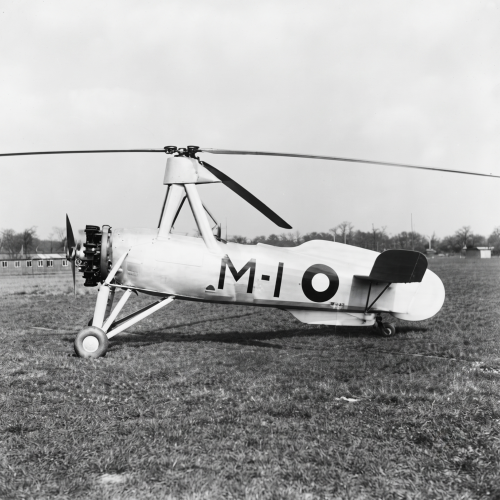
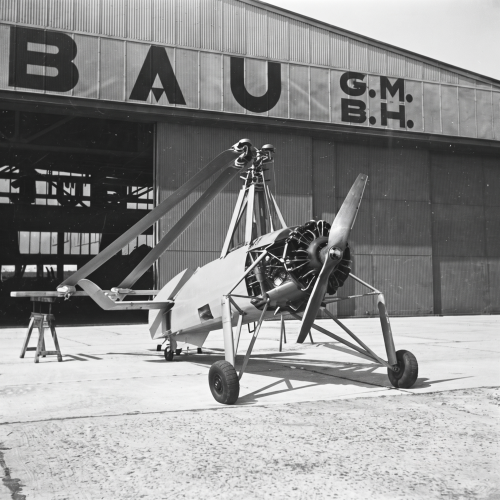
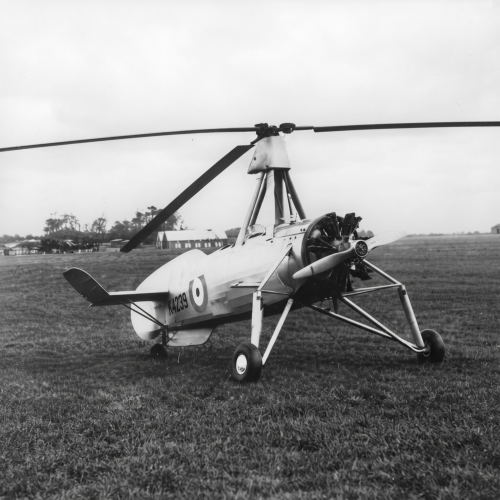
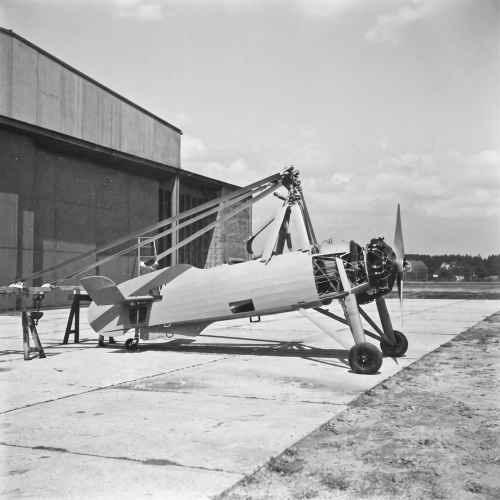
The Cierva C.30 emerged from Juan de la Cierva’s long effort to refine the autogyro concept after the earlier C.19 series.
Before the C.30, autogyros relied on conventional aerodynamic control surfaces—ailerons, elevators, and rudders—to steer, but these became ineffective at the very low speeds typical of autogyro landing and slow-flight regimes.
Cierva’s breakthrough was direct control, achieved by tilting the rotor head itself rather than relying on airflow over fixed surfaces.
This innovation was first proven on the experimental Cierva C.19 Mk V, which introduced a tilting rotor hub and a hanging control stick extending into the cockpit.
Building on this, Cierva commissioned Airwork and National Flying Services to create the first true C.30 prototype, G‑ACFI, which flew in April 1933.
It used a tripod rotor pylon, dihedral tailplane tips, and a fuselage converted from a C.19.
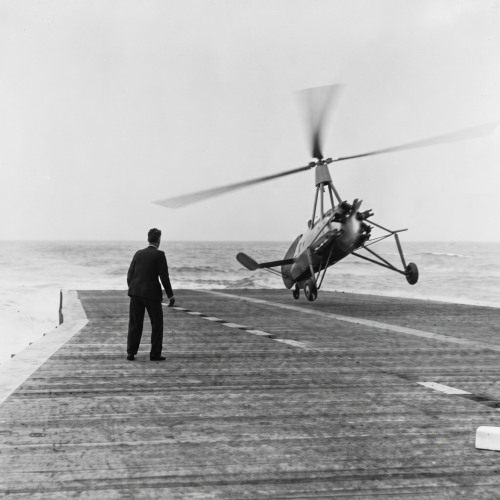
Its take-off run was about 30 yards, and landing required only 3 yards, thanks to the autorotating rotor’s ability to maintain lift at extremely low forward speeds.
A second prototype, G‑ACKA, designated C.30P, introduced folding rotor blades, a reinforced undercarriage, and a more powerful 140 hp Armstrong Siddeley Genet Major IA engine.
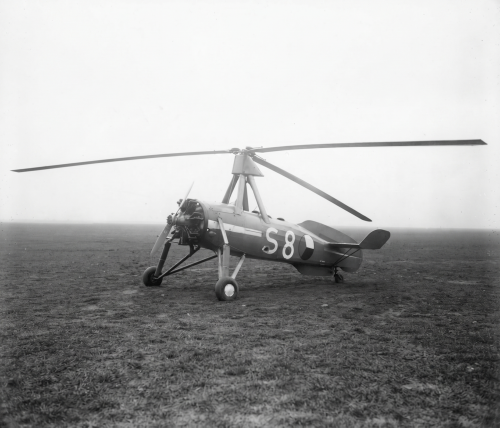
Danish C.30
Four C.30P machines followed, refining the design before full production.
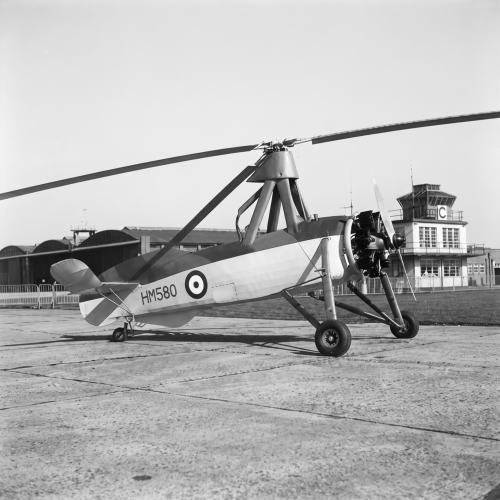
By 1934, A.V. Roe & Co. (Avro) acquired a licence to build the type, producing the definitive C.30A, also known as the Avro 671 Rota.
Production also occurred in France (Lioré‑et‑Olivier) and Germany (Focke‑Wulf).
Total production reached roughly 143–150 aircraft, depending on source.
Focke-Wulf C 30 Heuschrecke
Design and Technical Characteristics
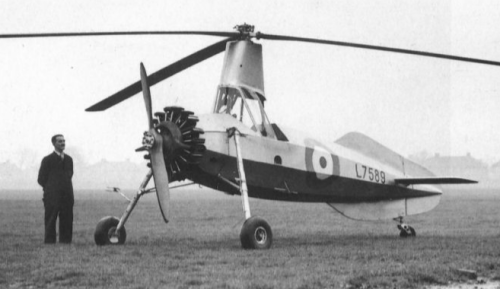
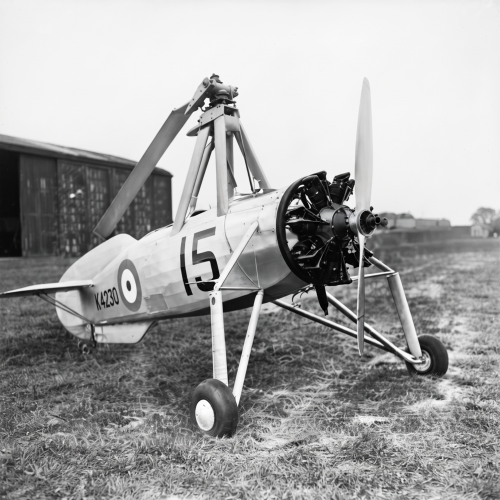
The Cierva C.30 was a two‑seat autogyro with a fabric‑covered fuselage and a three‑bladed rotor mounted on a rear‑leaning pylon.
Key design features included the following:
Rotor System and Control
Three‑blade rotor, diameter 37 ft (11.28 m).
Direct control via a tilting rotor head operated by a hanging control column.
This allowed pitch, roll, and yaw control independent of airflow over fixed surfaces.
The rotor could be pre‑rotated using an engine‑driven clutch system for short takeoff runs; later experiments enabled true vertical jump takeoffs.
Focke-Wulf C 30 Heuschrecke
Airframe
Fuselage: fabric‑covered, derived from earlier Cierva designs.
Tailplane: unbraced, without elevators; turned‑up tips and an inverted aerofoil section on the port side to counteract propeller torque.
Vertical surfaces: long dorsal fin and ventral fin, necessary because a tall fin would interfere with the sagging rotor at rest.
Undercarriage: wide‑track, wire‑braced legs; later C.30A versions had reinforced struts and a “knee” in the upper leg for strength.
Lioré et Olivier LeO C-302
Powerplant
Most production aircraft used the Armstrong Siddeley Genet Major IA, a seven‑cylinder radial engine producing 140 hp.
Lioré et Olivier LeO C-30S
Performance
Performance figures varied slightly by engine and national production, but typical values include:
Max speed: 110 mph (177 km/h)
Cruise speed: 95 mph (153 km/h)
Rate of climb: 700 ft/min (213 m/min)
Range: 285 miles (459 km)
Empty weight: ~1,220 lb (553 kg)
Loaded weight: ~1,800 lb (816 kg)
Operationally, the C.30 was renowned for its extremely short landing roll—often just a few yards—and its forgiving handling at low speeds, making it ideal for observation and liaison roles.
Variants
C.30 (Initial Production Design)
First production version, radial‑engined, three‑blade rotor, direct control system.
Used the 105 hp Genet Major I engine.
C.30P (Pre‑Production)
Four‑legged pyramid rotor mounting.
Reinforced undercarriage.
Folding rotor blades.
140 hp Genet Major IA engine.
C.30A (Main Production Model / Avro 671 Rota)
Built by Avro, Airwork, Lioré‑et‑Olivier, and Focke‑Wulf.
Revised undercarriage with increased track and additional bracing.
Movable trimming surfaces were added to the tailplane and fin.
Widely exported; 37 appeared on the British civil register.
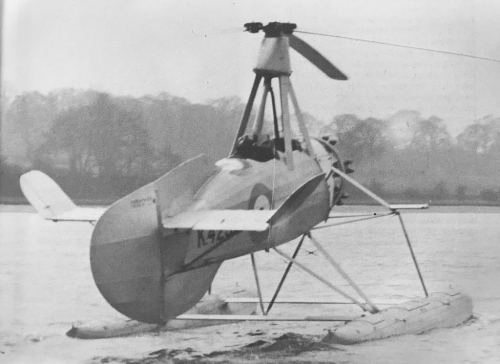
Sea Rota
Twin‑float version built for the RAF under Specification 16/35.
One produced.
C.40 / Rota II
Successor design incorporating perfected jump‑start (vertical takeoff) capability.
Side‑by‑side seating, a wooden semi‑monocoque fuselage, and a 175 hp Salmson 9NG engine.
Five ordered for RAF; some diverted to civilian customers.
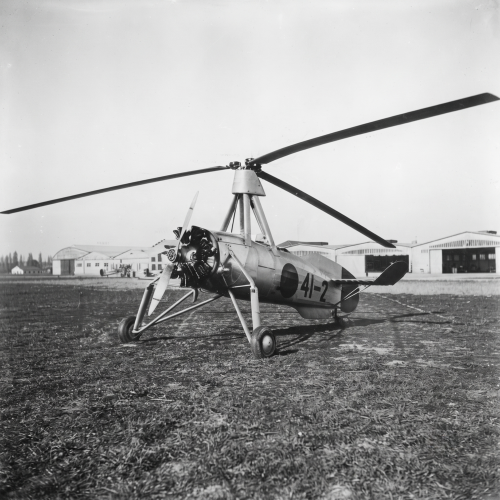
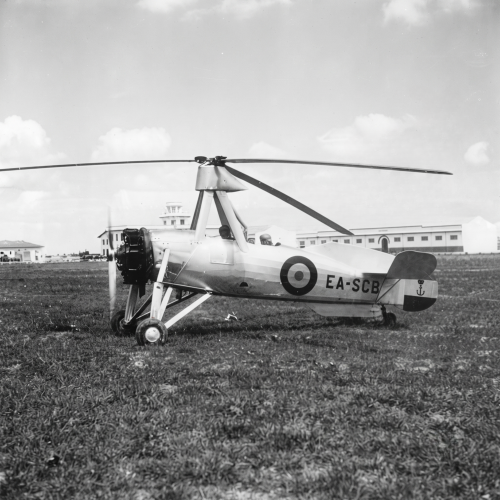
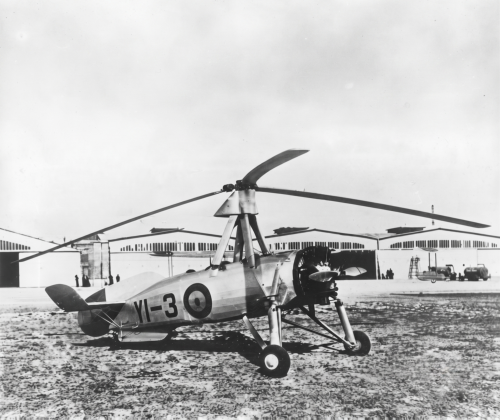
Spanish Naval C.30
Operational Use and WWII Context
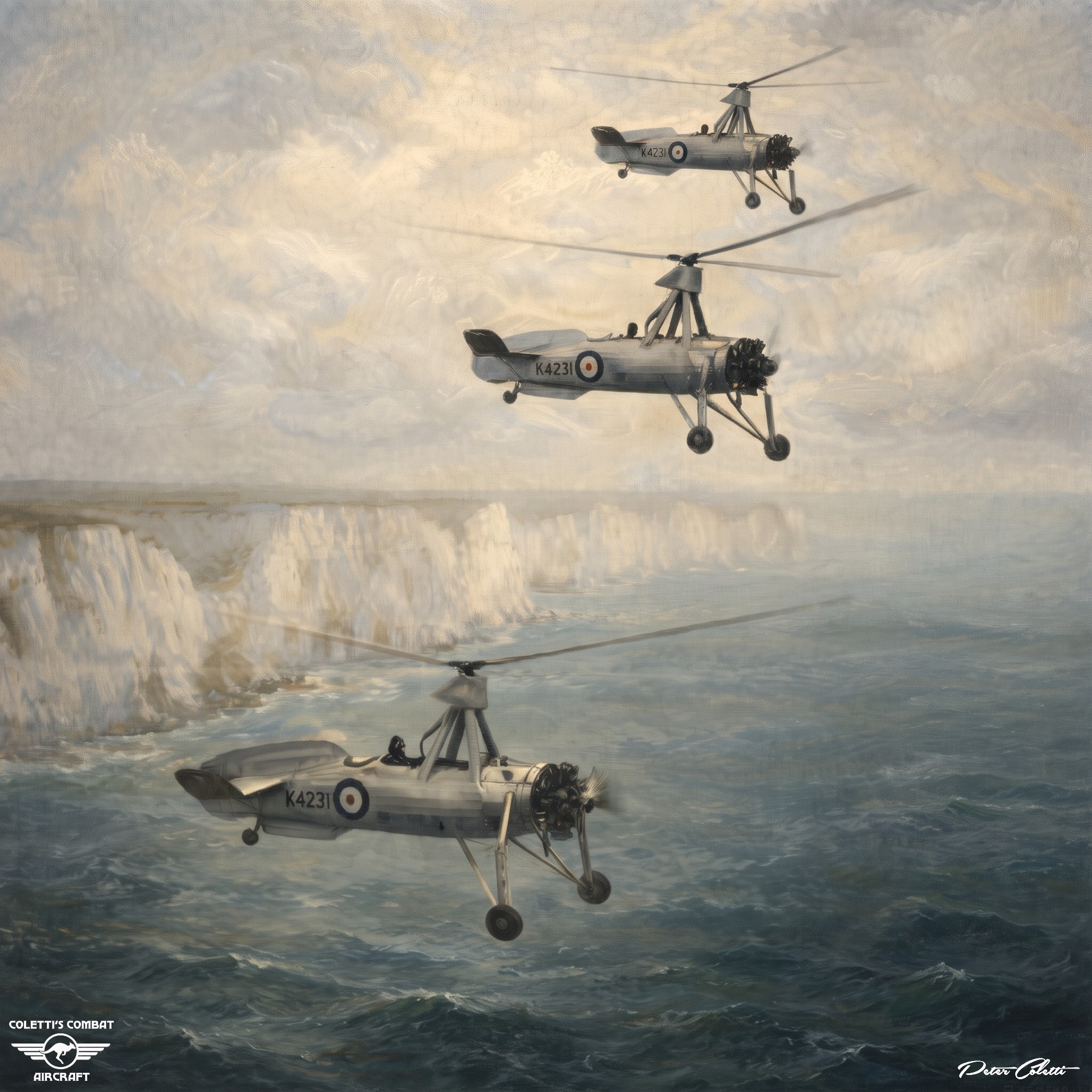
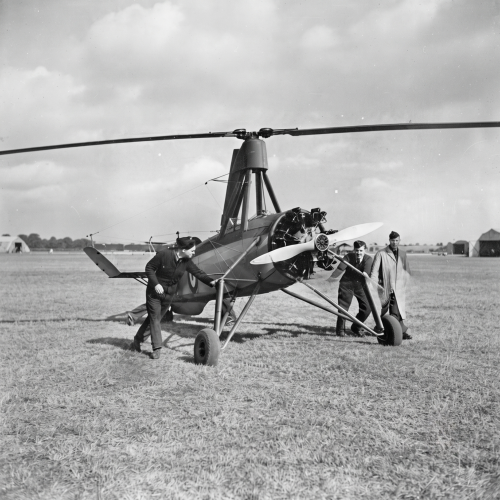
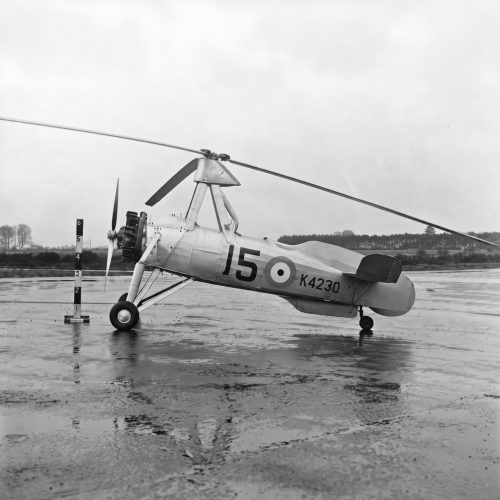
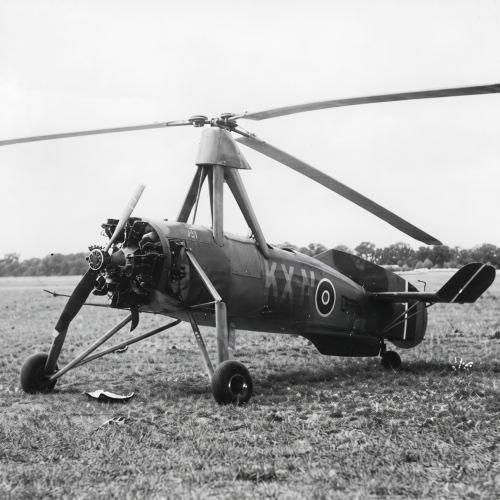
The Cierva C.30 entered RAF service beginning in December 1934, primarily with the School of Army Co‑operation at RAF Old Sarum.
These aircraft were designated Avro 671 Rota Mk I.
By the outbreak of the Second World War, the RAF’s Rotas were assigned to a highly secret unit responsible for ground radar calibration duties.
Their ability to fly slowly, maintain stable low‑speed flight, and land in extremely confined spaces made them ideal for this specialised role.
Spanish C.30
Other military uses included:
Blade‑flexing tests at the Royal Aircraft Establishment (aircraft K4775).
Limited foreign military adoption in Europe and Asia.
Civilian uses before and during the war included:
Traffic reporting at major events.
Filming duties, such as the 1936 FA Cup Final (aircraft G‑AGUT).
The C.30 did not serve as a combat aircraft; instead, its legacy lies in its role as a stepping stone towards practical rotorcraft.
Cierva’s innovations in rotor control and jump‑take-off technology directly influenced later helicopter development.
Legacy
The Cierva C.30 is widely regarded as the most successful pre‑war autogyro, with nearly 150 built across three countries.
Its direct-control rotor head and reliable autorotation characteristics made it the first autogyro capable of safe, predictable low-speed handling—an essential precursor to the helicopter.
The later C.40’s jump-take-off capability demonstrated the feasibility of vertical flight using powered rotors, closing the technological gap between autogyros and true helicopters.