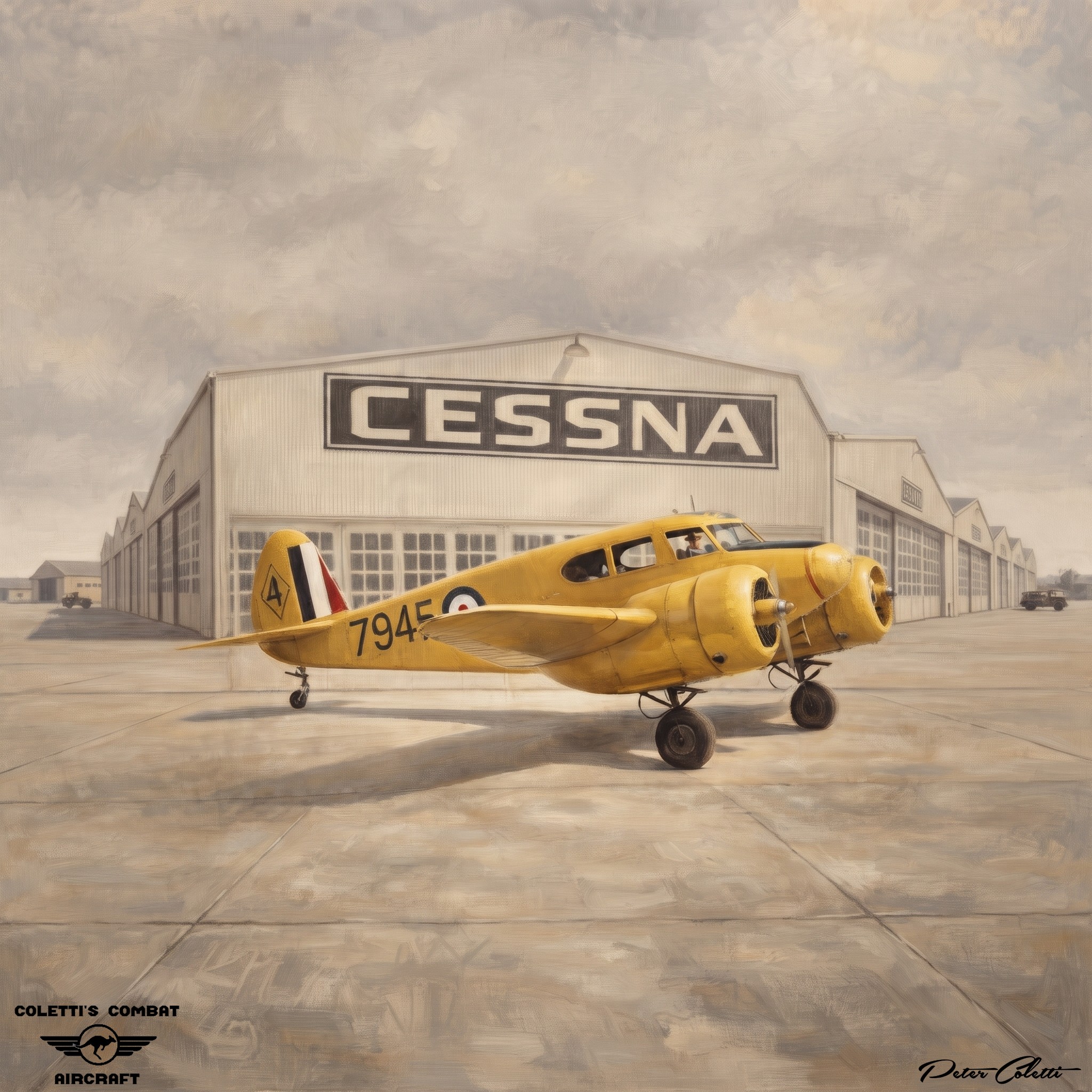
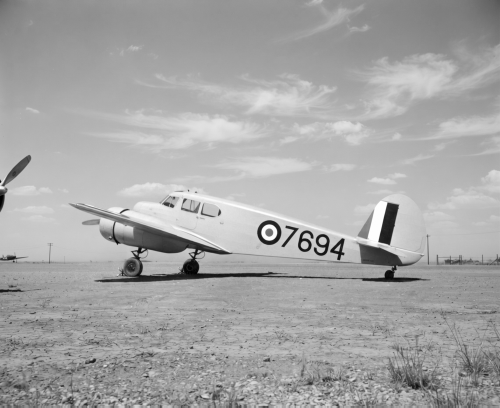
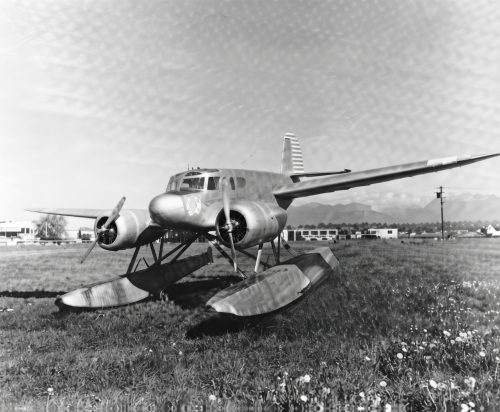
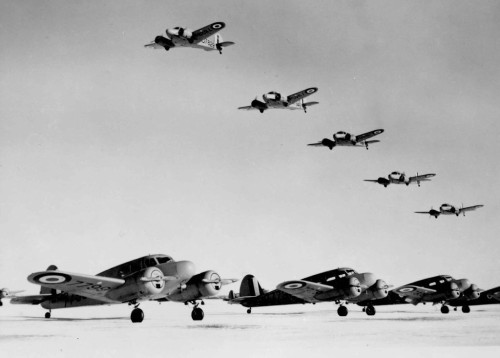
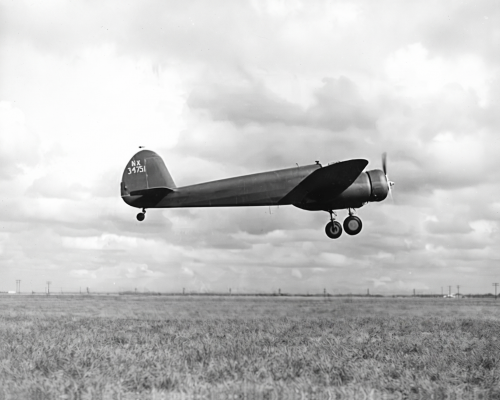
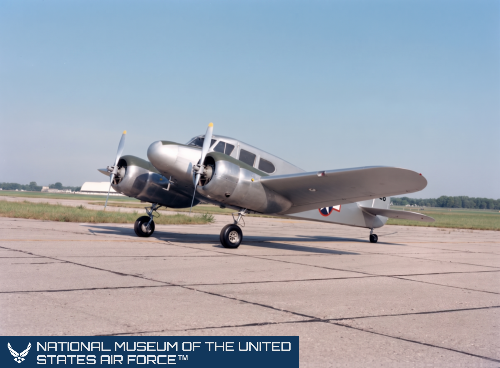
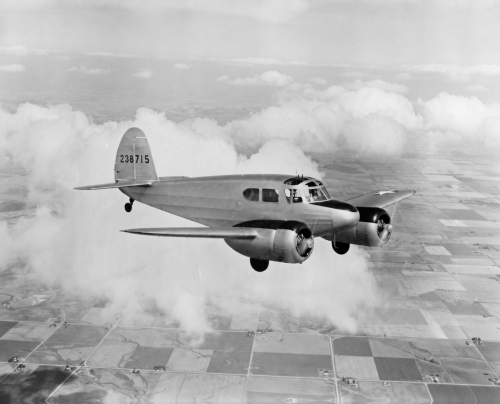
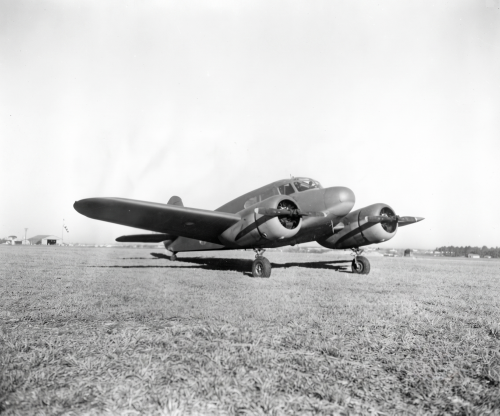
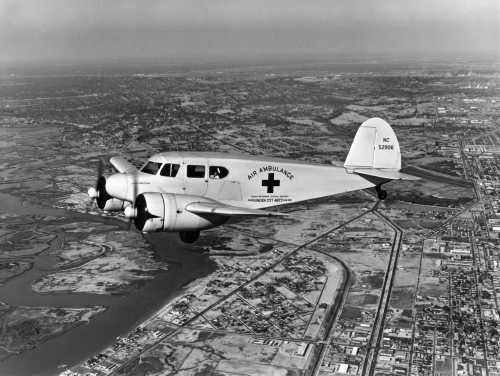
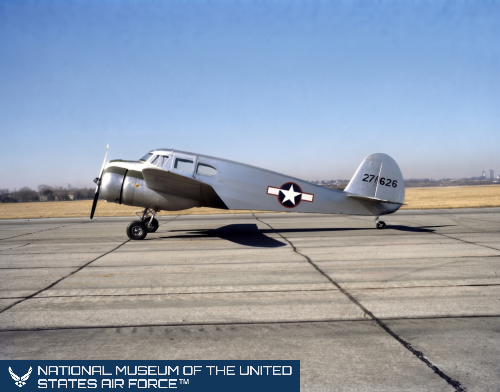
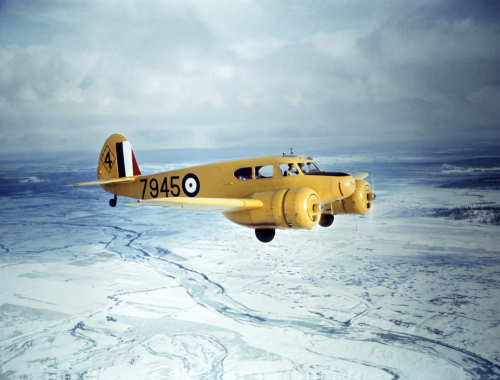
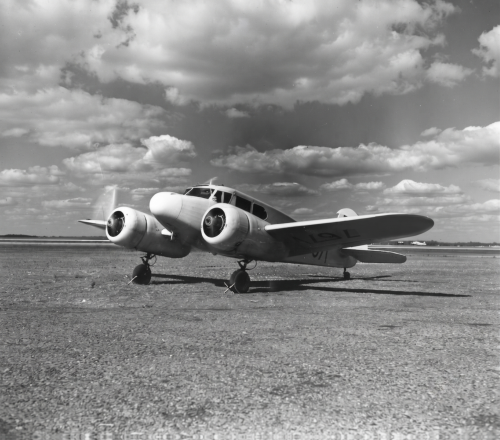
The aircraft, known variously as the Cessna T‑50, Cessna Bobcat, and in Royal Canadian Air Force service as the Cessna Crane, emerged from a period when Cessna Aircraft Company was transitioning from small, single‑engine private aircraft into more complex, multi‑engine designs.
In the late 1930s, the company recognised a growing civilian demand for light twin‑engine aircraft suitable for business travel, air taxi operations, and pilot training.
This led to the development of a five‑seat, twin‑engine cabin aircraft that would become the T‑50.
The prototype first flew in March 1939, demonstrating a combination of simplicity, low operating cost, and forgiving handling characteristics.
These qualities made it attractive not only to civilian operators but also to military services preparing for the possibility of large‑scale pilot training programmes.
As global tensions escalated and the Second World War began, the T‑50’s potential as a multi‑engine trainer became increasingly evident.
By 1940, both the United States Army Air Corps (USAAC) and the Royal Canadian Air Force (RCAF) were seeking reliable, economical aircraft to train pilots transitioning from single‑engine aircraft to more complex twin‑engine types.
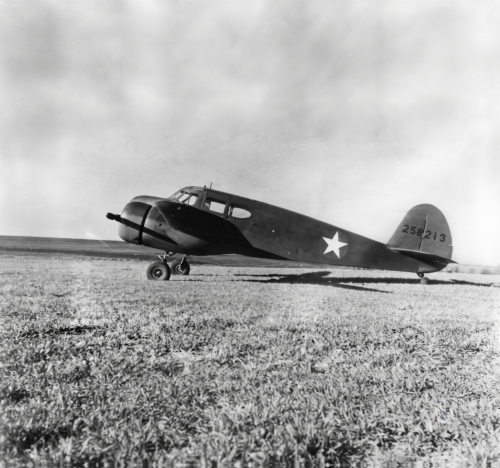
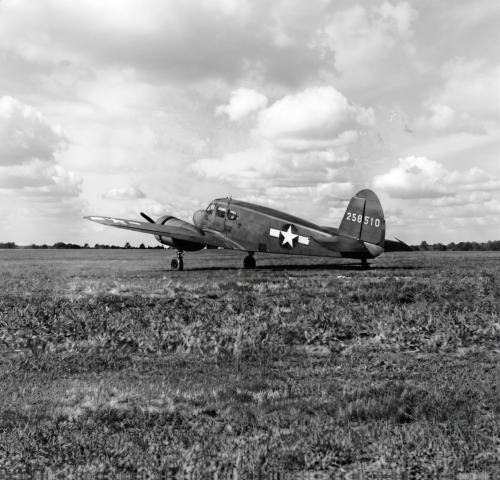
The T‑50 was selected for this role, entering service as the UC‑78 (utility transport) and AT‑17 (advanced trainer) in the United States and as the Crane Mk.I in Canada.
Production expanded rapidly, transforming what had begun as a modest civilian aircraft into one of Cessna’s most important wartime products.
Design Characteristics
Airframe and Construction
The Cessna T‑50 was notable for its mixed construction, a transitional design between the all‑wood aircraft of the early 1930s and the all‑metal aircraft that would dominate postwar aviation.
This combination kept manufacturing costs low and allowed rapid production using materials not in short supply during wartime.
The aircraft’s lines were rounded and graceful, with a distinctive “H‑tail” appearance created by its twin vertical stabilisers mounted on the ends of the horizontal tailplane.
Engines and Systems
The T‑50 was powered by two Jacobs L‑4MB radial engines, each producing around 225 horsepower.
These engines were air‑cooled, reliable, and relatively easy to maintain.
The aircraft featured:
Two‑bladed, fixed‑pitch propellers
Basic electrical and hydraulic systems suitable for training
Simple cockpit layout designed to ease the transition for student pilots
The retractable landing gear was one of the aircraft’s more advanced features for its time, giving trainees experience with systems they would encounter on larger combat aircraft.
Cockpit and Cabin
The cockpit accommodated two pilots side‑by‑side, with additional seating for passengers or trainees in the cabin.
Visibility was good, and the aircraft’s control forces were light, making it forgiving for novice multi‑engine pilots.
The cabin was fully enclosed and reasonably comfortable, reflecting its civilian origins.
Performance and Handling
The Cessna Crane/Bobcat was not a fast aircraft, nor was it intended to be.
Its performance figures were modest:
Maximum speed: ~190 mph (305 km/h)
Cruise speed: ~160 mph (257 km/h)
Range: ~750 miles (1,207 km)
Service ceiling: ~20,000 ft (6,100 m)
What made the aircraft valuable was its docile handling.
It was stable, predictable, and capable of maintaining control even with one engine inoperative—an essential requirement for multi-engine training.
Its stall characteristics were gentle, and its landing behaviour was forgiving, though the tailwheel configuration required careful handling on the ground.
The aircraft’s relatively low wing loading and broad performance envelope made it ideal for teaching procedures such as the following:
Engine‑out operations
Instrument flying
Retractable‑gear operation
Multi‑engine coordination and workload management
Wartime Service and Context
United States
In U.S. service, the aircraft was designated the following:
AT‑17 (Advanced Trainer)
UC‑78 (Utility Transport)
The AT‑17 was used extensively to train pilots destined for larger twin‑engine aircraft such as the C‑47, B‑25, and A‑20.
The UC‑78 variant served as a light transport, liaison aircraft, and personnel carrier.
Its reliability and low cost made it a ubiquitous presence at training bases across the country.
The aircraft earned the affectionate nickname “Bamboo Bomber”, referencing its wooden wings and fabric construction.
Despite its humble origins, it played a crucial role in preparing thousands of pilots for wartime service.
Canada
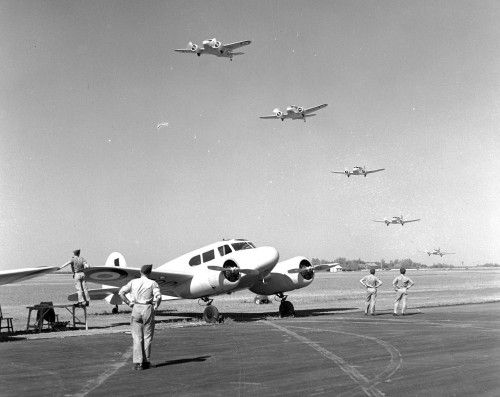
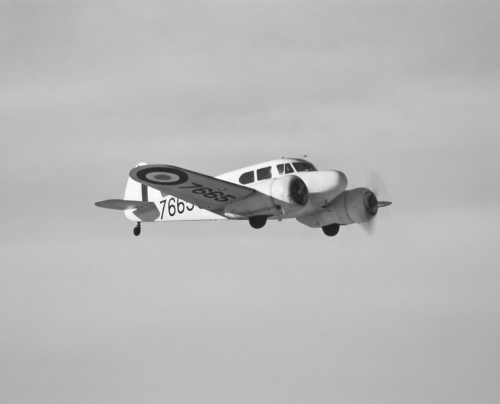
The Royal Canadian Air Force adopted the aircraft as the Cessna Crane Mk.I, using it primarily for the British Commonwealth Air Training Plan (BCATP).
Under this massive programme, Canada became a central training ground for Allied aircrew.
The Crane was one of the principal multi-engine trainers used in Canada, valued for its reliability in harsh weather and its suitability for novice pilots.
Crane aircraft operated at numerous BCATP stations, contributing significantly to the training of bomber and transport pilots who would later serve in Europe, Africa, and Asia.
Variants
The Cessna T‑50 family included several variants tailored to different roles:
T‑50 – Original civilian production model
AT‑17 – Military advanced trainer with minor equipment changes
AT‑17A/B – Variants with different engines or equipment
UC‑78 – Utility transport version for the USAAC
Crane Mk.I – RCAF designation for aircraft used in the BCATP
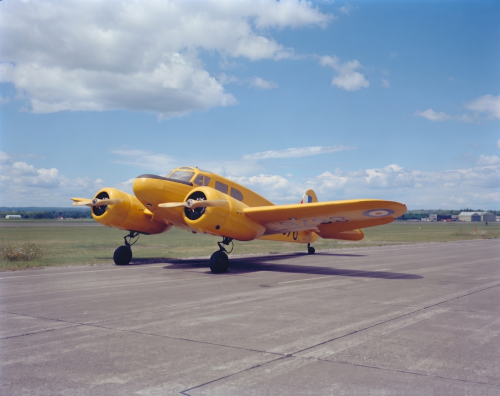
Postwar, many surplus UC‑78s returned to civilian life, serving as air taxis, bush planes, and personal transports.
Their mixed construction limited long‑term durability, but they remained in service for years in remote regions.
Legacy
The Cessna Crane/Bobcat occupies a unique place in aviation history.
It was not a glamorous aircraft, nor a front‑line combat machine, but it was instrumental in training the aircrews who flew them.
Its combination of simplicity, affordability, and forgiving handling made it one of the most important multi‑engine trainers of the Second World War.