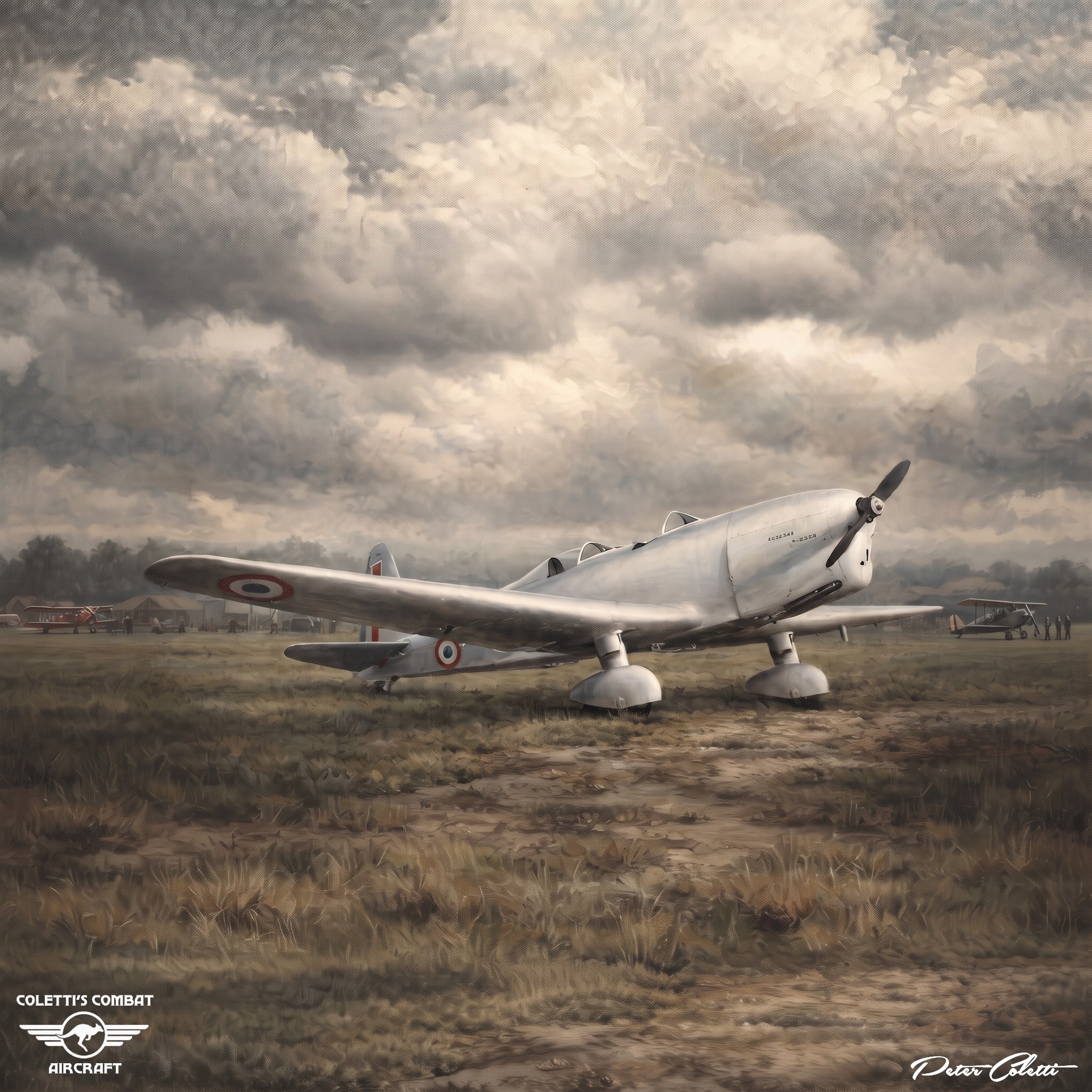
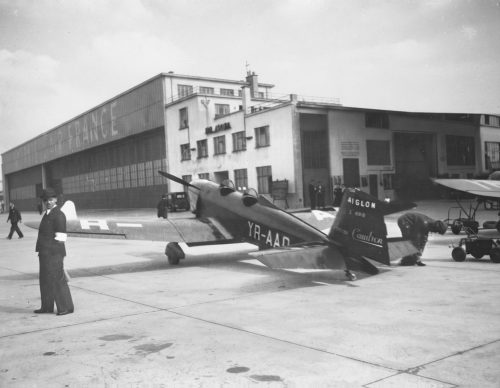
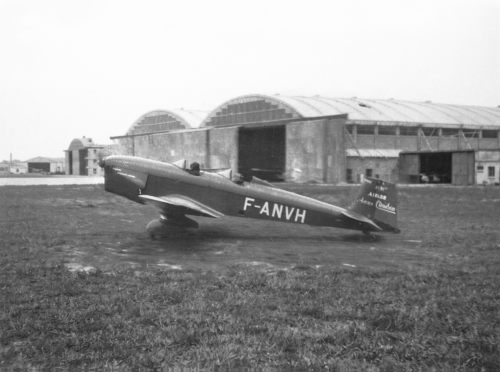
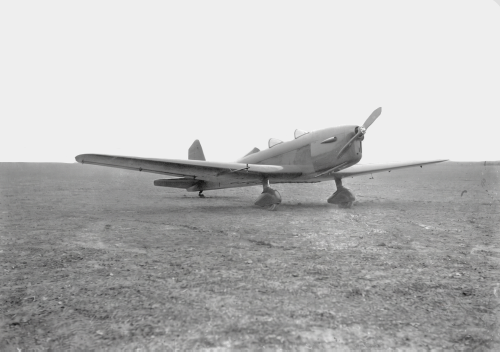
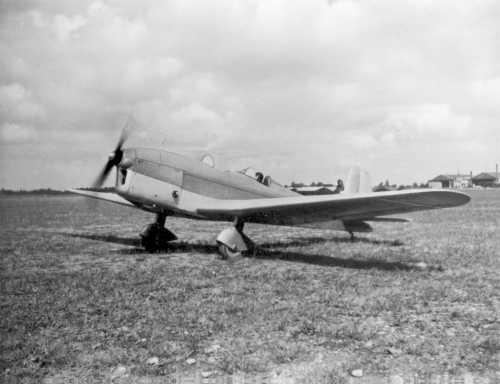
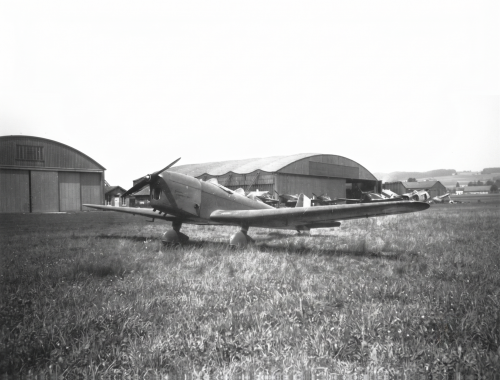
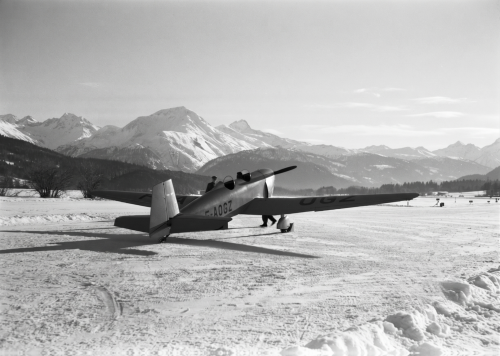
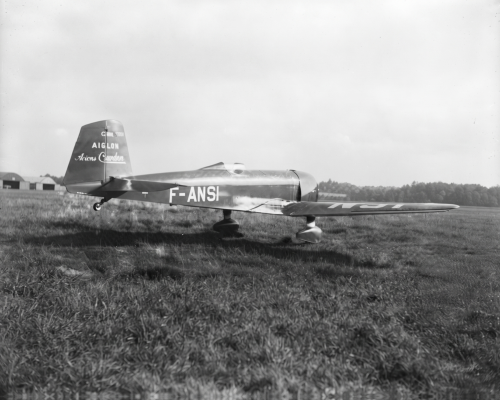
The Caudron C.600 Aiglon (“Eaglet”) emerged in the mid‑1930s as part of a revitalisation of Caudron’s light‑aircraft line following the company’s merger with Renault.
With this merger, the design department came under the leadership of Marcel Riffard, already renowned for his sleek racing aircraft and aerodynamic innovations.
His influence is immediately visible in the Aiglon’s clean lines, refined proportions, and emphasis on efficiency and practicality.
The aircraft was conceived as a two‑seat sport and touring monoplane, intended for private owners, flying clubs, and long‑distance enthusiasts.
Its first prototype flew in March 1935 from Issy‑les‑Moulineaux, marking the beginning of a production run that would ultimately reach 203 aircraft.
The Aiglon quickly gained a reputation for reliability, ease of handling, and aerodynamic finesse.
It became especially popular among French private pilots—including several prominent female aviators—and was exported to multiple countries.
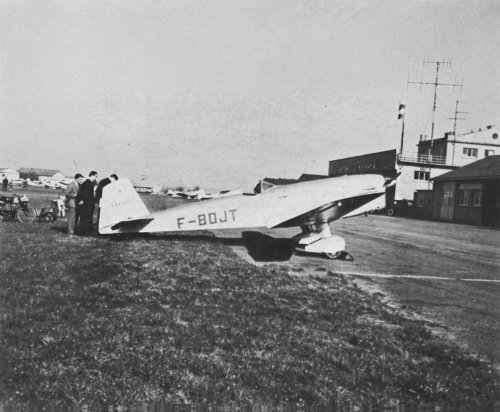
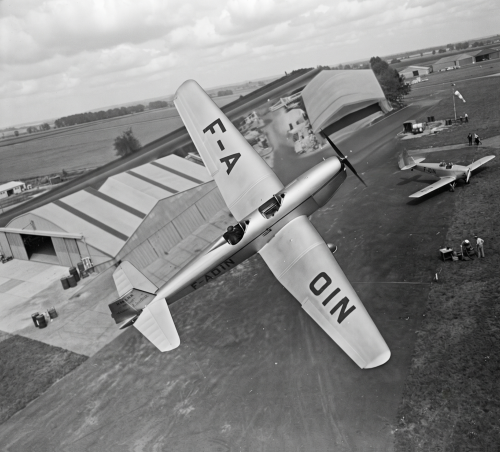
Caudron also developed specialised long‑range versions, most notably the C.610, which demonstrated impressive endurance by flying from Paris to Saigon in December 1935 at an average speed of 80 mph (129 km/h).
Caudron C.600 Aiglon
Design Characteristics
Airframe and Structure
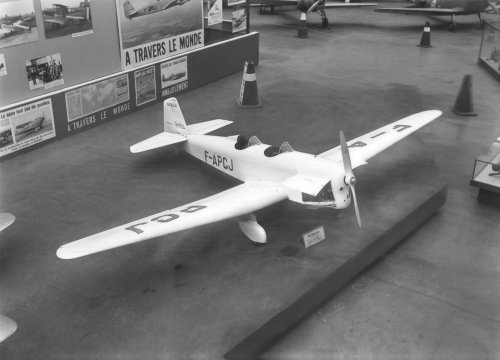
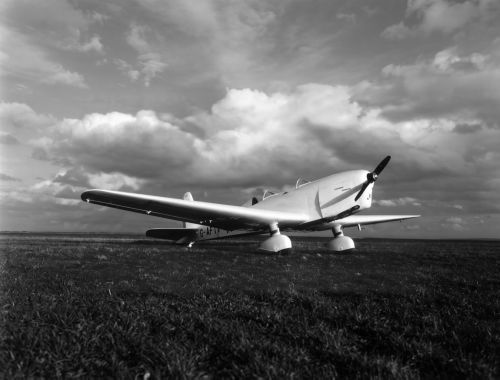
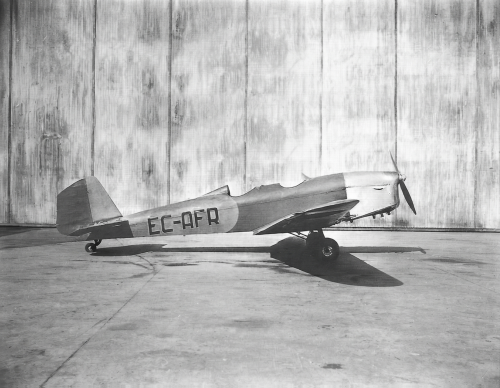
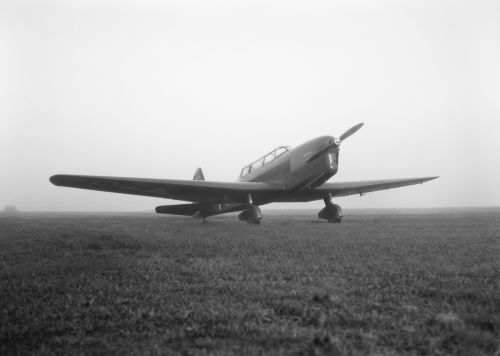
The Caudron C.600 was a low‑wing cantilever monoplane, built almost entirely of wood.
This construction method was typical of Caudron’s light aircraft and contributed to the Aiglon’s low weight and smooth aerodynamic surfaces.
The wing featured:
A single spar wooden structure
Large-span end flaps for improved low-speed handling
Fabric‑covered control surfaces
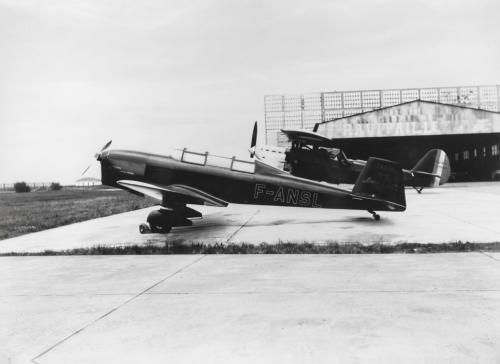
The fuselage was a streamlined wooden shell with two tandem open cockpits, though some later aircraft incorporated enclosed canopies (“solid glass lanterns”) for improved comfort and weather protection.
Caudron C.600 Aiglon
Landing Gear
The Aiglon used a fixed conventional landing gear with a tailwheel.
The main gear legs were equipped with liquid‑gas shock absorbers and differential brakes, and the wheels were enclosed in aerodynamic fairings to reduce drag—another hallmark of Riffard’s design philosophy.
Caudron C.600 Aiglon
Powerplant
The standard C.600 was powered by the Renault 4Pgi Bengali Junior, a 4‑cylinder inverted air‑cooled inline engine producing 100 hp.
This engine was reliable, lightweight, and well‑matched to the aircraft’s aerodynamic efficiency.
Other variants used:
de Havilland Gipsy Major (C.600G)
Renault 4Pei, 140 hp (C.601 Aiglon Senior)
Caudron C.600 Aiglon
Cockpit and Equipment
The tandem seating arrangement placed the pilot in the rear cockpit and the passenger or student in the front.
Two luggage compartments were located ahead of the forward cockpit, allowing the Aiglon to serve as a practical touring aircraft.
Instrumentation was basic but adequate for cross-country flying.
Caudron C.600 Aiglon
Performance
The C.600’s performance reflected its aerodynamic refinement and lightweight construction:
Maximum speed: 220 km/h
Cruise speed:190 km/h
Range:700 km
Service ceiling:4,000 m
Empty weight:560 kg
Gross weight:880 kg
These figures made the Aiglon competitive with contemporary touring aircraft and well‑suited for long‑distance flights, training, and liaison duties.
Variants
C.600 Aiglon
The main production model, powered by the Renault 4Pgi.
178 built, forming the bulk of the fleet.
C.600G
A small batch of five aircraft fitted with the de Havilland Gipsy Major engine and a metal Rattier propeller.
Designed for operators preferring British powerplants.
C.601 Aiglon Senior
A more powerful development with the 140 hp Renault 4Pei engine.
18 built, offering improved climb and cruise performance.
One example was exported to Japan as the Caudron KXC1 for evaluation by the Imperial Japanese Navy Air Service.
C.610 Aiglon
A long‑distance single‑seat version with enlarged fuel tanks.
Only two built, but they achieved notable endurance flights, including the Paris–Saigon journey.
Caudron C.600 Aiglon
Operational History and WWII Context
Pre‑War Use
Before the Second World War, the Aiglon was widely used by:
French flying clubs
Private pilots
Aeronautical schools
Long-distance record seekers
Its combination of reliability, forgiving handling, and respectable speed made it a favourite among recreational aviators.
It also saw limited export success, reaching countries such as Argentina, Guatemala, Hungary, Romania, Spain, and Japan.
Caudron C.600 Aiglon
Spanish Civil War
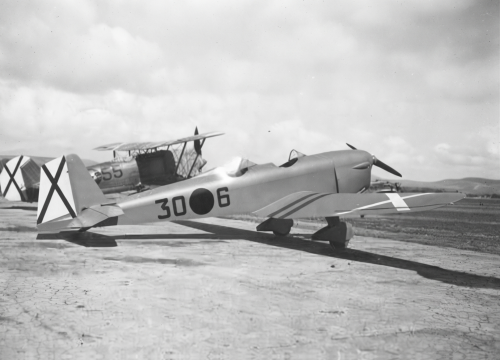
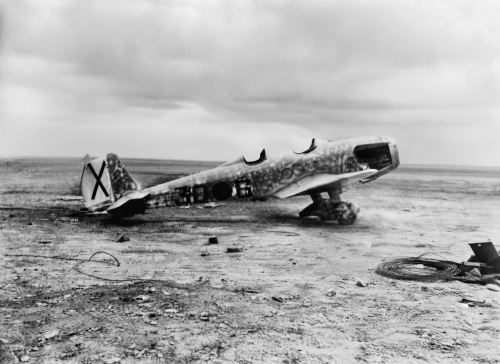
Several Aiglons were operated by the Spanish Republican Air Force, primarily at the El Carmolí fighter pilot training facility.
Their role was modest—liaison, training, and courier duties—but they contributed to the Republican air effort in a support capacity.
Caudron C.600 Aiglon
World War II Service
With the outbreak of war in 1939, many French civilian Aiglons were requisitioned by the Armée de l’Air for use as liaison aircraft.
Their lightweight, short-field capability, and low operating cost made them ideal for:
Courier missions
Personnel transport
Communication flights
Training
The aircraft’s wooden construction and modest performance limited its military value, but it remained useful in non‑combat roles throughout the early war period.
Caudron C.600 Aiglon
Axis Use
After the fall of France, surviving Aiglons were absorbed into various organisations, including the following:
The Royal Hungarian Air Force, which operated six aircraft between 1943 and 1945
German authorities, who used captured examples for liaison and training
Post‑War Fate
Few Aiglons survived the war intact.
Some returned to civilian use, while others were scrapped due to age, damage, or lack of spare parts.
Today, only a handful remain, some restored to flying condition or preserved in museums, such as the C.601 at the Musée Régional de l’Air at Angers‑Marcé.
Caudron C.610 Aiglon
Assessment and Legacy
The Caudron C.600 Aiglon stands as a representative example of French light aviation in the 1930s—elegant, efficient, and thoughtfully engineered.
It was not a revolutionary aircraft, but it was a highly successful one, embodying the strengths of Caudron’s design philosophy:
Aerodynamic refinement
Lightweight wooden construction
Practicality for touring and club flying
Adaptability to multiple roles and engines
Its wartime service, though limited, underscores the versatility of well‑designed civilian aircraft in times of national emergency.
Today, the Aiglon is remembered fondly by aviation historians and enthusiasts as one of the most charming and capable French light aircraft of its era.