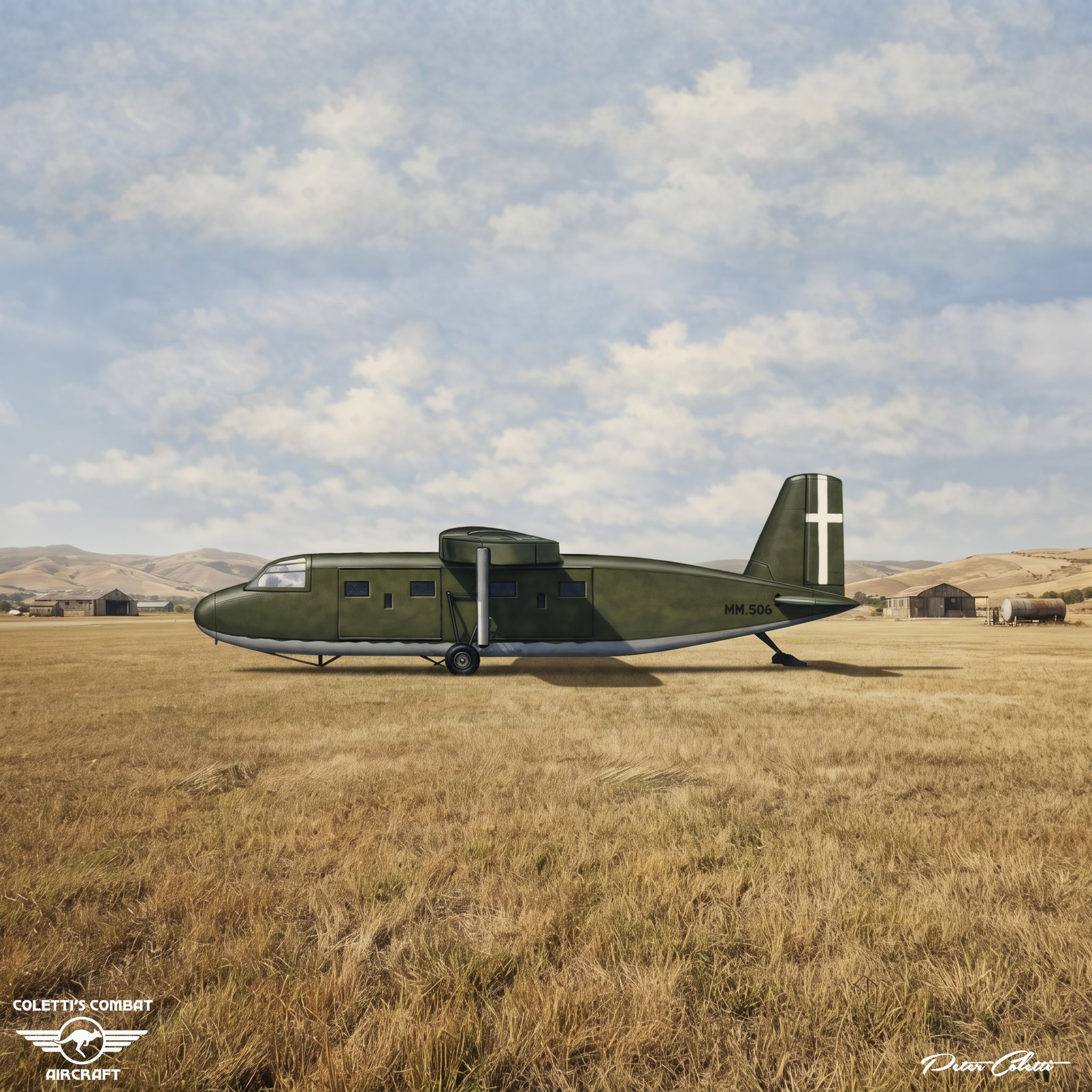
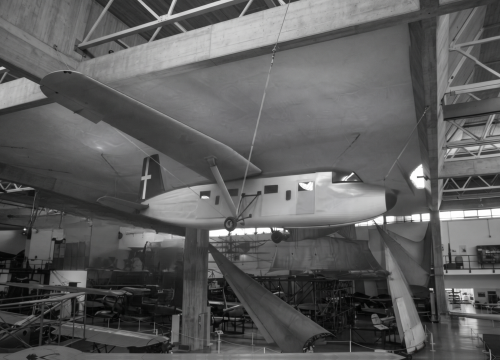
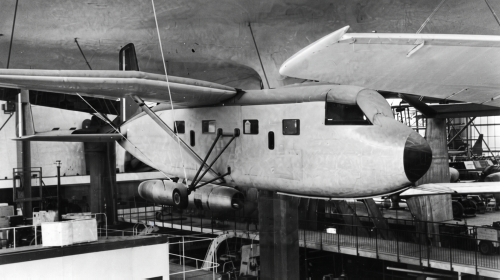
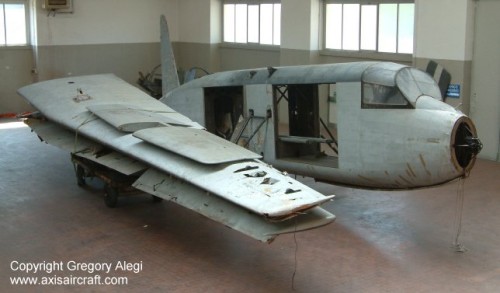
The CAT TM‑2 (Trasporto Militare 2) emerged from Italy’s late attempt to emulate German success with assault and transport gliders during the early years of the Second World War.
The Luftwaffe’s dramatic use of gliders—especially in the 1940 assault on Fort Eben‑Emael and the May 1941 invasion of Crete—prompted Italian military leaders to investigate similar capabilities.
By mid‑1941, Italian Army and Air Force leadership began formally requesting information on German glider operations, though the Luftwaffe provided only vague responses.
In October 1941, the Italian Ministry of Aviation issued a specification for a medium‑sized military glider capable of carrying 1,000–1,300 kg of troops or equipment.
Multiple Italian firms responded, including Aeronautica Lombarda (AL‑12P), Avia (SCA.2), and Costruzioni Aeronautiche Taliedo (CAT) with the TM‑2.
CAT, founded in 1937 by glider pioneer Ettore Catteano, had initially built German Dittmar Condor gliders under licence.
After its 1940 acquisition by industrialist Cesare Gallieni, the company expanded into maintenance work for the Regia Aeronautica and sought opportunities to produce original designs.
The TM‑2 was created under Sergio Del Proposto, an engineer associated with the nearby Caproni works.
By January 1943, CAT completed the first prototype (MM.510), followed by a second (MM.511) and a static‑test airframe.
The first flight occurred on 23 February 1943 at Milan‑Linate Airport under test pilot Nello Raimondo.
A short hop had been achieved the previous day while under tow by a Fiat CR.42.
Tragically, on the second full flight, the glider broke free from its towline and crashed, killing Raimondo and the onboard observer.
No further development followed, and the TM‑2 never entered production.
Design and Construction
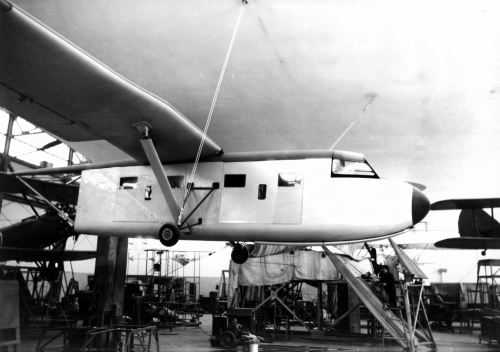
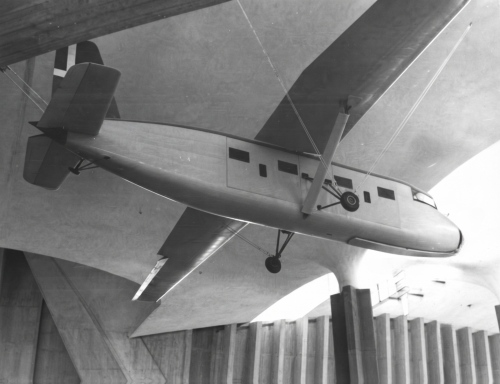
The CAT TM‑2 was a high‑wing monoplane glider of mixed wood‑and‑metal construction, reflecting Italy’s limited wartime access to strategic materials.
Its design prioritised rapid unloading, compatibility with existing Italian tow aircraft, and the ability to deliver small assault teams or light weapons directly onto contested landing zones.
Fuselage and Crew
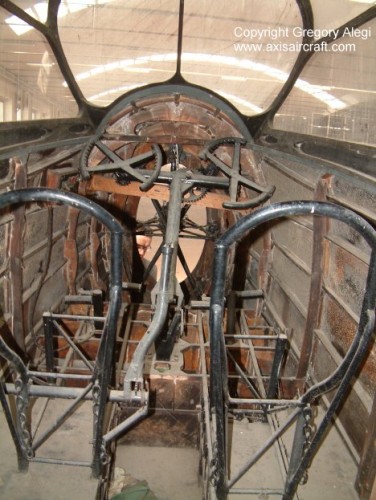
Single‑pilot cockpit, enclosed under a jettisonable Plexiglas canopy to allow emergency escape.
Main cabin dimensions:
Length: 5.6 m
Width: 1.2 m
Height: 1.65 m
Four large side doors—two forward and two aft of the wings—operated by a central control for rapid troop egress.
Payload Options
The TM‑2 could carry the following:
Ten-armed troops,
or
A Cannone da 47/32 infantry/anti‑tank gun with crew and ammunition,
or
An 81 mm mortar with crew and ammunition.
Wings and Landing Gear
Fabric‑covered wings braced by single struts.
Conventional landing gear, with main wheels that could be partially retracted or jettisoned in flight, allowing landing on a central skid—a common feature of assault gliders intended for rough terrain.
Technical Specifications and Performance
Dimensions and weights:
Length: 22.80 m
Wingspan: 13.87 m
Height: 4.70 m
Wing area: 45.70 m²
Empty weight: 1,995 kg
Loaded weight: 3,990 kg
Performance characteristics:
VNE (never‑exceed speed): 250 km/h
Maximum tow speed: 200 km/h
Stall speed: 109 km/h
These figures place the TM‑2 in the same general performance category as contemporary German medium gliders such as the DFS 230, though the TM‑2 was larger and designed for heavier payloads.
Variants
Only two prototypes (MM.510 and MM.511) were built, plus one static test airframe.
No operational variants were produced.
A related design, the CAT TM‑3, was proposed in response to a later 1942 requirement but did not progress beyond the competition stage.
Operational and WWII Context
Italy’s interest in assault gliders was driven by the following:
German airborne successes in 1940–41.
The desire to create a rapid‑deployment capability for small infantry units and light artillery.
The need for inexpensive aircraft that could be built quickly despite wartime shortages.
However, several factors prevented the TM‑2 from entering service:
Late development: First flight in 1943, when Italy’s strategic situation was deteriorating.
Industrial limitations: Italy lacked the large‑scale glider production infrastructure Germany had developed.
Accident during testing: The fatal crash of the first prototype halted momentum.
Armistice of September 1943: Italy’s surrender and subsequent occupation ended all further development.
As a result, the TM‑2 remained a prototype only, representing an unrealised attempt to create an Italian equivalent to German assault gliders.
Summary
The CAT TM‑2 was Italy’s most advanced attempt at a military transport/assault glider during WWII.
Designed to carry troops or light weapons into forward areas, it featured a practical high‑wing layout, rapid‑exit doors, and flexible landing gear.
Despite promising design features, its development was cut short by a fatal test accident and Italy’s collapsing wartime situation.
Only two prototypes were built, and the aircraft never entered operational service.