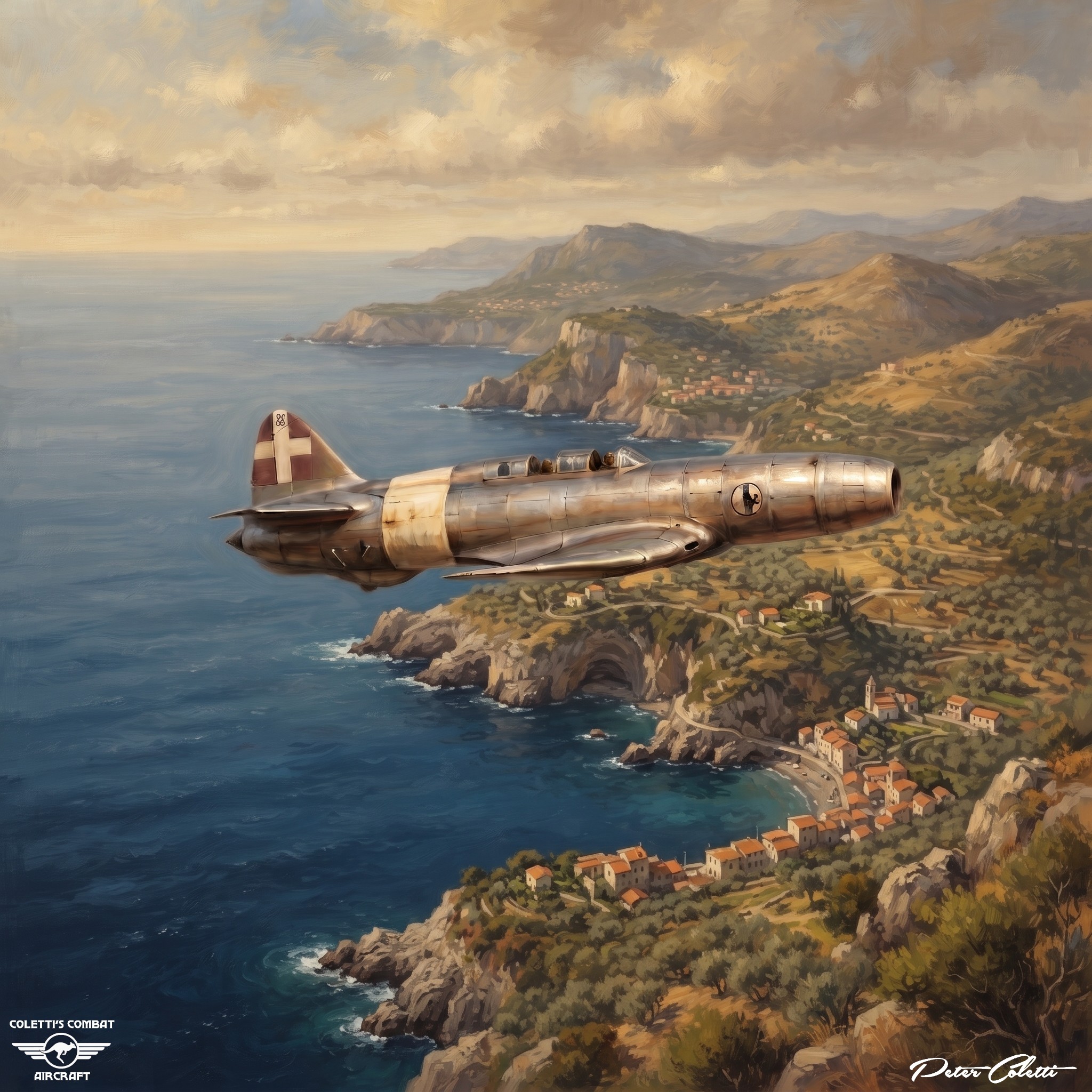
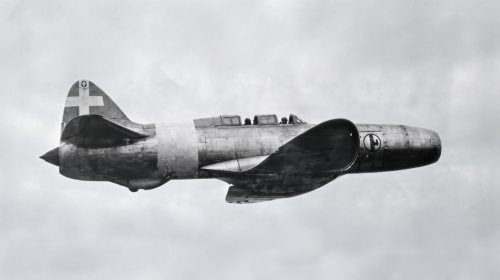
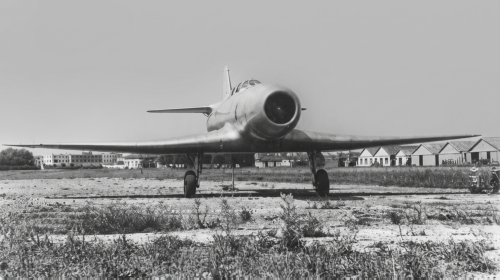
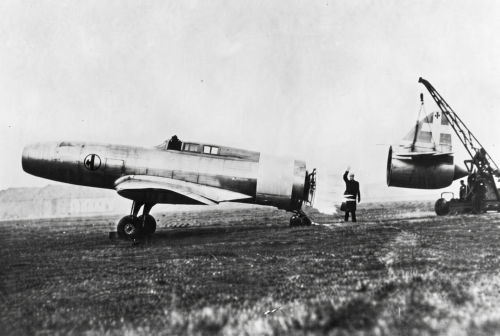
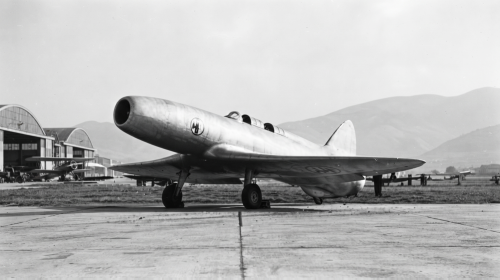
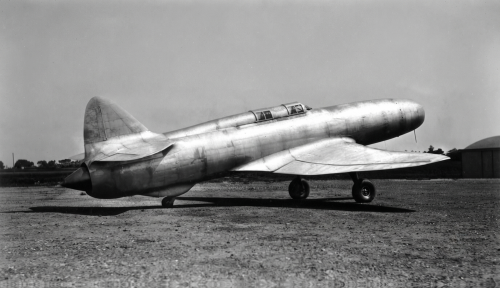
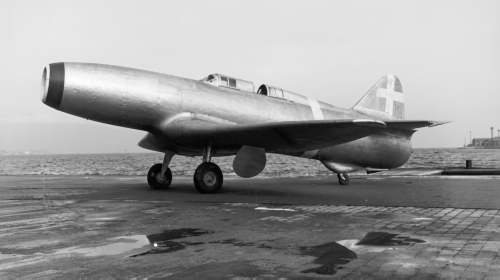
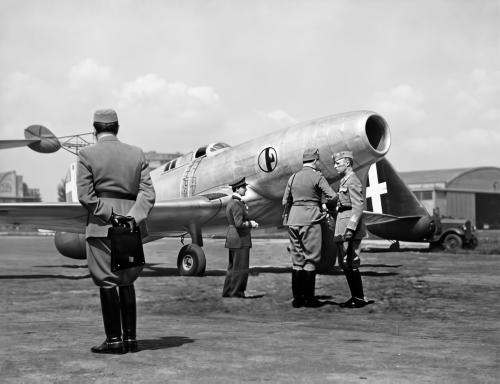
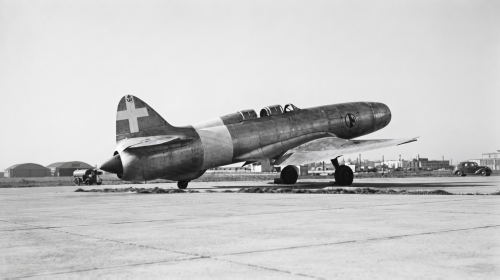
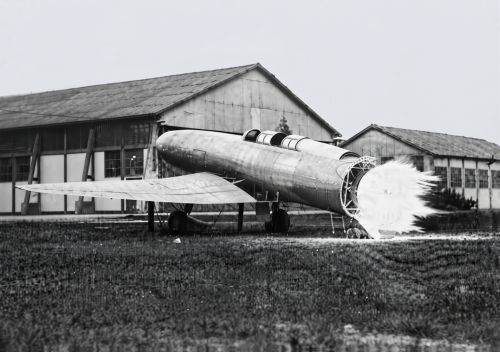
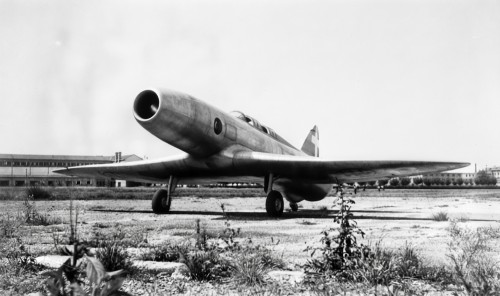
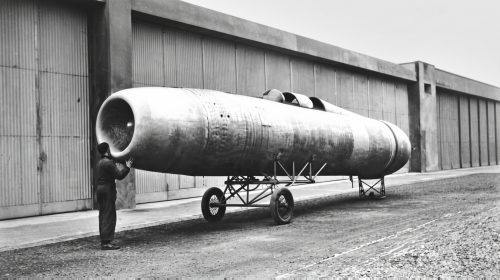
The Caproni Campini N.1, also known as the C.C.2, occupies a unique place in early jet age history as one of the first aircraft to fly using reaction propulsion.
Developed in Italy during the 1930s, it represented the culmination of engineer Secondo Campini’s long‑standing advocacy for jet‑based flight at a time when most nations still relied entirely on piston‑engine aircraft.
Although ultimately overshadowed by the German Heinkel He 178, which flew earlier in secret, the N.1 remains a significant milestone in the evolution of jet propulsion.
The origins of the N.1 trace back to 1931, when Campini submitted a formal proposal to the Regia Aeronautica describing his concept for a “thermojet” engine.
Unlike the turbojet designs emerging in Germany and Britain, Campini’s system relied on a conventional piston engine to drive a multi‑stage compressor.
Air would be drawn in, compressed mechanically, mixed with fuel, and ignited in a long duct to produce thrust.
This approach avoided the need for a turbine, which was technologically challenging at the time, but it also imposed severe limitations on efficiency and thrust output.
Campini’s early demonstrations, including a jet‑propelled boat tested in Venice in 1932, convinced Italian authorities that his ideas merited further exploration.
In 1934, the Regia Aeronautica authorised the construction of two experimental aircraft.
Campini partnered with the major Italian manufacturer Caproni, which provided the industrial capability to build the airframes.
The resulting aircraft was designated N.1, though it is often referred to as the C.C.2.
The N.1’s design was shaped entirely by the requirements of the motorjet system.
The fuselage was long and tubular, accommodating the piston engine in the nose, the axial compressor behind it, and the extended combustion duct running through the rear fuselage.
The aircraft was a mid-wing monoplane constructed of metal, with a two-seat cockpit arranged in tandem.
Early flights were often conducted with the canopies open because the propulsion system generated significant heat within the cockpit.
The propulsion system consisted of an Isotta Fraschini L.121/R.C.40 piston engine producing roughly 670 to 900 horsepower.
This engine drove the axial compressor, which supplied compressed air to the combustion duct.
Fuel was injected into the duct and ignited, producing a jet‑like exhaust.
Additional fuel could be sprayed into the duct to increase temperature and thrust, functioning similarly to an afterburner.
However, because the system lacked a turbine stage, it could not recover energy from the exhaust flow, resulting in low overall efficiency and limited thrust.
The first flight of the Caproni Campini N.1 took place on 27 August 1940 at Taliedo airfield near Milan, with Mario de Bernardi at the controls.
The flight lasted about ten minutes and was widely celebrated in Italy as a major technological achievement.
Italian newspapers proclaimed the N.1 the world’s first jet aircraft, unaware that Germany’s He 178 had flown a year earlier.
When the He 178’s existence became known, Italy’s claim to priority was lost, but the N.1 remained one of the earliest jet-propelled aircraft ever to fly.
Flight testing revealed the limitations of the motorjet concept.
The N.1 achieved a maximum speed of approximately 375 km/h, slower than many contemporary piston‑engine fighters.
Cruise speeds were far lower, and the aircraft’s thrust‑to‑weight ratio was insufficient for high‑performance flight.
The motorjet system was mechanically complex, heavy, and prone to overheating. Despite these issues, the aircraft demonstrated reliable operation during several test flights.
One of the most notable missions occurred on 30 November 1941, when the N.1 flew from Milan to Rome, stopping in Pisa for refuelling and carrying mail.
This flight was intended as a propaganda demonstration of Italy’s technological progress.
Although the aircraft completed the journey successfully, its modest performance underscored the limitations of the motorjet system compared to emerging turbojet designs.
The N.1 programme produced two prototypes.
A single‑seat version, sometimes referred to as the CC.1, appeared in development documents but did not reach flight status.
A later project, the Caproni Campini Ca.183bis attempted to combine piston and jet propulsion in a more advanced configuration, but it never progressed beyond the design stage.
The broader context of World War II shaped the fate of the N.1. Italy’s industrial capacity was limited, and the nation struggled to keep pace with rapid technological advances in Germany, Britain, and the United States.
By 1943, Italy had surrendered, and further jet development ceased.
Meanwhile, Germany fielded the Messerschmitt Me 262, the world’s first operational jet fighter, and Britain deployed the Gloster Meteor.
The N.1, by contrast, remained an experimental aircraft with no combat role.
After the war, one of the N.1 prototypes was examined by British engineers, who confirmed the inherent inefficiencies of the motorjet system.
The aircraft’s heavy structure, low thrust output, and thermal challenges made it unsuitable for further development.
Turbojets, with their turbine‑driven compressors and far superior efficiency, quickly became the global standard.
Despite its shortcomings, the Caproni Campini N.1 holds an important place in aviation history.
It demonstrated reaction propulsion at a time when jet technology was still in its infancy.
It showcased Italy’s early commitment to jet research and contributed to the broader understanding of jet propulsion principles.
Today, one of the prototypes survives in Italy as a reminder of the experimental path that led to modern jet aircraft.